"Why would I pay for a professional headshot when my phone takes great pictures?"
Fair question. I hear it from almost everyone who contacts me. The camera in your pocket is genuinely good. The twenty-nine dollar AI headshot apps get better every month. So the objection is reasonable.
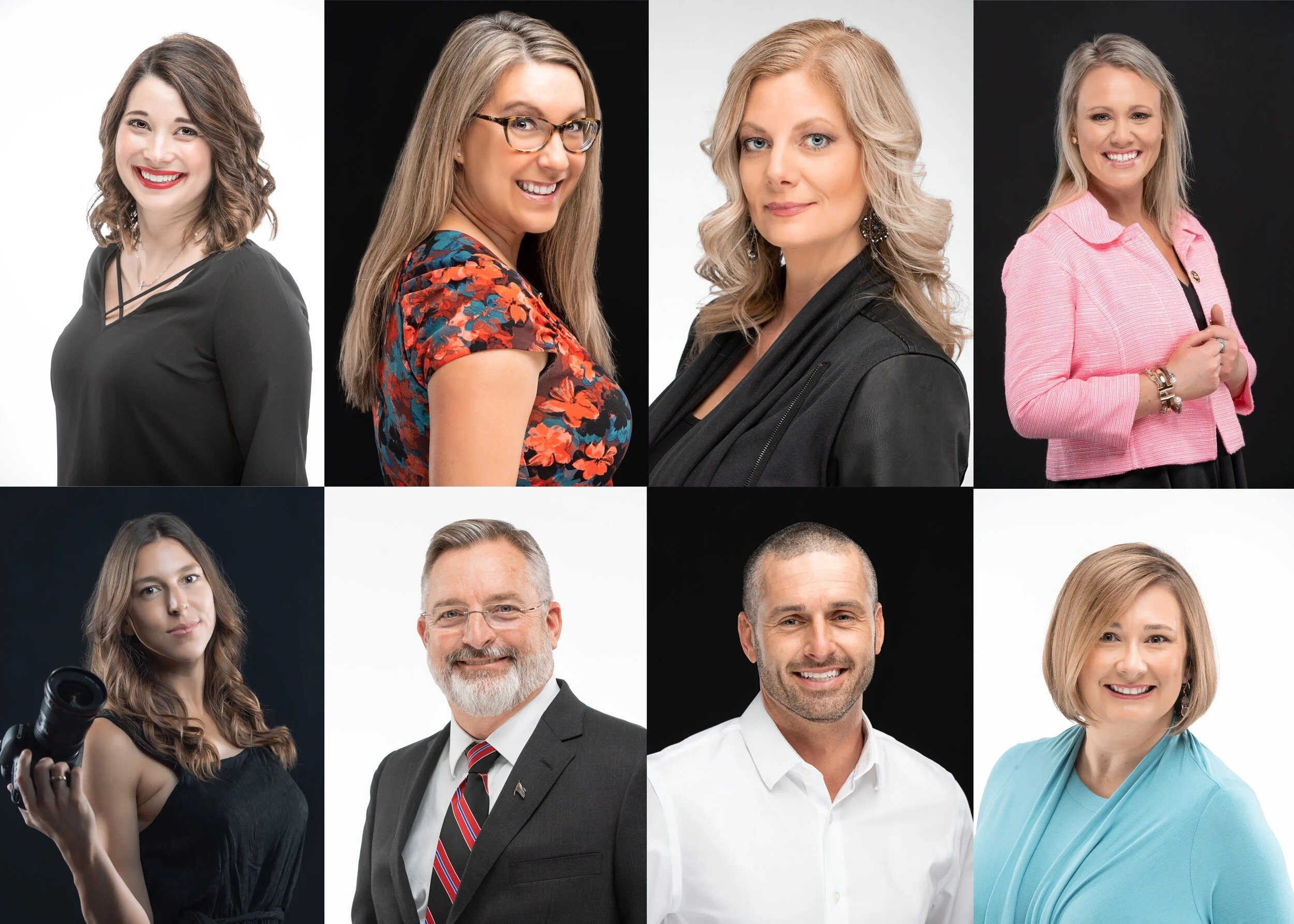
Here is the honest answer: a headshot is not a photo. It is a business tool, and it gets judged by a different standard than every other picture you own. Nobody compares your vacation photos to a studio portrait. But your LinkedIn photo sits right next to competitors who hired a photographer, and hiring managers notice the difference in under a second.
After 27 years of shooting faces for a living, including Lady Gaga, the Kardashians, and Richard Branson, I can tell you exactly where a professional headshot pays for itself, what it gives you that a phone cannot, and when you should save your money. No sales pitch. Here is the straight answer.
Where Your Headshot Actually Moves the Needle
Your headshot is the first handshake in every room you are not physically standing in.
LinkedIn is the obvious one. Recruiters scan profiles fast, and the photo is the first thing the eye hits. A sharp, well-lit portrait reads as competent before a single word gets read. A dim selfie taken in a car reads as someone who does not take the opportunity seriously. That judgment is unfair, but it is real, and it happens whether you like it or not.
Job searching is the highest-stakes use. I wrote more about whether you need a professional headshot for your job search. The short version: when a hiring manager chooses between two qualified candidates, the one who looks like a leader gets the interview.
Speaking and press is the second one. Organizers put your photo on the conference site and editors run it next to your quotes. A weak headshot can cost you the booking before anyone reads your bio.
Your about page, your book jacket, your speaker one-sheet. Anywhere your face represents your work, the photo is doing marketing. That is the standard to hold it to.
What a Professional Delivers That Your Phone Cannot
Direction
Most people do not know what their face does in front of a lens. They pull their chin back, they freeze their smile, they look tense in a way they never do in real life. A camera does not fix that. A photographer does.
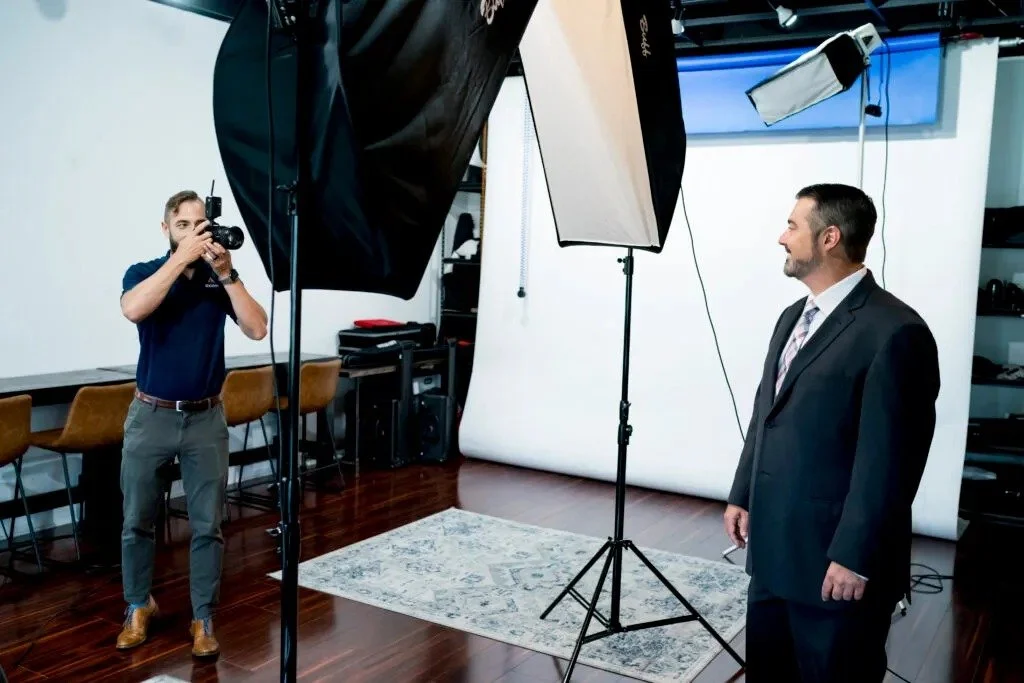
Directing is the actual job: reading your face in the first thirty seconds, finding the angle that flatters your bone structure, drawing out a real expression instead of a held one, and knowing when to stop talking and shoot.
I have been shooting people for 27 years. When I look at somebody I analyze their face, their jawline, their eyes. I can tell what the perfect angles are, what the perfect light is, what the perfect poses are. I know how to angle people's bodies. I really know how to bring out the energy that every client needs.
Your phone has no opinion. It captures whatever you give it, and most people give it their most self-conscious self.
Light
Phone cameras are good at exposure. They are not good at sculpture.
Studio light gets built around your face on purpose: a key light that shapes the cheekbones, a fill that opens the shadows, separation from the background so you pop instead of blending in. Window light can be flattering, but it is one option, take it or leave it. A photographer carries five or six options and picks the one built for you.
This is the difference people feel but cannot name when they compare a pro headshot to a phone photo. One was lit. The other was exposed.
Retouching That Keeps You Recognizable
Professional retouching is subtraction, not transformation. It removes the temporary stuff: the blemish, the stray hair, the redness from a rough night. What stays is you, on your best day.
AI headshot apps do the opposite. They generate a smoother, younger, slightly different person. It looks impressive until someone meets you on a video call and the face does not match. In hiring, that mismatch reads as dishonest, even when it was never meant that way.
A good retoucher follows one rule: the photo should look like you on the day you walk into the interview. Nothing more.

The AI Headshot App Question
Let us address the twenty-nine dollar option directly, because it is the real competition now.
AI headshot generators take your selfies and synthesize corporate portraits. The results can look polished. They can also give you a different jawline, invented teeth, and backgrounds no office on earth contains. Recruiters are getting good at spotting them, and "this person used AI for their headshot" is not the first impression you want.
There is a deeper problem: the AI works from your worst raw material. Bad light and stiff expressions in, a polished version of bad light and stiff expressions out. Or worse, a face that is not yours.
There is nothing wrong with AI headshot apps except they are not real. It just depends on you as a person. Are you a real, authentic person, or are you willing to let AI represent you?
Use the AI app for fun. Do not build your career on it.
When a Phone Photo Is Honestly Fine
I am not going to tell you a professional headshot is mandatory for everything. It is not.
Your phone photo is fine for your internal company Slack, your personal social accounts, a casual guest bio, or any context where nobody is deciding whether to hire you. If the budget is not there yet, a clean phone photo in good window light beats a bad studio photo.
The honest test is the stakes. If the photo appears somewhere a decision gets made about you, a job, a booking, a feature, invest in it. If the photo appears somewhere friends already know your face, your phone is fine.
Nobody needs a studio portrait for a fantasy football league.
What a Professional Headshot Session Costs
Here is my actual pricing. No mystery.
Two looks: $1,500. Three looks: $1,900. Four looks: $2,300. Five looks: $2,500. A look is a full wardrobe and styling change, shot and directed by me. More looks means more variety: the corporate shot, the approachable shot, the creative shot, all from one session.
That sounds like a lot until you run the math. One job offer, one speaking engagement, one press feature that brings clients. Any one of those pays for the session many times over. The expensive option is staying invisible while the role goes to the candidate who looked like they already had the job.
When you work with a professional headshot photographer, you are not buying pixels. You are buying twenty-seven years of knowing what a decision-maker's eye lands on first.
The Bottom Line
So, are professional headshots worth it in 2026? Yes, wherever your face is doing business for you. The phone is fine for everything else.
The camera in your pocket is a miracle. It just cannot direct you, light you, or retouch you into the version of yourself that closes the room. That is still a human being's job, and it is one I have done for 27 years.
If your headshot is currently a cropped wedding photo, it is time. Get in touch and let us make the one that gets you hired.