People ask me about my low light setup all the time. Here is the truth: I don't really have one.
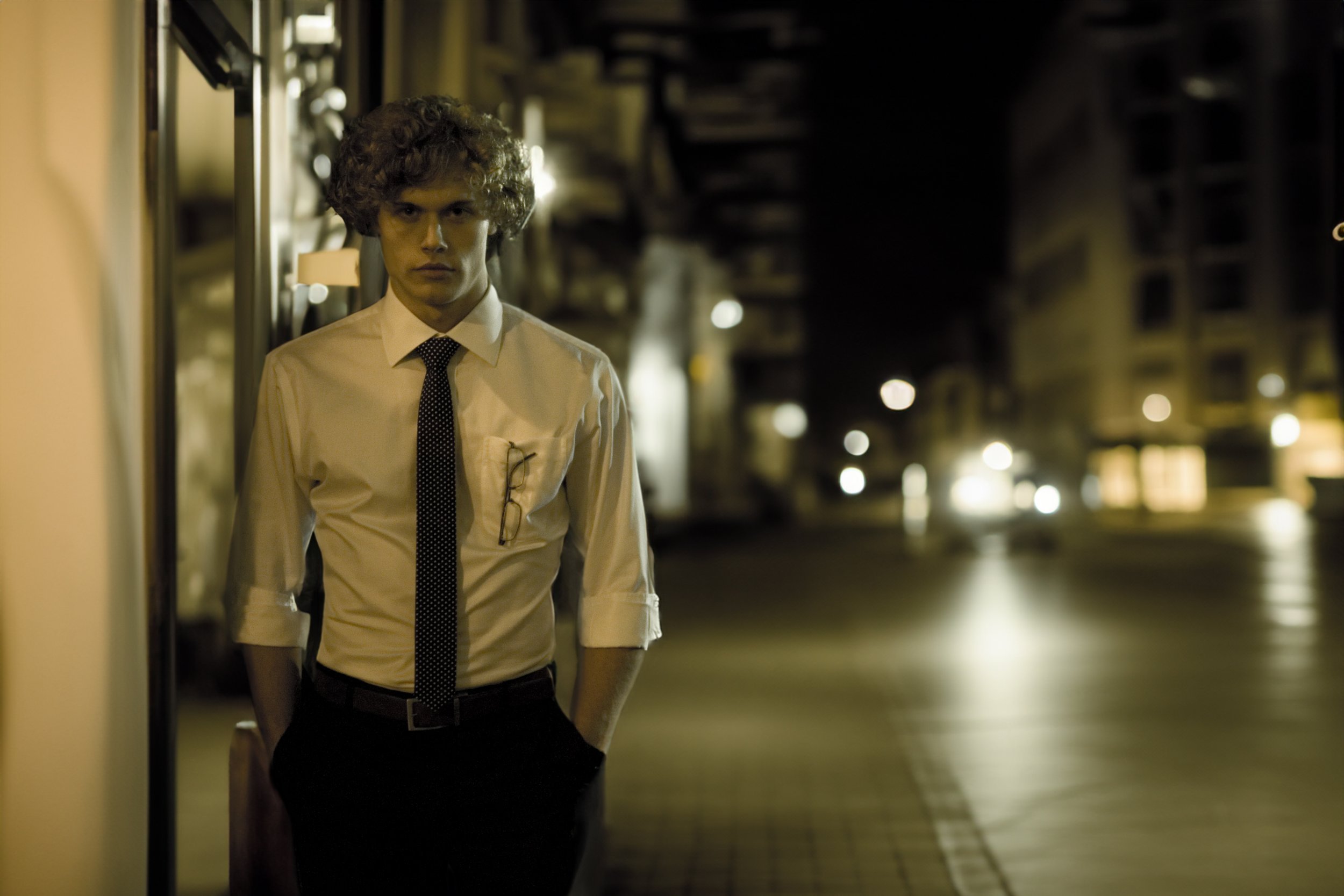
I shoot with a Sony, and the camera is so good in low light that I can take my subject basically anywhere and just work with what is there. Street light, window light, whatever the block gives me. The camera is amazing at low light, and what I love about it is how it captures the multiple light sources around you. You don't get one flat exposure. You get layers.
My Sony Low Light Setup: There Isn't One
Forget the bag full of gear. When I go out at night, I bring the camera and that's it.
The Sony sensor does the heavy lifting. Instead of fighting the darkness with strobes and LED panels, I let the street do the lighting design. One corner is warm amber from the street lamps. Half a block later you're under a neon sign throwing blue and red across your subject's face. The camera sees all of it at once, and that's the shot.
If you're just starting with night photography, this is the most freeing thing you can learn. You don't need to light the night. You need to see it.
The Settings I Actually Use
Here are my real numbers, the ones I dial in on a night fashion shoot:
ISO 6400. That's my home base after dark. Modern Sony sensors are clean enough up there that I don't think twice about it.
Aperture f/2.8. Wide open, or close to it. You want as much light hitting the sensor as possible, and at f/2.8 you also get that shallow depth of field that melts street signs and headlights into beautiful bokeh behind your subject.
Shutter speed 1/60th or 1/50th handheld. I have steady hands, so I can get away with a slow shutter. With a tripod, I'll go down to 1/30th for a static subject.
That's the whole recipe. 6400, f/2.8, 1/60. Everything else is seeing. Write these down or save them as a custom preset, so when the light gets weird you have a baseline to return to instead of guessing in the dark.
Why I Shoot the 50mm at Night
My lens of choice for night street work is the 50mm. I love it because it's like what the eye sees.
At night, that matters more than ever. A wide lens makes everything feel distant. A telephoto kills the environment. The 50mm puts you inside the moment at the same distance your eyes would be, which is what makes a high fashion shot on a gritty street feel real instead of staged.
Pair a 50mm at f/2.8 with 6400 ISO and you can shoot in light so dim your eyes are still adjusting. The camera sees better than you do. It's also small and light, which matters when you're walking downtown for hours. A big zoom gets heavy fast, and heavy gear stays home.
Focus After Dark: Sony Autofocus vs My Leica
Here's where the Sony really earns its keep. The autofocus is just amazing. You point, you click, it's sharp. In near darkness. You don't have to do much at all.
Compare that to my Leica, which has no autofocus. It's a rangefinder, so you line up two images manually. In daylight it's a joy. At night it's genuinely hard to line up, and I've missed shots the Sony would have nailed without me thinking.
If you're choosing a camera for night work, autofocus performance in the dark matters more than the spec sheet suggests. It's half the reason my night setup is "just bring the camera."
White Balance: Shoot RAW and Stop Worrying
Night street light is a mess of color temperatures. Amber sodium lamps at one color, fluorescent storefronts at another, neon throwing a third across everything. No single white balance setting is "correct."
I shoot everything in RAW. In camera I'll generally leave white balance on auto, or set it to tungsten or fluorescent depending on the block I'm on.
But because it's RAW, there's a lot I can do in post. I don't stress about nailing white balance on the street. I get the exposure and the moment, and shape the color later. Shooting JPEG at night under mixed lighting just makes life harder.
Where I Shoot: Downtown LA After Dark
I love shooting on the streets. Downtown LA at night is one of the best free studios in the world.
You get amber glowy light from the street lamps plus light spilling from street signs. I shoot super high fashion at night, and that combination is perfect. The model looks expensive, the background looks dangerous, and the tension between the two is the whole photograph.
One spot I go back to: the parking lot at Fifth and Hill Street, right by my house. Incredible industrial buildings, street signs, fences, so many cool backgrounds. One location, a dozen looks, all within fifty feet.
When scouting night shoots, look for places with multiple light sources at different colors and distances. That's what gives the Sony sensor something to chew on. A street with lamps, signs, windows, and passing cars is a lighting setup you could never afford to build.
For more on how I think about mood and shadow after dark, read my piece on nighttime and low light brand photography.

The Beginner Mistake: Fear of High ISO
The biggest mistake I see beginners make with night photography is being afraid of high ISO.
Because they're scared of noise, they bring lights. But a lot of times, your light kills the background. Your subject looks like they're standing in a studio that happens to be outdoors. All that amber glow and neon goes black behind them because your light overpowers it.
My suggestion: shoot without the light. Just see what happens. Push the camera to 6400 and see how far you can take it. The background stays alive, the mood stays intact, and you learn what your camera can actually do instead of what the forums told you to fear.
Dealing With Noise at 6400 ISO
Honestly, the noise at 6400 on the Sony is pretty good. It's not the blotchy mess high ISO used to be.
When there's more noise than I want, I run it through an AI denoiser. Topaz Gigapixel is my go-to, but plenty of AI apps clean up noise beautifully now. Between the clean sensor and modern software, noise is no longer a reason to avoid high ISO.
Shoot at 6400. Clean it if you need to. Keep the background.

Try It Tonight
If you're taking your Sony out tonight for your first night shoot, here's my one piece of advice: experiment with the camera.
Set it to 6400 ISO, or try even higher, and just shoot. Walk around. Street lamps, neon signs, doorways with window light spilling out. Then go home, pull up the files, and look at how much noise is actually there.
Then you'll know exactly how far you can push your camera. And once you know that, the whole city at night becomes your studio.
David Christopher Lee is a Los Angeles celebrity and portrait photographer with 27 years of experience. See more of his night work in his portfolio.