AI headshots are fake. They are not authentic. If you show somebody a fake picture, you are telling them that you are a fake person.
That is my position, and I have not softened it. But this week, for the first time, a federal appeals court gave photographers something stronger than an opinion. It gave us a ruling.
What the Court Said
The Third Circuit rejected an AI company's fair use defense for training its system on copyrighted work it did not license. The company had fed thousands of copyrighted editorial summaries into its AI to build a competing product, then claimed fair use when the owner sued. The court said no. The use was commercial, barely transformative, and aimed at replacing the very thing it was trained on.
I wrote about the legal side of this ruling in depth on David's Guide. The short version: the court treated an AI case as a plain copyright case, applying the same four-factor test that has protected creative work for decades. No special AI exception.
That framing is the real precedent. AI companies have spent two years arguing that training deserves its own lenient standard, as if the technology itself were a fifth fair use factor. This court declined the invitation. If your business model is training on someone's work to compete with them, expect the same test that has always applied.
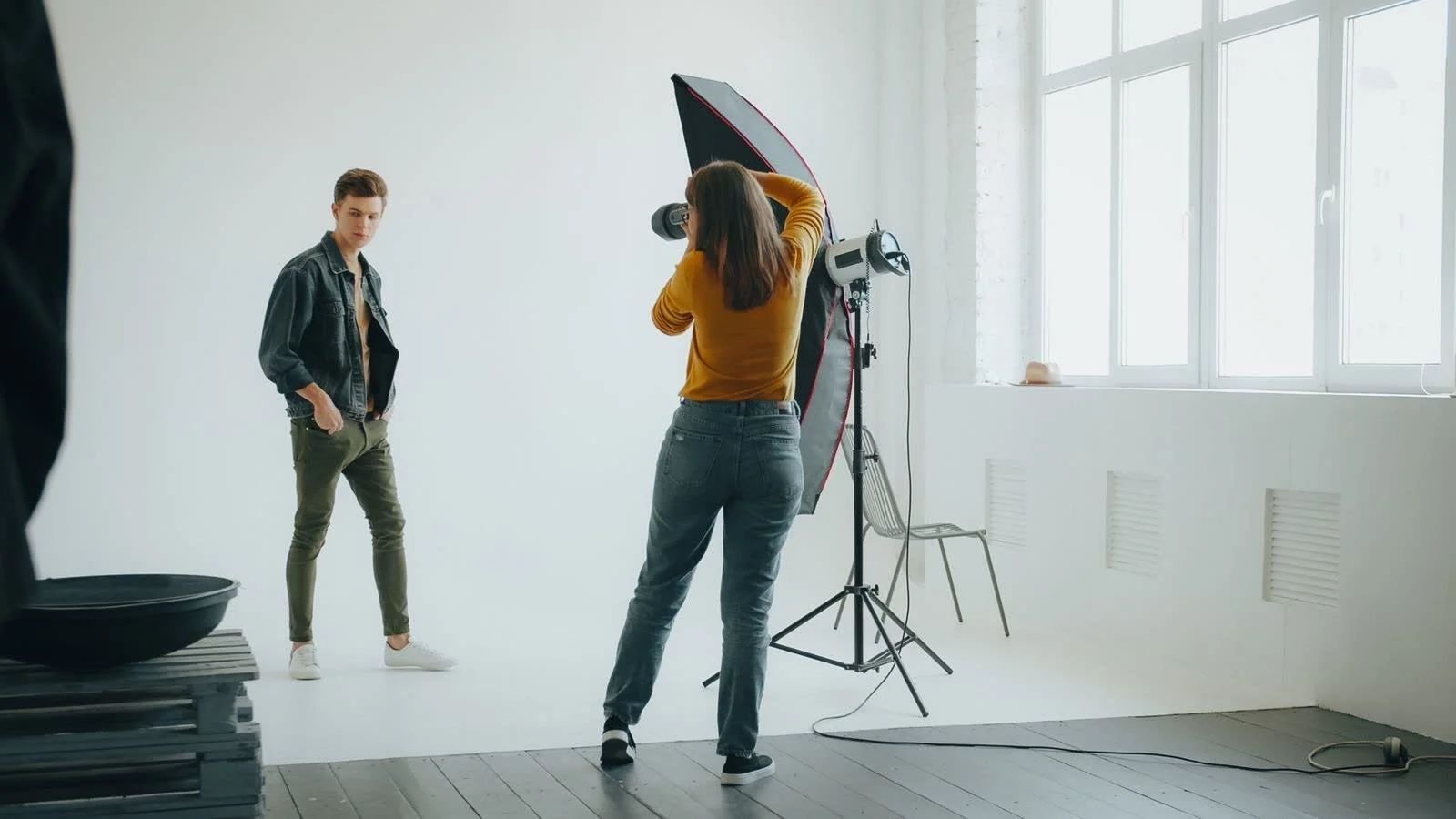
Why This Matters to Anyone Who Sits for a Portrait
Here is what nobody in the AI headshot business wants to say out loud: right now, people can tell the difference between AI images and real photography. And it matters, because people want things that are real. Anything fake is manufactured, and it shows inauthenticity.
A headshot is a first impression you control. When a casting director, a hiring manager, or a client looks at your photo, they are deciding whether to trust you. A generated image tells them you could not be bothered to show up as yourself. That is a strange message to lead with when the whole point is to be believed.
My clients understand this instinctively. No client has ever chosen an AI headshot over hiring me, and I think they are too afraid to even mention AI headshots. Whoever comes to me is not thinking about AI headshots. They want the real thing, because the real thing is the point.
There is a reason for that. The people who hire me are making high-stakes first impressions: actors going out for roles, executives raising capital, founders pitching investors. They cannot afford to look manufactured. An AI headshot might pass on a small phone screen, but it collapses the moment anyone looks closely, and everyone in a position to hire you looks closely. Authenticity is not a luxury in those rooms. It is the entry fee.
Where I Draw the Line on AI
People ask me if I use AI. I use Photoshop to edit the background. That is craft: my photo, my decisions, my eye, with software as the tool.
There is a canyon of difference between that and generating a person who never sat in front of a lens. One is photography with modern tools. The other is fiction with a familiar face. I know which one I am selling, and so do my clients.
People confuse the two because both involve a computer. But retouching starts with a real moment: real light on a real face, a real expression I directed in the room. The craft is in the decisions. Generation starts with a prompt and produces a person who was never there. One is a photograph. The other is an illustration of a photograph that does not exist.
The Theft Nobody Asked Permission For
Here is the part that should anger every working photographer. AI companies trained their image generators on millions of photographs without asking the photographers and without paying them. A photographer's style is their own. It should not be copied, and it should not be used by companies for their own financial gain while the photographer is not compensated.
Think about what "in the style of" means when a generator offers it. It means the model studied enough of a photographer's decisions, their lighting, their composition, their retouching, to reproduce their look on demand. That is not inspiration. That is automation of someone else's choices, trained on work they were never paid for.
The court's ruling does not fix this overnight. But it establishes the principle that will decide the cases to come: training on someone's work to compete with them is not fair use. It is just taking.
And here is what the AI companies will not tell you: they are already quietly changing their behavior. Licensing deals between AI companies and large publishers have been announced across the industry. The companies paying for licenses are implicitly conceding what the others deny in court: that the underlying material has owners, and owners get paid. The photographers with organized, registered, well-documented archives will be the ones positioned to collect. The ones with a hard drive full of unnamed files will not.
What I Tell Young Photographers
I would tell any young photographer that the best thing they can do is learn how to use AI. AI is just a tool.
I know this because I have lived it. When the digital camera arrived, I was the first to adopt it. My camera was 2.1 megapixels. Two point one. People laughed. But because I moved first, I had no competition, and I made a lot of money. I was very profitable. If I had been afraid of new technology, I would be nowhere.
The photographers who will struggle are not the ones competing with AI. They are the ones pretending it does not exist. Learn the tools. Understand what they do well and what they cannot do. Then go do the thing they cannot do: show up, direct a human being, and make a portrait that is true.
When I picked up that 2.1 megapixel camera, the established photographers called it a toy. They were right about the resolution and wrong about everything else. The camera was not the point. Being first to understand what the new tool made possible was the point. AI is the same test, administered again. The photographers who study it now will be the ones with no competition in two years.
Technology has never been the enemy of the photographer who adapts. The enemy is standing still.
Will the Ruling Change Anything?
Yes, I believe it will. We definitely need more laws, and we need protection for our own copyright. AI cannot just be going all over the place, taking what it wants.
Laws move slowly, but they move. This ruling gives every photographer negotiating a license, every publisher setting terms, and every artist watching their style get strip-mined something concrete to point to. The direction is set. The details will follow.
None of this requires believing AI image generation has no legitimate uses. It requires believing that the people whose work powers the models get a say in how that work is used. That is not a radical position. It is the position every licensing deal in the history of photography has taken. The only thing new is a set of companies asking to skip the negotiation.
Five Years From Now
I have no idea. It is such a mystery to me. Hopefully people still use photographers, but I do not even know what is going to happen.
Here is what I do know. In 27 years, I have watched film die, digital arrive, camera phones eat the low end, and social media rewrite the business twice. Every wave was supposed to end photography. Every wave ended with the photographers who adapted charging more, not less.
The through line is trust. A real portrait is evidence that you showed up, that a skilled human saw you and made decisions about how to present you. No generator can produce that evidence, because no generator was in the room. As long as people need to be believed, they will need photographers.
The Bottom Line
AI headshots are fake, and fake is a choice. It tells the viewer exactly what you think of them: that they are not worth the real thing.
A federal court just confirmed that the work AI companies built their models on belongs to the people who made it. The technology will keep evolving, and photographers should evolve with it. But the foundation does not change. Real work, made by real people, owned by the people who made it.
If you want a headshot that is actually you, you know where to find a headshot photographer in Los Angeles. I will be in the room, camera in hand, like always.