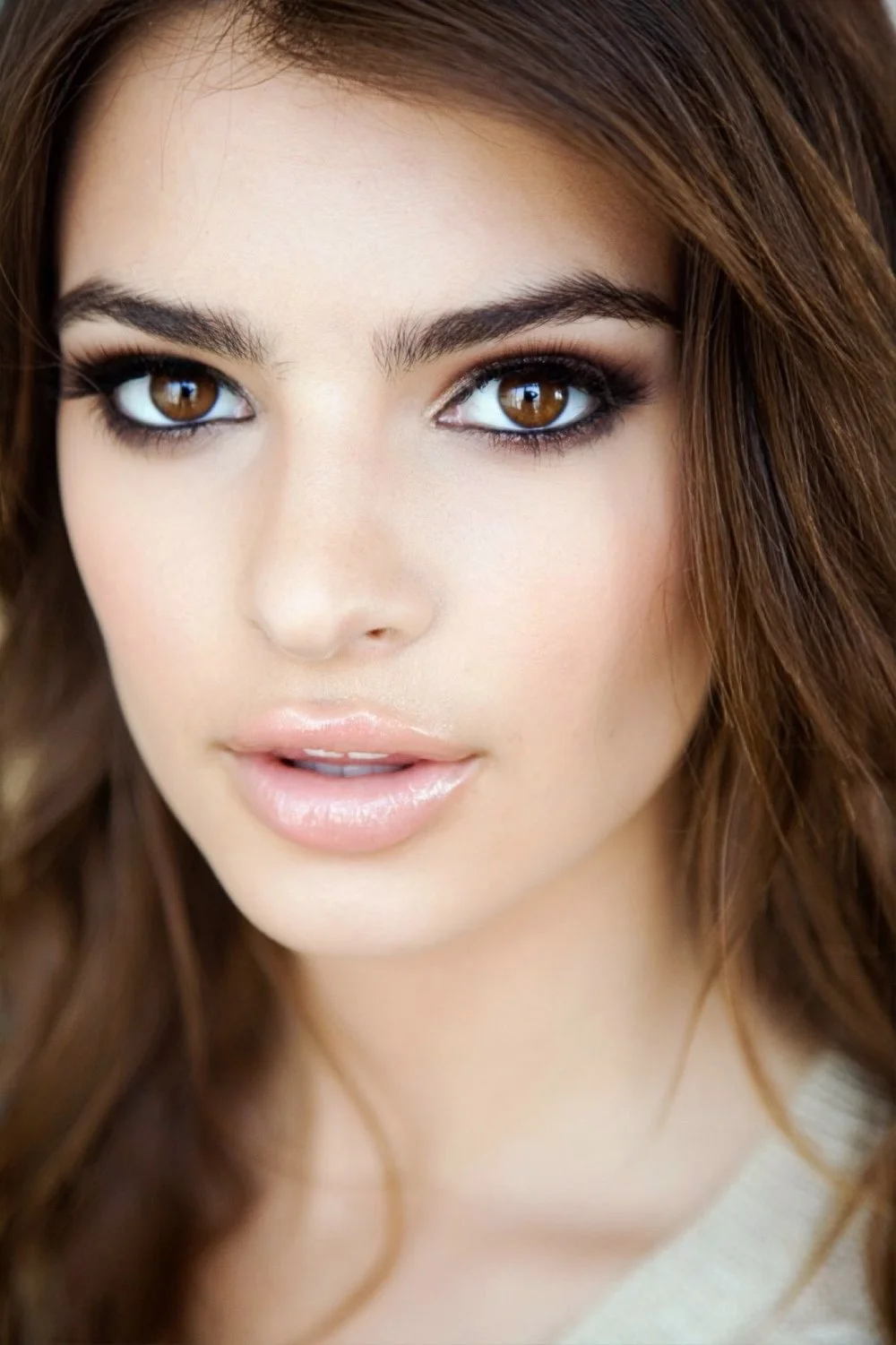
Nobody sets out to take an iconic portrait. You set out to survive the shoot, get the light right, and hope the subject gives you thirty honest seconds. Iconic happens later, when the image outlives the moment it was taken in.
After 27 years of photographing celebrities, I have stopped believing iconic is about gear, sets, or retouching. It is about something much simpler and much harder: the truth of the encounter. Here are the portraits that taught me that, and what they have in common.
Iconic starts before anyone knows
In 2007, a Universal Music publicist arranged for me to interview and photograph a brand-new artist at Area Nightclub in West Hollywood. "She's going to be the next Madonna," the publicist told me. Her name was Lady Gaga, and at the time, nobody else knew it.
It was just the two of us in an empty club. No publicist hovering, no entourage, no schedule. She wore a black Stella McCartney dress, a pink vintage Chanel scarf, and sunglasses. I directed her to sit on a couch, knees together, feet apart. We talked. I shot.
Eleven years later, Vaja took me to the Grammys, and afterward we ended up at a party where Gaga was with Mark Ronson. I reintroduced myself and showed her that 2007 portrait on my phone. We danced onstage together. I have no photograph of myself with her from either night.
That is the first secret: the most enduring portraits are often taken before the fame, when the subject has nothing to protect yet. There is no performance because there is no audience. The camera meets the person, not the persona. If you ever get the chance to photograph someone early, take it seriously. You may be holding the "before" picture the whole world will want later.
Iconic is permission, not direction
At Quincy Jones's cement ceremony at the TCL Chinese Theatre, I walked up to Snoop Dogg with my Leica M10-P and asked him to step a few feet into better light. His manager shut it down on the spot.
Snoop looked at the manager, looked at me, and said he would follow me because I was the man. We moved into the soft light. He loved the shoot so much he walked Usher over afterward and told him to listen to me.
Here is what actually happened in that exchange: a man who is photographed ten thousand times a year decided, in about three seconds, that I was safe. Not talented. Safe. The manager was doing his job, protecting the asset. Snoop overruled him because something in my approach told him this would be easy.
That is what makes a portrait iconic more often than any lighting setup. The subject's guard drops, and for a few frames, you get the person instead of the pose. You cannot buy that moment. You earn it by being calm, direct, and fast. Usher listened to my direction that day because Snoop told him to, but the portraits worked because both of them relaxed.
If you are commissioning a portrait, this is what to look for in a photographer: not the portfolio's gloss, but evidence that strangers trust them quickly.
Iconic is trust over time
Some portraits become iconic because of a single session. Others become iconic because the photographer and the subject built something across years.
I first photographed Emily Ratajkowski when she was 16, booked through Next Models for a brand called Key Closet. Her father came to the set because she was underage. We shot in a downtown Los Angeles penthouse near Staples Center. She became the face of the brand, and I booked her four more times, later shoots with Aston Martins and other exotic cars.
Watch what happens across a series like that: the stiffness leaves, the subject starts collaborating instead of posing, and the images get better every time. The fifth shoot is always better than the first. Iconic bodies of work are rarely one frame. They are relationships.
My very first celebrity subject taught me the same thing from the other direction. April Wilkner, from cycle two of America's Next Top Model, was about my tenth shoot ever. I had met her at San Francisco Fashion Week and booked her for my own project, TDink. We shot at a designer's atelier in the Mission District. I was a kid with more nerve than skill, and she was generous with both. Every long career starts with someone saying yes before you deserve it.
Iconic is play
In 2019 I photographed Bella Thorne at her Sherman Oaks house, the "Trippy Twins Funhouse," for a lip-plumper commercial. She offered me a McDonald's Chicken McNugget when I arrived, which tells you most of what you need to know about the energy on that set.
I had brought a Leica M10 and a Hasselblad H6D. Bella got curious about the Hasselblad, this big 100-megapixel machine, and started photographing me while I photographed her. So the session became a trade: portraits going both directions.
Those are the frames people remember, because play reads on camera. A subject who is having fun stops managing their face. The portraits from that day have a looseness you cannot direct into someone. You can only create the conditions for it: show up relaxed, bring interesting tools, and let the subject be a person instead of a prop.
Iconic is restraint
Linda Hamilton told me she only had new headshots taken about every ten years. A full decade between sessions. We shot at her home in Point Dume, Malibu: three looks, about an hour, earthy colors, an Alien Bee kit with a battery pack. Nothing elaborate.
Then I printed the photographs and drove back to her house with an album. She chose five images and gave me a $2,500 tip.
There is a lesson in the simplicity. When a subject of that caliber sits for you once a decade, the temptation is to overproduce, to justify the occasion with scale. The right move is the opposite: get out of the way. Three looks, one hour, honest light. The portraits endure because they are her, not a concept of her.
Restraint is the most underrated skill in portrait photography. Anyone can add. Knowing what to leave out is the job.
What the iconic portraits share
Looking back across 27 years, the portraits that lasted all have the same four qualities:
Intimacy. The Gaga shoot was two people in an empty club. The Hamilton shoot was one hour at her home. Small rooms make big portraits.
Trust. Snoop overruled his manager. Bella picked up my camera. Trust is visible in the frame, every time.
Timing. Photograph people early, photograph them often, and be ready when the unplanned moment arrives.
Restraint. The best frame is usually the simplest one. Serve the subject, not your portfolio.
Gear matters less than all of this. I have made lasting portraits on a 2.1-megapixel point-and-shoot and on a 100-megapixel Hasselblad. The camera records. The encounter is what the image is made of.
Commission a portrait
I am David Christopher Lee, a celebrity photographer in Los Angeles and New York with 27 years of portraits behind me. See how to hire a celebrity photographer in Los Angeles and what 27 years taught me, then get in touch to talk about your shoot.
Related reading
- What to Wear for a Celebrity Photoshoot
- How to Hire a Celebrity Photographer in Los Angeles
- How Much Does a Celebrity Photographer Cost?
FAQ
What makes a celebrity portrait become iconic? Intimacy, trust, timing, and restraint. The portraits that endure are usually simple, honest encounters where the subject's guard dropped, not elaborate productions.
Is expensive camera gear required for iconic portraits? No. Lasting portraits have been made on everything from a 2.1-megapixel point-and-shoot to a 100-megapixel medium format camera. The encounter matters more than the equipment.
How should I prepare for a celebrity portrait session? Keep it simple: a clear concept, a comfortable subject, and a photographer the subject trusts. The best preparation is choosing the right photographer, then getting out of their way.