One of the questions I receive more than almost any other is, “How much does portrait photography cost?” On the surface, it seems like a straightforward question. You need a portrait, you hire a photographer, they take your picture, and you pay them. But after spending the last 27 years photographing celebrities, Fortune 500 executives, physicians, entrepreneurs, artists, and public figures around the world, I can tell you that portrait photography is one of the most misunderstood investments people make.

Understanding Pricing and Budget Expectations Before Hiring
If you’ve searched online, you’ve probably seen photographers charging anywhere from $200 to well over $20,000 for what appears to be the same service. Naturally, people wonder why one photographer costs ten or twenty times more than another. The answer is that they are not selling the same thing.
Photography is not about owning a camera. Cameras have become incredibly affordable and technologically advanced. Almost everyone carries one in their pocket. Portrait photography is about experience, vision, storytelling, psychology, lighting, branding, and the ability to communicate someone’s identity in a single image.
The better question is not, “How much does portrait photography cost?”
The better question is, “What am I investing in?”
Your Portrait Is Often More Important Than Your Resume
Whether you’re a physician, attorney, CEO, entrepreneur, consultant, actor, or artist, your portrait is often your first introduction to the world.
Long before someone meets you, they’ve already visited your website, looked at your LinkedIn profile, read an article about you, or viewed your social media. Before they read a single sentence about your accomplishments, they’ve already formed an opinion based on your photograph.
Human beings make decisions quickly. We instinctively evaluate whether someone appears trustworthy, confident, approachable, intelligent, successful, or authoritative within seconds.
Your portrait is communicating all of those qualities before you ever speak.
I’ve worked with entrepreneurs who later built companies worth millions of dollars. Their portraits became part of their public identity and appeared on websites, investor presentations, press releases, magazine articles, and conference materials. Those images quietly worked for them every day by establishing credibility and building trust.
When viewed through that lens, portrait photography is not an expense. It is an investment in your personal brand.
Why Portrait Photography Prices Vary So Much
The reason portrait photography pricing varies so dramatically is because experience varies dramatically.
Two photographers may own identical cameras and identical lighting equipment, yet produce completely different results.
The camera does not create the photograph.
The photographer does.
Over the course of my career, I’ve traveled to more than 40 countries and photographed people from every imaginable background. I’ve worked in luxury hotels, corporate offices, magazine studios, private homes, red carpets, fashion shows, and outdoor locations around the world.
Every assignment taught me something.
Every difficult situation expanded my ability to solve problems.
Every client improved my understanding of people.
Experience creates instincts that cannot be learned from YouTube videos or weekend workshops.
When I walk into a room, I immediately recognize where the best light is coming from. I know how different colors will affect skin tones. I know which backgrounds strengthen the image and which ones distract from it. I know how different lenses change facial proportions. I know how to make someone who hates being photographed look relaxed and confident.
Those instincts come from thousands of photoshoots.
That is what clients are paying for.
You’re Hiring a Creative Consultant
Many people believe they are hiring someone to press a button.
In reality, they are hiring a creative consultant.
Every portrait should answer a question.
Who are you?
What do you stand for?
Why should someone trust you?
Those answers are communicated visually.
The wardrobe communicates personality.
The lighting communicates emotion.
The expression communicates confidence.
The environment communicates context.
The composition communicates sophistication.
Every creative decision contributes to the story.
My role is to understand the client’s goals and translate those goals into visual language.
If I’m photographing a physician, the portrait should inspire confidence and compassion.
If I’m photographing a startup founder, it may need to communicate innovation and leadership.
If I’m photographing an artist, it should reveal creativity and individuality.
The portrait should reflect the authentic identity of the person, not simply document what they look like.

Storytelling Is the Difference Between a Snapshot and a Portrait
I’ve always believed that the greatest portraits tell stories.
Anyone can document a face.
Very few photographers reveal a personality.
When someone looks at a great portrait, they immediately begin making assumptions about the subject.
They understand what kind of person they are.
They understand what they value.
They understand their purpose.
The clothing, expression, posture, lighting, background, and composition all work together to create that narrative.
This is why I spend so much time thinking before I ever raise the camera.
Photography is not about capturing reality.
It is about interpreting reality.
The Details That Most People Never Notice
People often ask what I’m thinking about during a portrait session.
The answer is almost everything.
While talking with the client and directing the session, I am simultaneously analyzing dozens of variables.
I’m studying the direction of the light.
I’m looking at the client’s posture.
I’m adjusting the angle of their shoulders.
I’m checking for wrinkles in clothing.
I’m noticing stray hairs.
I’m watching their hands.
I’m evaluating facial tension.
I’m looking for distracting objects in the background.
I’m considering perspective, symmetry, color harmony, and composition.
Most clients never notice these things.
They simply notice that one portrait feels significantly stronger than another.
Professional photography is really the art of paying attention.
The best images are created through hundreds of tiny decisions rather than one dramatic one.
Working With People Is Harder Than Working With Cameras
One of the greatest skills I’ve developed has nothing to do with technology.
It has everything to do with people.
Some clients walk into a session feeling confident.
Others are extremely uncomfortable.
Some naturally know how to pose.
Others freeze the moment the camera points in their direction.
Part of my responsibility is creating an environment where people feel relaxed enough to reveal their authentic personality.
That process starts long before the first photograph.
Sometimes we’ll spend fifteen or twenty minutes simply talking.
We discuss their business, their family, their goals, and what they hope the images will communicate.
Those conversations build trust.
The portrait becomes stronger because the connection becomes genuine.
Photography is ultimately about relationships.
The camera simply records them.
Lessons Learned From Twenty-Seven Years Behind the Camera
Looking back over my career, one lesson stands above everything else.
Practice matters.
Early in my career I had the opportunity to spend months photographing multiple models every day. Shooting constantly forced me to think quickly, adapt to changing conditions, and experiment creatively.
There is no substitute for repetition.
Every photoshoot presents new problems.
The weather changes.
The light changes.
People change.
Locations change.
The photographer who has experienced these situations before already knows the solution.
That confidence allows creativity to flourish instead of panic.
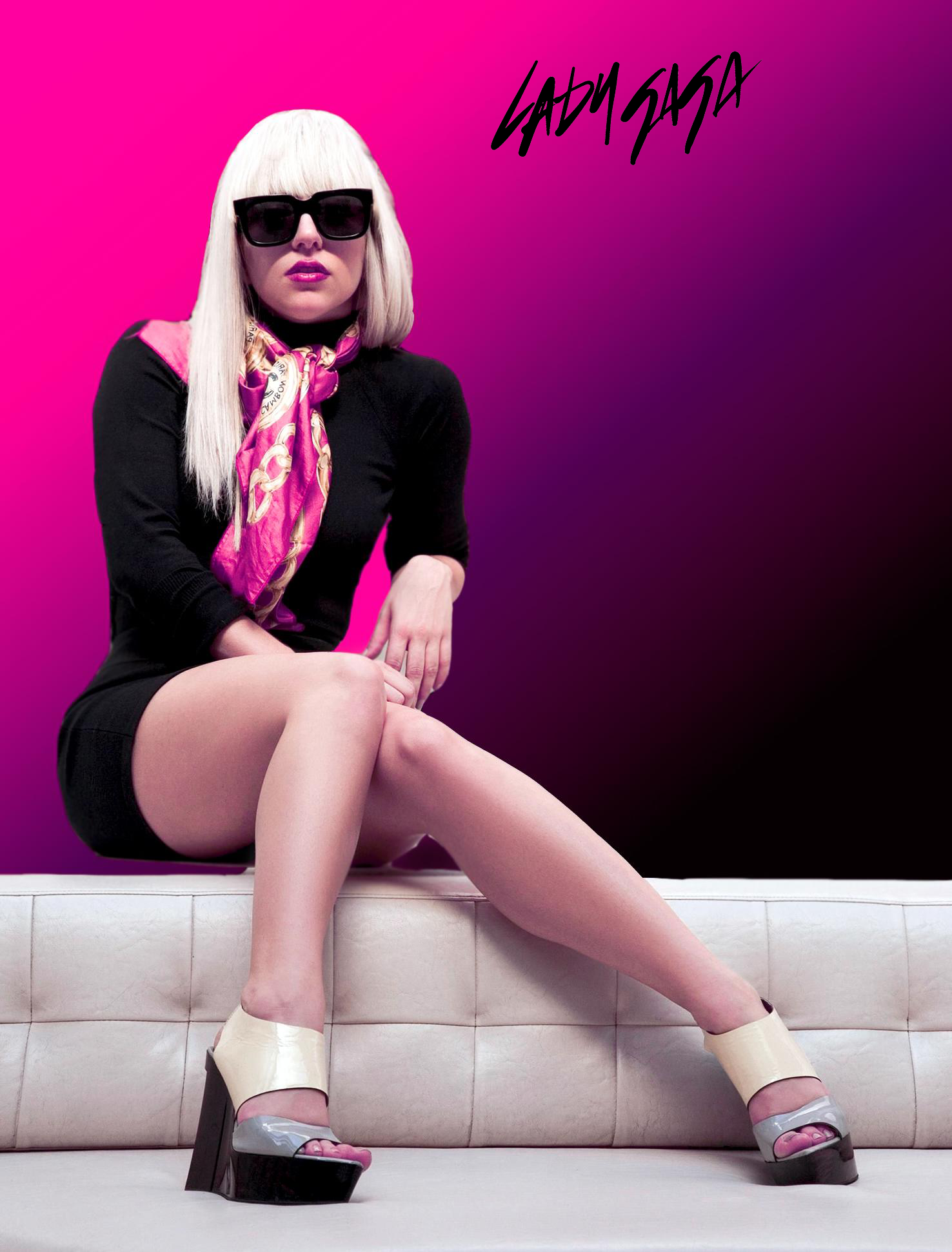
Photographing Lady Gaga Before She Was Famous
One of the most memorable sessions of my career involved an unknown musician named Lady Gaga.
There was no major production.
No entourage.
No elaborate crew.
It was simply the two of us creating photographs.
The images eventually became her first photos published in People magazine.
At the time, neither of us knew what the future would bring.
What I remember most is her commitment to creativity and authenticity.
Great portraits often capture people before the rest of the world discovers them.
Photography preserves moments that later become history.
That is one of the reasons I continue to love what I do.
Why Cheap Photography Can Be Expensive
Everyone loves saving money.
But sometimes choosing the least expensive option costs more in the long run.
I’ve seen executives spend years using weak portraits that undermine their credibility.
I’ve seen entrepreneurs launch companies with branding that failed to communicate professionalism.
I’ve seen actors submit portfolios that failed to showcase their range.
The cost of replacing poor photography is often greater than investing in quality photography from the beginning.
More importantly, the opportunities lost because of a weak first impression can never be measured.
One investor who chooses not to schedule a meeting.
One client who selects another company.
One magazine editor who passes on a feature.
First impressions matter.
How to Prepare for Your Portrait Session
The best portrait sessions begin before the camera comes out.
Preparation is one of the biggest contributors to success.
Every client receives wardrobe guidance because clothing plays a significant role in visual storytelling. Colors, textures, fit, and style all influence perception.
For larger branding projects, I often recommend hiring a wardrobe stylist to create a cohesive visual identity.
Clients should also think about how they want to be perceived.
Do they want to appear approachable?
Sophisticated?
Creative?
Authoritative?
Luxury-oriented?
Those answers shape every creative decision we make.
The clearer the vision, the stronger the final portraits become.
What Is Included in My Portrait Sessions
Every assignment is customized because every client has unique goals.
Most portrait sessions average approximately thirty minutes per look, allowing enough time to create a variety of expressions and compositions without feeling rushed.
Each look generally produces around thirty images for review.
Some projects require very little planning.
Others involve location scouting, concept development, wardrobe styling, production teams, and extensive creative direction.
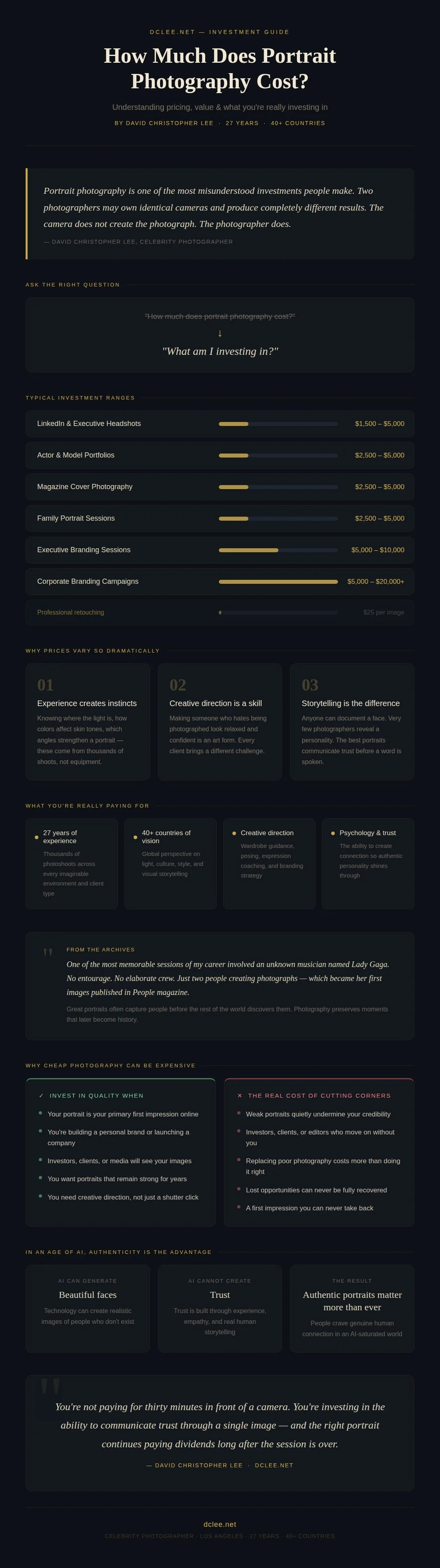
Professional retouching is available for twenty-five dollars per selected image, allowing clients to choose exactly which portraits they would like refined.
The process is designed to provide flexibility while maintaining the highest quality standards.
Typical Investment for Professional Portrait Photography
Every project is unique, but most professional portrait photography falls within several common ranges.
LinkedIn and executive headshots typically range between $1,500 and $5,000.
Executive branding sessions generally range from $5,000 to $10,000.
Actor and model portfolios often range from $2,500 to $5,000.
Magazine cover photography generally falls between $2,500 and $5,000.
Corporate branding campaigns typically range from $5,000 to $20,000 or more depending on production requirements.
Family portrait sessions generally range between $2,500 and $5,000.
Pricing depends on the complexity of the project, the intended usage of the images, creative direction, production requirements, and the overall goals of the client.
Artificial Intelligence Has Made Authentic Portraits Even More Valuable
Technology continues to evolve at an incredible pace.
Smartphones produce remarkable images.
Artificial intelligence can generate faces that never existed.
Editing software can transform photographs with a single click.
Ironically, these advances make authentic portrait photography even more valuable.
People crave genuine human connection.
They want authenticity.
They want to know there is a real person behind the business.
Technology can generate beautiful faces.
It cannot create trust.
Trust is built through experience, empathy, communication, and storytelling.
Those qualities remain uniquely human.
Choosing the Right Photographer
When selecting a portrait photographer, don’t simply compare prices.
Compare philosophies.
Compare consistency.
Compare storytelling ability.
Ask whether the photographer understands branding.
Ask whether they can direct people naturally.
Ask whether they have experience working with clients similar to you.
Most importantly, ask yourself how their images make you feel.
The right photographer will create images that not only look beautiful but also communicate your identity with honesty and purpose.
Final Thoughts
People often ask me how much portrait photography costs.
After nearly three decades behind the camera, I believe the answer has very little to do with money.
You’re not paying for thirty minutes in front of a camera.
You’re investing in twenty-seven years of experience.
You’re investing in thousands of photoshoots.
You’re investing in lessons learned across more than forty countries.
You’re investing in creative direction, storytelling, psychology, technical mastery, and the ability to communicate trust through a single image.
Anyone can take a photograph.
Very few people can create a portrait that changes the way the world sees you.
That is the true value of professional portrait photography, and that is why the right portrait continues paying dividends long after the session is over.