Every October, the same thing happens in family photography. The calendar fills up with inquiries from parents who waited too long to book a full session, and suddenly every photographer in town is racing to fit them in. Christmas mini sessions exist for exactly this moment. Done right, they are not a discount product. They are the highest revenue per hour you will shoot all year.
A Christmas mini session is a short, themed portrait session, usually 10 to 20 minutes, shot at a set location you choose, with multiple families booked back to back on the same day. The video below breaks down the business system behind them: photographers running mini sessions can book 4 to 6 sessions per hour and generate $4,000 to $10,000 in a single day, according to the photography business educator PhotographyXLence. This guide covers the full playbook: pricing for profit, a 15-minute scheduling system, a set that sells out your dates, marketing that fills slots before you announce publicly, day-of workflow, and the upsells where the real money lives.
Watch the video first, then read the breakdown.

In this guide:
- What a Christmas Mini Session Actually Is (and What It Is Not)
- Why Holiday Mini Sessions Are the Most Profitable Hours of the Year
- Price Them Like a Business, Not a Sale
- The 15-Minute Scheduling System
- Build a Set That Sells Out Your Dates
- Marketing That Fills Dates Before You Announce Publicly
- The Day-Of Workflow
- Upsells: Where the Real Profit Lives
- My Take: Discipline Scales, Talent Does Not
- Frequently Asked Questions
What a Christmas Mini Session Actually Is (and What It Is Not)
The number one mistake photographers make with mini sessions is treating them like a cheap version of a full session. SLR Lounge puts it plainly: mini sessions are not regular photo sessions offered at a cheaper rate, because that approach undermines your value and sets unrealistic expectations.
A real Christmas mini session has defined boundaries: 10 to 20 minutes long; one location, chosen by you, styled for the holidays; one look, no outfit changes; 3 to 10 included images, depending on your pricing model; quick delivery dates, in time for holiday cards.
Everything else, the families, the energy, the styling, is up to you. But those constraints are what make the format profitable. You are selling a tight, joyful, efficient experience, not a watered-down portrait session. Communicate the differences clearly on your booking page and enforce them on shoot day.
Why Holiday Mini Sessions Are the Most Profitable Hours of the Year
Here is the math that makes photographers take this format seriously. Per the video, 10 to 20 minute mini sessions let you book 4 to 6 clients per hour, and a well-run mini session day can generate $4,000 to $10,000 in revenue. SLR Lounge's scheduling guidance lands in the same place: 15-minute sessions scheduled in 20-minute increments let you book 3 clients every hour, which maximizes revenue per hour.
Compare that to a full session day. A traditional family session takes 60 to 90 minutes plus travel, plus a longer edit. You might shoot two or three in a day. With minis, you shoot twelve to eighteen families in the same hours, and your per-hour revenue climbs dramatically because the fixed costs, the set, the location, the marketing, are spread across every booking.
Demand is also on your side. SLR Lounge notes that the holiday time frame of late October through November typically has the highest demand and the most potential for profit of any mini session season. Families need holiday cards, gifts for grandparents, and a current family photo before the year ends. That urgency is built into the season. You do not have to manufacture it.
One more profit driver that beginners miss: mini sessions are a client acquisition channel. SLR Lounge reports that some clients may never afford a full session but come back every year for holiday photos, while others experience your mini sessions and book you for full family sessions later. Every December booking is also a January lead.
Price Them Like a Business, Not a Sale
Pricing is where mini sessions are won or lost. The video's central pricing lesson is direct: use profit-goal pricing, charge what your time is actually worth, and never compare yourself to the $50 photographers.
Start with your cost of doing business, then run the per-hour math. The principle is universal: your mini session price must make you significantly more per hour than a full session does, or the extra coordination is not worth it. Factor in the full workflow: set design and props, location fees or permits, marketing, booking and communication, the shoot day itself, and then culling and editing twelve to eighteen galleries instead of two or three.
SLR Lounge describes three pricing models photographers typically use: Shoot and burn (one price includes all final full-resolution images, usually 5 to 20 for a mini; simple, predictable, no upsell pressure); IPS, in-person sales (a low sitting fee, often $50 to $100, then clients buy images individually or as prints; higher ceiling, but the revenue is not guaranteed); Hybrid (a mid-range session fee includes 1 to 5 images, and clients pay per image for the rest; the most common choice for holiday minis).
Whichever model you choose, resist the urge to undercut. A mini session priced at $149 with 20 included images and free delivery is not a marketing strategy. It is a very long, very tiring way to make very little money. Price for the hour, not for the fear that nobody will book. Limited slots and a strong set do the selling; the price just has to be defensible. If you are still calibrating your rates generally, my guide on how to raise photography prices for 2027 walks through the same profit-goal thinking applied to your full pricing structure.
The 15-Minute Scheduling System
The schedule is the product. SLR Lounge recommends booking 15-minute mini sessions in 20-minute increments, which gives you 3 sessions per hour. Rebecca Rice, the family photographer interviewed on the ShootProof blog, runs her sweet spot as 15-minute sessions back to back in blocks of two to three hours, with a 5-minute break between each session to sanitize, reset the set, and breathe before the next family walks in.
A few scheduling rules that protect your profit and your sanity: Book 2 to 4 dates, not one (SLR Lounge recommends at least 2 different dates, since you are already building the landing pages, payment system, and marketing assets). Shoot in October and November (late October through November is the peak demand window; the ShootProof marketing timeline lays out the ideal sequence: design the set and photograph models in August, launch marketing in September, shoot in October, hold sales presentations in November, deliver in December. If you have not started, start now; October is still prime shooting month). Take deposits and automate booking (the video's advice is blunt: automated booking plus deposit collection eliminates cancellations and saves hours of admin every week). Have a rain date and a backup location (put the rain date in the contract and every client communication; SLR Lounge also advises having a backup location scouted).
Build a Set That Sells Out Your Dates

Your set is your marketing. Families book what they can picture themselves in, so the set has to photograph beautifully and read as unmistakably holiday without looking cluttered.
Keep it to one theme and one setup. Popular themes that book year after year include classic Christmas, winter wonderland, and rustic holiday, and the ShootProof blog notes that red vintage truck setups have been genuine best-sellers for some photographers. But you do not need a truck. Rebecca Rice's simplest hit setup was a gray couch with a wreath hung over it. Tasteful and simple outsells elaborate and chaotic, because the family stays the subject.
Practical set rules: Props in service of the family, not the other way around (blankets, a tree, ornaments, wrapped gifts, string lights; every prop should give the family something to do or somewhere to sit). Test the set under your actual shooting light (shoot the empty set at the same time of day you will shoot clients). Light it like you mean it (a single strobe through a large modifier gives you the soft, flattering, consistent look that keeps eighteen galleries cohesive and keeps your editing fast; my breakdown of a one light portrait setup shows how much you can do with one light, which is exactly the kind of repeatable lighting a mini session day demands). Keep a simple kit (camera, a 24-70mm range zoom, batteries, memory cards, permits, the printed schedule, and attention-grabbing toys or lights for the kids; long days punish heavy kits).
And the single best set investment, per the ShootProof blog: photograph a real family in it for your promo images. Rebecca Rice's advice is that minis are far more likely to book when the marketing shows a real family instead of just the empty setup. Trade a free session to photogenic friends or past clients in exchange for image use, and your marketing will outsell every other photographer showing an empty backdrop.
Marketing That Fills Dates Before You Announce Publicly
The video's marketing sequence is the one to follow: start selling holiday sessions early, give your VIP email list exclusive first access, and limit the number of slots so scarcity does the converting. SLR Lounge backs this up with a blunt assessment: the most effective marketing for mini sessions is likely email marketing, because your previous clients already know you and your work, and your lost leads, the inquiries that never booked, are warm prospects a mini session can recapture.
The order of operations:
- Email your list first (past clients and past inquiries get early access, ideally with a booking deadline; this is where most of your slots should fill).
- Then go to social (Facebook and Instagram posts, stories, and targeted local ads if you have the budget).
- Then go local (post in local Facebook groups, email your inquiry list, and partner with a local business that can promote you, like a Christmas tree farm or a children's boutique; one good local partner can fill a date).
- Keep urgency honest (limited dates and limited slots are real constraints, so say so).
Start the public push in September for October and November dates. The families who book holiday sessions are planners and procrastinators in roughly equal measure. The planners book in September. The procrastinators book when they see the slots disappearing.
The Day-Of Workflow
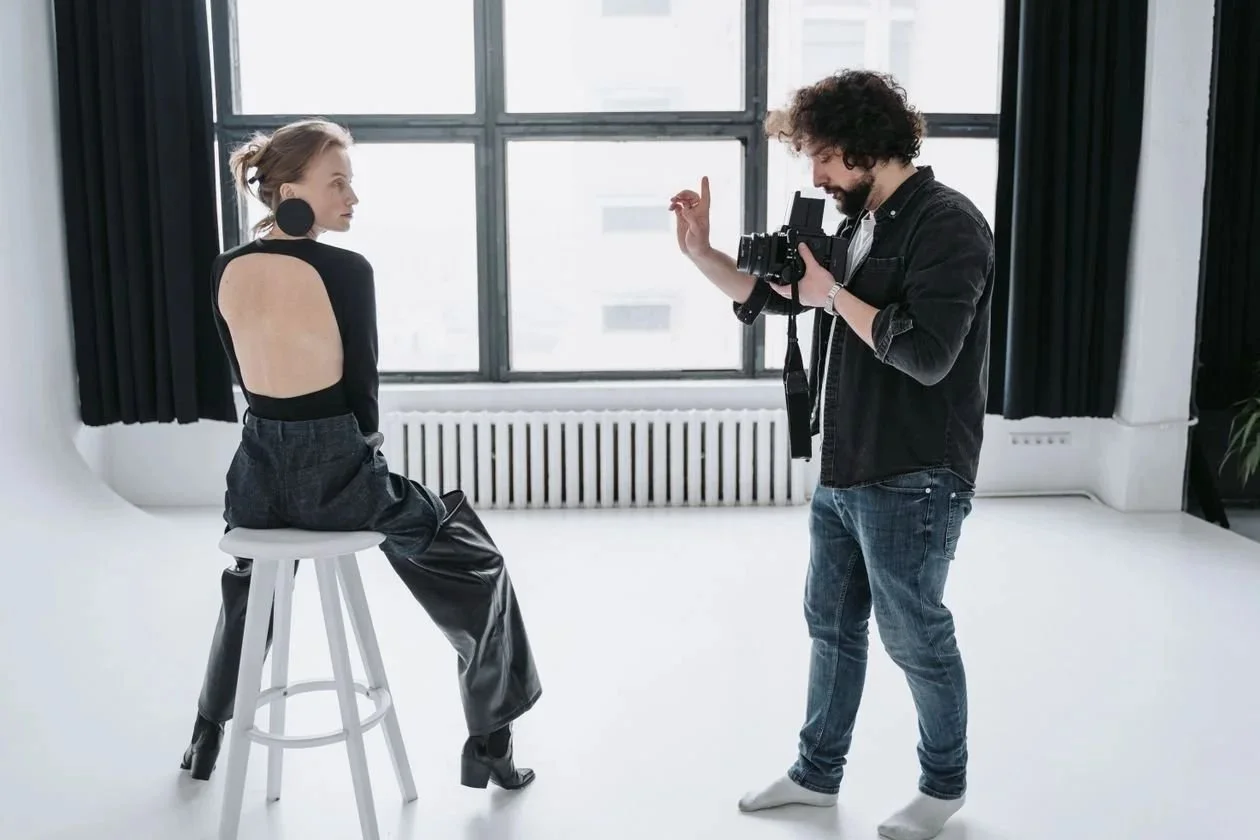
A mini session day is a production, and productions run on checklists. The most important discipline, per SLR Lounge, is to plan your shots before the session. Fifteen minutes leaves no room for creative wandering, so get the must-have photos first and improvise only after they are in the can. Their recommended shot sequence: the entire family looking at the camera full body (the most important photo, show it on the back of the camera for approval before moving on), the family looking toward the center, each child individually, the kids as a group, action poses like walking or laughing, and the parents together if time allows.
On the posing side, keep it simple and keep it moving. Bruna Rico, the Toronto portrait photographer quoted on the ShootProof blog, poses her clients first and then asks them to tell each other jokes, give tickles, and share a big family hug. Pose, then play. The posed frame is the deliverable; the play is where the genuine expressions happen.
Between sessions, cull. Rating or starring your keepers in the five-minute reset windows means the post-production mountain is a hill by the time you get home. Then batch your editing: shoot in manual mode with a locked white balance, apply your preset, sync settings across each time block in Lightroom, and resist detailed retouching on every frame. SLR Lounge's guidance is explicit: do not overdo the edits, keep advanced retouching as a quoted add-on, and keep your delivery dates quick. In the holiday season, fast delivery is part of the product. Families are ordering cards.
Upsells: Where the Real Profit Lives
The session fee gets clients in the door. The upsell is where a $200 mini becomes a $600 order. Rebecca Rice's model on the ShootProof blog is the template: her minis include five digital images with a print release, and she up-sells the additional digital images. Clients who see fifteen beautiful photos of their children do not want five. They want all of them.
The highest-converting holiday upsells: Additional digital images, priced per image or in bundles (this is the single biggest lever). Holiday cards (ideally one template, one size, one paper, ordered through a pro lab with fast turnaround like Miller's, WHCC, or Mpix; keep the offering simple, complexity kills holiday orders). Prints, ornaments, and gift items for grandparents (have samples on hand at the sales presentation so clients can see the quality difference from drugstore prints). A guided sales presentation, in person or virtual, instead of a passive online gallery link (the ShootProof blog highlights photographers whose gently guided presentations consistently produce exciting sales; showing the images large, to music, with you guiding the choices, converts at a completely different rate than an email with a gallery link).
Schedule the sales presentations for November so products and cards deliver in time for Christmas. And when the client comes to pick up their order, keep selling gently: a small card with a limited-time offer on a full family session turns a mini client into a next-year client.
My Take: Discipline Scales, Talent Does Not
I will be honest about where I sit on this topic. I have never built my business on Christmas mini sessions. My calendar for 27 years has been editorial portraits, celebrity sittings, and commercial work, the kind of assignments where one subject gets the full day. So I am not going to pretend I ran forty minis last December and netted five figures.
But I have spent 27 years on sets where the schedule was the whole game. Magazine days with six setups and a hard out. Event coverage where you get ninety seconds with a subject who is already walking away. Press lines where the light is terrible, the background is chaos, and the photo still has to be good. Every one of those situations taught me the same lesson that makes mini sessions work: discipline scales, talent does not.
Early in my career I learned that craft comes from volume and repetition. I wrote in my book about developing my craft through a massive amount of practice, doing the work consistently, over and over, until I discovered what I was good at and perfected it. That is the entire mini session business in one sentence. The photographers who make real money in December are not the most artistic ones. They are the ones with the tightest system: the set that is ready before the first family arrives, the shot list they can run in their sleep, the booking page that takes deposits without a phone call, the editing preset that makes eighteen galleries look like one.
There is one more thing the business guides will not tell you. Running a high-volume day well is a craft skill in itself. Keeping your energy up for the twelfth family. Making the shy kid laugh on cue at 4:40 in the afternoon when you have been directing since 9. Delivering the same care to the last session that you gave the first. That is not a marketing tactic. That is professionalism, and it is what turns a one-time mini client into someone who books you for the wedding, the headshots, the campaign. The session is 15 minutes. The reputation is permanent.
If you are a photographer thinking about adding holiday minis this year, start with the system, not the set. Price it like a business. And if you are a family in Los Angeles looking for portraits this season, you know where to find me.
Frequently Asked Questions
Q: How long is a Christmas mini session?
A: Most Christmas mini sessions run 15 to 20 minutes. SLR Lounge recommends scheduling 15-minute sessions in 20-minute increments, which lets a photographer book 3 sessions per hour while leaving a buffer to reset between families.
Q: How many photos do you get from a mini session?
A: Typically 3 to 10 edited images are included in the session price, depending on the photographer's pricing model. Most photographers offer additional images for purchase, and the upsell on extra photos is one of the most profitable parts of the format.
Q: How much should I charge for holiday mini sessions?
A: Charge based on profit-goal pricing, not on what the cheapest photographer in your market charges. Your mini session rate should earn you significantly more per hour than a full session does, once you account for set design, marketing, the shoot day, and editing a dozen or more galleries. Common structures are shoot-and-burn (one price, all images), IPS (low sitting fee plus per-image sales), or a hybrid of the two.
Q: When should I start selling Christmas mini sessions?
A: Earlier than you think. The video recommends starting to sell holiday sessions as early as July to fill your peak season before competitors begin promoting. A practical timeline: design the set and shoot promo models in August, launch marketing in September, photograph the sessions in October and November, and hold sales presentations in November so cards and prints deliver before Christmas.
Q: Are mini sessions actually profitable?
A: Yes, when priced and scheduled correctly. With 15-minute sessions booked back to back, photographers can shoot 3 to 6 families per hour, and a single well-run mini session day can generate $4,000 to $10,000 in revenue, according to the business breakdown in the video. The keys are profit-goal pricing, limited slots, an efficient day-of workflow, and upsells on additional images and holiday products.
Planning your holiday portraits, or are you a photographer who wants to see how a working pro runs a set? I shoot portraits, editorial, and commercial work in Los Angeles and worldwide. Book a session or get in touch here.
What is the one thing holding you back from running holiday mini sessions this year? Leave a comment below.