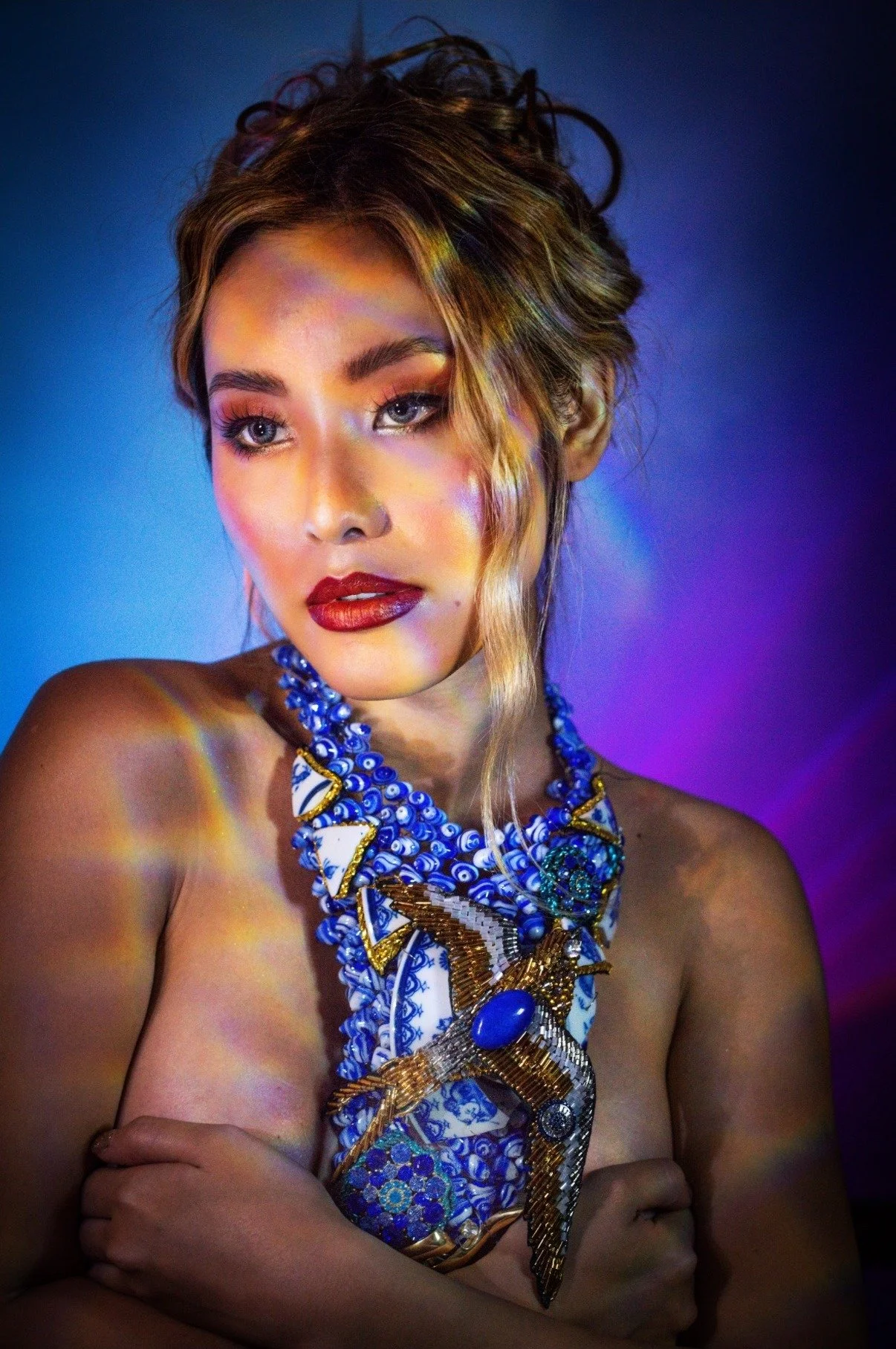
Jewelry photography is the most technically unforgiving work I do. A diamond is a few millimeters of engineered light, and your job is to photograph light itself. A watch is a machine with a hundred parts, and every one of them has to read in the frame. Get it right and the piece looks priceless. Get it wrong and a $50,000 necklace looks like costume jewelry.
I've shot fine jewelry in Los Angeles for years, including full editorial productions built around entire collections. Here's how it actually works: the two kinds of jewelry photography, the lighting that makes or breaks it, and what to look for when you hire someone.
The two kinds of jewelry photography
Every jewelry job falls into one of two buckets, and they require completely different skills.
Product jewelry photography is the catalog work: clean, precise, brutally honest images on white or neutral backgrounds for e-commerce and print. The piece fills the frame, every facet is sharp, the color is accurate. This is macro photography at its most demanding. You're focus stacking, sometimes combining dozens of exposures, because at that magnification the depth of field is measured in fractions of a millimeter. Dust you can't see with your eyes shows up like boulders. Metal reflects everything, including you, so the shooting environment gets tented and controlled down to the last reflection.
Editorial jewelry photography is the fantasy: the necklace on a model in a couture gown, the watch on a wrist against a dramatic location, the campaign image that makes someone feel something. The jewelry still has to look perfect, but now you're also directing a model, managing a location, styling wardrobe, and telling a story. The technical bar doesn't drop. It just shares the frame with art direction.
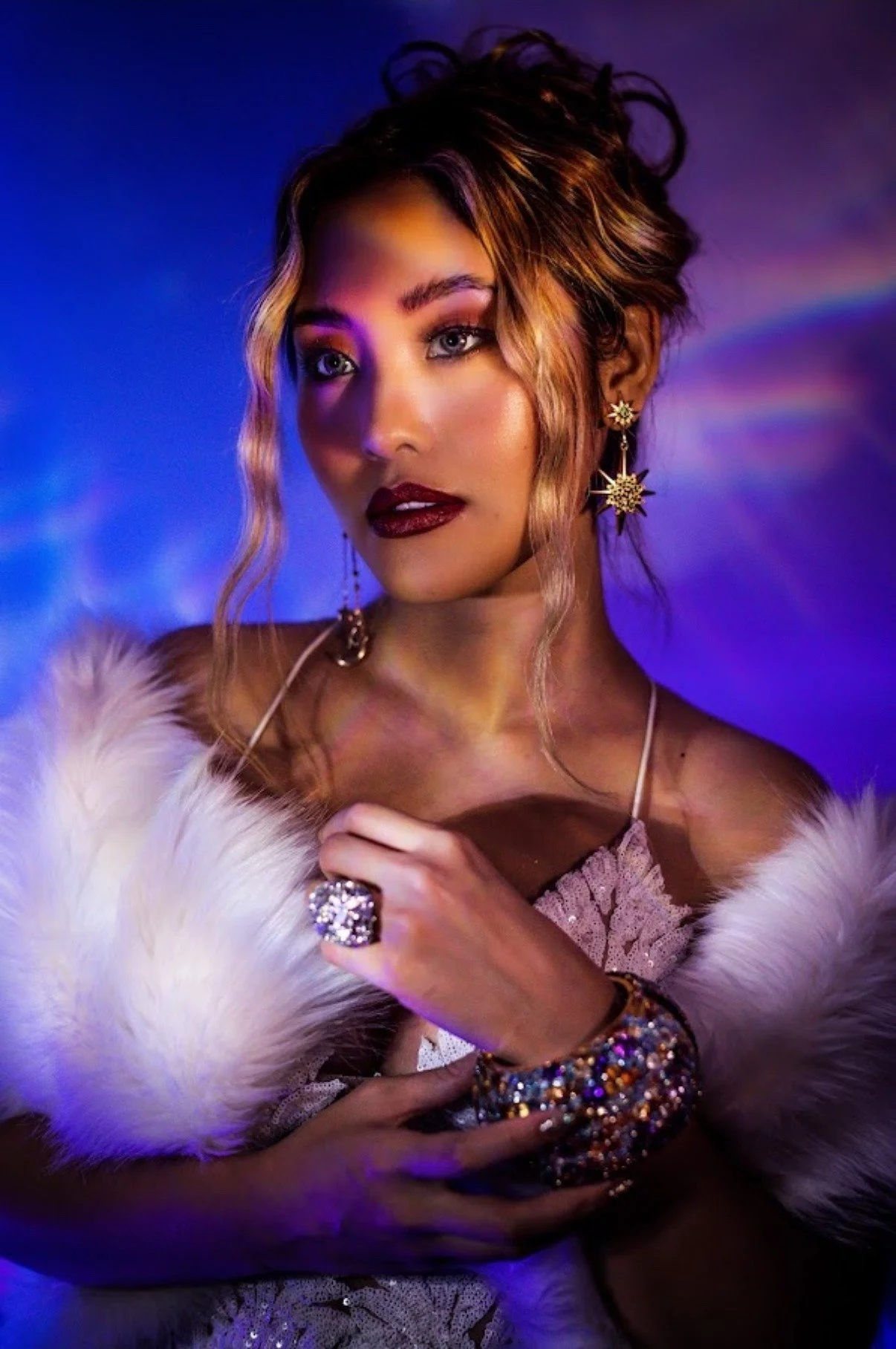
Ana Reign at an $87 million Beverly Hills palace
One of my favorite jewelry shoots was for the line Ana Reign, at a friend's parents' estate in Beverly Hills, an $87 million hilltop palace with walls bought from the Getty. We did an edgy shoot with multiple models in couture gowns, moving through the gardens and room after room of the house. For each piece, I used a tiny spotlight to make the jewelry pop against the dark, moody setting. Jewelry photography is light control: the stone only shines if everything around it is disciplined.
A story from the field: the Ana Reign shoot
The most ambitious jewelry shoot I've done was for the Ana Reign jewelry line, staged at a friend's parents' estate in Beverly Hills, an $87 million hilltop palace with walls bought from the Getty. It was an edgy, high-fashion production: multiple models, couture gowns, the gardens and the many rooms of the estate as our sets.
The concept was simple and demanding. Each piece of jewelry got its own tiny spotlight, a precise point of light in the middle of these grand, moody spaces. The diamonds had to ignite against the darkness. We moved through the garden and room after room, resetting that little universe of light for every piece, every model, every look.
That shoot taught me the central truth of editorial jewelry work: you're lighting two subjects at once. The model needs to look beautiful in the ambient scene. The jewelry needs a dedicated light source that makes the stones come alive. One light can't do both jobs. You build the scene light for the mood, then you add the jewelry light like a jeweler's loupe made of photons, and you balance them until the piece sings without the model going flat.
Lighting: where jewelry photography lives or dies
If product photography is about honesty and editorial is about fantasy, both run on the same physics. Gemstones are transparent. They don't have a surface the way a face does. They redirect light, and your lighting design is really a plan for which redirections the camera will see.
The classic setup uses multiple small, hard light sources instead of one big soft one. Big soft light flatters skin and makes diamonds look dead. Small hard sources create the sharp sparkle and defined facet reflections that make stones look alive. Each light gets flagged, shaped, and positioned to put exactly one highlight where you want it and nowhere else.
For watches, add the dial problem. A watch face is glass over a detailed dial, and it reflects everything. You light the dial through diffusion, kill the reflections with careful flagging, and often composite: one exposure for the dial, one for the case, one for the hands, blended in post. A great watch photo is usually three to five photographs wearing a trench coat.
Working with models and jewelry together
Editorial jewelry shoots add a human variable to an already technical job. Models move. Jewelry doesn't forgive movement. The model's job is to hold positions that show the piece to camera while looking effortless, which is genuinely difficult. A necklace sits differently when the chin lifts two degrees. A bracelet catches light only at certain wrist angles.
Direction matters enormously here. I talk models through the geometry: where the piece is, where the light is, which micro-movement makes the stones flare. The best jewelry models develop an instinct for it, a sense of when the piece is "on." Until then, it's the photographer's job to watch the jewelry like a hawk while directing the human like a portrait.
Security is the unglamorous part nobody photographs. Fine jewelry on location means insurance, handling protocols, and sometimes a guard. Pieces get signed in and out. Nothing sits unattended. On the Ana Reign shoot, the collection's value meant every move was tracked. That's normal for this work, and any photographer who treats a six-figure necklace casually is telling you everything about their professionalism.
Retouching jewelry: invisible precision
Jewelry retouching is a specialty within a specialty. The work is microscopic: dust removal, scratch repair on metal, evening out gold tones, cleaning reflections that slipped through. The rule is that nobody should be able to tell it was retouched. The piece has to look exactly like itself, only perfect.
What you don't do is reshape stones, invent sparkle that wasn't there, or change the color of the metal. Jewelry photography is a commercial document. If the customer receives a piece that doesn't match the photo, that's a return and a reputation problem. Honest retouching removes distractions. It never invents the product.
How to hire a jewelry photographer in Los Angeles
LA has no shortage of photographers who'll say yes to a jewelry job. Far fewer can actually do it. Here's how to tell them apart.
First, look at the macro work in the portfolio, not just the pretty campaign images. Zoom in mentally. Are the facets sharp? Is the metal clean? Are the reflections controlled or chaotic? Bad jewelry photography is obvious at full size, and that's the size your customers will see.
Second, ask about their lighting approach for stones specifically. A real jewelry photographer will talk about small hard sources, flagging, and facet control without hesitating. Someone who says "we'll figure it out on the day" hasn't shot enough jewelry.
Third, for editorial work, ask about their experience directing models with jewelry. It's a distinct skill from fashion direction. You need someone who watches the piece, not just the pose.
Fourth, ask about insurance and handling. A professional working with fine jewelry carries appropriate coverage and has a handling routine. This conversation should be boring and reassuring.
Frequently asked questions
How much does jewelry photography cost in Los Angeles? It varies widely by scope. Simple product shots are typically priced per piece or per day, while editorial productions with models, locations, and styling are quoted per project. Get an itemized quote that separates the photography from production costs like models, styling, and location.
What's the difference between product and editorial jewelry photography? Product photography is clean, precise catalog imagery on neutral backgrounds for e-commerce. Editorial photography places the jewelry on models in styled scenes for campaigns and lookbooks. Product work demands macro precision; editorial work adds direction, location, and storytelling.
How long does a jewelry shoot take? Product shoots can cover a surprising number of pieces per day once the lighting is dialed in, but intricate pieces slow things down. Editorial shoots run like fashion productions: a full day for a handful of looks is normal.
Do I need a specialist, or can my product photographer shoot jewelry? Jewelry is genuinely specialized. The macro technique, the lighting physics of transparent stones, and the retouching are all distinct skills. A general product photographer can learn them, but for fine jewelry, hire someone whose portfolio proves they already have.
What should I prepare before a jewelry photography shoot? Have every piece cleaned and polished, with any clasps or mechanisms working. Provide a shot list prioritizing hero pieces. For editorial work, confirm models, wardrobe, and location in advance, and arrange insurance and secure handling for anything valuable.
The bottom line
Jewelry photography is photography at its most precise. The stones demand lighting designed around physics, the metal demands reflection control down to the millimeter, and editorial work demands all of that plus a living, breathing human in the frame. When you're hiring, look past the pretty pictures and check the macro work, ask about the lighting, and confirm the boring stuff like insurance. The photographer who sweats those details is the one whose images will make your pieces look like what they're worth.
About the author: David Christopher Lee is a Los Angeles jewelry photographer and celebrity photographer with 27 years of experience shooting fine jewelry, editorial campaigns, and red carpets. Get in touch.