Every photographer with a camera calls themselves professional. The word is on every website, every business card, every quote. But when you're hiring someone to cover a conference your CEO is keynoting, or to shoot the portraits that will live on your company's leadership page for five years, "professional" needs to mean something specific.
I've been a professional corporate photographer in Los Angeles for 27 years — conferences, summits, award galas, executive portraits, brand days. Over that time I've watched clients learn the hard way what the word is supposed to mean. Here's the real definition: the business marks, the working marks, and the pricing signals that separate an actual professional corporate photographer from someone who just owns good gear.

"Professional" starts with the business, not the camera
This is the part nobody photographs, and it's the first thing to check.
A professional corporate photographer runs a real business. That means a written contract for every job — not a handshake, not a DM saying "yeah I can do Saturday." The contract should spell out the deliverables, the number of edited images, the delivery date, the usage rights, the cancellation terms, and the payment schedule. If any of those are missing, you're not hiring a professional; you're hiring a person with a camera who hasn't dealt with a dispute yet.
Insurance matters too. Liability insurance and equipment coverage. It rarely comes up in the sales process, which is exactly the point — a professional carries it so you never have to think about it. If your venue requires a certificate of insurance (many LA hotels and convention centers do), a professional corporate photographer produces one without blinking. An amateur asks you what that is.
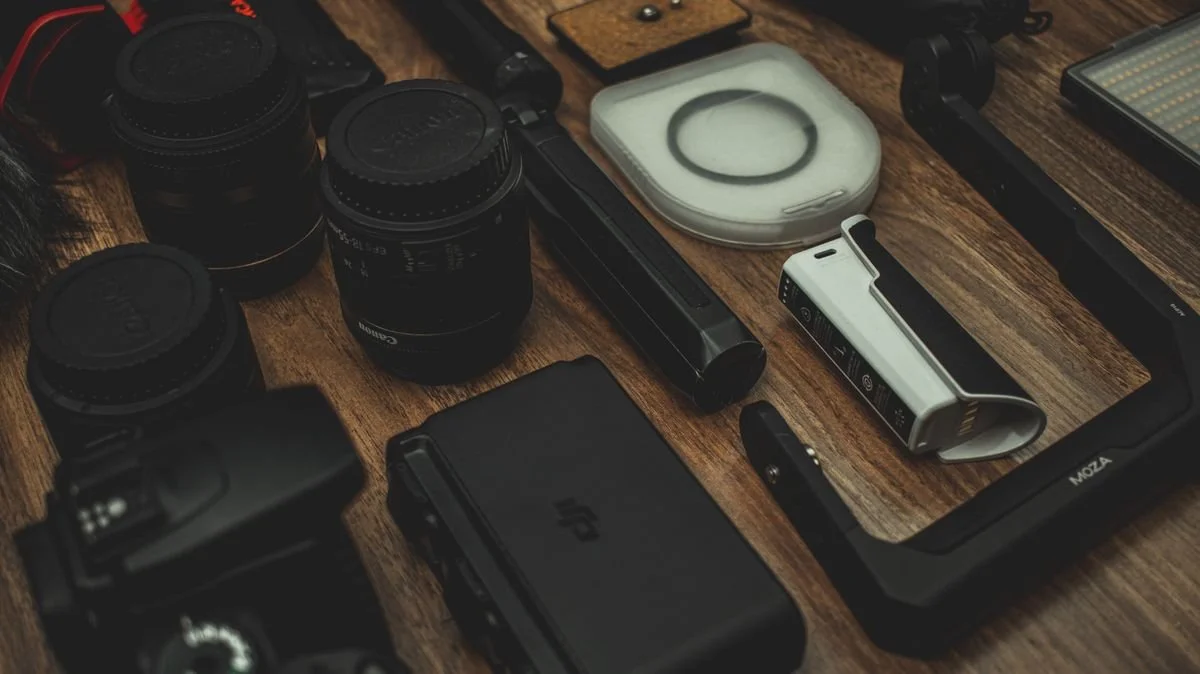
Then there's the backup question, and it's non-negotiable: two camera bodies minimum, backup lenses, backup lighting, backup storage cards, a plan for what happens if gear fails mid-event. I have never once had a shoot where both bodies were needed — but the client paying for certainty doesn't care about my track record. They care that the plan exists.
Ask on the first call: "Do you send a contract?" "Do you carry liability insurance?" "What's your backup gear plan?" The answers should come fast and specific. Hesitation on any of them is a no.
The working marks: what professionals do before and after the shoot
Here's where the real separation happens. The business marks keep you safe; the working marks are what you're actually paying for.
A professional starts with a planning conversation.
Before a corporate event, a professional corporate photographer wants your run of show, your list of key people, your sponsor signage priorities, and your shot list. If the first real conversation happens when they walk into the venue, they were planning to wing it. The shot list isn't micromanagement — it's how you make sure the breakout session your biggest client hosted doesn't get missed because the photographer was getting coffee.
A professional delivers usable assets, not homework.
Receiving 800 unorganized files in a single folder is not a deliverable. A professional organizes the final gallery by event segment — keynotes, panels, networking, sponsor activations, headshots — with a naming system your marketing team can use immediately. Ask how assets arrive and how fast: same-day or 24–48-hour selects for press and social, full gallery within 5–10 business days. Vague timelines ("usually about two weeks, depending") mean your recap email waits on their schedule, not yours.
A professional communicates like a vendor, not a freelancer.
One point of contact. Confirmed arrival times. A walkthrough or venue scouting plan for unfamiliar spaces. A clear answer to "what happens if it rains" for outdoor shoots. The whole experience should feel managed — because it is.
I shot a three-day summit once where the client's marketing director told me on day three that she'd forgotten I was there. That's the compliment professionals chase: the work gets done, the images land on schedule, and nobody on your team had to think about photography at all.

What professional corporate photographers charge — and what the price means
Let's talk money, because price is where "professional" gets tested against reality.
In the Los Angeles market, established professional corporate photographers charge in the range of $200 to $500 per hour, with full-day conference coverage typically landing between $1,500 and $4,000 per day. Executive portrait sessions price per person or per half day. Detailed quote comparisons matter: get the full picture of corporate event photography pricing in Los Angeles before you decide what "expensive" means.
Here's what those numbers actually buy: the business infrastructure above, the planning time before the shoot, the editing time after it, and the experience to handle the dark ballroom, the moving keynote speaker, and the group photo of 400 people without breaking a sweat.
Two pricing signals to read carefully:
Suspiciously low prices. A "professional" corporate photographer charging $100 an hour in Los Angeles is either not actually running a business (no insurance, no contracts, no backup gear — the math doesn't work otherwise) or cutting corners you'll discover at delivery. Underpricing is the most honest signal that the business marks are missing.
Opaque quotes. A professional gives you a written quote that itemizes what's included: hours, number of edited images, second shooters, turnaround, usage rights. "It depends, let's just do it and see" is not a pricing structure. For context on what professional day rates cover and how usage fees work, The Image Crafters' commercial photography pricing guide breaks down how working pros structure day rates versus usage — the same logic behind corporate quotes. Get it in writing, every time — my full guide on how to hire a corporate photographer in Los Angeles walks through what the contract should cover.
Red flags: when "professional" is just a word
Walk away from any of these, no matter how good the portfolio looks:
- No contract, or a contract that doesn't mention usage rights. The clause that causes the most post-event fights. Professionals license images with clear terms; amateurs improvise.
- Stock photos in the portfolio. If you can't tell whether the images are theirs, assume they aren't. Professionals show complete, recent, real work.
- "Unlimited photos." Professionals deliver a defined number of edited images. "Unlimited" means an unedited dump you'll never sort through.
- Full payment upfront. A 50% retainer to hold the date is standard. 100% before the shoot is not.
- No backup plan. One camera body, no second shooter for a multi-track event, no answer to "what if your gear dies." The absence of a plan is the plan failing.
- Portfolio only shows easy conditions. Bright outdoor portraits and styled shoots are the low bar. Look for the hard stuff: dark hotel ballrooms, mixed stage lighting, big groups, moving subjects. That's where professionalism shows.
The one-call test: verify professionalism in 15 minutes
You don't need a procurement process. One call, five questions:
- "Have you shot an event like mine? Can I see a complete delivery from it?" Not highlights — the full set. You're checking for consistency across hundreds of frames.
- "Walk me through your planning process." You're listening for shot lists, run-of-show review, and a pre-event call. Winging it shows up in the answer.
- "What's included in the quote, exactly?" Hours, edited image count, second shooter, turnaround, usage terms. Itemized or it isn't real.
- "What's your backup plan?" Gear, personnel, weather. Two sentences minimum.
- "When do I get the images, and how are they organized?" Same-day or 48-hour selects, full delivery in 5–10 business days, organized by segment. Specificity is the tell.
A professional corporate photographer answers all five without pausing. An amateur stalls on at least three of them. You don't need to know anything about photography to run this test — you just need to listen for the specifics.
Frequently asked questions
What does "professional corporate photographer" actually mean?
It means someone who runs photography as a real business: written contracts, liability insurance, backup equipment, structured planning, defined deliverables and timelines, and transparent pricing. The word describes the operation, not just the skill.
How do I verify a corporate photographer is actually professional?
Ask for a contract, proof of insurance, a complete recent delivery from a similar event, and specifics on turnaround and asset organization. Professionals answer immediately and in detail.
Should a professional corporate photographer cost more?
Usually, yes — the business infrastructure (insurance, backup gear, contracts, planning time, editing) is built into the rate. But price alone isn't proof. Run the five-question test above before you trust the number.
What's the difference between a professional photographer and a good photographer?
A good photographer takes great pictures. A professional takes great pictures reliably, under contract, on schedule, with backup gear, and delivers them organized and on time. Reliability is the product.
The bottom line
"Professional corporate photographer" isn't a style — it's a standard. Contracts, insurance, backup gear, real planning, organized delivery, and a quote you can read without a decoder ring. The photographer who meets that standard might cost more than the hobbyist with the nice website, but the hobbyist is the one who costs you the reshoot, the missed sponsor shot, and the gallery your team can't use.
Hire the operation, not the portfolio. The portfolio is the promise; the operation is what delivers it. If you're building a shortlist, Clutch's corporate photography services guide offers an independent checklist of vetting criteria — expertise, range of services, equipment, fees, and communication — worth cross-referencing against any photographer you're considering.
About the author: David Christopher Lee is a Los Angeles professional corporate photographer with 27 years of experience shooting conferences, product launches, award galas, and executive portraits. Read the hiring guide → · Executive headshot services → · Get in touch →