What an On-Site Headshot Booth Actually Is
An on-site headshot booth is a small portrait studio built inside your event. One photographer, one backdrop, one or two lights, and a sign-up list. Attendees step in between sessions, spend about five minutes in front of the camera, and leave with a finished professional headshot.
It is not a photo booth with props. Nobody is wearing oversized sunglasses or holding a sign that says CEO of Fun. It is a working portrait station, and the output is the same quality of portrait you would get in a studio session. The difference is scale: one studio, dozens or hundreds of people, one event day.

How a Headshot Booth Works at a Corporate Event
The setup
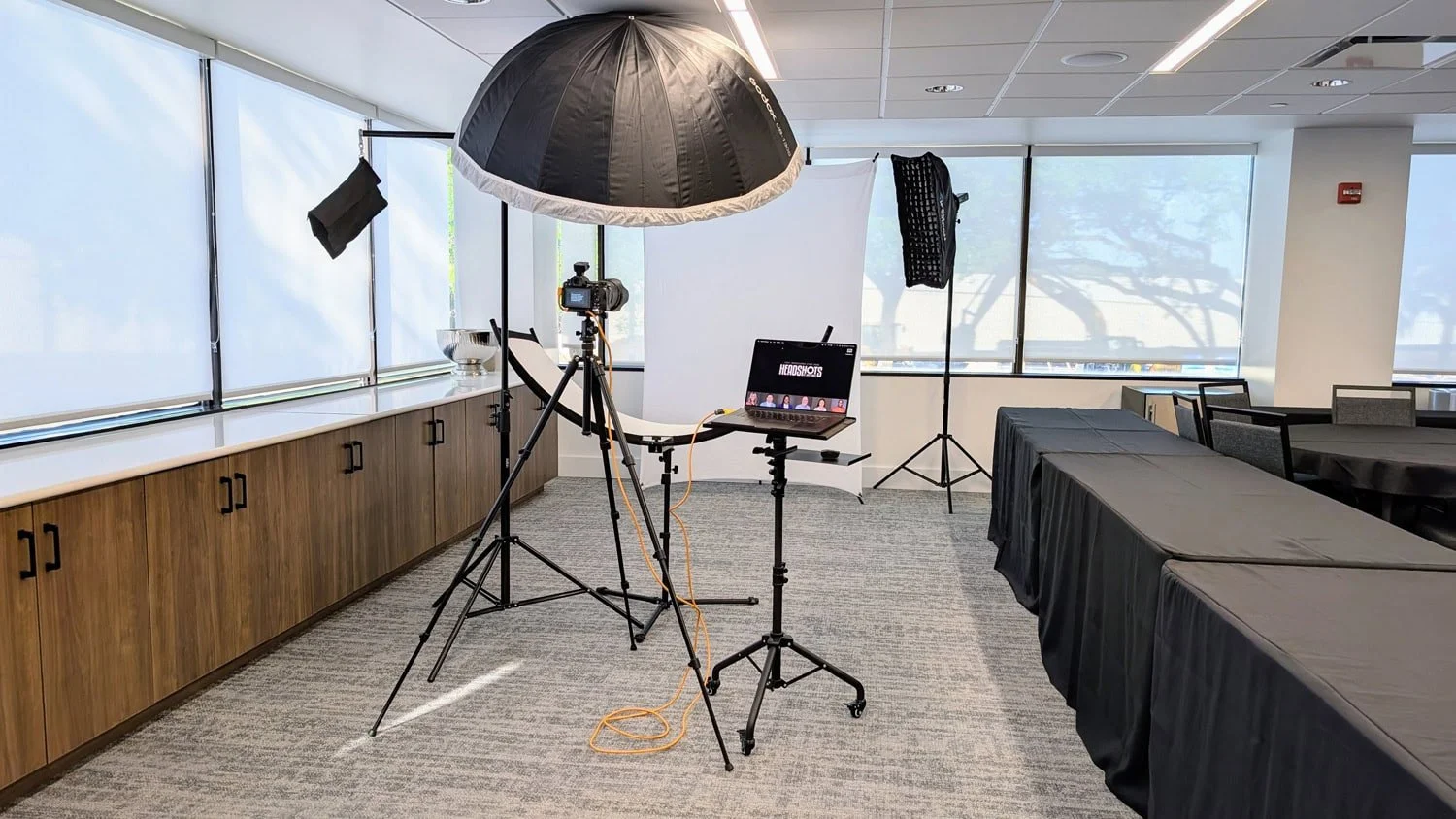
The booth goes in a breakout room, an unused suite, or a roped-off corner of the ballroom. The photographer brings a collapsible backdrop, usually gray, white, or a brand color, plus studio strobes or affordable LED panels that pack into a couple of rolling cases. A tethered laptop lets attendees preview their frames and pick a favorite before they leave.
Setup takes about 30 to 45 minutes. A 10 by 15 foot area is enough, plus room for a short queue outside the door. If the room has a window wall, the photographer will position the backdrop to control the ambient light so it stays consistent from the first sitter to the last.
The sign-up flow
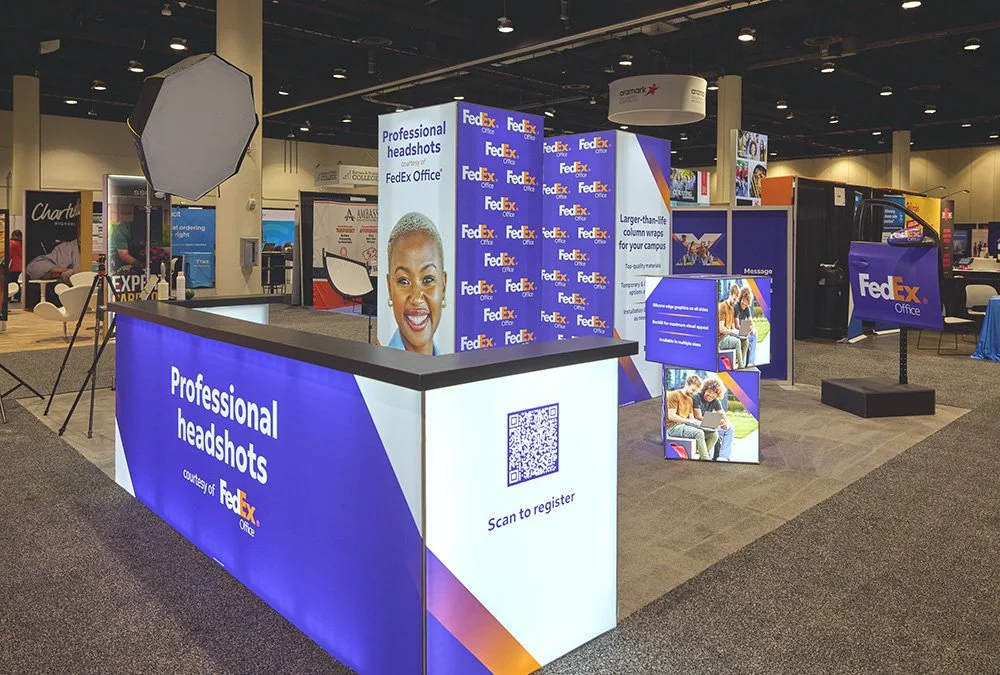
Most events run one of three flows. Pre-registration through a shared sign-up sheet or the event app. Walk-ins during breaks, first come first served. Or a hybrid: speakers and VIPs pre-booked, everyone else on standby. A QR code at the booth entrance pointing to a live sign-up sheet has become the norm.
When there is huge demand or a big line, I have a system where clients just sign up with a QR code. It gets all their information, and I can keep track of everybody's contact information.
The throughput math
A single booth photographs roughly 10 to 12 people per hour. That is about five minutes of shooting plus a minute or two of turnover between sitters. A four-hour block covers 40 to 50 people. Two stations double that. For events over 150 attendees, plan on two booths or a second day.
This is why the schedule matters more than the gear. Book the booth during the hours people are actually free, and the math takes care of itself.
When It Makes Sense to Book One
- All-hands and town halls. The entire company is in one room. That almost never happens, so use it.
- Conferences and summits. Sponsor the booth, brand the backdrop, and attach your company name to the one perk attendees actually use.
- Onboarding days. Every new hire leaves day one with a photo that works for Slack, email, and the company directory.
- Sales kickoffs. Your sales team finally replaces the cropped wedding photo on LinkedIn with something current.
- Leadership offsites. Consistent executive portraits without flying the C-suite to a studio on separate days.
The common thread is simple: the people are already there, already dressed for it, and have downtime between sessions. A headshot booth turns idle time into a deliverable.
The Business Case
Every attendee leaves with a usable LinkedIn photo
Most employees still use a photo taken on a phone in 2019. A five-minute booth session replaces it with something current and professional. That is a perk people remember, which makes it one of the cheapest morale wins on an event agenda. Recruiters and salespeople in particular will use the photo daily.
Employer brand consistency
When every headshot shares the same backdrop, lighting, and crop, your team page, careers page, and investor deck look deliberate. Candidates notice. Press notices. A scattered set of selfies does the opposite, and you cannot fix that with a layout redesign.
A recruiting asset that compounds
The photos do not expire when the event ends. They go into the company directory, the press kit, speaker bios, and every future job posting. One day of shooting pays for itself every time a hiring manager pulls a consistent, current portrait instead of chasing someone for a photo that never comes.
What It Costs: Booth Pricing Structure
A headshot booth is priced like on-site event coverage, not like a studio portrait session. Here is how the structure works, using my own corporate event rates as the reference.
Full-day on-site corporate photography runs $4,500, half-day $2,500, or $750 per hour. A headshot booth is typically quoted the same way, by the block of time, because throughput is a function of hours on the floor. You are buying a station, not a per-photo rate.
Compare that with my studio corporate headshots in Los Angeles. A two-look session starts at $1,500, which makes sense for one executive who needs variety. For 40 people in a day, the per-look model breaks down completely. The booth model is per-day, per-station, because everyone gets one polished look and the value is volume.
Booth day pricing depends on the number of people I shoot. Everything really depends on headcount, so if somebody is interested they just need to contact me.
Logistics: Space, Scheduling, and Turnaround
- Space. A 10 by 15 foot area per station is enough. A room with a door beats a hallway corner, and keep it near the main traffic flow so people actually find it.
- Power. One standard outlet runs the strobes and the laptop. Battery-powered strobes exist if the venue is difficult, but a wall outlet is always better.
- Scheduling. Run the booth during coffee breaks, lunch, and the hour before the opening keynote. Never run it against a marquee session, because it will sit empty.
- Turnaround. Retouched files are typically delivered within a few business days. Ask up front what the delivery timeline is and whether same-day selects cost extra.
- Privacy. Attendees will ask where the photos go. Have an answer ready, and make sure the photographer collects consent if the company plans to use the images publicly.
What to Ask the Photographer Before You Book
- How many people can you realistically photograph per hour, and what do you do when the line backs up?
- Do you retouch, and what does the final file look like: resolution, crop, and color treatment?
- Who manages the sign-up list, you or us?
- Can the backdrop match our brand color?
- How do attendees receive their finished photos, and who owns the raw files?
- Are you insured, and can you provide a certificate of insurance for the venue?
The answers to these six questions tell you almost everything about whether you are dealing with a professional who has done this before or someone figuring it out on your event day.
The Bottom Line
An on-site headshot booth is one of the few event add-ons that outlasts the event itself. Keynotes are forgotten by Friday. A good headshot lives on LinkedIn for years. If you are already spending the money to gather your people in one room, spending a little more to send every one of them home with a portrait worth using is an easy call. Reach out for a quote, tell us your attendee count and venue, and we will map out the station count and schedule.