behind the scenes

Before They Were Famous: Bella Thorne

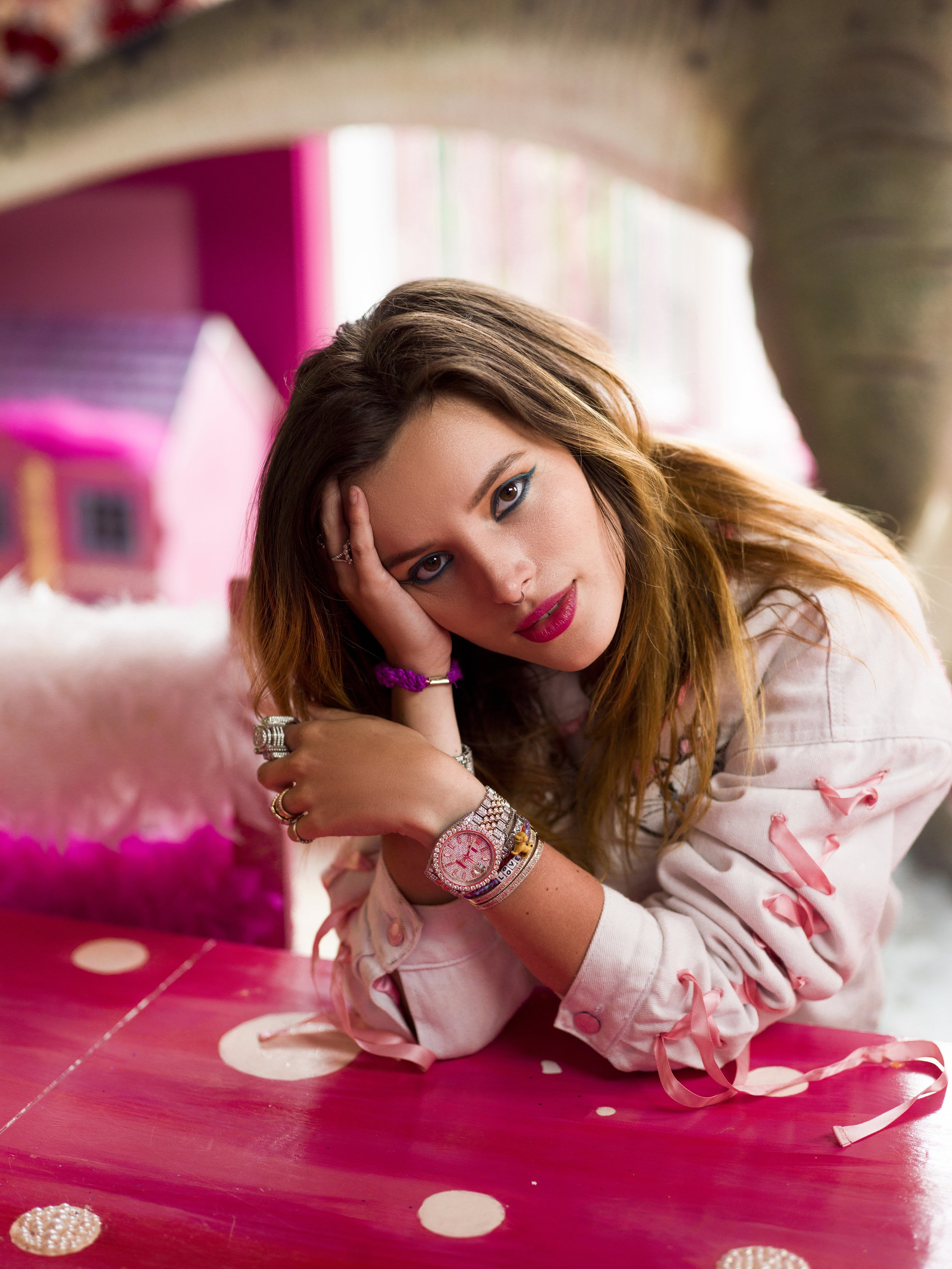
Bella Thorne photographed by David Christopher Lee at her Sherman Oaks home in 2019, leaning on a pink table

Before They Were Famous: Bella Thorne

She was already famous. That is the first thing to say, because this story breaks this series' own rule in the best way.

When I photographed Bella Thorne in 2019, she had grown up on the Disney Channel and become an Instagram superstar with 22 million followers. Everybody knew her face. What nobody had quite seen yet was the person she was becoming once she stopped letting Disney decide who that was. I caught her mid-break — in a house she designed herself, shooting a commercial and shooting me right back.

The call

My friend Johnny, of the EDM group Hotel Lobby, had become friends with Bella in 2019. He asked if I wanted to shoot with her at her Sherman Oaks house. Of course I said yes. The job was a commercial for a lip plumper serum — on paper. In reality it became a tour of the most personal house I have ever shot in.

The Trippy Twins Funhouse

Bella's house is called the Trippy Twins Funhouse — it even has its own Instagram. It is 4,500 square feet, bought for $2 million in 2016, designed by Bella and her sister, with light-up stairs, a colorful mural, and a 12-foot unicorn statue.

In the living room sits a hand-painted rainbow coach with a T. rex behind it. Bella sleeps in a tipi — she wanted something weird, something that felt like a safe space. Her closet holds around 4,000 pieces of clothing and 600 pairs of shoes. She has 17 cats, with a cat castle in the pink room.

I walked through the hallway to the kitchen, where I met Bella and her manager. She was eating McDonald's Chicken McNuggets, and she offered me one. No entourage wall, no velvet rope — just a girl in her own funhouse, sharing her lunch.

The shoot

I set up the lights with Johnny, and Bella sat down in front of her dinosaur. I brought both of my cameras: the Leica M10 and the Hasselblad H6D.

When I started shooting her with the Hasselblad, she got curious — she had never seen one before. I told her it was a 100-megapixel medium format camera, probably the best on the market, then did what you do when a subject is curious: I showed her the camera and let her take some pictures with it.

So I shot her with my Leica while she shot me with the Hasselblad — there are funny pictures of us taking pictures of each other — and after that the whole shoot opened up. I shot her all over the house: colorful furniture, a plastic ball chair, the backyard. She grew up in the Disney mold, told what she could and could not do. Now she gets to do whatever she wants.

That is the before-and-after here. Not unknown to famous — molded to free. She was rebelling against her Disney heritage, directing, writing books, acting in her own projects, and the house was the proof. Her own line says it best: "Don't try to impress people. Always be yourself." Her book of poems, "Life of a Wannabe Mogul: Mental Disarray," chronicled that break in her own words. My assignment was a lip serum commercial; what I actually photographed was a person mid-escape from a brand she did not choose.

The takeaway for photographers

Here is the lesson Bella Thorne taught me: when your subject gets curious about your gear, hand it over.

I could have kept the Hasselblad to myself. Instead I let her shoot me with it, and she stopped performing for the camera and started playing with it. The pictures after that moment are looser and more honest, because she was a collaborator, not a subject.

On any portrait where the person in front of you feels guarded — a fashion photographer in Los Angeles session or otherwise — find the thing they are curious about and give it to them. Curiosity beats any direction shouted from behind the lens.

And if you are hiring a celebrity photographer in Los Angeles, ask how they handle a subject who wants to play. The ones who say yes get the pictures nobody else gets.

Frequently asked questions

Was Bella Thorne famous when David Christopher Lee photographed her? Yes, and this edition does not pretend otherwise: Disney Channel star, 22 million Instagram followers in 2019. The "before" here is before the world fully saw the post-Disney Bella — director, author, independent artist — breaking out of the mold she grew up in.

Where was the shoot? At her Sherman Oaks home, the Trippy Twins Funhouse, designed with her sister. A lip plumper serum commercial, shot around the house — colorful furniture, a plastic ball chair, the backyard.

What cameras did he use? A Leica M10 and a Hasselblad H6D, a 100-megapixel medium format camera. Bella had never seen a Hasselblad, so he let her use it — and she shot him while he shot her.

How do I book a shoot? Get in touch here. I have spent 27 years as a celebrity photographer in Los Angeles and New York, and every session gets the same standard.


About the author: David Christopher Lee is a Los Angeles celebrity photographer with 27 years of experience, shooting for GQ, Vogue, InStyle, People, and brands around the world.

Book a Shoot: Book your shoot. If you want pictures of who you actually are — not who a brand told you to be — that is what I do.
Before They Were Famous: Lady Gaga

Before They Were Famous: Lady Gaga

In 2007, a Universal Music publicist told me an unknown artist was going to be the next Madonna. I believed her enough to go meet the girl at a nightclub in West Hollywood. A year later, the whole planet knew her name.

This is the story of shooting Lady Gaga before she was famous.

The tip

In 2007 I was running TDINK, my online magazine, when a Universal Music publicist contacted me about an artist nobody had heard of. Her pitch was blunt: this girl is going to be the next Madonna. She told me to meet her at Area Nightclub in West Hollywood.

I went, and interviewed her for about ten minutes before we shot. I asked what kind of music she did. Pop, she said. I asked if it was pop like Britney Spears. She said she did her own version of pop, blended with a lot of European techno.

Her name came from the Queen song "Radio Gaga." Her producer Rob Fusari thought she was so theatrical that the name stuck. She called herself the do-it-yourself pop artist. She wrote the music, she designed the clothing, she designed the stage. "Its completely 150 thousand percent my vision," she told me. Her influences ran from David Bowie and Madonna to Talking Heads and the Beatles. Her first single, "Just Dance," was about to come out.

I opened the interview in TDINK by telling readers: you might not know her yet, but you definitely will.

Just the two of us

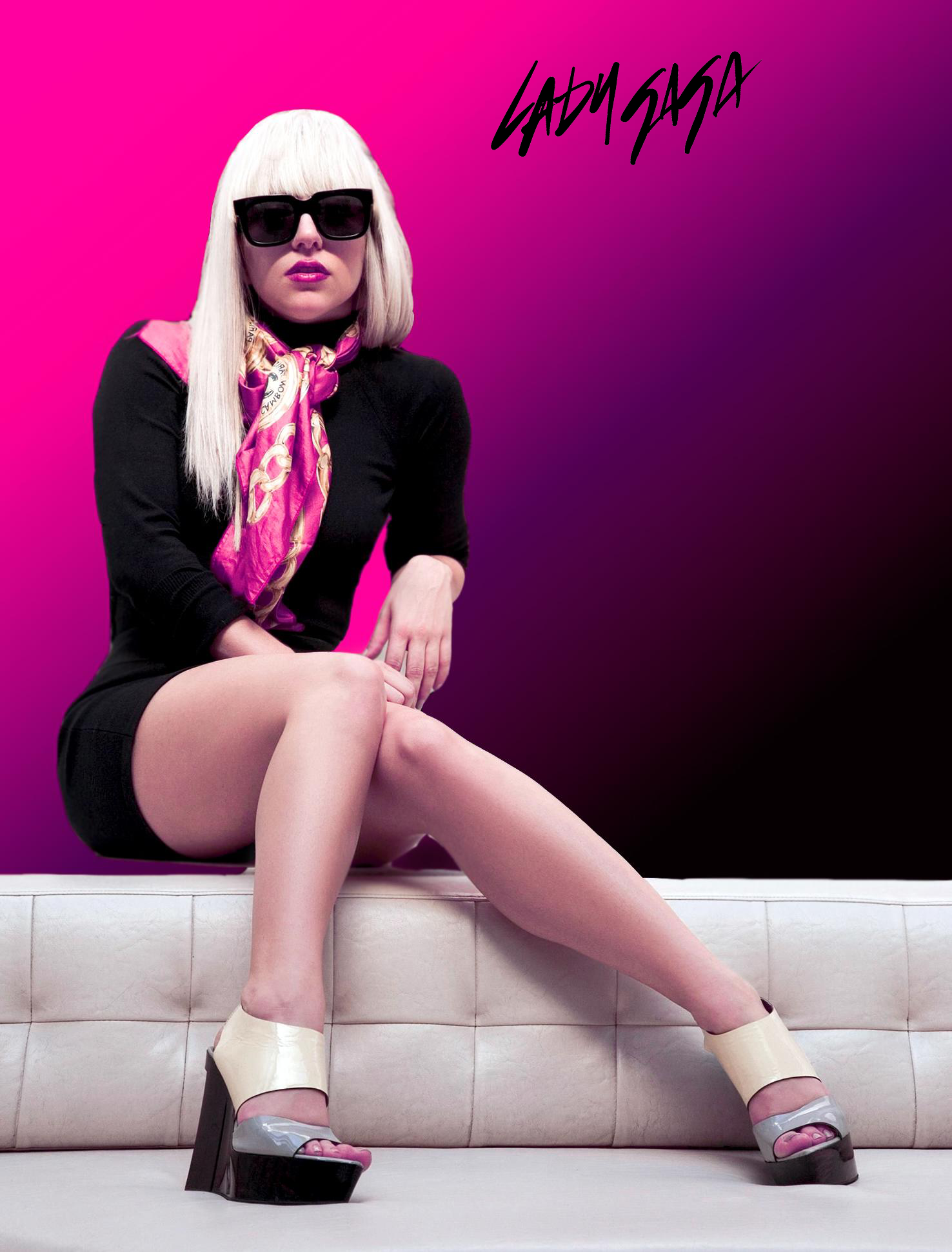
After the interview we shot, just the two of us, alone in the club. Not even a publicist was there. Nobody took a picture of us together, so I have no photograph from that night with both of us in it.

I told her to sit on the couch, knees together, feet apart. I told her to put her sunglasses on to contrast with her blonde hair. She wore a black Stella McCartney dress and a pink Chanel scarf. That was the whole direction, and that was the whole crew.

Then she was famous

"Just Dance" came out in April 2008. The Fame followed that August. By 2009 she was the biggest pop star on earth, and the publicist's "next Madonna" line stopped sounding like hype.

Twelve years later

In 2018 my friend Vaja took me to the Grammys. Gaga won three Grammys that night, and Vaja got a call from Dawn Miller inviting us to the Valley for Gaga and Mark Ronson's party at Oil Can Harry's, a dive bar. Adele was dancing, the crowd was electric, and Gaga was onstage dancing up a storm. I went up and reintroduced myself, telling her I had done one of her first photoshoots at Area Nightclub. She was sweet about it and asked when. I said 2007. She said, "Wow."

I showed her the portrait on my phone and congratulated her. I told her she inspired me. Then we danced together onstage for a good ten minutes. Nobody was taking pictures, just like Area all those years before. It was a time before social media. All these years later, I still don't have a picture with her. I have the memories, and this portrait.

The takeaway for photographers

Take the small editorial shoots. TDINK was my own online magazine. There was no budget, no crew, and no publicist in the room. But that night built an asset no paying client could have given me: one of the first portraits ever taken of Lady Gaga.

Unknowns become somebodies, and archives compound. When a publicist tells you an artist is going to be the next Madonna, you go to the nightclub and shoot the unknown like she is already famous. The frame you make in an empty club tonight can become the frame the world wants tomorrow. Twelve years later, I was showing her that portrait on my phone at her own afterparty. No assignment would have put me in that room.

That is how I still run my work as a fashion photographer in Los Angeles. The portfolio is not just the famous names, it is the unknowns you believed in first. Most celebrity photographers in Los Angeles will show you their covers. Ask what they shot before the cover existed.

Frequently asked questions

When did David Christopher Lee photograph Lady Gaga? In 2007, at Area Nightclub in West Hollywood, for his online magazine TDINK, arranged by a Universal Music publicist who told him she would be the next Madonna.

Was Lady Gaga famous when he photographed her? No. Her first single, "Just Dance," was about to come out when I shot her. It released in April 2008, The Fame followed that August, and by 2009 she was a global star.

How do I book a shoot with David Christopher Lee? Get in touch here. I have spent 27 years as a celebrity photographer in Los Angeles and New York, shooting everyone from unknowns who became icons to the icons themselves, and every session gets the same standard.


About the author: David Christopher Lee is a Los Angeles celebrity photographer with 27 years of experience, shooting for GQ, Vogue, InStyle, People, and brands around the world.

Book a Shoot: Book your shoot. If you need a photographer who saw the next Madonna in an empty nightclub, that is what I do.

Before They Were Famous: April Wilkner

She was the first celebrity I ever photographed. Not the most famous. The first.

April Wilkner had just finished as the second runner-up on Cycle 2 of America's Next Top Model, back when that show was appointment television. And I was a kid with an online magazine and maybe ten shoots under my belt. This is the story of that shoot: the gown, the atelier, and the lesson.

The meeting

I met April at San Francisco Fashion Week. She had just come off Cycle 2 as the second runner-up, in the season that made America's Next Top Model a phenomenon. That show was everywhere at the time.

I walked up and asked if she wanted to be on the cover of TDink, my online magazine. I was nobody. She said yes anyway, gave me her number, and we set up the shoot.

Think about that for a second. She had just been on national television. I had shot, by my own count, about ten sessions total. She said yes because I asked, and because I had a magazine with her name on the cover.

The atelier

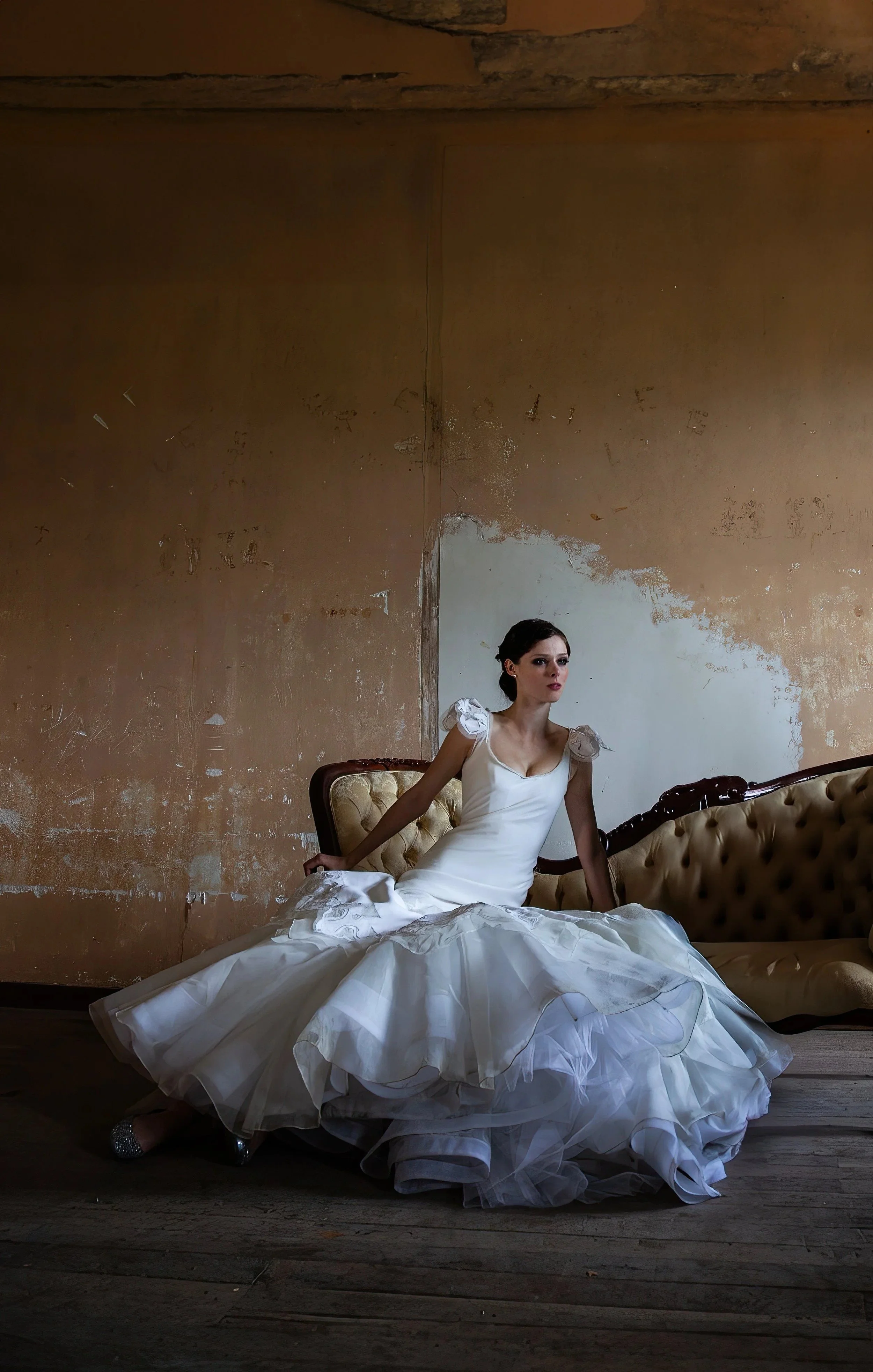
April Wilkner in a white Colleen Quen couture gown, photographed by David Christopher Lee at Colleen Quen's atelier in San Francisco

We shot at the atelier of my friend Colleen Quen, in the Mission District of San Francisco. Colleen is a couture designer. She makes gowns for the debutantes and heiresses who attend the San Francisco Opera.

We dressed April in a long white fitted Colleen Quen gown with a cascading white couture jacket. White on white, in a couture atelier, on a girl America had just watched on television for weeks. It was a fashion shoot, not a reality TV shoot, and that was the point. I wanted her to look like the cover of a magazine, not a still from a TV episode.

She was the first person I had ever photographed who had been on television. This was the first shoot with a name attached to it.

Before she was famous

The timeline is what makes this a before-they-were-famous story, even though she had already been on TV. When I shot April, she was the second runner-up of Cycle 2, famous for a moment, in the way reality TV made people famous for a moment back then. The show was at its peak cultural power. What came next was unwritten. I caught her in the window between the finale and whatever followed, when the whole thing was still new and electric.

And on my side of the camera, I was nobody. About ten shoots in. That asymmetry is the whole story. She trusted a kid with a camera because he had a magazine.

The takeaway for photographers

Here is the lesson April Wilkner taught me, and it is the most practical one in this whole series: build your own platform.

Nobody gave me TDink.com. I started it. And because I had started it, I could walk up to a girl from America's Next Top Model at San Francisco Fashion Week and offer her a cover. The magazine was the credential. Without it, I am a random kid with a camera asking for a favor. With it, I am an editor offering an opportunity.

You do not need permission to start the thing that gives you permission. A blog, a zine, a self-published editorial series. It does not have to be big. It has to exist, so that when you meet your April Wilkner, you have somewhere to put her.

I still work that way. A fashion photographer in Los Angeles who brings their own platform to the table is not waiting for the industry to notice.

If you are hiring a celebrity photographer in Los Angeles, ask what they built themselves, not just who hired them. The ones who built their own stage will build one for you too.

Frequently asked questions

When did David Christopher Lee photograph April Wilkner? After her run on America's Next Top Model Cycle 2, where she finished as second runner-up. They shot the TDink cover at Colleen Quen's atelier in San Francisco's Mission District.

Was April Wilkner famous when he photographed her? She had just been on national television. Cycle 2 was the season that made America's Next Top Model a phenomenon. But she was at the very start of her public career, and David was at the very start of his: it was about the tenth shoot he had ever done, and the first with someone who had been on TV.

Who is Colleen Quen? A San Francisco couture designer and David's friend, whose gowns are worn by debutantes and heiresses at the San Francisco Opera. Her Mission District atelier was the location, and her long white fitted gown with a cascading white couture jacket was the look.

How do I book a shoot? Get in touch here. I have spent 27 years as a celebrity photographer in Los Angeles and New York, and every session gets the same standard.


About the author: David Christopher Lee is a Los Angeles celebrity photographer with 27 years of experience, shooting for GQ, Vogue, InStyle, People, and brands around the world.

Book a Shoot: Book your shoot. If you need a photographer who builds his own stage, that is what I do.

I Sat Down with The Lance Burkitt Encounter: 27 Years, Lady Gaga Pre-Fame, and the Night a 2.1MP Camera Won

I recently sat down with Lance Burkitt for an episode of The Lance Burkitt Encounter, and it turned into one of the most wide-ranging conversations I have done about this career. We talked for nearly an hour, and Lance asked the questions photographers actually want answered. Not gear trivia. The real stuff. How you get in the room. How you stay in the room. What 27 years behind the camera teaches you about people, fame, and survival.

Getting in the room

I got into photography young. That is the short version. The longer version is that I got obsessed early and never found a reason to stop. Most photographers can point to a moment when the camera stopped being a hobby and became the thing. Mine came fast, and I have spent the decades since trying to deserve it.

The early doors opened because I showed up. That sounds like a platitude, but it is the entire business model. You show up where the work is, you do the work better than expected, and someone remembers your name. Then they call you again. Then someone else calls. That is how a kid with a camera ends up photographing Lady Gaga before the world knew her name.

Lady Gaga before she was Lady Gaga

Let me talk about Gaga, because the episode is literally titled around it and people keep asking. Before she was Lady Gaga, she was Stefani. I photographed her pre-fame, and that shoot has stayed with me for a simple reason. Fame does not change a person all at once. It changes the room around them. The photographer sees the before and the after, and the difference is never the person. It is the circus that shows up with the fame. She was the same artist in that room that she is on the biggest stages in the world. The world just had not caught up yet.

Lance runs a straight-talking photography channel with new conversations every week. If you are into portrait, celebrity, or editorial photography, his channel is worth a subscribe: https://www.youtube.com/@lanceburkitt. You can find him at https://lanceburkitt.com

And if this conversation reminds you it is time for new headshots, you know where to find me.

Lady Gaga photographed pre-fame by David Christopher Lee
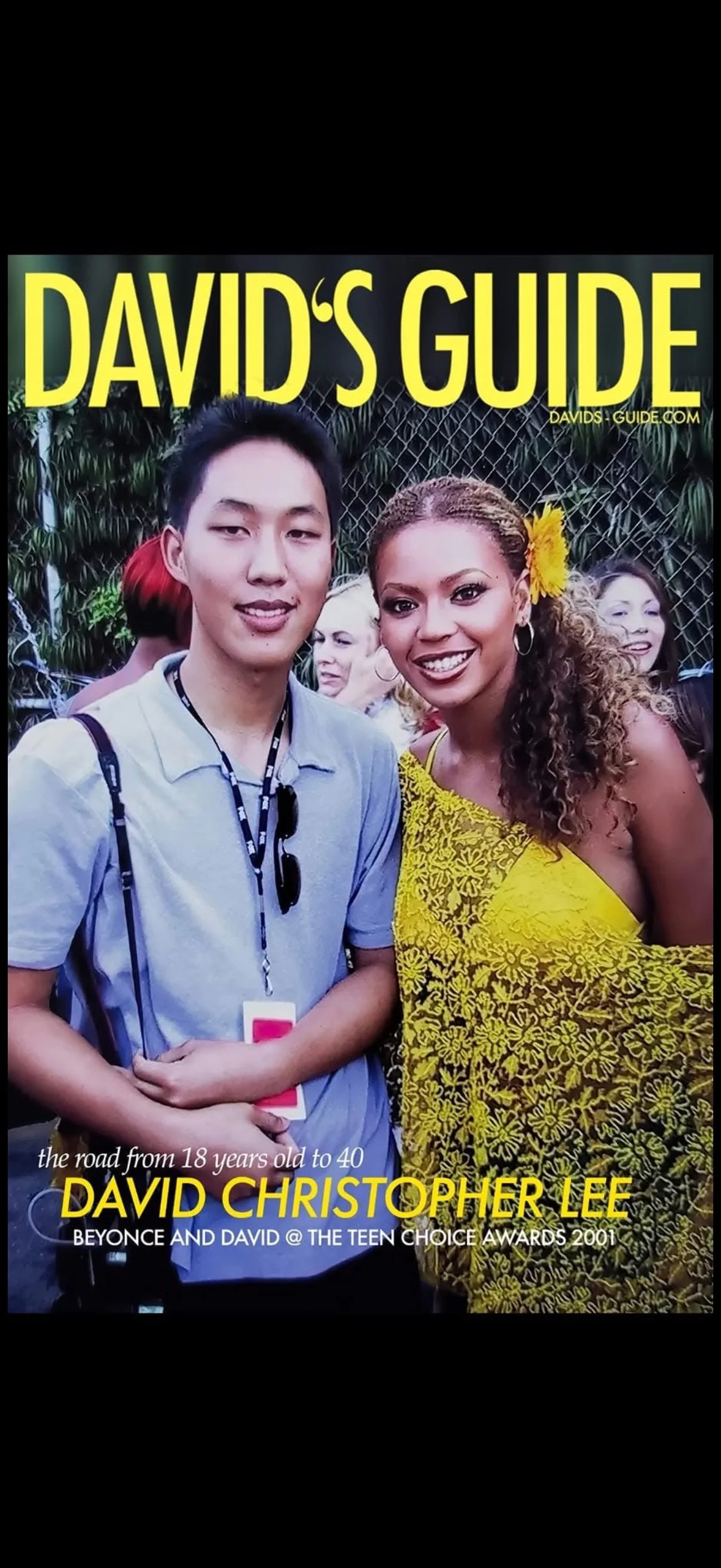
David Christopher Lee with Beyonce at the Teen Choice Awards

The night a 2.1MP camera won

One story from the episode I want to repeat here, because it still makes me laugh: the night a 2.1MP camera beat $10,000 film bodies. Early digital. Everyone with money was still shooting film on bodies worth more than a car, and I walked in with a 2.1 megapixel digital camera that the film guys treated like a toy. The images held up. The clients were happy. The film guys were not. Technology does not ask permission. It just shows up and makes the old arguments irrelevant. I have watched that happen three or four times now, film to digital, digital to mirrorless, and now AI knocking on the door. The photographers who survive are the ones who learn the new tool instead of defending the old one.

AI is a tool, not the talent

We spent real time on that in the conversation, the AI question. My take is simple. AI is a tool. It will replace photographers who were already replaceable, the ones doing work a machine can do. It will not replace the photographer who walks into a room and makes a nervous celebrity feel like a normal person for ten minutes. That is not a technical skill. That is a human one. Use AI to your advantage, absolutely, but do not confuse the tool with the talent. The photographers panicking about AI are usually the ones who never learned to direct a human being in the first place.

Treat famous people like normal people

Which brings me to the thing I have said for 27 years and will keep saying: treat famous people like normal human beings. The camera knows when you are performing for the fame instead of photographing the person. Every great portrait I have ever taken started with forgetting who was in front of the lens. Snoop Dogg. Pamela Anderson. Usain Bolt. Richard Branson. The Kardashians. Different rooms, same rule. The moment you treat them like a trophy, you get trophy photos. The moment you treat them like a person, you get something real.

I have been shooting the Teen Choice Awards since 2000, back when I was filing same-night images from a Nikon Coolpix 950 over a 56k modem while everyone else was still waiting on film. That is where the Beyonce photo above comes from. Same rule applied then as now, and it is the same rule I bring to every session as a celebrity photographer in Los Angeles: the celebrities who trusted me did it because I treated the job like a job, not an audience with royalty.

Price is a finished sentence

Lance pushed me on the business side too, and I am glad he did, because photographers do not talk about this enough. Know your worth and your style. The client who haggles your price before the shoot questions every frame after it. The one who pays your rate without flinching trusted you at booking, and that trust carries through the whole session. I spent 27 years photographing some of the most recognizable people in the world, and the best clients I ever had never asked for a discount. Price is a finished sentence. Say it once, then stop talking. That is how I run every booking, from a two-look headshot session to a full editorial day.

Access is a reputation business

We talked about access, because everyone wants to know how you get into the rooms. Editorial work. Magazine assignments. Red carpets. The honest answer is that access is a reputation business. You get access by being someone people want in the room, and you keep it by never making anyone regret it. One bad story follows you for years. One good reputation opens doors you did not know existed. Create opportunities rather than waiting for them. Nobody is coming to discover you. Go discover the work.

Say yes to the weird opportunity

There is a story in the episode about bartering my way around the world, trading photography for travel, and about a fashion show in a Hollywood parking lot with 600 people. I will let you hear those from the episode itself, because Lance gets the details out of me better than I get them out of myself. But the point of both stories is the same: the photographers with the best careers are not always the ones with the best cameras. They are the ones who said yes to the weird opportunity, showed up, and delivered.

Find your niche

We also talked about the disappearance of photographers in the UK, the way the industry has thinned out, and what that means for the people still standing. My advice has not changed in two decades. Find your niche. Be the person who does one thing better than anyone. Generalists starve. Specialists get called.

Ditch the circadian rhythm

And ditch the circadian rhythm. That one is half a joke and half serious. This career does not run on office hours. The call comes at midnight. The flight leaves at dawn. The best light does not care about your sleep schedule. If you want a predictable life, do something else. If you want this life, the unpredictability is the job.

Watch the full episode

The last thing Lance asked me was where people can find my work. Twenty-seven years in, the answer is the same places it has always been. My photography at dclee.net. My publication, David's Guide, at davidsguide.com. And on Instagram at @davidcleephotography and @davidsguide.

Watch the full episode here:

Before They Were Famous: Emily Ratajkowski

In 2007, I photographed a 16-year-old girl for a studded t-shirt campaign. Six years later, she was in the most-watched music video on the planet.

This is the story of shooting Emily Ratajkowski before the world knew her name.

The booking

A friend of mine had a clothing line called Key Closet. It was a studded t-shirt line with animal drawings, very much in the spirit of that era's Ed Hardy craze. He needed a campaign shot and asked me to find the girl.

I booked Emily through her agency, Next Models. She was 16. My client wanted a shorter, fuller-chested girl with a tiny waist, and Emily fit the profile exactly.

There is a detail I have never forgotten from that first shoot. Emily showed up with her dad. She was underage, and he came along to the set. We shot in my client's penthouse loft in downtown Los Angeles, right next to the Staples Center, and we used everything the space gave us: the view, the hallways, and a leopard print couch that became one of the signatures of the shoot.

She had quite an exotic look. She told me she was part Brazilian, and I remember thinking her eyes and lips made her really special. Even then, at 16, there was something about the way she looked into the lens.

She became the face of the brand

Emily did such an amazing job on that first shoot that over the next couple of years, we booked her four more times. We shot all over downtown LA, with Aston Martins and other exotic cars. Each shoot I paired her with a different guy, and for one of them we shot her with Didier Cohen, the Australian DJ and actor.

She became the face of Key Closet. The campaign was everywhere that little brand could reach, and her face was the one people remembered.

Then came the phone call

A few years later, in 2013, Emily appeared in the music video for Robin Thicke's "Blurred Lines," and almost overnight she was the hottest girl in the world, which is exactly what I wrote in my memoir at the time. She went on to "Gone Girl," high fashion campaigns, and a career that made her one of the most recognizable faces of her generation.

When I saw that video, I called up my friend, the one who owned Key Closet, and I told him the truth: we made her famous. Well, at least we can say we saw it first.

The takeaway for photographers

Here is what that shoot taught me, and what I still tell any photographer who wants to do this kind of work: shoot every unknown like she is already famous. The 16-year-old who shows up with her dad to a t-shirt campaign might be the face of the decade six years later, and the images you make today become the archive everyone wants tomorrow. Treat a small campaign with the same seriousness as a magazine cover, because you never know which one the internet is going to find first.

If you are hiring a celebrity photographer in Los Angeles, look at how they treat the unknowns in their book, not just the names. That tells you everything about how they will treat you.

Frequently asked questions

When did David Christopher Lee photograph Emily Ratajkowski? In 2007, when she was 16, for the Key Closet clothing line campaign. We shot at a penthouse loft in downtown Los Angeles, and she went on to shoot four more campaigns with the brand over the next two years.

Was Emily Ratajkowski famous when he photographed her? No. She was a working agency model at Next Models. Her breakthrough came in 2013, when she appeared in Robin Thicke's "Blurred Lines" music video, followed by "Gone Girl" in 2014.

How do I book a shoot with David Christopher Lee? Get in touch here. I have spent 27 years as a celebrity photographer in Los Angeles, shooting everyone from unknowns who became icons to the icons themselves, and every session gets the same standard.

About the author: David Christopher Lee is a Los Angeles fashion photographer in Los Angeles and celebrity portrait photographer with 27 years of experience, shooting for GQ, Vogue, InStyle, People, and brands around the world.