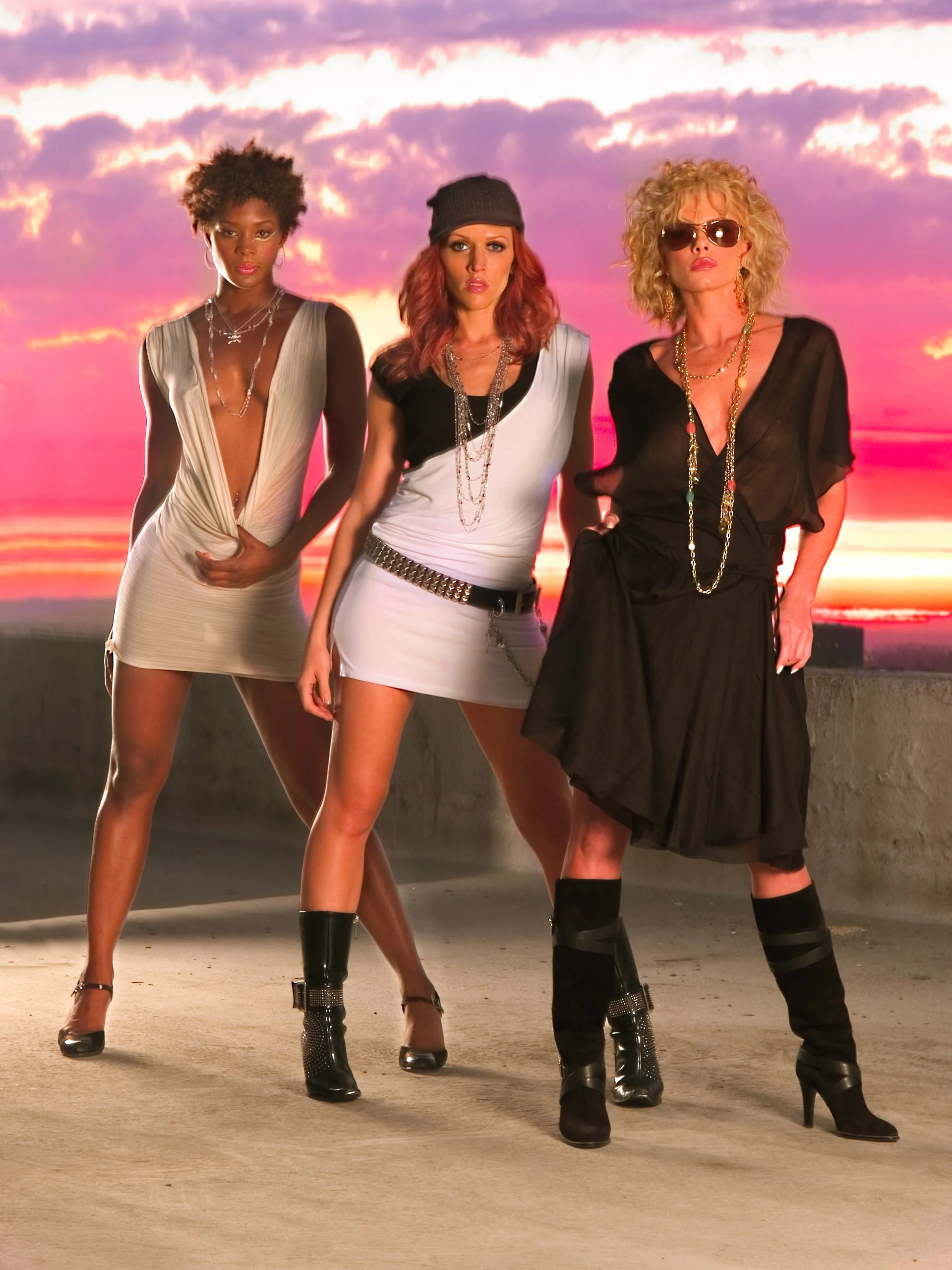
Fashion photography in Los Angeles lives between two worlds: the scrappy test shoot in a downtown loft and the polished campaign that ends up in national magazines. I've worked both ends for 27 years, and the distance between them is shorter than most people think — it's mostly a matter of vision, persistence, and knowing how to talk to the people in front of your camera.
It Starts With the Test Shoot
Every fashion photographer starts by shooting for free — or close to it. Test shoots with new models, small designers, emerging stylists. Nobody's getting rich. Everybody's building a book.
My first celebrity subject was April Wilkner — around my tenth shoot ever — at the atelier of designer Colleen Quen. That session taught me something no workshop could: how to walk into a room with talented, nervous people and make something real in a few hours. The clothes were beautiful, the stakes were low, and the only thing that mattered was whether I could see something in the model that she didn't know was there yet.
If you're a young photographer reading this: the test shoot is not beneath you. It's the whole game. Every campaign photographer you admire spent years in rooms exactly like that one.
The Flip-Phone Portfolio
In 2005, when I was 22, I met Jaime Pressly and showed her my portfolio — five images on the one-inch screen of a flip phone. She booked me. We shot a rooftop campaign, and that led to two more campaigns with her. The coverage ran everywhere: US Weekly, In Style, Vogue, Perez Hilton.
I tell this story for one reason: the work matters more than the presentation of the work. Five tiny images on a terrible screen won a national campaign because the images were strong. Photographers obsess over websites, branding, and packaging. Clients respond to the pictures. Make the pictures undeniable and the rest sorts itself out.
That campaign also taught me how fashion work compounds. One strong shoot with the right person becomes the calling card for the next ten. Jaime led to more talent, more designers, more editors. In fashion, your last great shoot is your business development department.
Directing Models: Permission, Not Instructions
Here's the thing most photographers get wrong with models: they over-direct. Constant posing instructions — chin here, hand there, now look pensive — produce stiff, lifeless frames.
What models actually need is permission, not directions. They know how to move. Your job is to create the conditions where they feel free to do it: the right music, a clear concept, genuine reactions to what's working, and the confidence to let a great unplanned moment run instead of interrupting it.
When I shot Emily Ratajkowski at 16 for Key Closet — booked through Next Models, her father on set, a downtown penthouse location — she came back four more times. Teenagers don't rebook photographers who make them uncomfortable. They rebook the ones who make the shoot feel easy.
The Business Side Nobody Photographs
Fashion photography is a business, and the business happens between shoots. Relationships with model agencies, designers, stylists, and editors. Following up. Delivering on time. Being someone people want in the room.
The unglamorous truth: I got as much work from being reliable as from being talented. Deliver the selects when you said you would. Treat the intern with the same respect as the editor. Don't be precious about revisions. In a town full of brilliant photographers, the one who answers emails and hits deadlines wins an unfair share of the work.
What to Wear, Where to Shoot, How to Prepare
Fashion shoots live or die on preparation. The concept should be clear before anyone arrives — mood, wardrobe direction, hair and makeup references, location locked. The best fashion images look effortless because the effort happened the week before.
The short version: plan the clothes around the concept, not around what the model happens to own, and always have one more option than you think you need.
Frequently Asked Questions
How do I break into fashion photography in Los Angeles? Test shoots with agency new faces, assisting established photographers, and building a tight portfolio of 15-20 undeniable images. Then get those images in front of the right people — agencies, small designers, independent magazines. Repeat for years.
What's the difference between editorial and commercial fashion photography? Editorial tells a story for a magazine — more creative freedom, less pay. Commercial sells a product for a brand — more constraints, better money. Most working fashion photographers do both, and the editorial work feeds the commercial bookings.
Do I need expensive gear to shoot fashion? No. I shot early career-defining work on modest equipment. What matters is light, composition, and direction. Clients hire your eye, not your camera — though by the time you're shooting campaigns, professional gear is expected.
How important is retouching in fashion? It's part of the craft, but the best fashion retouching is invisible — cleaning up distractions while keeping skin texture and the human being intact. If the retouching is the first thing someone notices, it's too much.
Related Reading
- What to Wear for a Celebrity Photoshoot
- Celebrity Portrait Photography: What Makes It Iconic
- How to Hire a Celebrity Photographer in Los Angeles
David Christopher Lee is a celebrity and fashion photographer in Los Angeles and New York with 27 years of editorials and campaigns behind him. Book a shoot.
Plan the wardrobe with our guide on what to wear for a celebrity photoshoot. For what makes a portrait iconic, read our analysis. If you're hiring a celebrity photographer in Los Angeles, start with our hiring guide.