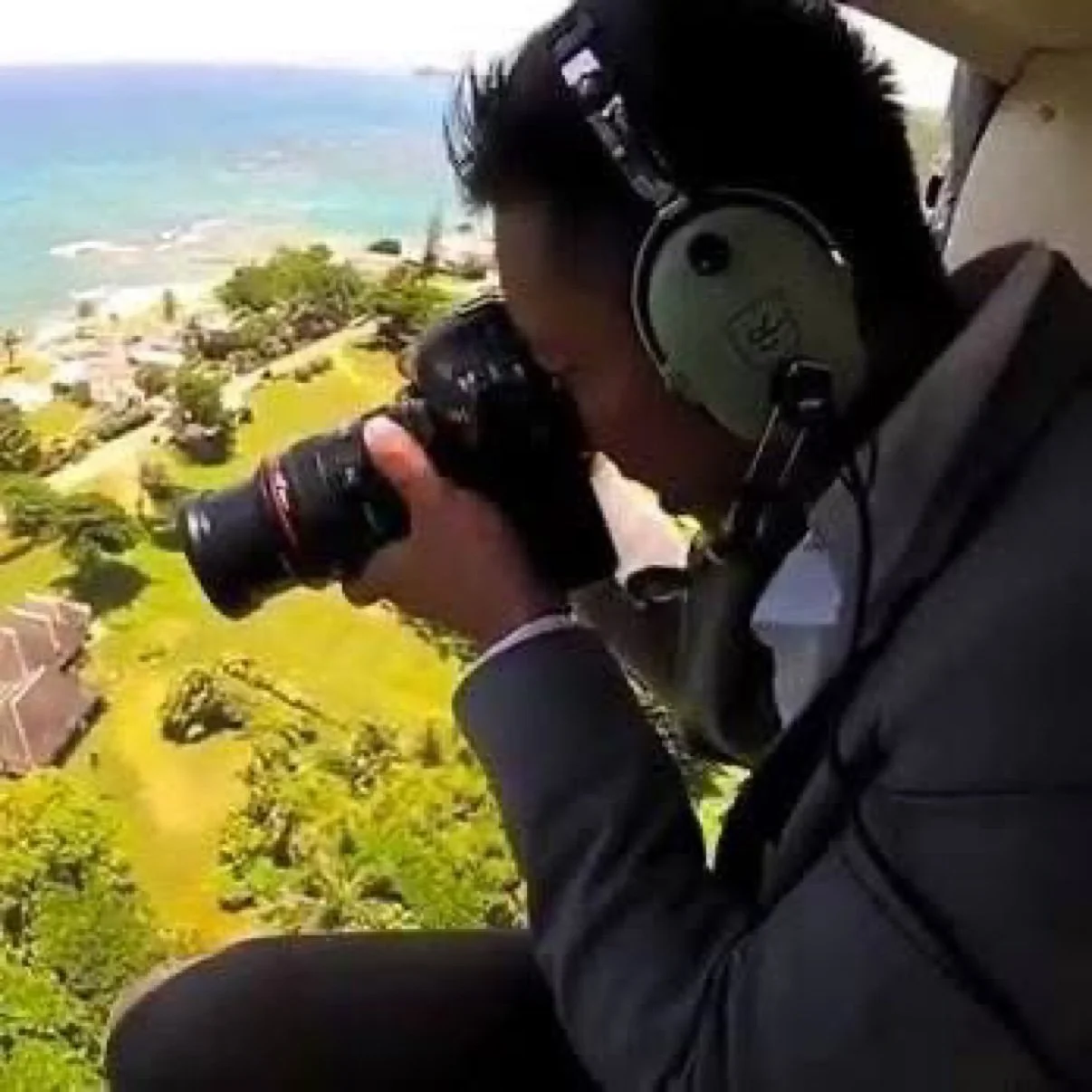
A traveling corporate photographer is not a tourist with a nice camera. It's a logistics job that happens to involve photography. The shoot is the easy part. Getting the right gear to the right city, building a studio in a room you've never seen, and delivering on deadline with no home base to fall back on, that's the job.
I've done destination shoots in 40 countries over 27 years. Conferences, executive portraits, events, all of it on the road. Here's what it actually takes, what can go wrong, and how to hire someone who won't learn these lessons on your dime.
What "traveling corporate photographer" really means
Companies hire traveling corporate photographers for two reasons. The first is consistency: one photographer shooting every office, every executive team, every regional conference, so the whole company's imagery matches. The second is trust: the photographer already knows the brand, the key people, and the deliverables, so there's no briefing a stranger in every city.
The work itself looks familiar. Headshot days, conference coverage, office lifestyle shoots. What's different is everything around it. A local photographer walks into a venue they've shot before with gear that lives in their studio. A traveling photographer walks into a stranger's ballroom with everything they need in cases that survived checked baggage.
The gear that travels (and the gear that stays home)
Travel forces brutal decisions about equipment. Every case costs money to fly, risks damage in transit, and has to be carried through airports and parking garages. After decades of this, my rule is simple: bring what the job requires, rent what the city provides, and never check anything you can't shoot without.
Camera bodies and lenses fly in the cabin, always. Two bodies, the lenses the job needs, cards, batteries, a laptop for backup. That bag never leaves my sight. Lighting can fly checked in hard cases, but for many jobs I ship it ahead or rent locally. A good rental house in any major city will have exactly the strobes I need, and that's one less case to lose.
Power is the detail amateurs forget. I once shot headshots for Linda Hamilton at her home in Point Dume, Malibu, and there were no outlets in her backyard. I brought an Alien Bee kit with a battery pack and shot three looks in an hour without plugging into anything. On the road, that lesson multiplies. Different venues, different countries, different power situations. Battery-powered strobes and a full set of charged spares are non-negotiable.
Logistics: the invisible half of the job
Nobody hires a traveling photographer for the travel. They hire one despite it. Your job is to make the travel invisible to the client.
That starts before the flight. Confirm the venue's load-in rules, ceiling heights, and power access. Know where you're setting up before you arrive. Have the shot list, the schedule, and the contact for the on-site coordinator in your phone. Scout on Google Maps and venue photos when you can't visit in person.
Build in buffer time. Flights get delayed, gear gets held, traffic in an unfamiliar city is always worse than you think. I arrive the night before for any shoot that matters, and I build setup time into the schedule like it's a line item, because it is. A photographer rushing setup is a photographer making mistakes.
Backup is a travel discipline, not a suggestion. Cards get copied to two drives every night, and one copy stays separate from the gear. If the bag with the laptop disappears, the shoot still exists. I've never lost a client's images, and the reason is boring routine, not luck.
Communication is the other invisible system. Time zones, international phone plans, and venue Wi-Fi that collapses under a thousand attendees. I carry a portable hotspot and confirm the client's preferred channel before I fly: text, WhatsApp, email, whatever they actually answer. When the schedule shifts at midnight, and it will, you need a channel that works.
A story from the road: the billionaire's conference
The best travel lesson I ever got came from a job I chased, not one I was handed. A pair of acquaintances had promised a billionaire ticket sales and sponsorships for his annual Caribbean conference, failed to deliver, and asked me to shoot a pro bono video project for him in Washington DC as a make-good. If it went well, he'd hire me for the conference. Shooting for this man had been a dream of mine, so I paid my own way to DC and delivered. He hired me.
I put together a five-person crew of people I trusted and flew everyone to the Caribbean. That's when the real travel lesson hit. Two of the acquaintances forced their way onto the shoot, had no production experience, and spent the week creating chaos: making demands on my crew, spreading stories about me, acting like it was their production. I had done destination shoots in 40 countries and ran it like a producer, because that's what the job required. We delivered successfully despite them.
The lesson: on the road, your crew is your company. Vet everyone. A local hire you haven't worked with can save a shoot or sink it, and you won't know which until you're already on location. I only travel now with people I've worked with before or who come with references I trust.
Costs: how travel gets billed
Travel costs are separate from photography costs, and any honest traveling photographer breaks them out. Expect line items for flights, hotel, ground transport, meals, and gear shipping or rental. Some photographers roll it into a flat travel fee. Either way, you should see it itemized before you agree.
The photography rate itself doesn't change because of travel. A headshot day costs what a headshot day costs. What changes is that you're paying for the photographer's travel days too, usually at a reduced day rate or half rate. Flying in the night before is a workday for the photographer, and it should be in the quote.
Get all of this in writing before anyone books a flight. The awkward conversation is always cheaper before the trip than after it.
How to vet a traveling corporate photographer
The portfolio still comes first, but for travel work you need three more checks.
First, ask about their travel kit. A real traveling photographer can tell you exactly what flies, what ships, and what they rent on arrival. Vague answers mean they haven't done this much.
Second, ask about backup workflow. How do images get from the card to safety each night? Where do the copies live? This question separates professionals from hobbyists faster than any other.
Third, ask for a reference from a multi-city or multi-day job. Anyone can survive one local shoot. You want proof they've run the logistics of a real trip: the flights, the crew, the delivery, all of it working.
Fourth, confirm what happens if something goes wrong. Flights cancel, gear breaks, people get sick. A professional has an answer: backup gear on hand, a local second shooter they can call, a plan for getting images out even if the primary plan fails. You're not hiring them for the good days. You're hiring them for the bad one.
And check that they carry proper business insurance and backup gear. On the road there's no studio to run back to. Redundancy is the entire safety net.
Frequently asked questions
What does a traveling corporate photographer do? They handle corporate photography, headshots, conferences, events, and brand imagery, at the client's locations instead of their own studio. Companies hire them for consistency across offices and because the photographer already knows the brand.
How much extra does travel cost? Travel is billed separately from the photography: flights, hotel, ground transport, meals, and gear shipping or rental, usually itemized. Travel days are typically billed at a reduced day rate. Get it all in writing before booking.
Should I hire a traveling photographer or someone local in each city? One traveling photographer gives you consistent imagery and one relationship to manage. Local photographers in each city can be cheaper per shoot but produce inconsistent results and need briefing every time. For brand-critical work, consistency usually wins.
What gear does a traveling corporate photographer bring? Cameras, lenses, cards, and batteries in the cabin. Lighting either flies in hard cases, ships ahead, or gets rented locally. Battery-powered strobes are standard because venue power is never guaranteed.
How do I know a traveling photographer is legitimate? Ask about their travel kit, their nightly backup workflow, and references from multi-day or multi-city jobs. Clear, specific answers on all three mean you're dealing with a professional.
The bottom line
Traveling corporate photography is a logistics business with a camera attached. The photographers who thrive at it obsess over the unglamorous parts: the cases, the power, the backups, the crew, the buffer time. When you're hiring one, don't just fall for the portfolio. Ask how the sausage gets made. The one who answers clearly is the one who'll deliver when the flight is late, the venue is dark, and the keynote starts in twenty minutes.
About the author: David Christopher Lee is a Los Angeles corporate photographer with 27 years of experience and destination shoots in 40 countries, covering executive portraits, conferences, and corporate events. Get in touch.