If you're searching for corporate photographers in Los Angeles, you're probably staring at a wall of portfolios that all look the same. Clean backgrounds, smiling executives, confident poses. They blur together because most corporate photography is made the same safe way. Here is how to tell the photographers apart, from someone who has shot corporate work for 27 years, including team shoots of 200 people in a single day.
The Ones Who Get Hired Again
The photographers who get hired again are very consistent and technical. They know exactly how to light. They know exactly what to tell people to pose. They're professionals.
That sounds basic, but it is the whole game in corporate work. A company is not hiring art. It is hiring reliability. When the marketing director books you for the annual team shoot, she needs to know that all 200 headshots will match, that the lighting will be right on every single one, and that nobody will look bad. The photographers who deliver that get called back every year. The ones who don't get hired again let all the details fall through the cracks.
In corporate work, the details are the job. A crooked tie in 40 headshots is not a small problem. Inconsistent skin tones across the leadership page is not a small problem. The client may not know the technical term for what went wrong, but they know it looks off, and they will not book you twice.
The Most Common Failure: Boring
I've seen a lot of really boring technical corporate photography shoots. The photographer will choose the most boring background, and then the corporate headshots are just stale.
Stale is the enemy. A company headshot lives on LinkedIn, on the website, in pitch decks, on conference badges. It represents the person and the company every time someone looks it up. If it looks like a mugshot with better lighting, it failed, no matter how technically correct the exposure was.
Boring happens when the photographer stops thinking. Same gray backdrop, same flat light, same lifeless expression, 200 times in a row. The photographer was technically competent and creatively absent. Companies can feel the difference even when they cannot name it. Their team page looks dead, and they assume that is just how corporate photography looks. It is not. That is how bad corporate photography looks.
Professional Does Not Mean Boring
To make something professional without making it boring, you have to really look at the background and look at the subject. Every person is different, and every background tells a different story. The photographer who actually looks, instead of running the same setup on autopilot, produces work with life in it.
I like natural light because it just looks amazing. There is a quality to real daylight on a face that no softbox fully reproduces. And I like using a long lens with a small f-stop. That blurs out the background and gives a really nice look, separating the person from whatever is behind them and making the whole image feel more premium.
Typically, an 85 millimeter lens or 50 millimeter lens makes everybody look good. That is not a small thing when you're photographing a whole company. Flattering focal lengths mean fewer reshoots, fewer complaints, and a team page where everyone looks like the best version of themselves.
And the simplest prevention for a boring result? Hire a good photographer. That's how you avoid the stale result. It sounds like a dodge, but it is the truth. The difference between a stale shoot and a great one is the person holding the camera, not the camera.
How a 200-Person Shoot Actually Runs
For big groups, you don't use natural light because there are way too many people. Natural light changes, people move through different patches of it, and by person 60 the look has drifted. So we set up in a dark room and bring the lights. That way everybody gets the same consistent lighting. There is a set place for people to stand and a pretty standard way of doing things, so everything is very consistent.
Consistency at that scale is a system, not a talent. The crew matters as much as the camera:
- Two coordinators on set getting everybody's name and information, so files are labeled correctly and nobody gets lost in the shuffle
- Makeup artists touching people up before they step in, so the photographer is not fixing shine and flyaways frame by frame
- An assistant handling the technical side, watching exposure and gear while the photographer watches people
- The camera on a tripod, same position every time, so framing never drifts
- About five to ten minutes per person, shot one by one, in a steady rhythm
That system is why the 200th headshot looks like the first one. It is also why the shoot finishes on time. Without the coordinators and the tripod and the fixed positions, a 200-person day turns into chaos by lunch.
What It Costs in Los Angeles
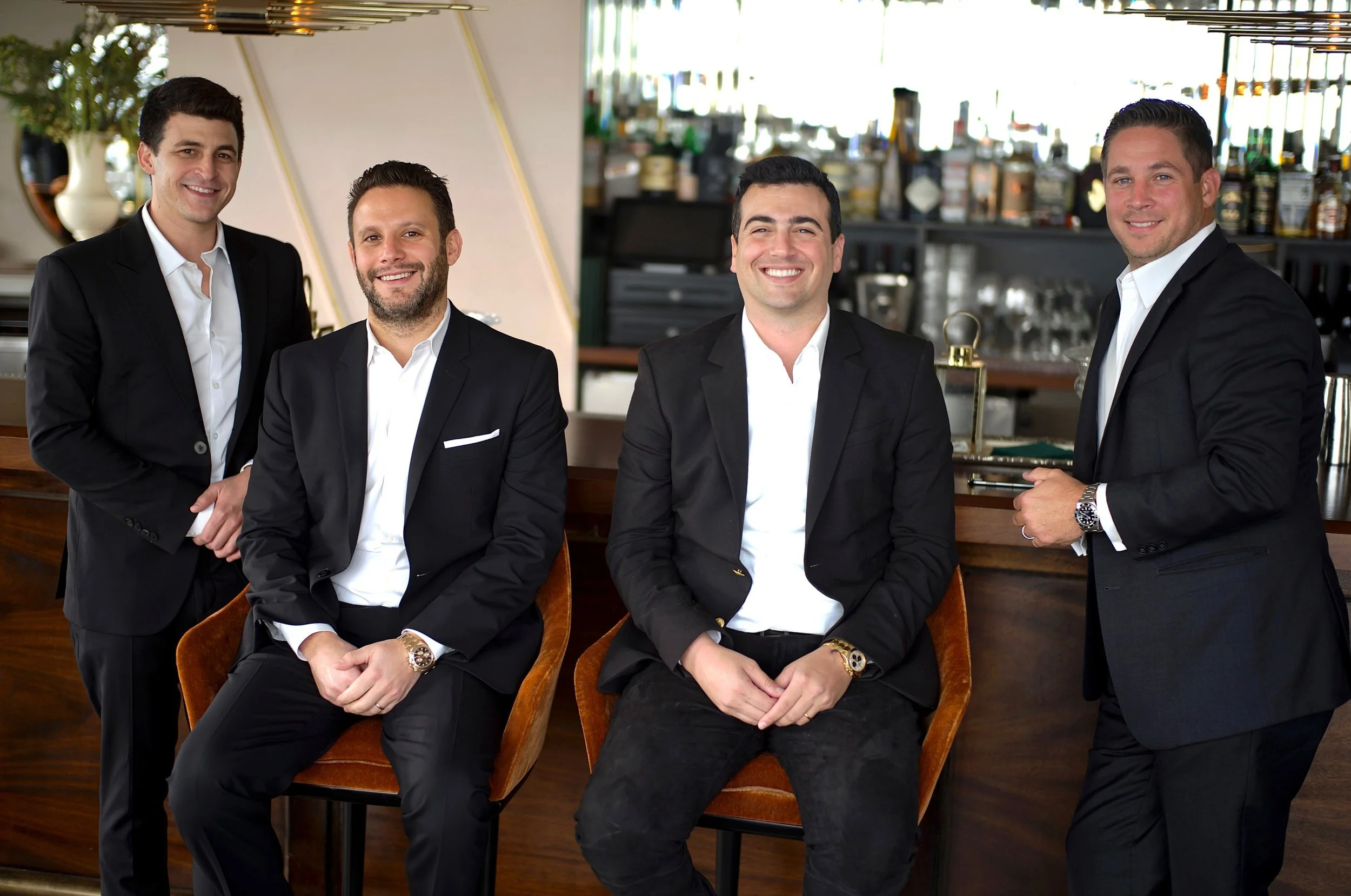
A corporate shoot is generally around $5,000 to $10,000, depending on the number of people. Obviously it goes up with more people. That is pretty much the going rate.
What you're paying for is not just the shutter clicks. You're paying for the lighting system, the crew, the coordination, and the guarantee that every single person looks good. You are paying for the 27 years that make a 200-person day feel routine instead of terrifying.
Companies sometimes balk at the number until they have lived through the alternative: the inexpensive shooter who delivers 200 inconsistent files, half of which need reshoots, with no system for naming or organizing them. The going rate exists because the job is real work.
Getting a Good Expression in Five Minutes
Most employees hate having their photo taken. They walk in tense, they have been dreading it all week, and they have exactly five minutes before they need to get back to their desk.
Sometimes I get people to laugh, sometimes I get them to smile, sometimes I'll tell them a joke. I know how to get people to react to the camera to give them that perfect expression. It is not a trick. It is reading the person in front of you in the first ten seconds and knowing which version of encouragement unlocks their face.
Five minutes is plenty when you know what you're doing. It is not enough when you don't.
Red Flags
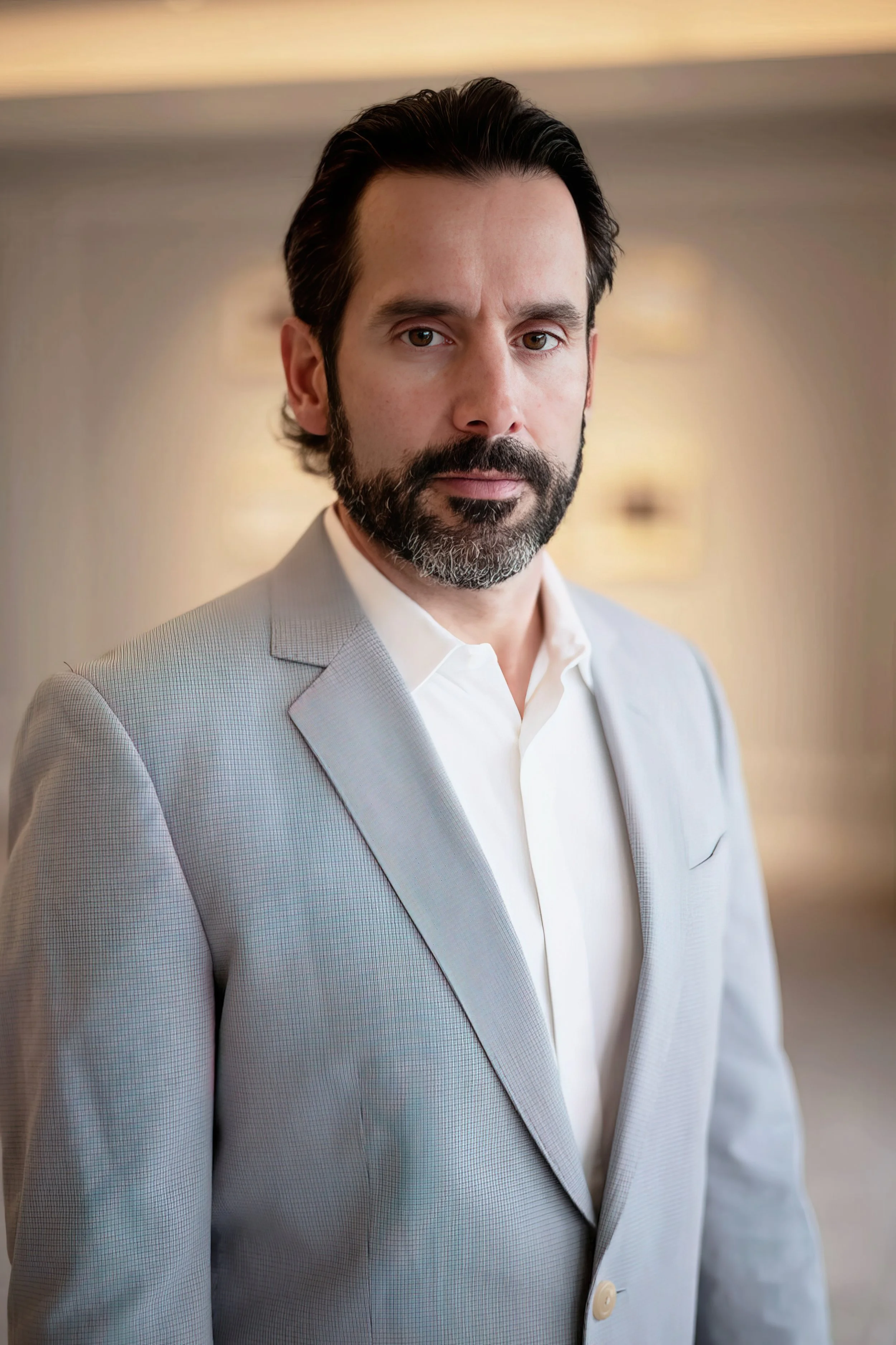
Just look at their work and you can tell if they're bad. But if you don't know what you're looking at, then it's hard to tell.
So here is what to look at, specifically. Are the backgrounds thoughtful or lazy? A good corporate photographer chooses backgrounds with intention. A lazy one uses whatever wall was closest. Do the expressions look alive or frozen? If every subject has the same dead-eyed corporate smile, the photographer cannot direct people. Is the lighting consistent across the whole portfolio, or does it fall apart halfway through? Inconsistent light means inconsistent skill.
Those three answers tell you everything. Backgrounds, expressions, consistency. If all three hold up across dozens of samples, you are looking at a professional.
The Experience Advantage
I'm so much more organized than any of the younger people, and the reason why I'm so organized is because I know exactly what to look for and what to organize. I know exactly what can happen and what the risks are, and I know how to minimize the risk.
That is what 27 years buys you. Not just better photos. Fewer surprises. The card that fails, the light that overheats, the executive who is 40 minutes late, the room that is smaller than promised. I have seen all of it, and the shoot still delivers because the system absorbs the problems.
A younger photographer might take a beautiful single portrait. But corporate work is not a single portrait. It is an operation. Organization is the difference between a photographer and a corporate photographer.
The Short Version
- Rehired corporate photographers are consistent, technical, and detail-obsessed.
- The biggest failure mode is boring: lazy backgrounds, stale expressions.
- Professional does not mean boring. Natural light, long lenses, and intention keep it alive.
- Big team shoots need a dark room, brought-in lights, coordinators, and a tripod system.
- Expect $5,000 to $10,000 in Los Angeles, scaled by headcount.
- Judge the portfolio on backgrounds, expressions, and consistency.
- Experience buys fewer surprises, not just better photos.
David Christopher Lee is a corporate photographer in Los Angeles with 27 years behind the camera, shooting executive headshots and team photography for companies across 40 countries. https://dclee.net