Catalog work is product driven. Advertising campaigns are based on emotion. Catalog work tends to be more technical. That is the difference in one paragraph, but the way it plays out on set, on the invoice, and in the final images is worth understanding before you hire anyone. Brands mix these two jobs up constantly, and it costs them money every time they do.
I have shot both for 27 years, sometimes for the same brand in the same week. I have stood in the bright, shadowless catalog setup in the morning and directed a dark, tangled campaign scene that afternoon. Here is what actually separates them.
The Job Is Different
A catalog exists to show the product clearly. That is the entire assignment. Bright light, minimal shadows, same expressions, same poses, every colorway documented. The customer needs to see what they are buying, in every size and every color, with nothing hidden and nothing exaggerated. It is technical work and there is nothing wrong with that. Precision is the point.
An advertising campaign exists to make someone feel something. The goal is to attract attention, not to document inventory. Nobody stops scrolling for a perfectly lit pair of jeans on a white background. They stop for tension, for desire, for a story they want to be inside of. That is why ad campaigns are supposed to be fun, edgy, and exciting.
A boring catalog image will never work as an ad, because it was never designed to stop anyone. And a moody campaign image will never work as a catalog photo, because it was never designed to show the product. They are built for opposite jobs, and brands that try to make one image do both end up with something that does neither.
Farmer Jeans: The Same Brand, Two Different Shoots
I shot a jean company campaign called Farmer Jeans, and it is still the clearest example I have of the split. The catalog was very straightforward. Bright light, same expressions, same poses. Model after model, clean and consistent. Every pair of jeans shown the same way so the customer could compare washes and fits without distraction.
The ad campaign was a different universe. The models were on top of each other making out. Dark, high contrast, full of tension. Same jeans. Completely different photographs.
Here is what I took away from that shoot, and what I still use today: I love pushing the envelope. It is fun to be super creative and work with models that are willing to do anything. When the talent trusts you and the brand gives you room, you can make something that lives far beyond the season. That campaign was actually copied by Calvin Klein within about two years. I guess I was doing something right.
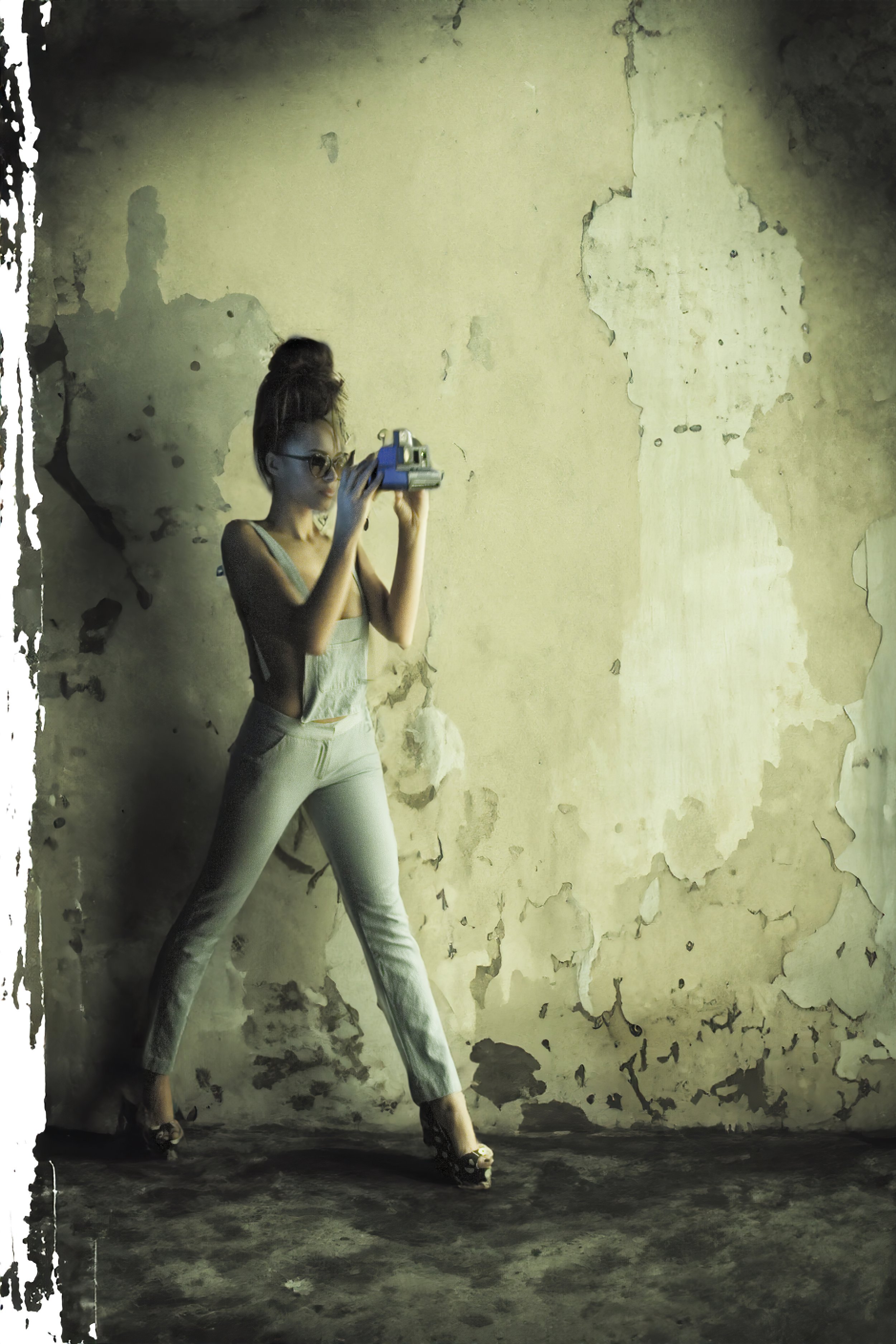
Nobody copies a catalog. Catalogs are supposed to be invisible. Campaigns are supposed to be unforgettable.
The Lighting Tells You Everything
Technically, the split is simple, and you can see it before you read a single word of the brief. Catalog is usually brightly lit with minimal shadows. Everything visible, nothing hidden. The light wraps the product evenly because the product is the whole message.
Ad campaigns can be edgier, so I go more high contrast with more shadows. Shadow is where mood lives. If the brief says attract attention, I am reaching for contrast, not fill light. I want edges, I want mystery, I want the viewer's eye to work a little.
This is why the two styles need different photographers, or at least a photographer who truly understands both. The catalog shooter who brings flat, even light to a campaign will produce something forgettable. The campaign shooter who brings drama to a catalog will produce something the customer cannot read. Know which job you are hiring for.

The Money Works Differently Too
Shooting catalog is pretty much a day rate. You show up, you shoot the line sheet, you go home. The pricing is straightforward because the usage is straightforward. The images live on the product page, and that is it.
Ad campaigns have usage fees based on where the ad is placed. A billboard costs more than an Instagram post, and the fee reflects that. The image is doing more work, reaching more people, carrying more of the brand's value, so the usage fee scales with the placement. This is standard across the industry, and brands should know this before they sign anything.
Here is the part nobody tells young brands: usage fees are necessary. When you don't pay usage fees, you're generally working with someone inexperienced, so quality suffers. An experienced campaign photographer prices usage because they know what the image is worth. If someone hands you a campaign for a flat day rate with no usage conversation, you are not getting a deal. You are getting someone who does not know the business.
Directing: Roles, Not Poses
On a catalog shoot, direction is positional. Chin here, shoulders there, next look. It is repetitive by design, and consistency is the skill. The hundredth frame should match the first.
On a campaign, I direct for chemistry. Sometimes I just tell them a role and then they start moving, and I start clicking. Sometimes I tell them to act like they got away with something big, and they really light up. You cannot pose that. You have to create the conditions for it and then catch it.
That is the real craft difference. Catalog directing is about control. Campaign directing is about controlled chaos. You build the frame, you set the energy, and then you let the models surprise you. The best campaign frames I have ever shot were the ones I did not plan.
What If You Can Only Afford One Shoot?
I get this question from small brands a lot, and my answer surprises people. I would be open to helping a small brand do both in one shoot if I liked the product. I love helping small quality brands. I started with many small ones which grew, and then they started paying my rate. It's all about relationships.
Practically, that means shooting the clean catalog setups first while everyone is fresh, then pushing into campaign territory as the day loosens up. One crew, one location, two libraries of images. The catalog work gets done when the light is predictable and the energy is disciplined. The campaign work happens later, when everyone is warmed up and willing to take risks.
If you are a small brand reading this, here is my honest advice: find a photographer who believes in your product, not just your budget. The relationships you build early are the ones that carry you when you grow.
How to Choose Between Them
If you are deciding between a catalog shooter and a campaign photographer, ask each one: what would you do for the campaign, and what would you do for the catalog? Ask what their ideas are and see if they're in line with what the brand is.
That single question reveals everything. A real campaign photographer will light up describing the concept, the mood, the story. A real catalog photographer will talk about consistency, systems, and throughput. If someone gives you the same answer for both, they only know one of the jobs.
But in the end it all boils down to the work. Just look at the work of the photographer and you can tell which one you want to go with. Portfolios do not lie. If the campaign work is boring, the photographer cannot do campaigns. If the catalog work is inconsistent, the photographer cannot do catalog. Trust your eyes.
The Short Version
- Catalog photography is product driven, brightly lit, technically precise, and billed at a day rate.
- Advertising photography is emotion driven, high contrast, directed for chemistry, and billed with usage fees.
- Never use a boring catalog image as your ad. The jobs are not interchangeable.
- Small brands can sometimes get both from one shoot day if the photographer believes in the product.
- When hiring, ask what they would do differently for each, then judge by the work.
David Christopher Lee is a commercial photographer in Los Angeles with 27 years behind the camera, shooting advertising campaigns and catalog work for brands across 40 countries. https://dclee.net