# How Much Retouching Is Too Much in a Headshot?
It is a question I hear constantly. Clients sit down, look at their proofs, and ask some version of the same thing. Can you take ten years off? Can you make my skin perfect? And underneath it, the real fear: will I still look like me?
After 27 years photographing people for GQ, Vogue, InStyle, People, Teen, Men's Health, and Departures, I have a rule for this. It is short, it is absolute, and it has never failed a client. "I leave the things that give people character. If it is a mole or something like that, it stays. If it is a blemish like a pimple, I take it out."
That one sentence is the entire philosophy. Everything below is just the explanation of why it works.
## Retouching Has a Job, and the Job Is Narrow
A headshot is not a magazine cover. Nobody is asking your LinkedIn photo to sell perfume. The job of headshot retouching is to show you on your best day, under the best light, without the temporary stuff that the camera caught and your colleagues would never notice in person.
Think about what a camera actually does. A modern sensor resolves more detail than the human eye picks up across a conference table. It sees the pimple that appeared yesterday morning. It sees the stray hair, the bit of lint on your collar, the temporary redness from the cold walk to the studio. None of that is you. Removing it is not deception. It is translation, turning what the sensor recorded into what people actually see when they meet you.
The problem starts when retouching goes past translation and into reinvention.
## The Plastic Line: What Too Much Actually Looks Like
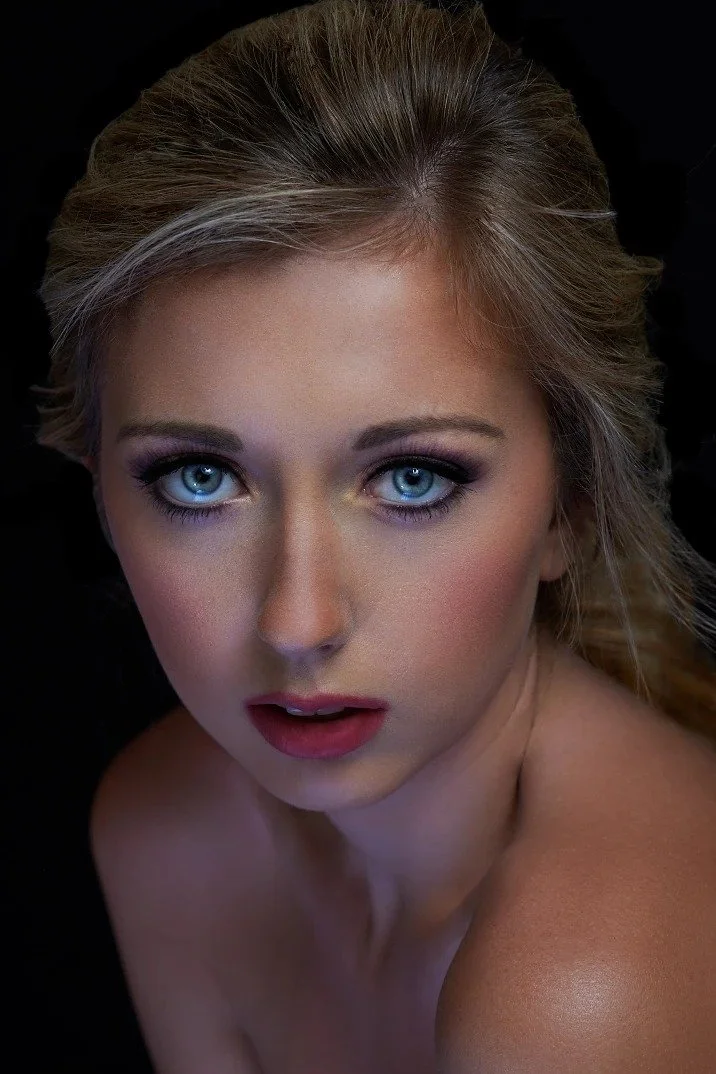
Everyone has seen the over-retouched headshot. The skin has the texture of a porcelain doll. The pores are gone, the laugh lines are gone, the jawline has been quietly redrawn, the eyes have been enlarged just enough to look almost human. You look at it and your brain does something strange. It registers the person as attractive, and then, a half second later, it registers them as fake. Trust drains out of the image.
This matters more than most people realize. Your headshot is often the first thing a recruiter, a client, or a casting director sees. LinkedIn's own data shows that profiles with a photo get up to 21 times more profile views and up to 36 times more messages than profiles without one. But that advantage belongs to a photo that looks like a real person. An eye-tracking study by LinkedIn found that viewers spend 19 percent of their time on a profile looking at the profile picture, more than any other element on the page. Nineteen percent of their attention is on your face. If that face reads as artificial, the attention turns into suspicion.
And suspicion is fast. Ladders ran an eye-tracking study in 2018 that found recruiters spend an average of just 7.4 seconds on their first look at a resume. Your photo gets a fraction of that. There is no time for the viewer's brain to resolve the uncanny feeling of over-retouched skin. It just files you under "not quite real" and moves on.
## My Rule: Character Stays, Blemishes Go
Here is how the rule works in practice, because the philosophy is only useful if it tells you what to do with a specific face.
Stays: moles, birthmarks, freckles, the gap between your teeth, the shape of your nose, scars with a story, the natural asymmetry of your face. These are the things that make you recognizable. They are the reason your friends can spot you across a room. A headshot that erases them is a headshot of a stranger who happens to share your haircut.
Goes: pimples, cold sores, temporary redness, razor burn, stray hairs, lint, flyaways, the dark circles from the red-eye flight you took the night before, shine on the forehead. These are visitors. They were not there last month and they will not be there next month. The camera is not obligated to memorialize them.
There is a gray zone, and I am honest with clients about it. Deep under-eye bags that you have had for years are character. Under-eye bags from one bad night are a blemish. Wrinkles from a lifetime of laughing are character. I will soften them, because harsh light exaggerates them, but I will not erase them. Erasing a 50-year-old's laugh lines does not make them look 35. It makes them look like a 35-year-old wearing a 50-year-old's suit, and everyone can tell.
## Frequency Separation vs Plastic Skin
The technique behind good retouching matters, because the wrong technique is what creates that plastic look in the first place. The two approaches professionals argue about are frequency separation and dodge and burn, and I have written a full breakdown of frequency separation vs dodge and burn if you want the technical deep dive.
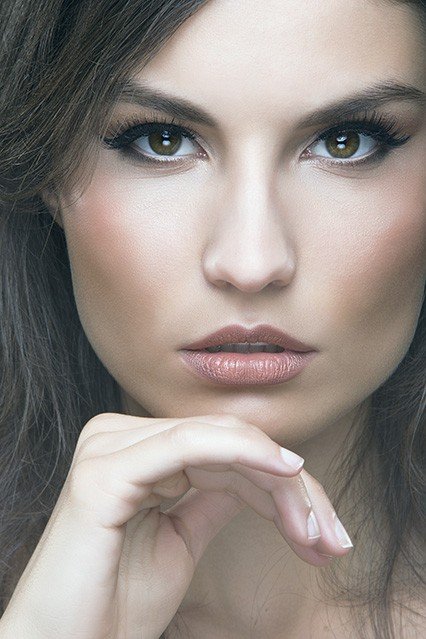
The short version: bad retouching blurs the skin. Blurring destroys texture, and destroyed texture is what your brain reads as fake. Good retouching separates the work into layers. Color and tone get evened out on one layer while the actual skin texture, the pores, the fine detail, is preserved on another. The result is skin that looks clean but still looks like skin. It takes longer. It requires a trained eye. It is the difference between a $25 rush job and professional work.
When you are evaluating a photographer's portfolio, zoom into the skin. If you can see pores, you are looking at a retoucher who knows what they are doing. If the skin looks like it was airbrushed by a paint program from 2004, keep looking.
## The Eyes Must Stay Alive
There is one rule that sits above all the others, and it is about the eyes. "The eyes are definitely the most important. I just have to make sure their eyes are open, that there is a catch light, that there is a great expression in the eyes."
Retouching should never touch the life in the eyes. Do not enlarge them. Do not change their color. Do not whiten them until they glow. The catch light, that small reflection of the light source in the pupil, is what makes eyes look alive in a photograph. Some retouchers clone it out or paint over it while cleaning up the eye area. That is a crime against the portrait. A headshot with dead eyes is a failed headshot no matter how perfect the skin is.
I have seen AI retouching tools do exactly this. They "enhance" the eyes into something symmetrical and luminous and completely lifeless. There is nothing wrong with AI headshot apps except they are not real, and the eyes are where the unreality is easiest to spot.
## What to Ask Your Photographer Before You Book
You do not need to learn retouching. You need to know how to interview the person doing it. These are the questions that separate the professionals from the filter-pushers.
First, ask to see before and after examples. Not just finished portfolio images. A real professional can show you the raw frame and the final retouch side by side, and the difference should look like a better version of the same person, not a different person.
Second, ask who does the retouching. Some photographers outsource to bulk retouching services overseas. There is nothing automatically wrong with that, but you want to know whether the person who directed your session, who saw your face in three dimensions, is the one finishing the files. The photographer who watched your expressions knows what your real smile looks like. A stranger with a preset does not.
Third, ask about their philosophy in one sentence. If they cannot answer, or if the answer is "we make everyone look amazing," be cautious. You want to hear something specific about preserving character. My one-sentence version is the mole rule. Every good retoucher has their own version.
Fourth, ask how many rounds of revisions are included. Taste differs. You might want the laugh lines softened more than I would by default, or less. A professional includes at least one round of adjustments because the final image has to be something you are proud to put your name on.
Fifth, ask what is not included. Teeth whitening, background cleanup, and stray hair removal are sometimes separate line items. You want no surprises on the invoice.
## The Bottom Line
Retouching is too much the moment the photo stops looking like you on your best day and starts looking like someone you wish you were. Moles stay. Pimples go. Texture stays. Blur goes. Eyes stay alive, always.
Get this right and your headshot does its real job. It makes the 7.4-second glance turn into a second look. It makes the recruiter, the client, or the casting director feel like they have already met you, and liked you. That is not vanity. That is the entire point of the photograph.
My headshot sessions start at $1,500 for two looks, and professional retouching is part of every session, guided by the philosophy above. If you are preparing for a shoot, review what to wear for your headshot and my headshot photography techniques so you walk in knowing exactly what to expect. You bring the face. I will make sure the camera tells the truth about it, kindly.