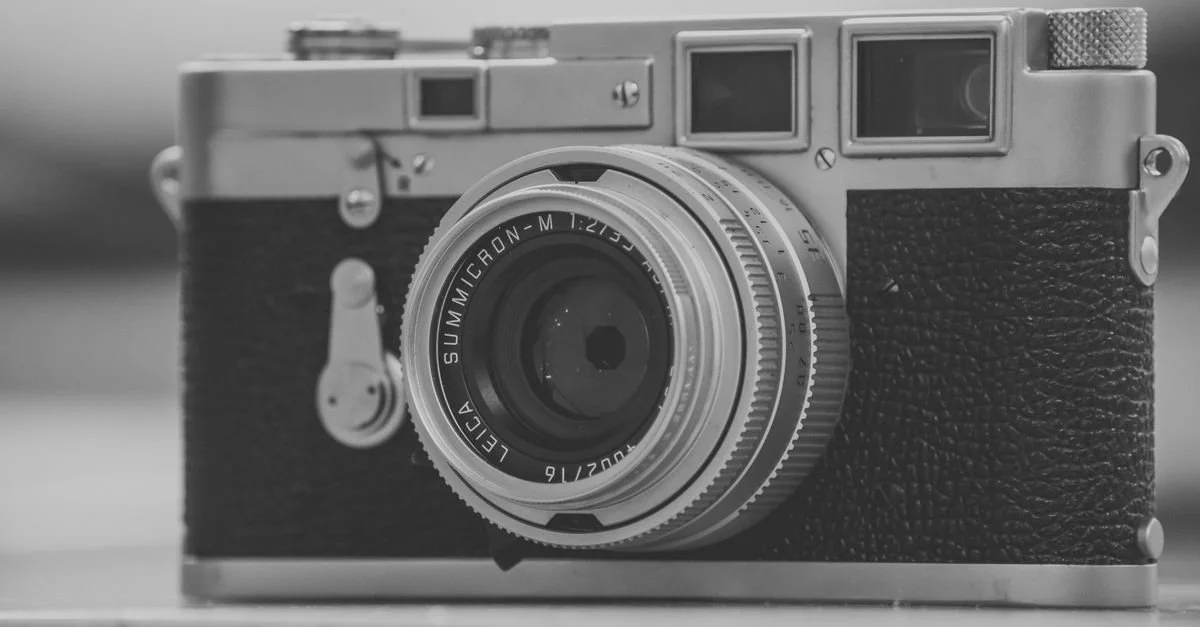
The 2026 Leica Oskar Barnack Award Went to Patience, Not Gear
The 2026 Leica Oskar Barnack Award went to Damir Faizulin for "Preserving Nature as Preserving Ourselves," a long-term documentary series on the mountains of Dagestan in the North Caucasus. The win rewards what awards should reward: years inside one place, available light, and the patience to let complexity stay complex. I shoot a Leica M11 with a 50mm, natural light only, and I have opinions about why this particular win matters.
Who Won the 2026 Leica Oskar Barnack Award?
Three photographers took home honors at the Celebration of Photography on October 8, 2026, at the World of Leica in Wetzlar, Germany. Russian photographer Damir Faizulin won the main prize: 40,000 euros in cash plus a Leica camera kit worth 10,000 euros. American photographer Laila AnnMarie Stevens won the Newcomer Award, which carries 10,000 euros and a Leica Q3. Italian photographer Valentina Sinis became the first recipient of the newly created LOBA Women Grant, worth 10,000 euros plus a Leica Q3 and professional support to complete her ongoing series, "The Last Butterflies."
This was the 46th edition of the award, which has been given since 1980 and is named for Oskar Barnack, the man who built the first Leica. More than 400 entries were submitted this year. The jury included Jane'a Johnson of the Museum of Modern Art in New York, Celina Lunsford of the Fotografie Forum Frankfurt, photographer Paolo Pellegrin, and Gu Zheng of Fudan University in Shanghai. The winning work, along with the nine other shortlisted series, is on view at the Ernst Leitz Museum in Wetzlar through February 4, 2027.
What Does "Preserving Nature as Preserving Ourselves" Actually Show?
Faizulin's series documents the mountains of Dagestan, in the North Caucasus of southern Russia, and the delicate balance between the people who live there and the land they live on. He photographs the emerging tourism industry, modern architecture rising next to neglected traditional structures, and a culture visibly changing in real time. At the same time, the work celebrates the region's beauty. It refuses to pick one story.
The backstory is the part working photographers should pay attention to. Faizulin first visited Dagestan as a tourist in 2020 and felt an immediate connection to the place. He had a strong feeling the region was about to change fast, and he wanted to document it. So in 2021, he moved there. Not a two-week assignment. He relocated his life to go deeper. His own words on the work: it is important to him that a photograph does not simplify reality, but helps us recognize its complexity.
That sentence is the whole award, as far as I am concerned.
Why Does This Win Matter to a Working Photographer?
Because it went to time, not equipment. After 27 years behind the camera, shooting celebrities and campaigns across 40 countries, I have learned that the gear conversation is mostly theater. I thought early on it was all about the equipment. It is not. A lot of photographers use a ton of equipment for show, not out of necessity. It makes the behind-the-scenes footage more interesting, and that is about it.
Faizulin won with years, not strobes. He won by being there when the light did whatever it did, and by staying long enough that the place trusted him. That is the oldest lesson in photography and the one every new piece of gear promises to let you skip. You cannot skip it. The award jury, which included one of the great working documentary photographers in Paolo Pellegrin, clearly agreed.
There is a second lesson here about what makes a portrait or a documentary frame last. Flash freezes a moment; sustained attention earns one. When I think about what makes a portrait iconic, it is never the lighting rig. It is the sense that the photographer was actually present for something real.
What Can You Steal From It? Available Light Is a Decision
I shoot natural light only. No strobes, ever. That is not a limitation I work around; it is the decision that shapes everything. The Leica M11 has the best glass and the best colors I have ever used, very flattering, and it rewards you for reading light instead of manufacturing it.
Available light forces a discipline most photographers never develop: you have to move. I once walked up to Snoop Dogg at Quincy Jones's cement ceremony at the TCL Chinese Theatre, Leica M10-P in hand, and asked him to step a few feet into better light. His manager shut it down on the spot. The frame I got instead was the one the real light allowed, and that constraint is the job. You do not bend the light to your will. You find where the light is already telling the truth and you put your subject there.
Faizulin's Dagestan work is that discipline stretched across years. Mountain light is brutal and gorgeous and completely indifferent to your schedule. You shoot what the day gives you, and the series coheres because his eye stayed consistent, not because the light did. If you want to practice this, start with shooting in available light at night, where every choice is visible in the frame.
The 50mm Discipline and the Rangefinder's Slowness
The 50mm is the same view as the human eye. I just prefer it. It is also a constraint: you cannot hide behind a long lens or fake intimacy with a wide one. You stand where a person would stand, and you see what a person would see. The rangefinder slows you down, and that is the point.
Faizulin's method, moving to Dagestan in 2021 to document change he sensed coming, is the 50mm discipline applied to a career. Get close, stay at human distance, and let the complexity stay complex. His quote about not simplifying reality is a working method, not a philosophy. Simplification is fast. Complexity takes years. The award noticed.
For my work as a still photographer, the same rule applies on a compressed timeline. A celebrity sitting takes twenty minutes, not two years, but the job is identical: be present, read the light, and do not simplify the person into a pose. Twenty-seven years of that teaches you that the camera is the least interesting part of the equation.
Where to See the Winning Work
The 46th LOBA exhibition is open at the Ernst Leitz Museum in Wetzlar, Germany, through February 4, 2027. It features Faizulin's winning series, Stevens's Newcomer work, and the nine other shortlisted projects. If you are anywhere near Germany before February, go stand in front of the prints. Screens flatten exactly the qualities this work is about: tonal patience, available light, and time.
And if you take one thing from this year's winners, make it Faizulin's: move toward the story before it changes, bring less gear than you think you need, and let the photograph stay complicated.