Portrait of the Week

Portrait of the Week: Snoop Dogg and Usher — The Quincy Jones Ceremony

Snoop Dogg portrait by celebrity photographer David Christopher Lee, taken at the Quincy Jones hand cement ceremony in Hollywood

The portrait

The frame is all attitude. Snoop Dogg in a black fur jacket and dark sunglasses, shot in the lobby of the Chinese Theatre, glowing with soft flattering light against the darker room behind him. He is standing where I put him, looking straight at the camera, and the portrait has the ease of a man who has been photographed a million times but was actually enjoying this one.

Then there is the second frame. Usher in a long green jacket and sunglasses, same lobby, same soft light, listening to every word of direction I gave him. Two of the biggest names in music, shot minutes apart, in a quiet pocket of the theatre after the ceremony ended. No crew. No entourage in the frame. Just me, my Leica, and two legends who decided to trust the guy with the camera.

The story behind the shoot

A friend invited me to the hand cement ceremony of Quincy Jones at the TLC Chinese Theatre in Hollywood. I brought my Leica M10 P, because I knew there would be celebrities there, and I have learned to never leave the camera at home when that is true.

I got there about a half hour early and there were no celebrities. Then, minutes before the ceremony, the front row filled in: Kareem Abdul-Jabbar, Quincy Jones, Rashida Jones, Snoop Dogg, Usher, and Patrick Soon-Shiong. Snoop and Usher went on stage and gave a speech recognizing their idol, Quincy Jones.

Rashida followed them and spoke about her father's career: more than 60 years in entertainment, a record 80 Grammy nominations, Oscar nominations, and production credits on Michael Jackson's Off the Wall, Thriller, and Bad. In 1985 he produced "We Are the World." Watching him press his hands into the cement, then raise them for the audience, was a sight I will not forget.

After the ceremony came the VIP reception inside the theatre, basically just for the celebrities and Quincy's family. I met Snoop and told him I was a good friend of one of his good friends, Bishop Don Magic Juan. He gave me a hug. I asked if I could take pictures of him. He looked at my camera and said yes, of course. He is a big fan of Leicas, and he knew I was not messing around.

I asked if we could move to the light. His manager came over and said Snoop could not move. Snoop told the manager he was going to do what I said, because, and I quote, "I was the man."

I shot Snoop in the lobby in various poses and showed him the pictures. He absolutely loved them. He was having so much fun that he brought Usher over and told Usher to listen to whatever I said, repeating, "he's the man." Usher listened to everything I said. Snoop cheered me on while their publicists and managers snickered in the background.

I got my shots, and I had a lot of fun doing it. I am still in touch with Snoop, and I am sure we are going to shoot again soon.

The technical takeaway

For photographers, the lesson is this: find the light, then move the person into it, even when everyone around them says the person cannot move.

The lobby of that theatre was not a studio. But there was a pocket of soft, flattering light, and I knew it would give Snoop a nice glow for a serious portrait. When the manager said Snoop could not move, I did not argue and I did not settle for the bad light. I stayed calm, and Snoop overruled his own manager on my behalf. That only happened because I had already shown him I knew what I was doing, and because I kept showing him the pictures on the back of the camera as we went.

That is the discipline I have carried through 27 years as a celebrity photographer in Los Angeles and New York: never let the room dictate the portrait. You do not need a studio. You need one good pocket of light, the nerve to ask for it, and the habit of showing your subject proof the direction is working. Proof beats equipment. Every time.

It is also why I love ceremonies and red carpets. Most red carpet photographers shoot fast and move on. The real portraits happen in the quiet pockets afterward, when the speeches are over and the subject has a minute to actually be photographed.

FAQs

Where did David Christopher Lee photograph Snoop Dogg and Usher? At the hand cement ceremony of Quincy Jones at the TLC Chinese Theatre in Hollywood, during the VIP reception inside the theatre after the ceremony.

What were Snoop Dogg and Usher wearing? Snoop wore a black fur jacket and sunglasses. Usher wore a long green jacket and sunglasses.

How do I book a portrait session? Get in touch here and tell me about the shoot. I photograph celebrities, executives, and anyone who needs a portrait with presence, in Los Angeles and New York.

Book a Shoot

One frame can change how the world sees you. I have spent 27 years making portraits like this one. If you need a celebrity photographer in Los Angeles who knows how to find the frame in any room, book your shoot.
Linda Hamilton: The Headshots She Shoots Once a Decade

The portrait

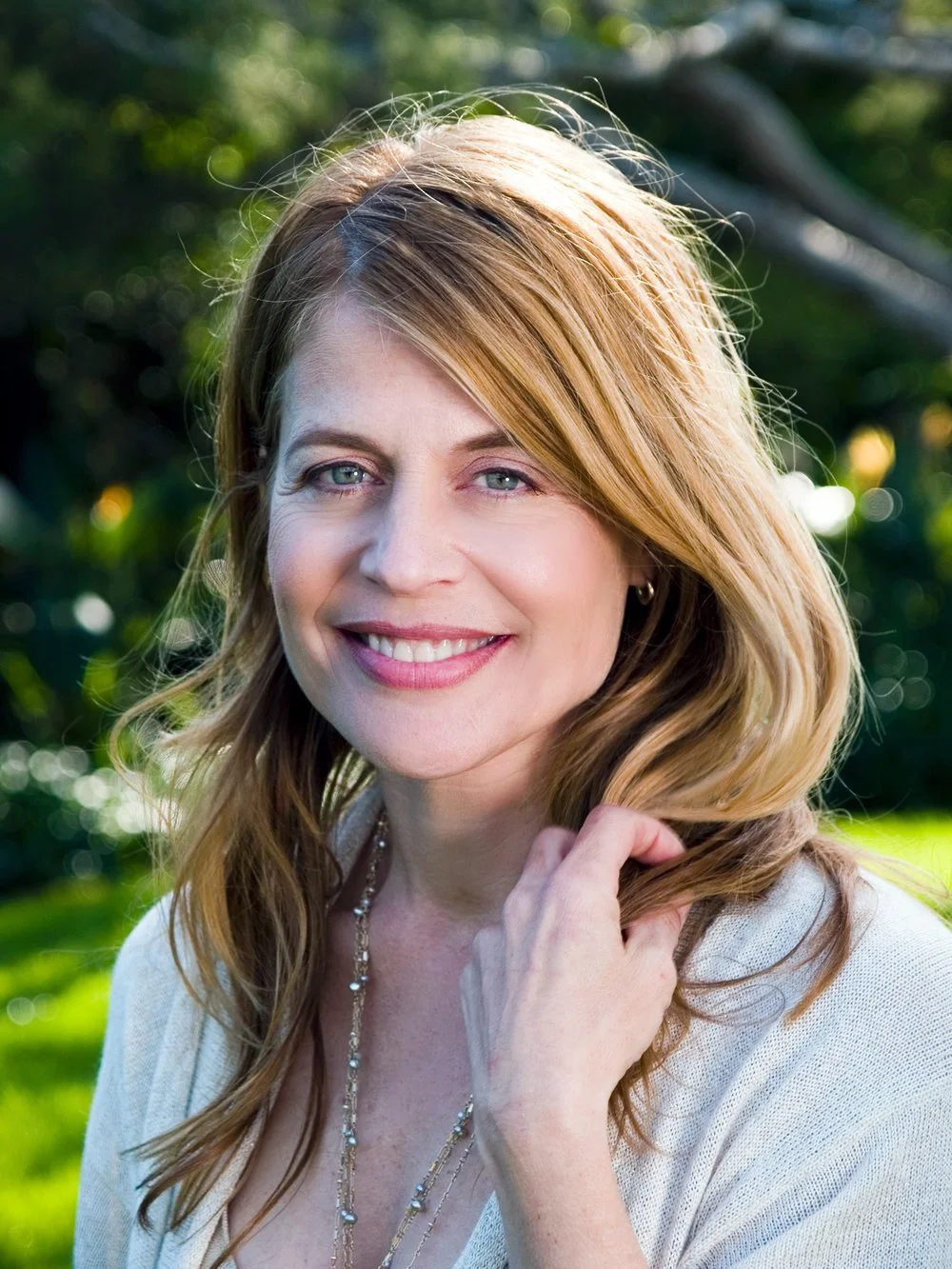
The frame holds Linda Hamilton in the backyard of her own home, green foliage soft behind her, a cream cardigan over an earth-toned top, two layered necklaces catching the light. She is smiling the way people smile when they are at home: easy, unguarded, warm.

Nothing about the image says Terminator. There is no armory, no desert grit, no chin-ups on a cell door. This is a headshot for a woman who shoots headshots once every ten years, and she wears it like a friend stopping by your house for tea. Which, in a way, is exactly what the shoot was.

I remember looking at this frame and thinking about the pressure hiding inside it. This image had to represent her for a decade. One hour, three looks, and the face that agents, casting directors, and fans would see for the next ten years. It is the highest-stakes version of a headshot there is.

The story behind the shoot

The booking came through my friend Greg. Greg was Linda Hamilton's masseuse, and he was also an aspiring model. We were doing a photoshoot one day when he told me he had just started working with her and that she was looking for a photographer to shoot new headshots. He mentioned my name and gave her my number.

I waited. I hoped she would call. A couple of weeks passed, and then the phone rang. Linda told me she only shoots headshots every ten years and that she loved my work. She wanted me to shoot them. She booked me for the following week.

We shot at her house in Point Dume in Malibu. In my head I had the version of her I grew up with: the badass from Terminator 2, super ripped, intense, the heroine of the movie. The woman who opened the door was the opposite: sweet, charming, accommodating. She invited me in, offered me tea, and asked me what the plan for the shoot was.

I told her we should shoot her in natural solid colors with earthy tones. My makeup artist, Cat, started on her makeup while I set up my lights in her backyard. I brought an Alien Bee light kit with a battery pack, so I never needed to plug anything in. We shot three looks for about an hour. I shot her from so many different angles because I wanted to make sure she got exactly what she needed. After all, this was going to be her image for the next ten years.

When it was done, I went home, printed the pictures, and put them in a photo album. A couple of days later I went back to her house so she could choose. She loved the pictures. She picked five for touchups, and then she handed me a $2,500 tip. I was not expecting it. It was incredibly generous. I think she saw me as a new, talented photographer and wanted to do her best to support me.

Her quote opens the chapter of my memoir where I tell this story: "My heart is so light that it's amazing. I get to play all this grief, all this loss, all this disaster and chaos. It's hysterically funny. I am very light." That is the woman in this frame. Not Sarah Connor. Linda.

The technical takeaway

For photographers, the lesson here is the battery pack. A backyard has no outlets, and you do not ask a client to run extension cords through her living room. I brought an Alien Bee kit with a battery pack so I could light anywhere on the property without being tethered to a wall.

This is the whole job of location headshots: show up self-contained. Natural light does the heavy lifting, a battery strobe does the shaping, and you never make the client accommodate your gear. Clients like Linda hire you because the shoot feels effortless on their end. The effort goes in the bag you carry.

The second lesson is about the session itself. Three looks, one hour, every angle covered. When the images have to last ten years, you do not walk away wondering if you got it. You overshoot deliberately: every angle, every look, then you curate later. A relaxed client gives you her real face, and the printed album made choosing feel like unwrapping a gift instead of approving proofs on a screen. Old school. It worked.

That is how I have approached 27 years as a celebrity photographer in Los Angeles and New York: bring your own power, overshoot the coverage, and let the client feel the ease.

FAQs

How did David Christopher Lee end up photographing Linda Hamilton?

Through his friend Greg, her masseuse, who mentioned David's name when she said she was looking for a photographer. She called a couple of weeks later, told him she only shoots headshots every ten years and loved his work, and booked him for the following week.

Where was the shoot?

At her house in Point Dume in Malibu. He lit her backyard with a battery-powered Alien Bee kit and shot her in natural solid colors with earthy tones: three looks in about an hour.

What made the session unusual?

The stakes and the generosity. The headshots had to represent her for a decade, so he shot every angle he could. Then, after choosing five pictures for touchups, she gave him a $2,500 tip, a gesture he read as an established star supporting a new, talented photographer.

How do I book a headshot session?

If you need acting headshots in Los Angeles or portraits anywhere else, get in touch here and tell me about the shoot.

Book a Shoot

One hour. Three looks. A face she would wear for ten years. I have spent 27 years making portraits like this one, from Linda Hamilton's backyard to red carpets across Los Angeles. If you need a headshot photographer in Los Angeles who shows up self-contained and leaves you with your best face, book your shoot.

Linda Hamilton in a cream cardigan and earth-toned top in the backyard of her Point Dume home in Malibu, photographed by David Christopher Lee

Jaime Pressly: The 2005 Clothing Line Shoot | David Christopher Lee

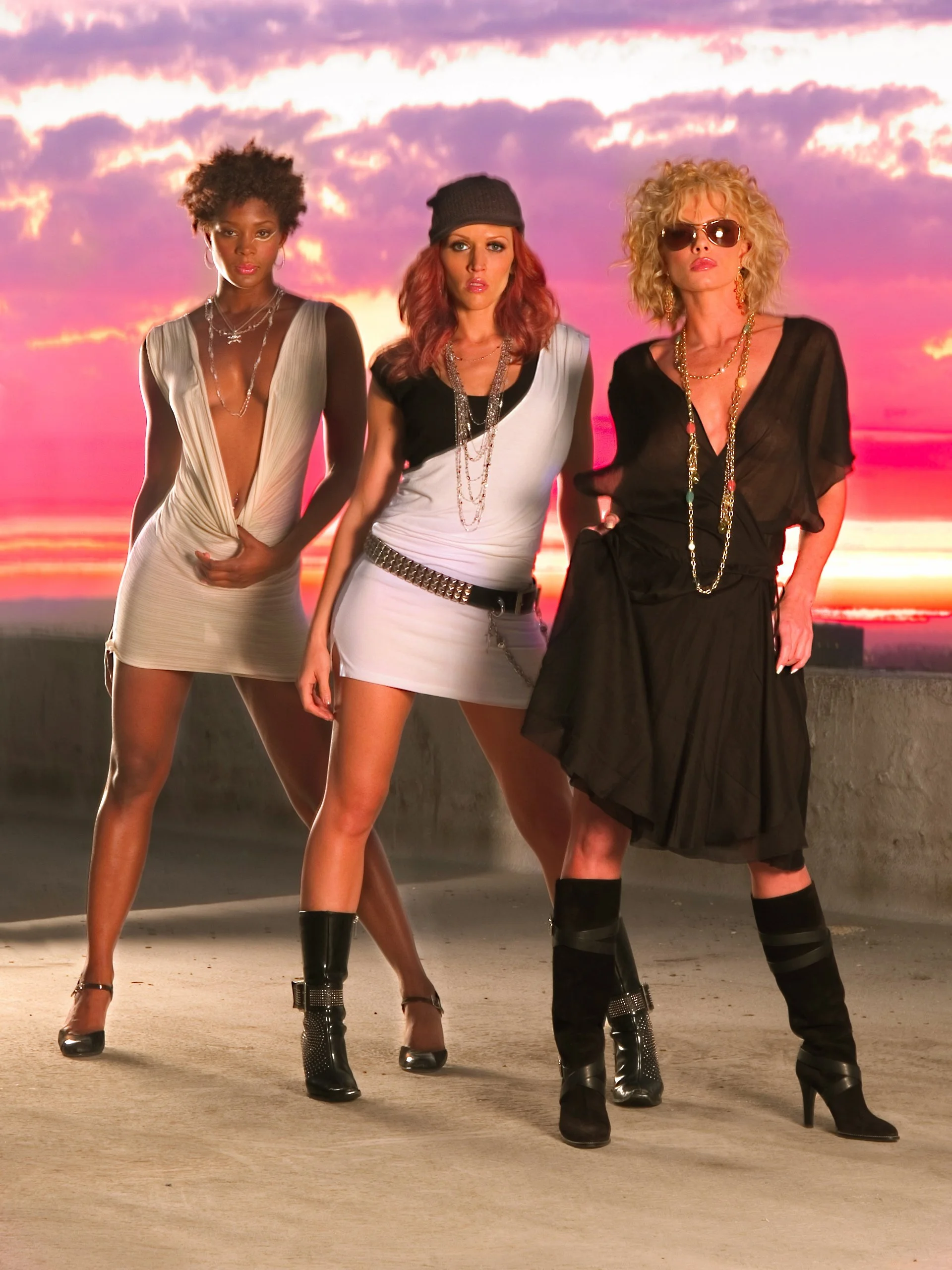
Jaime Pressly (center, black beanie) with two models on a downtown Los Angeles rooftop during her 2005 clothing line shoot, photographed by David Christopher Lee

The portrait

The frame holds three women on a downtown Los Angeles rooftop at sunset. Center: Jaime Pressly, red hair under a black beanie, sunglasses on, knee-high boots, messy curls, and one of the best six-packs I had ever seen. Two models flank her. Around them, Jaime's own bohemian Moroccan set: a lamp, an Arabic rug. Behind them, the downtown skyline in the last hour of daylight. No strobes, no crew lighting.

This is the shoot that built my career. When I look at this frame, I see the exact moment a 22-year-old kid with a flip phone portfolio became a working celebrity photographer.

The story behind the shoot

I moved back to Los Angeles in 2005 and met Jaime Pressly at a party. At the time, she was a sex symbol, known for Not Another Teen Movie, and she had just been cast on My Name Is Earl. I was a 22-year-old kid, fresh out of college.

I started talking to her and told her I was a photographer. She asked what type of pictures I did. I told her fashion, and that I had just shot the campaign for San Francisco International Fashion Week. Then I showed her my flip phone, which had a one-inch screen, and five pictures of my work. She told me she liked my work, then asked if I could do a shoot for her clothing line. Of course I said yes.

We shot at her building in downtown Los Angeles. Her line was dresses, tops, and leggings, primarily made of jersey material. I shot her and two models on her rooftop. Jaime set up the bohemian Moroccan set herself, with a lamp and an Arabic rug. We shot with the downtown skyline behind them and used the natural light of the sunset to get that nice soft glow.

She loved the pictures, and she ended up using me for her next two campaigns.

After we wrapped, she took us to Geisha House in Hollywood, one of the hottest restaurants in town at the time. I ordered Kobe beef and rock shrimp. She told me about her house in Newport Beach and a club called Sutra, the hottest club in Orange County with the best DJs, and said I should come check it out with her. I was very excited.

The pictures were published all over: US Weekly, InStyle, Vogue, and even Perez Hilton, the leading blog at the time. That shoot was pivotal for getting my name out there and building my credibility as a celebrity photographer.

The quote that opens this chapter of my memoir is hers: "If you want to do something, just do it. No one is going to do it for you." She lived it. And that night at the party, showing my portfolio on a one-inch screen, so did I.

The technical takeaway

For photographers, the lesson is the sunset. This entire shoot runs on natural light, and that is not a compromise. It is the point.

A low sun is the biggest softbox you will ever own. On that rooftop, the setting sun gave us a soft glow on skin, a skyline that fell off into haze, and jersey fabric moving in the evening air. No strobe could have made that frame feel the way it feels. When you shoot fashion outdoors, plan around the edges of the day. The middle of the day is your enemy. The last hour is your studio.

The second lesson is about who builds the set. Jaime designed the Moroccan setup herself: the lamp, the rug, the whole bohemian mood. A lot of photographers would have fought that or tried to art-direct over it. I did not. When a subject brings a strong visual idea, you build around it. My job was the light, the skyline, and the frame. Her job was the world inside the frame. That division of labor is why she hired me for two more campaigns. Photographers who need to control everything get one shoot. Photographers who collaborate get careers.

That instinct has carried through 27 years as a celebrity photographer in Los Angeles and New York: light first, ego last.

FAQs

When did David Christopher Lee photograph Jaime Pressly?

In 2005, for her clothing line, on the rooftop of her building in downtown Los Angeles. He was 22 and fresh out of college.

How did the shoot come about?

They met at a party. She asked what kind of pictures he did, he showed her five photos on his flip phone's one-inch screen, and she hired him for her clothing line on the spot.

Where were the photos published?

Everywhere: US Weekly, InStyle, Vogue, and Perez Hilton, which was the leading blog at the time. The shoot built his credibility as a celebrity photographer, and she hired him for her next two campaigns.

How do I book a portrait session?

Get in touch here and tell me about the shoot. I photograph celebrities, executives, and anyone who needs a portrait with presence, in Los Angeles and New York.

Book a Shoot

One frame can change how the world sees you. I have spent 27 years making portraits like this one. If you need a fashion photographer in Los Angeles who can turn a rooftop and a sunset into a campaign, book your shoot.