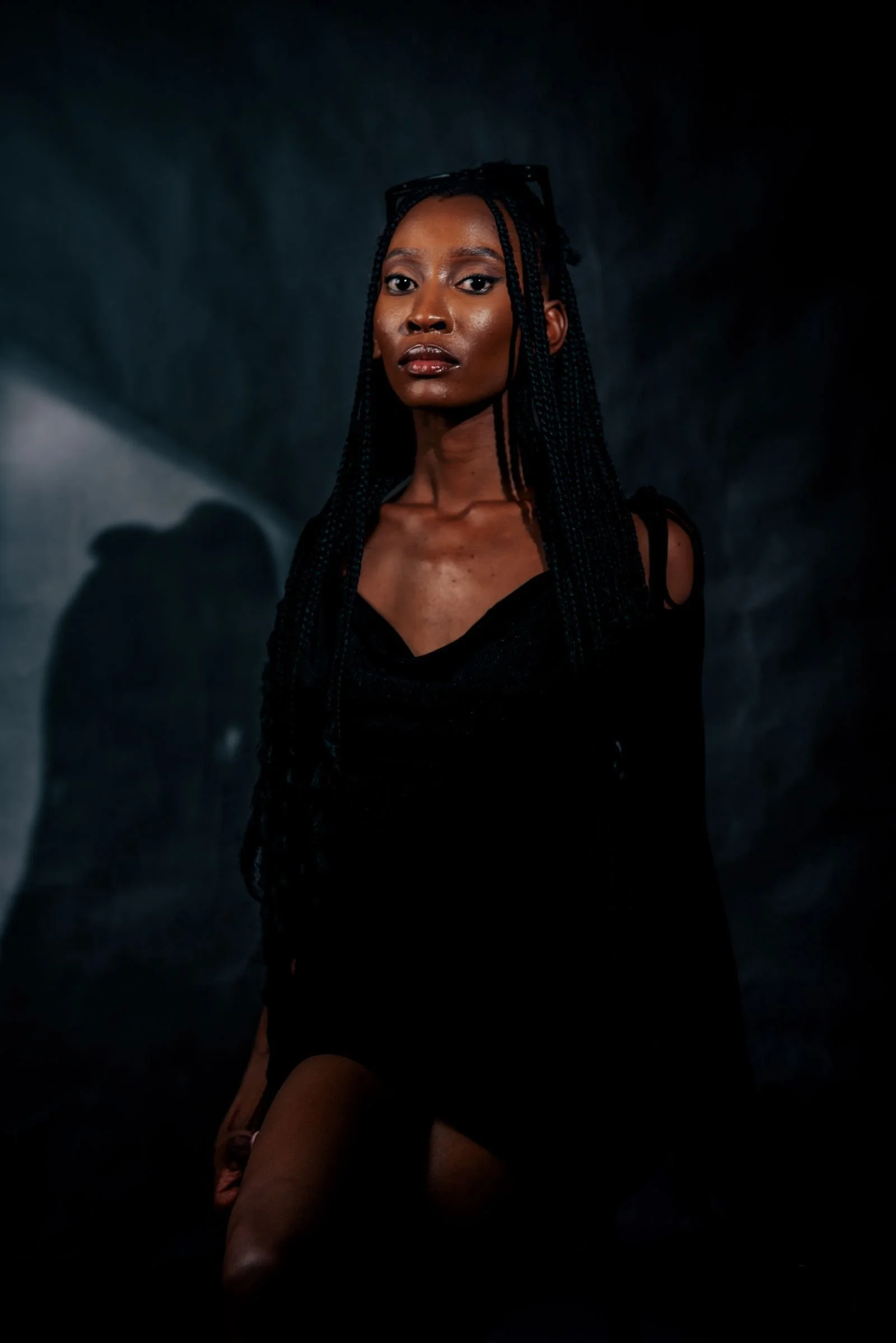
For almost everyone booking a headshot in 2026, the answer is color. Casting directors, recruiters, and agents expect color, and color tells the truth about your skin, your eyes, and how you actually look walking through a door. Black and white is a powerful exception for theatrical actors and certain brands, but it should never be the default.
I have spent 27 years behind the camera photographing people the world pays attention to. Lady Gaga. The Kardashians. Richard Branson. Ella Beatty. My work has run in GQ, Vogue, InStyle, People, and Men's Health. In all that time, I have never delivered a headshot in black and white as the primary file, and I have never had a client regret getting color. That is not a fashion opinion. It is a practical one, and it comes from watching what actually gets people called back.
Why Do Almost All Headshot Photographers Deliver in Color?
Because the headshot has one job, and that job is recognition. A casting director opens your thumbnail on Actors Access or Casting Networks and decides in two seconds whether you look like the person described in the breakdown. An agent glances at your submission email. A recruiter checks your LinkedIn. Every one of those people wants to see you as you will appear when you walk into the room, and you do not walk into rooms in black and white.
Color carries information that black and white throws away. Your eye color, your skin tone, the warmth or coolness of your hair, the way light actually falls on your face at noon in Los Angeles. None of that is decoration. It is data the viewer uses, consciously or not, to decide whether you match the role, the brand, or the team. Every platform that matters in 2026 is built for color: LinkedIn, company bio pages, press kits, casting databases, speaker directories. A black and white headshot on a page of color ones does not look distinguished. It looks like an old file, or an affectation.
When Does Black and White Actually Work Better?
There are real exceptions, and I want to name them honestly rather than pretend color wins every round.
The strongest case is the theatrical actor. If you are submitting for stage work, dramatic film roles, or Shakespeare, a black and white headshot can strip away color distractions and put the entire emphasis on your eyes, your bone structure, and the emotion in your face. Theatrical casting has a longer tradition of monochrome, and a dramatic black and white look reads as intentional there rather than odd. If you are an actor who needs both commercial and theatrical looks from one session, this is the one scenario where I tell people to plan for a black and white version of their dramatic setup from the start.
The second case is brand. Musicians, fine artists, fashion creatives, and certain editorial personalities use black and white as a deliberate identity. When the whole brand is monochrome, the headshot should match.
The third case is practical. Some print contexts still reproduce in black and white: theater programs, certain newspaper placements, festival catalogs. If you know your headshot will be printed without color, having a version that was converted properly matters.
The fourth case is the one nobody says out loud. Black and white is forgiving. It evens out redness and blends uneven skin tone. But proper retouching does the same thing in color, without throwing away everything else. My standing rule in my own studio is that character stays and blemishes go. Moles stay. Pimples go. You do not need monochrome to get clean, natural skin. You need a photographer who retouches like a professional instead of a filter.
And the honest caveat for corporate clients: on LinkedIn and company pages, black and white often reads as cold, distant, or dated. Business is about trust and approachability, and color photographs warmer. I have never once advised an executive to lead with black and white.
Can You Shoot in Color and Convert to Black and White Later?
Yes, and this is the workflow I recommend to everyone. Always capture in color. Always. If you need black and white, convert in post production. Never shoot with the camera locked to a black and white JPEG and throw away the color data, because you can always remove color later and you can never put it back.
But there is a technical point most people miss. A good black and white conversion is not the desaturate button. Turning the saturation to zero gives you a flat, gray, lifeless image because every color becomes the same middle gray. A real monochrome conversion mixes the color channels deliberately: darkening a blue shirt to add contrast against skin, brightening reds so lips do not go muddy, shaping the tonal curve so the eyes carry the image. It is a separate creative decision.
This is also why the decision does not have to happen at the shoot. I shoot on a Leica M11 with a 50mm lens, in natural light, no strobes, and every frame starts as a full color file. The color session is the session. If a client later needs a black and white version for a theatrical print, a program book, or a brand placement, I produce a proper monochrome conversion from the same selects. Book the color session. Decide the treatment per use. Color is the master file, and black and white is a version you make from it when a specific use calls for it.
What I Found When I Audited 10 Los Angeles Headshot Photographers on Black and White
I wanted real numbers instead of opinions, so I went through the public package, rate, and FAQ pages of ten working Los Angeles area headshot photographers and checked two things: do they list black and white as a deliverable option, and does it cost extra. Here is what each page actually says, in their own terms.
Karen Vaisman Photography in Agoura Hills lists its Glamour Headshot Digital Session and Glamour Full Body Print Session as "available in color and black & white." No surcharge is stated anywhere on the page. Black and white is simply one of the two finishes included.
Mark Maryanovich, a Los Angeles portrait photographer, answers the question directly on his FAQ page: "Do you shoot / provide images in black and white? Absolutely!" His page states that all images are delivered in color, "with the option for black and white versions created during postproduction, at no additional charge."
Ken Weingart's Hollywood headshots page states that all images are digital "and can therefore be converted to either color or black and white usage." No fee is mentioned for the conversion.
The Light Committee in Glendale, with actor and corporate sessions from $165 to $345, makes no mention of black and white anywhere on its rate pages. Color is the assumed product.
Cameron Radice Photography in Van Nuys, with by the look sessions from $499 to $699, lists no black and white option on its rates page.
Jose Lara Photography in Camarillo, with a $249 actor headshot session, lists no black and white option on its actor headshots page.
Afonso Salcedo, based in West Hollywood with portrait sessions starting at $525, makes no mention of black and white in his portrait session FAQ.
Samantha Tokita in Downtown LA, with packages at $550 and $650, lists no black and white option on her packages page.
Rogne Photo in Downtown LA, with sessions starting at $325 for the first look, makes no mention of black and white on its pricing report page.
LA Corporate Photo, with an $800 Executive Express session and a $2,000 team rate, lists no black and white option on its headshot packages page.
The pattern is clear. Three of the ten studios mention black and white as a deliverable, and every one of those three includes it at no extra charge. Zero charge a surcharge. The other seven do not discuss it at all, which tells you how settled the default is: they shoot color, they deliver color, and black and white never comes up because clients are not asking for it.
I audited 10 Los Angeles headshot photographers' public package pages: three list black-and-white as a deliverable, every one of them includes it free, and none of the ten charges a surcharge for it.
For extra context, the same pattern holds outside Los Angeles. GoodEye, a Bay Area commercial headshot studio, tells clients in its prep guide that a purchased file includes "any and all versions" at "no extra cost," specifically naming black and white versions. Sean Tucker, a London portrait photographer, delivers each of his five included retouches in both colour and black and white versions. The one outlier I found anywhere was Dan Harris PhotoArt in Jacksonville, whose rate sheet lists black and white as included for in studio sessions but as an additional charge for on location work.
What Should You Ask Your Photographer About Black and White?
If you think you might want a black and white version, do not leave it to chance. Ask before you book, while you are still running through the questions to ask a headshot photographer before booking. Four questions cover it.
One, do you deliver black and white versions, or only color? Most photographers will say yes if you ask, but get it stated before money changes hands.
Two, is there an extra charge? Based on my audit, the answer in Los Angeles is almost certainly no, but a photographer who treats it as a separate product should publish the price up front.
Three, do you do a proper monochrome conversion, or do you just desaturate? If the photographer cannot explain the difference, assume the latter.
Four, can I see examples of your black and white work? A portfolio that shows only color tells you where the photographer's eye actually lives. If you need a strong theatrical monochrome look, hire someone whose portfolio proves they can make one.
How Do You Decide: Black and White or Color?
Here is the decision framework I give people who ask me in person. It has never steered anyone wrong.
If you are an actor submitting for commercials, television, or film, go color. Casting wants to see the person who will walk through the door, and that person has a skin tone and an eye color.
If you are an actor building a theatrical book, get your dramatic looks in color at the session, then have your photographer produce black and white versions of the strongest one or two. You keep the color masters and you get the theatrical versions as a deliberate choice.
If you are an executive, founder, attorney, physician, or anyone whose headshot lives on LinkedIn and company pages, go color. Warmth and approachability win business, and color photographs warmer.
If you are a musician, artist, or creative whose entire brand is monochrome, go black and white, but make it a brand decision across all your materials, not a one off experiment on one platform.
If you know the headshot will be printed in black and white, get a proper conversion done by your photographer rather than letting a printer do it for you.
And the universal rule underneath all of it: shoot color, decide later. The color file is the master. Every black and white version you will ever need can be made from it. The reverse is not true.
If you are still choosing who shoots it, start with finding the right headshot photographer in Los Angeles. My own sessions run from $1,500 for two looks to $2,500 for five looks, half due to book and half due on shoot day, and every frame is delivered in color unless you ask for the monochrome version. That is the workflow the entire industry settled on, and the audit above shows I am in good company. If the numbers surprise you, the honest breakdown of why headshots cost so much will put them in context before you compare quotes.
Black and White vs Color Headshot: Frequently Asked Questions
Do casting directors accept black and white headshots?
Sometimes, but color is the safer bet. Theatrical casting has a longer tradition of accepting monochrome, especially for dramatic roles. For commercial, television, and film casting, color is the expected standard. When in doubt, submit color.
Should my LinkedIn photo be black and white?
No. LinkedIn, company bio pages, and professional directories are color platforms, and color photographs warmer and more approachable. A black and white LinkedIn photo tends to read as dated or distant.
Can I convert my color headshot to black and white myself?
Technically yes. Any editing app can remove the color. But a proper monochrome conversion done by the photographer involves channel mixing and contrast decisions tuned for black and white, and it looks visibly better than simple desaturation. Ask your photographer for the conversion. In Los Angeles, my audit found that every studio offering it includes it free.
Does black and white cost extra?
Based on my audit of ten Los Angeles headshot photographers, no. Three studios list black and white as a deliverable and all three include it at no additional charge. The other seven shoot and deliver color by default.
Is black and white more flattering than color?
It can be, in narrow ways. Monochrome evens out redness and emphasizes eyes and bone structure. But modern professional retouching achieves the same flattering result in color without discarding information. My rule is that character stays and blemishes go, and that works in either treatment.
If I can only afford one look, should it be black and white or color?
Color. One look means one chance to be recognized and called, and color gives the viewer the most information. A black and white version can later be converted from your color master at no extra cost.