The Short Answer
"Why do headshots cost so much?" Every headshot photographer hears it. You see $1,500 for a session and wonder how pressing a shutter button costs more than your laptop. Fair question. Here is the direct answer: you are not paying for a photo. You are paying for everything that has to go right before and after the shutter clicks, plus the 27 years it took to make all of it look effortless. My headshot rates are public: 2 looks for $1,500, 3 looks for $1,900, 4 looks for $2,300, 5 looks for $2,500. A look is a full wardrobe and styling change, shot and directed by me. What follows is the line by line breakdown of what those numbers buy.
Where the Money Goes
1. Pre-Shoot Consultation and Planning
A great headshot session starts days before you arrive. We talk about what the images are for. An actor's casting headshot, a founder's LinkedIn photo, and a speaker's press kit image are three different assignments, and they get shot three different ways. I guide wardrobe choices, tell you what to avoid, and help you show up looking like your best self instead of a stranger in a borrowed suit. This planning is invisible on the invoice, but it is where good headshots are actually made. A session that starts without a plan is guesswork, and guesswork shows in the final frames.
2. The Session: Direction Is the Real Skill
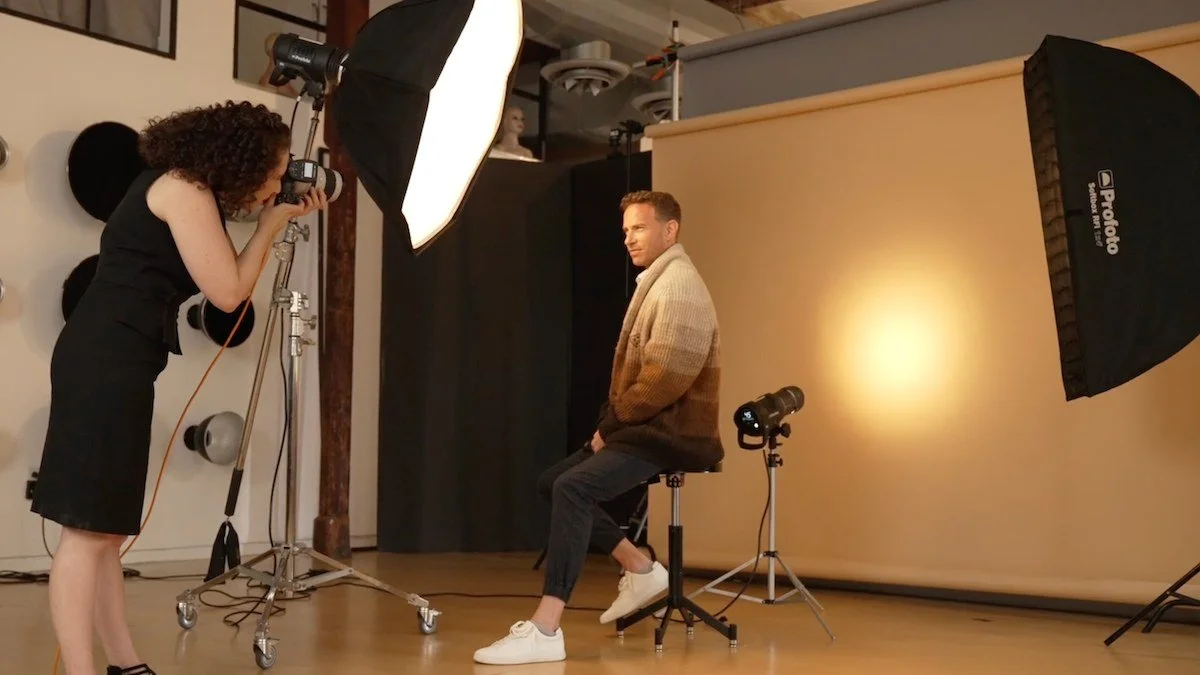
Almost nobody walks into a studio knowing how to be photographed. Most people freeze, force a smile, and hope. The real skill of a headshot session is not operating the camera. It is getting a relaxed, confident expression out of someone who arrived nervous. That means directing every frame: chin position, shoulder angle, weight shift, where the eyes land, the micro adjustments that separate a flat stare from a portrait with presence. A budget shooter hands you three poses and fires away. A photographer shooting a real professional headshot directs you into the version of yourself the camera likes best, and keeps you there take after take. The eyes are definitely the most important whenever I am shooting anybody. I just have to make sure their eyes are open, that there is a catch light, that there is a great expression in the eyes. The eyes say everything.
3. Professional Lighting and Studio Costs
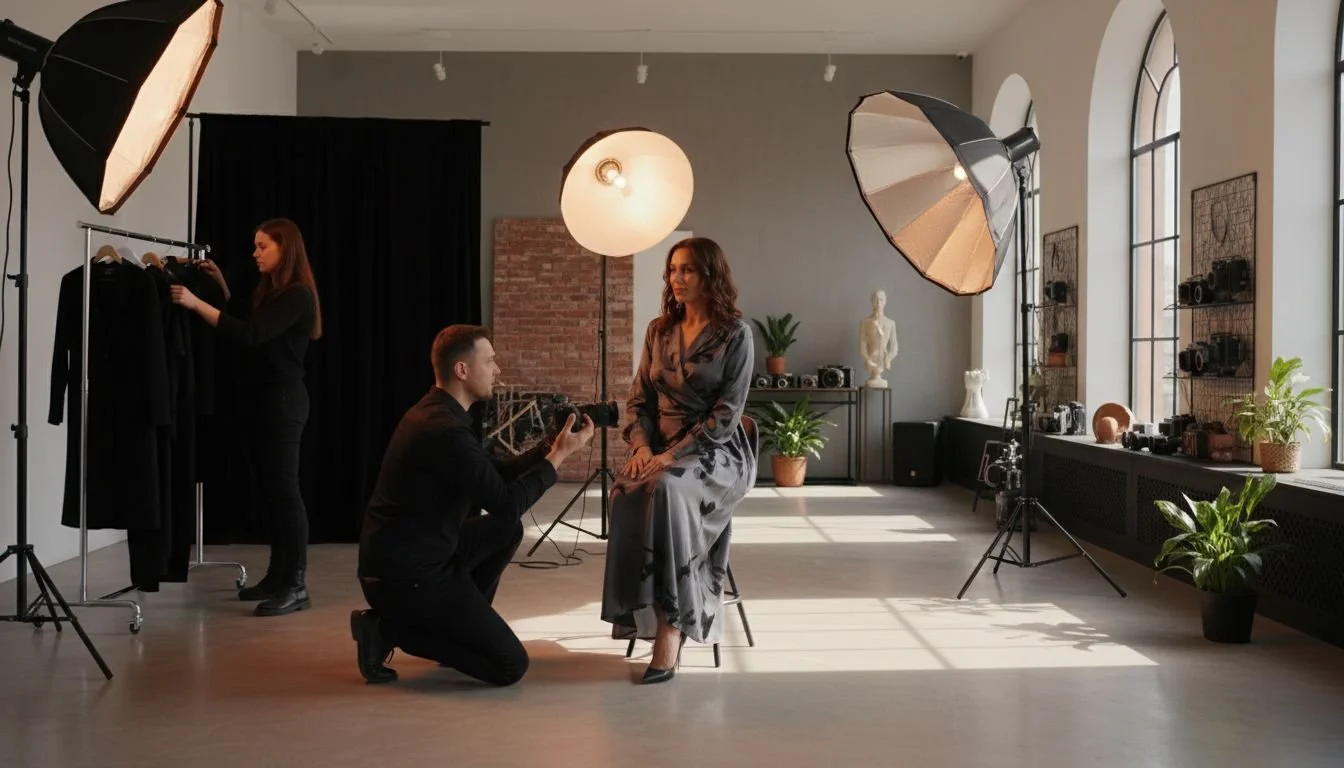
Headshot lighting is built, not found. Key light, fill, and rim light to separate you from the background, each one shaped and positioned for your specific face. Then there is the studio itself: the space, the backdrops, the modifiers, and the tethered setup so you can see results on a monitor as we shoot. Here is the part people get wrong. My cameras and lights are affordable gear. You are not paying for the equipment. Anyone can buy the same strobe. You are paying for knowing exactly where to put it, how high, how close, and how to reshape it when your face needs something different from the last client's.
4. Culling and Selection
A real session produces hundreds of frames. The hard truth is that most people cannot pick their own best photo, and they should not have to. Culling is skilled work: lining up near identical frames and finding the one where the eyes are alive, the jaw is clean, and the expression reads as confident instead of tense. The difference between frame 214 and frame 215 is invisible to you and obvious to a trained eye. That difference is the headshot.
5. Retouching: The Invisible Hours
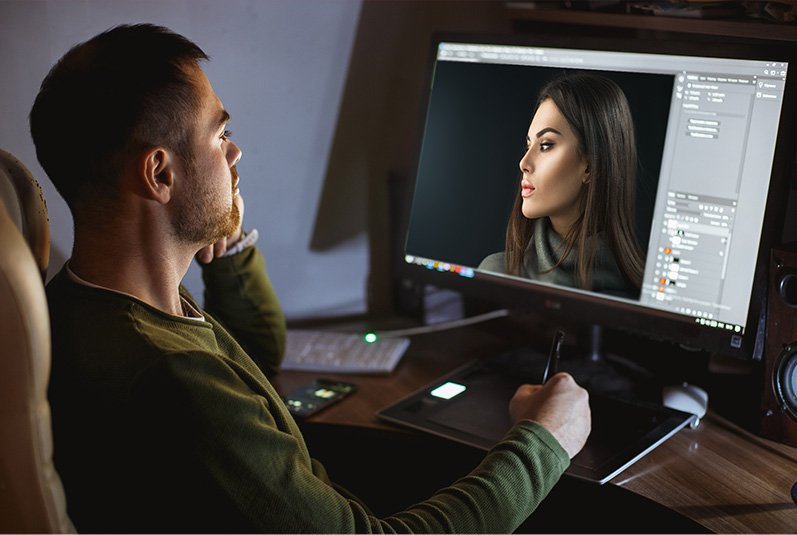
This is the biggest cost nobody sees. Professional retouching is done by hand, image by image. Skin texture stays real. Stray hairs, clothing wrinkles, and background distractions get cleaned up. Color and tone get balanced so the image holds together everywhere it appears. The rule is simple: you should still look like you on your best day. Anyone who has met you should recognize the photo instantly. That restraint takes hours per look, and it is the opposite of what an app does. An app smears your face into plastic in four seconds. A retoucher preserves the person.
6. Licensing and Usage Rights
A headshot is a commercial asset. It lives on LinkedIn, your company website, press articles, conference programs, speaker pages, and maybe a book cover or a billboard. Professional pricing includes clear rights to use the image wherever your career needs it, spelled out in writing, with no surprise invoice six months later when your photo lands somewhere prominent.
7. Twenty-Seven Years of Expertise
A session that looks effortless is the product of 27 years. I have shot Lady Gaga, the Kardashians, and Richard Branson, and been published in GQ, Vogue, InStyle, People, Men's Health, and Departures. That history is not decoration. It is the reason there are no wasted sessions, no reshoots, no discovering in post that the light was wrong. You are buying certainty. The shoot works the first time, because it has worked thousands of times.
What $150 Buys You
The quick shoot tier exists, and it is honest about what it is. Fifteen minutes, one lighting setup, minimal direction, files delivered with little or no hand retouching, often in a rented studio slot shared with a line of other clients. For a detailed look at how session pricing breaks down across the market, I wrote up portrait photography rates in Los Angeles separately. The $150 session is fine if you need a placeholder fast. It will look like one. The expression will be the one you walked in with, the light will be the same light everyone got, and the retouching, if any, will be a batch preset applied to every frame equally.
What $24 Buys You
The AI headshot app generates a face that resembles you from a handful of selfies. No photographer, no direction, no real light, no session at all. The problems are practical. Casting directors and hiring managers can spot generated headshots, the likeness drifts from your actual face, and when someone meets you after seeing the image, the mismatch registers. Your headshot is the first impression before the first impression. An AI approximation gambles your credibility on the single image people judge you by.
How to Tell Whether a Photographer Is Worth Their Rate
Price alone tells you nothing. Here is what to check before you book.
- Portfolio consistency. Is every face lit beautifully, or only the best three? A strong portfolio has no weak frames hiding at the bottom.
- Retouching included and done by hand. Ask who retouches and whether the finish keeps people recognizable. If the answer is vague, the retouching is an afterthought.
- Real direction during the session. A photographer who directs, poses, and adjusts you is doing the actual job. One who just shoots is selling shutter clicks.
- Usage rights in writing. Professional photographers spell out where you can use the images. If licensing is never mentioned, expect limits later.
- Repeat clients and reviews. People who pay $1,500 and come back for more are the strongest pricing signal there is.
The Bottom Line
A headshot is one of the cheapest career investments you will ever make, measured per view. It works for you on every profile, every pitch deck, and every press mention for years. The question was never really why headshots cost so much. It is what a bad one costs you. If you want headshots built the way this article describes, book a session and we will plan yours.