The question "why are Leica cameras so expensive?" gets asked in every camera store, every forum, and every comment section, and it is usually asked with genuine curiosity rather than criticism. A Leica M11 body costs $8,995 before you even buy a lens. That is not a typo. So what exactly are you paying for?
The short answer is that you are paying for how the camera is made, where it is made, how many are made, and what it does to the value of your money over time. The longer answer is eight separate reasons, each one real, and together they explain the price tag completely.
In this guide
- Watch: The Real Reason Leica Cameras Are So Expensive
- The 8 reasons why Leica cameras are so expensive
- What does a Leica cost in 2026?
- My take after 27 years: the tool has to serve the job
- Frequently asked questions
- Book your session in Los Angeles
Watch: The Real Reason Leica Cameras Are So Expensive
Before we get into my breakdown, watch this documentary from the CameraReflex channel. It walks through the full story: Oskar Barnack's original 35mm camera, the Leica that sold at auction for millions, the hand assembly in Wetzlar, Germany, the precision of the optics, the Noctilux and Summicron lenses, and the photojournalists like Henri Cartier-Bresson and Robert Capa who made the red dot famous.

The film makes one point especially well: Leica is not just a camera company. It is a philosophy about slowing down, shooting deliberately, and building an object that lasts generations. That philosophy shows up in every one of the eight reasons below.
The 8 Reasons Why Leica Cameras Are So Expensive
1. They are still hand assembled in Wetzlar, Germany
The biggest single cost driver is labor. Many Leica cameras are still assembled and calibrated by hand in Wetzlar, Germany, by skilled technicians using techniques the company has refined for roughly a century. Digital Camera World describes the SL2 being produced by hand, right down to hand placing the signature red dot on the front of the camera.
Hand assembly is dramatically more expensive than a robotic production line, and it shows up in the price of every body and lens. Germany's skilled labor costs are high, and Leica's technicians are paid as the specialists they are. When you buy a Leica, you are paying for human time at every step of the build.
2. The lenses are engineered like scientific instruments
If the camera bodies explain part of the price, the lenses explain the rest. Leica lenses are manufactured to extremely tight tolerances, using specialty glass and long, meticulous assembly processes. The result is what photographers call the Leica look: strong micro-contrast, smooth tonal transitions, and a sense of three-dimensional separation that has little to do with raw sharpness and everything to do with how the subject renders inside the frame.
That look is the reason so many working photographers stay loyal to the system. You are not just paying for sharpness. You are paying for micro-contrast, rendering, transitions, and the way flare behaves. The glass is widely considered the soul of the system, and it is the hardest part of the whole operation to manufacture.
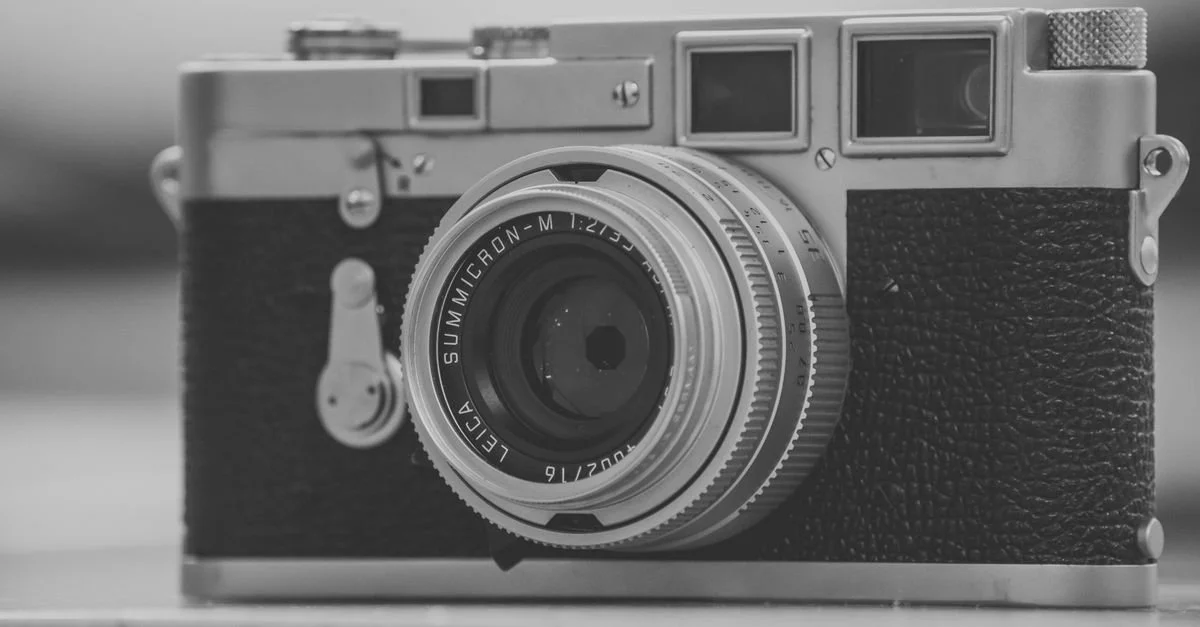
Leica Summicron-M 35mm lens close up on a rangefinder body, the precision optics at the heart of why Leica cameras are so expensive
3. They are made in very small numbers
Leica produces a fraction of the units that Canon, Sony, or Nikon ship. Low production volumes mean the enormous fixed costs of R&D, tooling, and skilled labor get spread across far fewer cameras, so the cost per unit is naturally higher.
Small batches also mean Leica can afford to be obsessive. When a person, not a robot, assembles your camera, small runs are an advantage. The flip side is that scarcity is baked into the business model, and scarcity supports premium pricing. Digital Camera World's Rod Lawton put it bluntly: "First, Leicas are made in small numbers, which is more expensive. Second, they are made for engineering quality without any regard for price."
4. The materials are premium and built to outlast you
Leica's own spec sheet for the M11-P lists a full-metal housing in magnesium and aluminum, or magnesium and brass on the silver version, plus a sapphire glass LCD cover. These are not commodity parts. The brass top plates, precision-machined helicoids, and leatherette coverings are chosen for decades of service, not for a two-year product cycle.
This is why used Leicas feel the way they do. The materials develop patina rather than falling apart. A brass top plate that brasses through its paint tells the story of its owner, and many Leica shooters love exactly that.
5. They are engineered for quality without regard for price
That phrase from Digital Camera World is worth sitting with: Leica builds for engineering quality without any regard for price. Most camera companies design to a price point. Leica designs to a standard, then sets the price to match.
You can see it in the spec sheet. The M11-P runs a 60.3 megapixel backside-illuminated full-frame sensor with no low-pass filter, a Maestro III processor, and triple-resolution DNG output at 60, 36, or 18 megapixels using the full sensor surface. The rangefinder mechanism is a large-base split and superimposed image system with automatic parallax compensation. None of that is cheap to design or build. Leica's own specifications read like a company that refused to compromise, and that refusal is in the price.
6. A century of heritage, from Barnack to the decisive moment
Leica invented the 35mm film camera format as we know it. The Leica I was exhibited at the Spring Trade Fair in Leipzig in 1925, and it changed photography by making the camera portable. Henri Cartier-Bresson used a Leica to capture the decisive moment. Robert Capa carried one through conflict zones. Magnum photographers including Inge Morath, Robert Frank, Josef Koudelka, and Rene Burri shot Leica to tell stories that defined photojournalism.
A hundred years of that history is not decoration. It is brand equity that lets Leica price like a luxury house while still being, at its core, a working photographer's tool. When you buy a Leica, you are buying into the same lineage that defined 20th century photography.
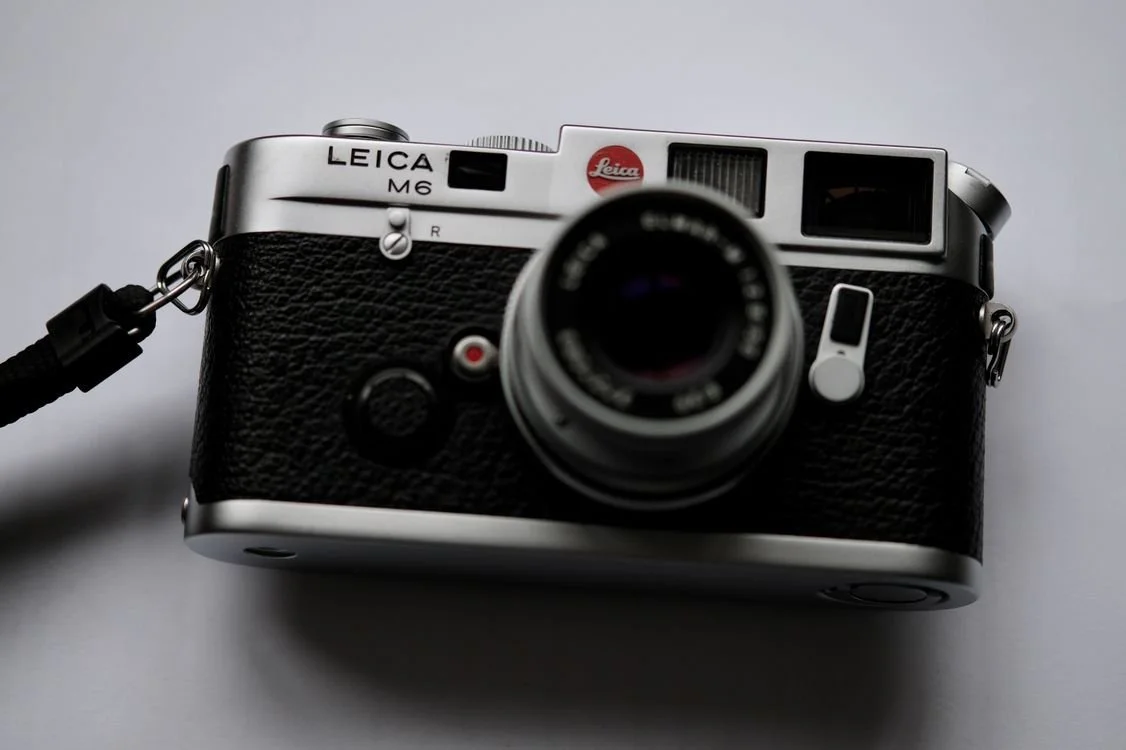
Leica M6 film rangefinder camera with red dot, showing the hand assembled German craftsmanship behind why Leica cameras are so expensive
7. The red dot is a cultural icon, not just a logo
Leica has crossed over from camera brand to cultural icon, recognized in art, fashion, design, and pop culture. The company has partnered with names like Hodinkee and Disney, and photographers, directors, writers, and musicians choose the brand partly for what it signals.
Call it the red dot tax if you like. Luxury positioning means Leica can charge what the market will bear, and the market keeps bearing it. But the positioning only works because reasons one through six are real. The mystique survives contact with the product, which is more than most luxury branding can claim.
8. Resale value that changes the math completely
Here is where the price tag starts to make financial sense. Leica cameras and lenses hold their value far better than almost any other digital system. Park Cameras notes that a used M11, which launched around 6,900 pounds, typically sells second hand for 5,500 to 6,000 pounds depending on condition. Certain Noctilux and early Summilux lenses have more than doubled in value on the second-hand market in recent years.
The extreme example: a 1923 Leica 0-Series, the world's most expensive camera ever, sold at auction for over 12 million pounds. Even the more ordinary M6 film bodies from the 1980s now sell for around double their original price. Slow product cycles and limited production mean your Leica depreciates gently instead of falling off a cliff like a typical digital body. The real cost of ownership, purchase price minus resale, is often lower than it looks. If the used route appeals to you, read my guide to buying a used camera without getting scammed before you shop, because the same inspection discipline applies to rangefinders.
What Does a Leica Cost in 2026?
To put real numbers on it: the Leica M11 launched at $8,995 for the body alone, and lenses are sold separately. The M11-P adds features like Content Credentials for image authenticity. The Q3, the full-frame compact with a fixed 28mm Summilux lens and 60MP sensor, is the popular entry point for photographers who want the Leica experience in one purchase rather than building a system.
None of these are cheap. But measured per year of ownership, with resale factored in, a Leica often costs less than a flagship mirrorless body that loses half its value in three years. That is the argument, and it is an honest one.
My Take After 27 Years: The Tool Has to Serve the Job
I shoot Leica rangefinders myself, including M series bodies, so I read every one of these "why is Leica so expensive" explainers nodding along. The rangefinder experience, the deliberate pace, the manual focus, the way the camera gets out of your way and forces you to see, is exactly why I keep reaching for these cameras after 27 years as a working photographer.
But here is the part the explainers usually miss. No camera makes you a better photographer. Practice does. Early in my career I shot hundreds of sessions back to back, three to four models a day for four months in Miami, and that volume taught me more about light, skin tones, and directing people than any gear upgrade ever has.
I learned that lesson in 2000, at the Teen Choice Awards. I was 18, shooting with my dad's Nikon Coolpix 950, a 2.1 megapixel digital point and shoot, while every other photographer in the room was on film. They thought digital was a toy. But I was the only one who could deliver images that same night, sending files over a 56k modem while everyone else was still developing and printing slides. A publicist paid me $1,250 for a single photo on the spot.
The lesson was not that new technology is always better. The lesson was that understanding your tool, whatever era it comes from, is what creates the opportunity. The same applies to a Leica. A Leica M11 in the hands of someone who shoots every day will produce magic. The same camera in the hands of someone who shoots twice a year produces expensive snapshots.
So should you buy one? If the rangefinder process inspires you to shoot more, if you value the build, the glass, and the way these cameras hold value, then yes. Buy the camera if it inspires you to shoot more. That inspiration is real and it counts. Just do not expect the red dot to do the work. That part has always been yours.
For a deeper look at the flagship body itself, read my Leica M11 review, where I break down the 60MP sensor, the battery life, and the honest flaws like freezing and magenta shift after watching a 200-day real-world test.
Frequently Asked Questions
Why are Leica cameras so expensive compared to other brands?
They cost more upfront because they are produced in lower volumes, built with premium materials by hand in Germany, and designed for decades of use rather than frequent replacement. When resale value and service life are factored in, the real cost of ownership is often closer to competing flagship systems than the sticker price suggests.
Is a Leica worth the money, or is it just hype?
If you judge by specs alone, you will never justify one. Cheaper cameras focus faster and shoot bursts quicker. The value is in how the camera feels, how it changes your process toward slower and more deliberate shooting, and how the lenses render. For photographers who value craft over convenience, it is worth it. For spec chasers, it is not. Be honest about which one you are.
Do Leica cameras hold their value?
Yes. Leica gear is widely known for retaining a higher percentage of its original value than most digital systems, especially M-series bodies and lenses. Limited production and slow product cycles reduce depreciation: a used M11 launched around 6,900 pounds typically sells second hand for 5,500 to 6,000 pounds depending on condition, a far gentler decline than most digital bodies. Certain vintage bodies and lenses have appreciated significantly.
What is the Leica look?
The term refers to how Leica optics render a subject: strong micro-contrast, smooth tonal transitions, and natural separation from the background. It is not about sharpness or bokeh alone, but about how sharpness, contrast, color, and falloff interact to give the subject a sense of depth. Many photographers describe it as mimicking how the human eye naturally sees.
Book Your Portrait Session in Los Angeles
The right camera matters, but the photographer matters more. I have spent 27 years photographing more than 300 celebrities for GQ, Vogue, InStyle, and People, and every session gets the same discipline I bring to a magazine cover. If you need headshots, portraits, or editorial photography in Los Angeles, reach out through my contact page and tell me what the images need to win for you.
What would you buy first if budget were no object: the body or the glass? Tell me in the comments.