The Question Everyone Asks in 2026
Type “AI headshot” into any search bar and you will get thousands of people asking the same thing: why pay a photographer when software can generate a headshot for under fifty dollars? It is a fair question. I have been a celebrity photographer in Los Angeles for 27 years. I have shot Lady Gaga, the Kardashians, and Richard Branson for GQ, Vogue, InStyle, People, Teen, Men’s Health, and Departures. I am not threatened by AI headshots. I am just honest about what they can and cannot do.
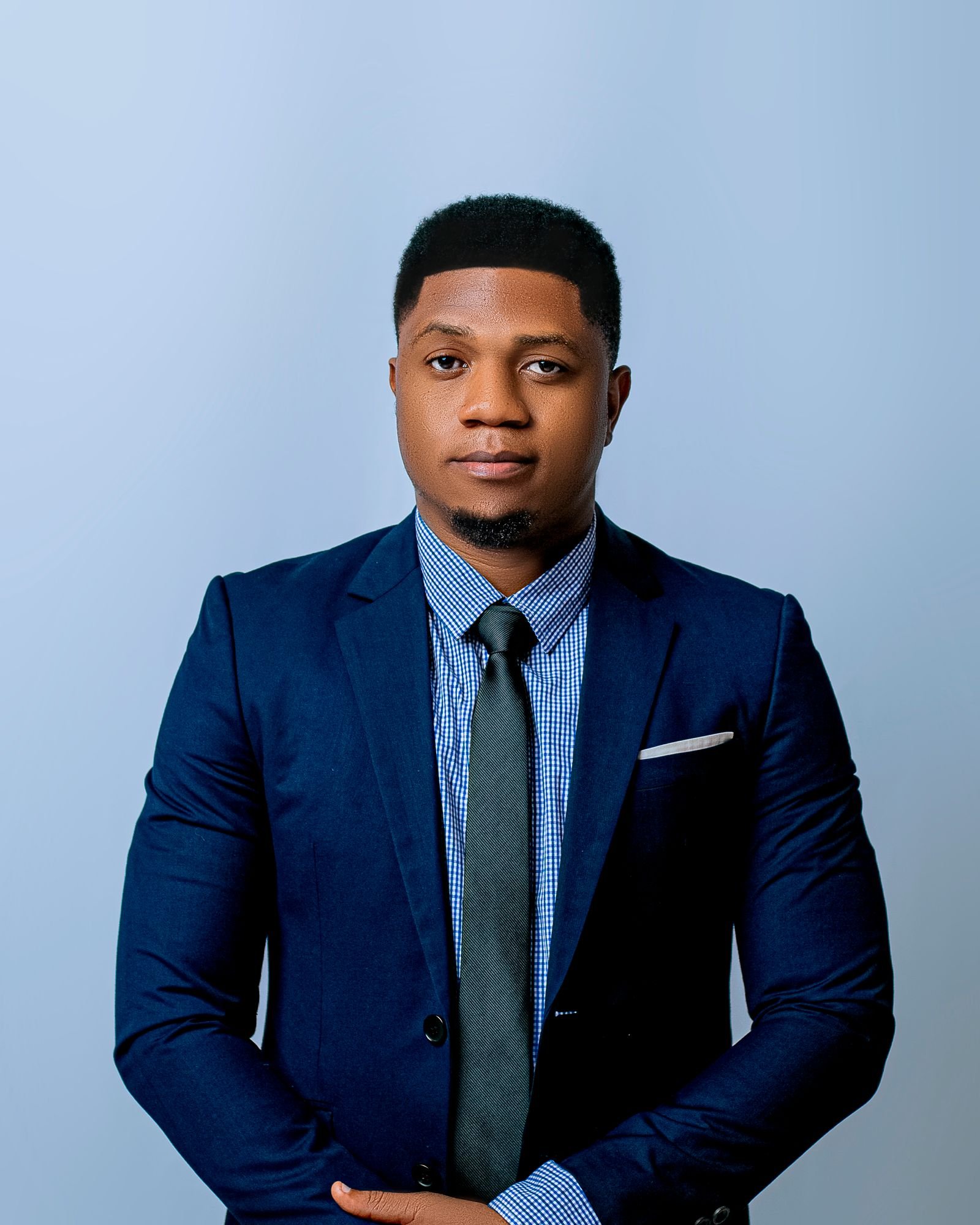
Where AI Headshots Fail
Your Face, Approximately
AI headshot generators do not photograph you. They learn you, roughly, from a handful of selfies, and then they render a face that looks kind of like you. That “kind of” is the problem. The most common complaint is simple: it does not look like me. The generator narrows your jaw, changes your eye spacing, smooths out the asymmetry that makes you recognizable, and hands you a slightly better looking stranger. The whole point of a headshot is that someone who has only seen the photo recognizes you in a meeting. AI fails this test regularly.
The Telltale Artifacts
Spend five minutes in any thread about AI headshots and you will find the horror stories: crossed eyes, a sixth finger on a shoulder, teeth that merge into a white blob, ears that dissolve into the background, glasses frames that bend in impossible directions. Some outputs are genuinely cursed. The generators are better than they were two years ago, but they still invent details where they are uncertain. A photographer does not invent your face. The camera captures exactly what is there, which is the entire job.
Uncanny Uniformity
There is a second problem that gets less attention. AI headshots all look the same. The same blurred office background. The same navy blazer. The same confident-yet-approachable expression. When an entire executive team uses the same generator, the company page reads like a lineup of clones. Your headshot is supposed to differentiate you. A generated image gives you the visual equivalent of stock photography of yourself. If you are a founder, an executive, or anyone whose personal brand carries weight, that uniformity is costing you.
The Authenticity Problem
Press outlets are increasingly requiring authentic, verifiable photos of the people they cover. Editorial teams do not want to discover that the executive in the story has a synthetic face. Speakers, authors, and board members are being asked for real portraits. Even where nobody checks, the risk is social: if someone suspects your headshot is fake, they start wondering what else about your presentation is fake. Trust is the currency, and a real photograph is a small, affordable way to earn it.
Where AI Headshots Are Fine
I am not going to tell you AI headshots are useless. They have a legitimate place. If you need an internal Slack or Teams avatar and the stakes are zero, an AI headshot works. Nobody in the company channel is studying your face for authenticity. If you are job hunting and need a placeholder photo for a job board profile tonight, a decent AI result beats a bathroom selfie. Low-stakes, temporary, and internal: that is the lane where AI headshots belong. The mistake is using a low-stakes tool for a high-stakes job. Your LinkedIn photo, your company bio, your speaker page, your book jacket, your press kit. Those are high-stakes. People make decisions about you based on those images, and a photo that is almost you sends exactly the wrong signal.
What a Real Photographer Delivers That AI Cannot
Direction That Relaxes You
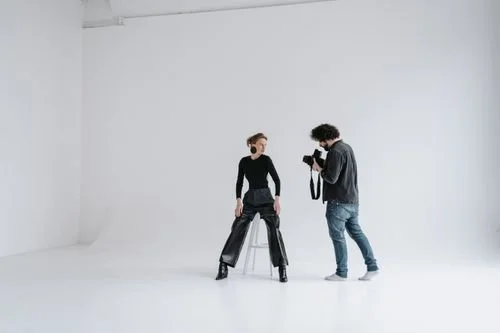
Most people hate being photographed, and it shows. The tight jaw, the frozen smile, the eyes that look scared. A good photographer sees that in the first ten seconds and fixes it with direction. Small adjustments to your chin, your shoulders, your breathing. A joke that gets a real expression out of you. A rhythm to the session that makes you forget the camera exists. AI cannot direct you. It cannot see that you hold tension in your shoulders or that your real smile is the one that happens right before you think about smiling. Twenty-seven years of directing people, from first-time founders to the most photographed people on the planet, has taught me that the difference between a stiff photo and a great one is almost never the camera. It is the direction.
Real Light on Your Actual Face
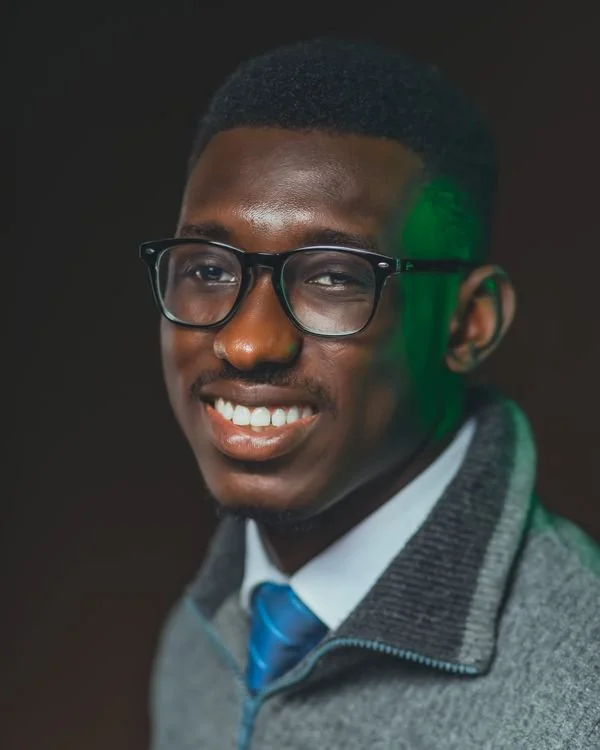
Lighting is the thing AI imitates worst. A generated headshot paints plausible-looking light on a plausible-looking face. A real session shapes actual light around your actual bone structure. The softbox that takes ten pounds off your face. The rim light that separates dark hair from a dark background. The fill that keeps your eyes alive without flattening your features.
Retouching That Keeps You Recognizable
Professional retouching is not plastic skin and erased wrinkles. It is removing the temporary stuff, the blemish, the under-eye shadow from a bad night, while keeping everything that makes you you. The line between polished and fake is a judgment call, and it takes a human eye to make it. I leave the things that give people character. If it is a mole or something like that, it stays. If it is a blemish like a pimple, I take it out.
Coaching for Camera-Shy People
Ask anyone who has sat for me and they will tell you the same thing: the session is fun. That is not an accident. A huge part of the job is managing the psychology of the person in front of the lens. Most executives are brilliant in a boardroom and miserable in front of a camera. My job is to get the boardroom version of them to show up in the frame. No app can do that. The camera-shy client is exactly the person who needs a photographer most.
What It Actually Costs
Here is the part people assume is a problem and is not. My headshot sessions in Los Angeles run: two looks for $1,500, three looks for $1,900, four looks for $2,300, five looks for $2,500. A look is a full wardrobe and styling change, shot and directed by me, so you walk out with multiple distinct, usable portraits. Corporate teams, speakers, authors, executives. Everyone gets the same treatment I give celebrity subjects. Think about what that headshot does. It sits on your LinkedIn, your company site, your speaker bio, your press kit, your book cover. It works for you for years. Amortized over the hundreds of first impressions it shapes, it is one of the cheapest high-leverage investments a professional can make. The AI version costs less because it delivers less: a likeness that is approximate, a look that is generic, and a file you will quietly replace the moment you can.
The Verdict
Use AI headshots for your Slack avatar. Use them as a placeholder. Use them for anything where nobody is making a decision about you. For everything else, the work a professional headshot has to do, earn trust, differentiate you, represent you accurately in rooms you have never entered, hire the photographer. The difference is not the camera. It is a human being who knows how to make you look like yourself on your best day, with light that actually touched your face. That is not something software can generate. When you are ready, book a session.