For most portraits in 2026, digital wins on speed, cost, and consistency. It is not close. But film still wins one thing that digital cannot manufacture: a specific look that clients now request by name, and a discipline that changes how you shoot. Whether film "wins" depends entirely on which game you are playing. I have played both, sometimes on the same night, and here is the honest breakdown from 27 years behind the camera.
## The Night Film Lost to a 2.1-Megapixel Camera
My position on this debate is not theoretical. It was settled for me on a red carpet in the late 1990s, and the story has never left me.
I was credentialed to cover an awards show with a 2.1-megapixel digital camera, which at the time was treated as a toy. Every other photographer on that carpet shot film, because the consensus was that digital was not good enough to publish. It was not. Film was sharper, richer, and more professional in every measurable way.
But a publicist needed one specific picture that night: the publisher of Seventeen Magazine with N Sync. She offered me $1,250 for the image if I could deliver it before morning. After the show, every film shooter packed up their rolls and headed to the lab to develop and print slides for the magazines. I went home, connected a 56k modem, and sent the picture digitally over a few hours. Two megapixels turned out to be just enough for print. I got the sale, an all-access pass, and a career lesson I have carried for decades: the format that wins is the format that delivers what the client actually needs, when they need it.
Film was the better image. Digital was the better business. That split has defined the entire debate ever since, and it still does in 2026.
## What Does a Roll of Film Actually Cost in 2026?
The romance of film survives until the first invoice. Let me put real 2026 numbers on it, because this is where most "should I shoot film" conversations die.
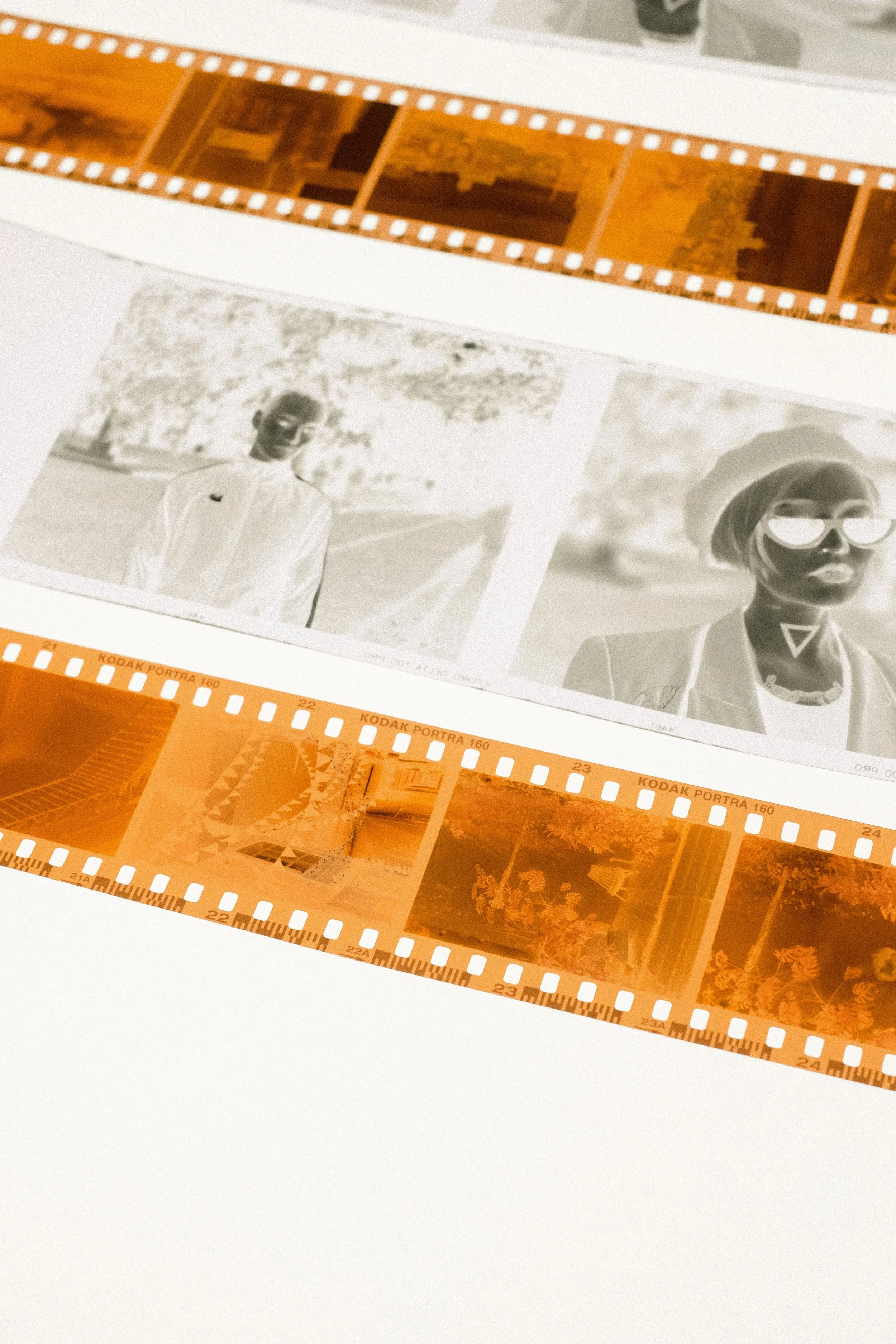
The film itself. Kodak Portra 400, the professional color negative stock most portrait photographers mean when they say "film look," runs roughly $16 to $26 per 36-exposure roll at 2026 retail. Budget color stocks like Kodak Gold 200 run closer to $11 to $15 per roll, and black and white stocks like Tri-X 400 or Ilford HP5 sit in the $13 to $17 range. Those prices do not include anything else. A roll of film is a roll of potential, not a roll of pictures.
Developing and scanning. A professional lab charges around $17 per 35mm roll for C-41 developing, and high-resolution scans add another $8 to $16 depending on size. Boutique Film Lab, for example, charges $17 for developing and $12 for large scans that resolve close to 20 megapixels, so about $29 per roll all in before shipping. The Darkroom's develop-plus-scan bundles run $14 to $20 per roll depending on scan resolution. Turnaround at professional labs averages four to six business days, plus shipping both ways.
The per-frame math. Add it up for one roll of Portra 400: roughly $22 for the film, $29 for develop and scan, and you have 36 exposures. That is about $1.40 per frame, before you factor in the frames you will throw away. In a portrait session where you might burn three rolls to get forty keepers, you have spent over $150 in consumables before the client pays you a dollar. The marginal cost of a digital frame is zero.
The hidden line items. Film cameras need maintenance. Light seals rot. Shutters drift. A used film body that was affordable to buy can become expensive to keep accurate. Expired stock is a gamble. And every roll introduces a week of waiting into your delivery pipeline, which is a real cost when clients expect galleries in days.
This is the math behind every working photographer's answer. Digital did not win because it looked better. It won because the economics are not a contest.

## The Look: What Film Actually Does Differently
Now the part the film faithful are waiting for, and I will give it to them straight: the look is real. It is not nostalgia. It is physics.
Film handles highlights the way digital still struggles to. Overexpose Portra 400 by two stops and the highlights roll off gracefully into a warm, glowing shoulder. Overexpose a digital sensor by two stops and the highlights clip into a hard, ugly white. For portraits, where skin is mostly highlight, this is the entire ballgame. Film forgives. Digital punishes.
The grain is real too. Film grain is a random silver structure that sits in the image like texture in paper. Digital noise is a pattern the camera invents when it runs out of light, and it always looks like a mistake. Nobody has ever looked at Portra grain and called it noise. That distinction matters in a portrait, where the viewer's eye goes straight to the skin.
And the color science of professional stocks was engineered for people. Portra 400 was designed, literally, to render skin tones beautifully under mixed and imperfect light. That is why wedding and portrait photographers adopted it as a standard. The warmth, the gentle contrast, the way reds and oranges behave: it flatters the human face by design, not by preset.
Here is the contrarian part, from someone who shoots for a living: that look is now replicable enough that the gap is a preference, not a quality tier. Twenty-seven years of directing light has taught me that the light matters more than the medium. My own setup is a Leica M11 with a 50mm lens, which I call the same view as the human eye, shot in natural light only, no strobes. I have never needed a film camera to make skin look extraordinary, because the window does the work the stock used to do. The photographer who understands light will beat the photographer with the expensive film habit every time. The craft is the constant. The medium is the variable.
## Where Digital Is Simply Better for Portraits
Let me be blunt about the rest of the scorecard, because the film revival conversation sometimes pretends these do not exist.
Instant review. On a portrait session, seeing the frame immediately is not a luxury. It is the difference between catching a bad expression in the moment and discovering it at the lab a week later. Tethering a digital camera to a monitor lets the client participate in the shoot. That collaboration is worth more than any stock's color science.
Volume and consistency. A corporate headshot day with forty people is a digital job. Full stop. The consistency of exposure, white balance, and delivery across forty subjects is what the client is buying, and film introduces variance at every step: the roll, the lab, the scan. Variance is charm in art and liability in commerce.
Low light. Modern digital sensors see in the dark. A fast prime on a current body shoots clean at ISO levels that would turn film into a grain storm. For event and backstage portraits in bad light, this is not a preference. It is the only option.
Delivery speed. Clients expect galleries in days, sometimes hours. My corporate event work delivers 200 to 300 images the next day. Film cannot touch that pipeline. The Teen Choice Awards lesson, delivered on a 56k modem, has only become more true.
Cost at scale. Zero marginal cost per frame means you can shoot freely, bracket, experiment, and overshoot without a meter running in your head. For a working photographer, that freedom is a creative tool, not just a budget line.
This is also why the AI headshots versus a real photographer debate resolves the same way this one does. The technology question is never really about the technology. It is about what the client needs and what the craft delivers. Digital won the working world for the same reason the real photographer beats the AI generator: reliability, judgment, and delivery.
## Where Film Still Wins in 2026
And yet I am not here to bury film, because film is not dead and the obituary is premature. There are places where film genuinely wins, and they are worth naming precisely.
When the client asks for it. This is the biggest one, and it is growing. A meaningful segment of portrait, wedding, and editorial clients now specifically request film. They grew up on digital perfection and they want the texture. When the client names the medium, the medium wins. Arguing them into digital is bad business.
The discipline. Twelve or thirty-six frames changes your brain. You stop machine-gunning and start seeing. Every film photographer I know, including me, shoots more deliberately on digital because film trained the instinct. If you want to become a better portrait photographer, shooting a few rolls of film is one of the fastest teachers available. It is expensive tuition, but the lesson sticks.
The editorial aesthetic. For fashion editorials, album art, and personal projects, film's imperfections are the point. The grain, the halation, the slight color shifts: these read as intention in a gallery and as atmosphere in print. Digital can emulate them, but emulation is a filter and film is a fact. Some viewers can feel the difference even when they cannot name it.
The archive. Properly stored negatives outlast every digital storage medium we have invented. Hard drives die. Cloud accounts lapse. File formats rot. A negative in an archival sleeve is readable with light and a lens, no software required. For portraits meant to outlive the photographer, that is not a small thing.
## Should You Start With Film in 2026?
If you are learning portrait photography now, here is my direct answer: learn on digital, study on film.
Digital is the correct learning tool because feedback is instant and free. You need ten thousand frames of feedback to build your eye, and film would make that education cost a fortune and take a decade. Master camera settings for portraits on digital first. Learn to see light, direct a face, and expose properly with the training wheels of the histogram and the LCD.
Then buy a roll of film and a simple camera, and shoot it slowly. Not because film is better, but because the constraint will show you what you actually know. Film is the exam. Digital is the classroom. Every serious portrait photographer benefits from sitting the exam at least once.
## The Bottom Line
Does film still win in 2026? For the working portrait business, no. Digital won on cost, speed, consistency, and low light, and the margin is wide. For the craft of portraiture, the answer is more interesting: film still owns the highlight rolloff, the grain, the discipline, and the archive, and clients are asking for the look by name again.
The format was never the point. The light, the direction, and the delivery were always the point. I learned that on a red carpet with a 2.1-megapixel camera while the film shooters waited for their slides. The tools change. The job does not.
If you are booking portraits and want to talk about what actually matters, the light, the direction, and the final image, that conversation starts with the photographer, not the medium. My actor headshots in Los Angeles work is shot on digital and lit by windows, and the clients keep coming back for the look, not the stock.