If you wear glasses every day, the instinct is to wear them in your headshot. That instinct is usually right, but there are real technical considerations, and the smartest move is one most people never think of. After 27 years photographing people in glasses, here is the complete guide.
The Core Principle: Look Like Yourself
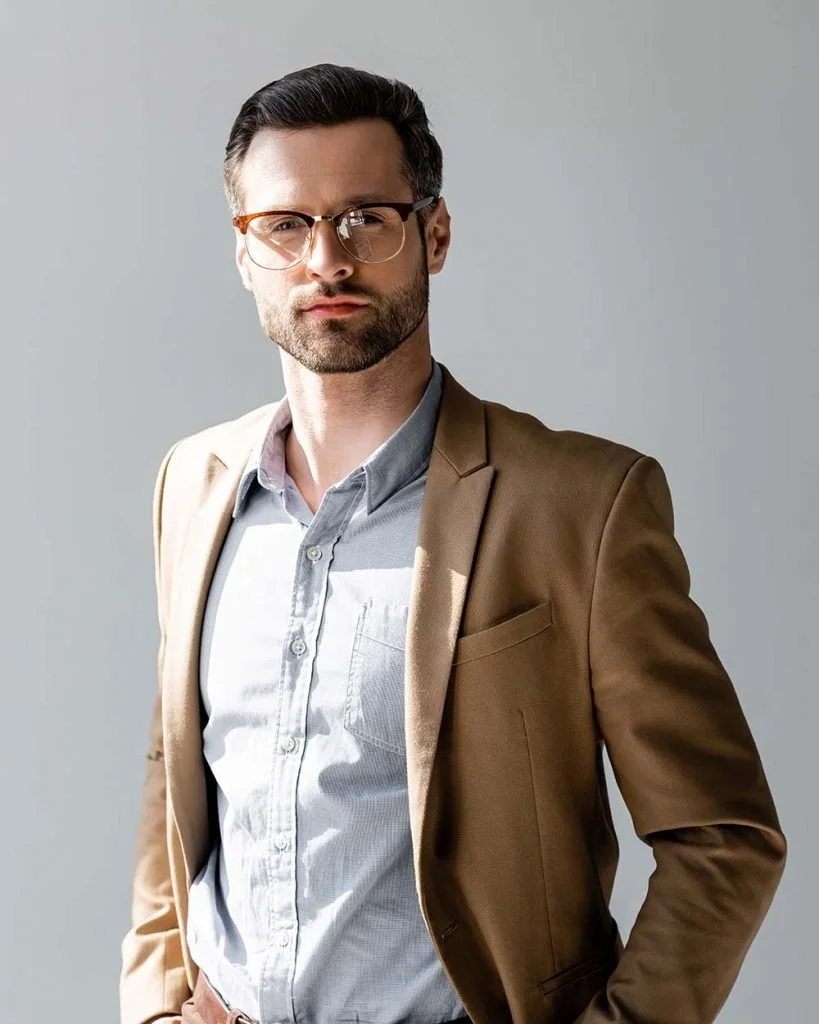
Your headshot is a promise about what you look like. If you wear glasses in every meeting, on every video call, and in daily life, your headshot should show you in glasses. When someone meets you after seeing your photo, there should be no surprise.
The reverse is equally true. If you only wear glasses occasionally, or you wear contacts most days, shoot without them. The photo should match the face people actually encounter.
This is the same honesty principle behind my retouching philosophy: "I leave the things that give people character. If it is a mole or something like that, it stays. If it is a blemish like a pimple, I take it out." Glasses are character. They stay if they are part of you.
When Glasses Help Your Headshot
Glasses do genuine visual work in a portrait:
- They add structure and definition to the face, framing the eyes.
- They signal intelligence and competence in professional contexts. Unfair or not, the association is real and well documented.
- They give the photo a distinctive anchor. In a sea of headshots, frames make a face more memorable.
- For many people, glasses are simply part of their identity. Removing them makes the photo feel like someone else.
I have had clients who took their glasses off for the shoot at someone's advice, saw the proofs, and immediately asked to reshoot with them on. Trust your daily reality over generic advice.
The Technical Challenges (and How I Solve Them)
Glasses create two problems for photographers: glare and distortion. Both are solvable, but only with intention.
Glare and Reflections
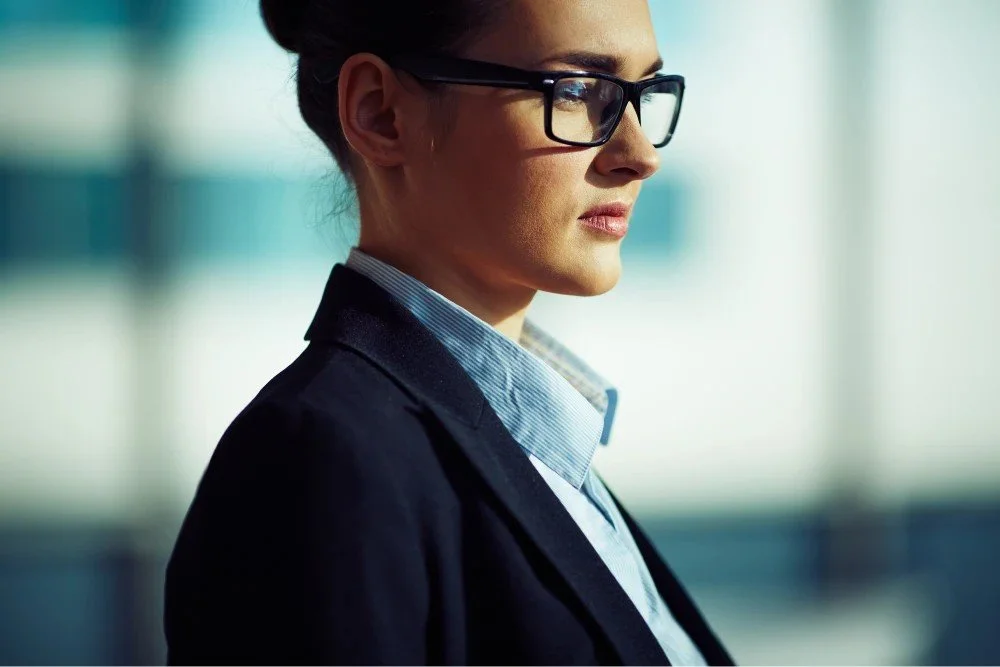
Studio lights reflect in lenses. The fix is a combination of light positioning, head angle, and frame tilt. I adjust my lights specifically for glasses wearers, angle the frames slightly, and check every test frame for reflections before we shoot in earnest. This is routine for an experienced headshot photographer and a nightmare for an amateur. It is one of the quiet technical skills that separates pros from hobbyists.
What you can do to help:
- Clean your lenses thoroughly before the session. Smudges catch light.
- Consider frames with anti reflective coating if you are buying new glasses before a shoot.
- Bring a backup pair. Different frames photograph differently, and options help.
Distortion and Shadows
Strong prescriptions can distort the eyes slightly through the lens, and frames cast small shadows. I watch for both and adjust accordingly. Thinner frames and lenses minimize the effect. If your prescription is strong, mention it before the shoot so I can plan the lighting.
The Eyes Still Matter Most
Here is what I never compromise on. The eyes are everything in a headshot: open, engaged, with catch lights and real expression. Glasses sit between my lens and your eyes, which means I work harder to keep that connection strong. The frames should frame the eyes, never hide them.
Shoot Both: The Smartest Move
My standing advice for glasses wearers: shoot with glasses and without. It takes five minutes during the session, costs nothing extra, and gives you options you cannot create later.
Why both? Because different contexts favor different versions. Your LinkedIn might use the glasses shot that matches your daily look, while a speaker bio or publication might run the cleaner no glasses version. Having both means never wishing you had the other.
This fits naturally into how my sessions work. A look is a full wardrobe and styling change, and removing glasses reads as a meaningful variation within a look. We will shoot the glasses, shoot without, and you will decide later with the proofs in front of you.
Choosing Frames for the Camera
If you are shopping for frames before a shoot, or choosing between pairs you own:
- Medium frames photograph best. Very large frames dominate the face. Very small frames disappear.
- Dark frames add definition and contrast. They are the safe, classic choice.
- Avoid heavy glare prone coatings and very reflective metal finishes.
- Make sure the frames sit straight. Crooked glasses are distracting and surprisingly hard to fix in post.
- Match the frames to your wardrobe formality. This is part of the broader what to wear for headshots planning, and the best colors to wear for headshots apply to frame color too.
Contacts vs Glasses on Shoot Day
Some glasses wearers consider switching to contacts just for the shoot. My advice: do not, unless contacts are already part of your routine. Unfamiliar contacts cause redness, watering, and discomfort, all of which photograph worse than any glasses glare ever could. Your eyes need to be comfortable and natural, and that means sticking with what you normally wear.
The exception is if you genuinely alternate between glasses and contacts in daily life. In that case, contacts for the shoot are fine, because both versions are authentically you. Just make sure your eyes have adjusted before we start shooting. Bring the glasses anyway as a backup, since we shoot both versions regardless.
One more consideration for contact lens wearers: bring eye drops. Studio lights and long sessions dry eyes out, and drops between looks keep your eyes bright and comfortable. It is a small detail that shows up in the final images more than you would expect.
What About Sunglasses or Blue Light Glasses?
Sunglasses have no place in a headshot. Ever. Blue light glasses with a visible tint are a judgment call: if the tint is noticeable in photos, they will look like sunglasses and create the same problem. Clear blue light lenses are fine.
The Bottom Line
Wear your glasses if you wear them daily. Your headshot should look like you. Work with a photographer experienced enough to handle glare and reflections without breaking a sweat. And shoot both with and without, because options are free during the session and priceless later.
If you are weighing whether professional headshots worth the investment applies to you, consider that details like this are exactly what you are paying for. Anyone can point a camera at a face. A professional solves the glasses problem before you even know it exists, and hands you a gallery where every frame works.