December has a way of sorting photographers into two groups: the ones who spend the month scrambling, and the ones who spend it shooting. The difference usually isn't talent. It's the system.
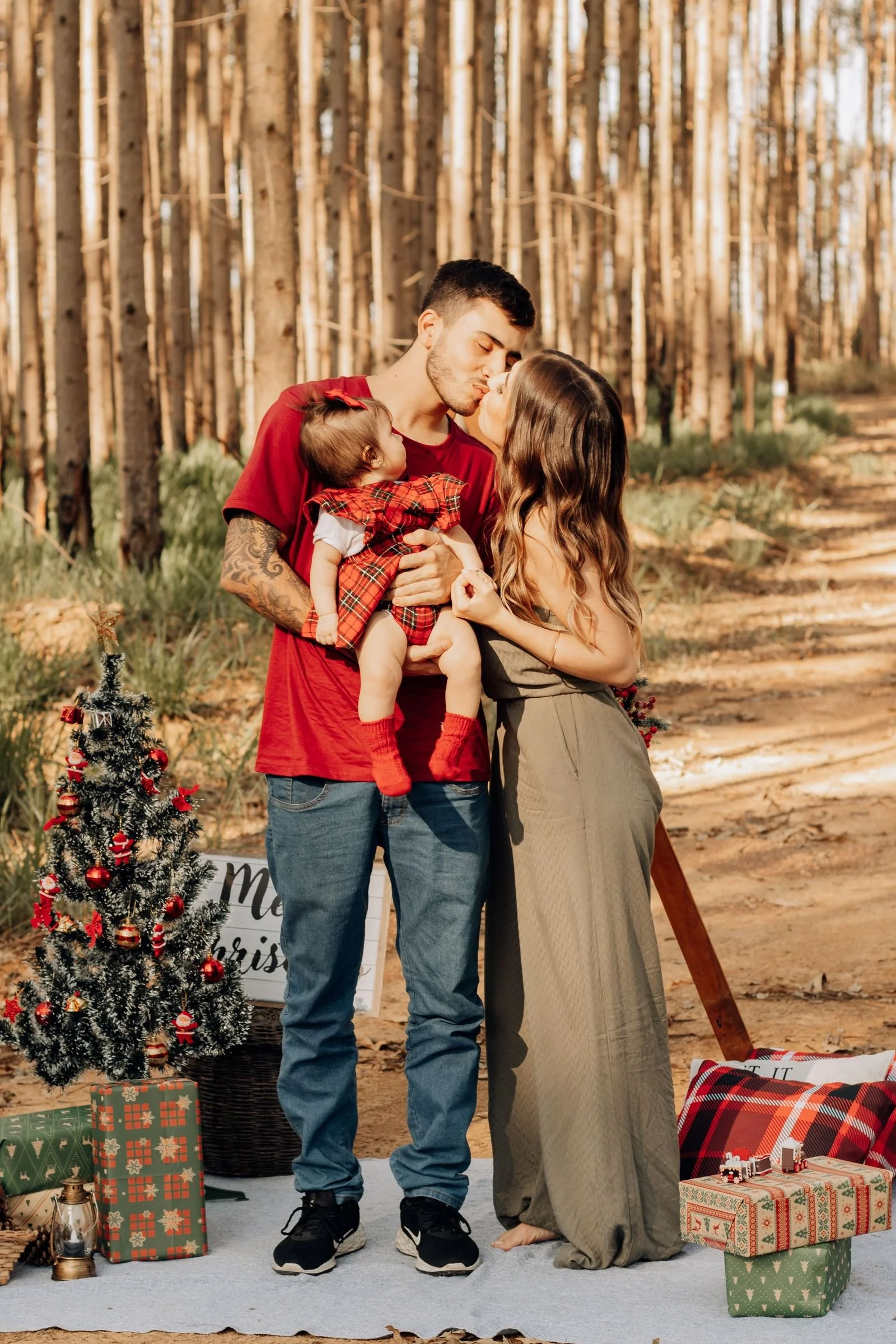
Holiday mini sessions are the highest-leverage days on a portrait photographer's calendar. In a single day, at a single location, you can photograph a dozen families, deliver galleries people genuinely love, and earn the kind of revenue that carries you into the quiet of January. But only if the day runs like a machine instead of a scramble.
I learned the core of my system from an unlikely source: a family posing cheat sheet by photographer and educator Rebecca Rice. Her 15-minute shooting order — a repeatable sequence of groupings that starts with the entire family and ends with a quiet moment for mom and dad — became the heartbeat of every mini session day I run. It's a guide, not a script, and that's exactly why it works.
This guide is the complete workflow around that flow: the booking machine, the pricing, the same-day cull and batch edit, and the gallery delivery that turns one December day into your most profitable of the year.
In this guide:

The Video That Sparked This Guide
Every system needs a seed, and mine came from Rebecca Rice's family posing cheat sheet video. In it, she lays out a shooting order she uses to move through family portraits without hesitation: start with the entire family together, then mom with the kids, then dad with the kids, then the kids together, then each child individually, then the entire family again, then just mom and dad — and finally, ask the clients what else they want.
On paper it looks almost too simple. In practice, it's the difference between a session that drifts and a session that delivers. When every family walks into the same 15-minute window, you can't afford to stand there deciding what to shoot next. Rice's order removes that decision entirely. You always know the next grouping, so your full attention stays where it belongs: on connection, expression, and light.
Two details matter most. First, the order is a guide, not a script. If a toddler is melting down at minute three, you don't plow through the sequence — you read the room, grab what you can, and circle back. The structure is there to serve the session, never the other way around. Second, that final question — "what else do you want?" — is quietly the most profitable sentence in the whole flow. It catches the combinations you forgot, the grandmother who just arrived, the dog nobody mentioned. It turns a rigid system into a personal one.
Watch the video embedded above and notice how little time she spends thinking about what to shoot. That's the whole point. The thinking happens before the session; during it, you're fully present.
Watch: My Family Posing Cheat Sheet, Family Posing Tips by Rebecca Rice
I built the rest of this guide around that 15-minute flow — because a shooting order is only as good as the booking, pricing, editing, and delivery system wrapped around it.
What a Holiday Mini Session Workflow Actually Is
A holiday mini session is a short, themed portrait session — typically 15 to 30 minutes — offered during the holiday season at one set location, with families booked back-to-back across one or two days. Clients get a beautiful, ready-for-the-card gallery at a lower price point than a full session. You get a concentrated burst of revenue at the most demand-heavy moment of the year.
The workflow is everything around the shutter clicks: how the date gets chosen, how bookings and payments happen without you lifting a finger, how clients arrive prepped and on time, how you shoot a full gallery in 15 minutes, how you cull and edit the same day, how you deliver in a way that sells prints and wall art, and how you follow up so next December fills even faster.
Here's what a mini session is not: it is not a discounted full session. That distinction is the foundation of everything in this guide. A full session is custom — your time scouting, styling, shooting for an hour or more, and hand-editing every frame. A mini session is a product: one setup, one look, one tight time window, repeated efficiently. Different products, different prices, different promises.
I wrote in detail about the business side of Christmas minis — choosing profitable dates, structuring the offer, and marketing the day — in my guide to running profitable Christmas mini sessions. This post is the operational companion to that one: the day-of system that makes the business model work.
When the workflow is tight, a mini session day feels almost calm. Clients show up, you shoot for 15 focused minutes, the next family is already waiting, and by dinner you're culling with a glass of something. When it's loose, the same day feels like triage. The system is the difference.
The 7-Stage Holiday Mini Session Workflow
This is the full system, start to finish. Each stage feeds the next — skip one and you'll feel it somewhere down the line.
Stage 1 One Date One Location One Setup
Every decision you eliminate multiplies your efficiency. One date (or one weekend), one location, one backdrop and lighting setup that never moves all day. Scout the spot in advance at the same time of day you'll be shooting, so you know exactly where the light falls and where each family should stand.
One setup also means one consistent look across every gallery, which is a quiet marketing advantage: when families share their images, your work is instantly recognizable. Pack the car the night before — lights, stands, backdrop, stepladder, reflector, snacks, a bluetooth speaker for kids' music — and keep a printed copy of the shooting order taped to the light stand. Future you will be grateful.
Stage 2 Build the Booking Machine
The booking process should run without you. Use an online scheduler with automatic payments: the client picks a time slot, pays the session fee on the spot, and receives an automatic confirmation. No DMs, no "what times do you have left?", no chasing deposits.
Set your terms at booking: the session length, the number of images, the delivery timeline, and the late policy. A family that arrives ten minutes late to a 15-minute session has arrived for a five-minute session — write that down somewhere kind but firm. Send an automatic reminder 48 hours before and again the morning of the shoot, including parking instructions and exactly where to walk.
This is where most mini session days are won or lost — in the inbox, days before anyone picks up a camera. For how this stage fits into the bigger picture of running a client from first contact to final gallery, my portrait photography workflow breaks down all nine steps.
Stage 3 Prepare Every Client Before They Arrive
A prepared client is a fast client. A few days before the session, send a short prep guide: what to wear (coordinated, not matching; texture over logos), when to arrive (15 minutes early, ready to step in), and what to expect (15 minutes, fast-paced, fun). Include a photo of the exact meeting spot so nobody wanders the park looking for you.
Set expectations about the gallery too: how many images they'll receive, when delivery happens, and how prints and holiday cards can be ordered. Clients who know the plan relax into it. Clients who don't spend your 15 minutes asking questions.
For wardrobe and posing prep, posing guidance for people who aren't models pairs well with this — send the link to nervous clients and watch them arrive noticeably more confident.
Stage 4 The 15-Minute Shooting Flow
This is the heartbeat: Rebecca Rice's shooting order, adapted to the holiday setup. Entire family first, while everyone is fresh and the kids still think this is fun. Then mom with the kids. Then dad with the kids. Then the kids together. Then each child individually. Then the entire family once more — because by now everyone has loosened up, and this is often the best frame of the day. Then just mom and dad, which almost nobody asks for and everybody treasures. Finally: "What else do you want?"
Work the order briskly and keep the energy high — music, movement, genuine reactions over frozen smiles. Shoot each grouping in a few variations (tight, wide, laughing, serious) so every combination yields gallery-worthy options. Watch the clock without showing it; a small timer on your phone keeps the day honest.
Two authorities on the mini session format are worth bookmarking alongside this guide: SLR Lounge's 10 tips for mini session success and Pixieset's guide to photography mini sessions. And if you want more of Rice's thinking on the business side of holiday minis, her Christmas in July mini session business tips are a smart companion read.
Stage 5 Cull and Batch-Edit the Same Day
Momentum is everything. Cull the day's sessions the same evening while the faces are still fresh in your memory — flag the keepers, reject the blinkers, and don't agonize. Apply one consistent preset across the whole day for a cohesive look, then batch-edit: white balance and exposure in bulk, then quick individual passes only where needed.
Aim to have every gallery edited within a week, and tell clients that timeline at booking so delivery feels fast instead of merely on time. Same-day culling also means you spot any technical problem — a misfiring strobe, a soft lens — while there's still time to offer a reshoot.
Stage 6 Deliver Galleries That Sell the Upsell
Delivery is not the end of the sale; it's the middle. Send galleries through a platform that makes ordering prints, canvases, and holiday cards effortless — because most families will happily spend more when the buying moment is beautiful and easy. Price your print products with real margins; the session fee got them in the door, and the gallery is where the profit compounds.
Structure the gallery for decisions: favorites first, clear categories, and a gentle deadline ("holiday card orders placed by December 10th are guaranteed for Christmas"). Scarcity and clarity sell more than either does alone.
Stage 7 Follow Up and Fill Next Year
A week after delivery, send a thank-you email with a small incentive to book next year's minis early — a returning-client rate, first pick of time slots, or a bonus print credit. Ask for a review while the glow is fresh, and ask permission to share their images in next year's marketing.
Then write everything down: what worked, what dragged, which time slots filled first, what you'd change. Next December's effortless sellout is built on this December's notes.
Pricing: Mini Sessions Are Not Discounted Sessions

Say it with me: a mini session is a different product, not a cheaper version of the same one. The moment you price minis as "my full session, but less," you've trained clients to wait for the sale. Price them as what they are — a limited, high-demand holiday product — and they sell themselves.
Three pricing models dominate the holiday mini world:
Shoot-and-burn. One flat fee covers the session and a set number of digital images. Simple to sell, simple to deliver, and clients love the clarity. The trade-off: your revenue per client is capped at whatever the package costs, so your profit lives entirely in volume and efficiency. This model rewards the tightest workflow — every minute you shave off the shooting flow and the edit goes straight to your margin.
In-person sales (IPS). A lower session fee — sometimes just a retainer — covers your time on the day; clients purchase prints, albums, and digitals afterward through an ordering session. Higher revenue per client, more work per client. The gallery has to be gorgeous and the ordering process has to be effortless, or the model stalls. IPS shines for photographers who love the sales conversation and want each family to become a four-figure client.
Hybrid. A mid-range session fee includes a small set of images, with additional digitals and print products available for purchase. This is where most photographers land: the base fee guarantees the day is profitable, and the upsell is pure margin. You get the simplicity of shoot-and-burn at booking and the upside of IPS at delivery.
Whichever model you choose, do the math backward from the day. Decide what the day needs to earn, divide by the number of slots, and price the offer to hit that number — not to match the photographer down the street. And remember the golden rule of mini pricing: the price should make a full session look like the obviously better value for anyone who wants more time, more variety, or more of you.
What 27 Years of Tight-Window Shooting Taught Me
I've been photographing people for 27 years — celebrities on red carpets with thirty seconds and a wall of shouting photographers, executives between meetings, families with toddlers operating on no noticeable schedule. Tight windows are not the exception in my career; they're the job.
Here's what those years taught me about days like a holiday mini marathon.
First: preparation is the shoot. Every chaotic session I've ever had was lost before I picked up the camera — the location I hadn't scouted, the timeline I hadn't communicated, the battery I assumed was charged. The photographers who look calm under pressure aren't calmer people; they're just better prepared people. The workflow in this guide is that preparation, written down.
Second: constraints make better pictures. Give me an hour and I'll fill it; give me 15 minutes and I'll distill. The mini session format forces decisions — one setup, one look, one flow — and those decisions are visible in the work. Some of my favorite frames of any year come from the most constrained days, because constraint kills the fiddling and leaves only the seeing.
Third: the client experience is the product as much as the photos. Families don't remember your f-stop. They remember whether the day felt joyful or stressful, whether you learned their kids' names, whether the gallery arrived when you said it would. Run the workflow well and clients describe the day to their friends — and friends book.
And finally: systems compound. The first year you run minis, it feels like a lot of work for a day's pay. The fifth year — with the booking machine built, the prep emails written, the shooting flow in your bones, and half the slots filled by returning families — it feels like the easiest money of your year. Build the system once. Let it pay you every December.
Frequently Asked Questions
What is a mini session?
A mini session is a short, themed portrait session — usually 15 to 30 minutes — offered at a set location on specific dates, with clients booked back-to-back. It's a streamlined product: one setup, one consistent look, and a fixed number of delivered images, designed to be efficient for the photographer and affordable for the client.
How long should a holiday mini session be?
Fifteen to twenty minutes is the sweet spot. It's long enough to work through a full shooting order — whole family, parents with kids, kids together, individuals, couple — and short enough to keep young children engaged and the day's schedule on track. Anything much longer stops being a mini and starts competing with your full sessions.
How many photos should I deliver from a mini session?
Deliver enough to feel generous but few enough to stay curated — typically 10 to 25 finished images, depending on your pricing model. Every image in the gallery should be one you'd proudly share. A tight gallery also makes print and card decisions easier for clients, which helps your upsell.
How much should I charge for holiday mini sessions?
Price backward from what the day needs to earn: decide your target revenue, divide by the number of slots, and build your packages around that number. Mini sessions are a distinct product, not discounted full sessions — the price should reflect the seasonal demand, the limited availability, and the finished gallery, while keeping your full session as the clear premium option.
When should I start advertising holiday mini sessions?
Start building the waitlist in late summer and open booking in early fall — September into October for most markets. Announce to past clients first (they fill the most slots with the least effort), then open remaining times to the public. By the time the holidays arrive, the day should already be sold out.
Book Your Holiday Portraits
If you're a family reading this instead of a photographer: the same system that makes mini session day run smoothly is what makes it genuinely fun. Fifteen focused minutes, a beautiful setup, and a gallery full of images you'll actually frame — that's the whole promise.
Holiday mini session dates are limited every December. Get in touch to reserve your family's spot.
Photographers — what's the one part of mini session day that still feels chaotic for you? The booking, the shooting flow, the editing pileup? Drop a comment below; I read every one, and the best questions become future guides.