Most photographers can learn lighting. Far fewer learn how to direct models on set, and that gap is exactly what separates a working fashion photographer from someone who just owns a nice camera. You can nail the exposure, shape beautiful light, and still walk away with stiff, lifeless frames, because the missing piece was never technical. It was direction.
Directing is not posing. Posing is geometry: chin here, shoulder there, hand placed just so. Directing is performance: giving a human being something real to do, feel, and respond to, then recognizing the moment it lands. After 27 years directing everyone from first-time test models to some of the most photographed celebrities on the planet, I can tell you the camera reads the difference instantly.
In this post I am breaking down seven field-tested techniques for directing models on a fashion set, plus a video lesson from fashion photographer and educator Lindsay Adler on one of my favorite directing tools: repeatable motion prompts that keep a shoot moving and kill the dreaded frozen, pose-y look.
Watch: Directing Fashion Models With Repeatable Motion
The video below is from Lindsay Adler, a Canon Explorer of Light and one of the best fashion photography educators working today, from Adorama's Inside Fashion and Beauty Photography series. Her premise is one every fashion photographer recognizes: it is easy for everything to start looking pose-y and static, and random motion (twirls, jumps, hair flips on command) is almost impossible to control. Her solution is prompts that coach the model into small, repeatable movements.
The key concept is repeatability. If the movement is something the model can do over and over, you can coach small tweaks to the pose on every repetition until everything comes together. Here are her three go-to prompts, in my own words:
1. The bounce step. The model simply bounces from one foot to the other, stepping back and forth. Each step is repeatable, and you can change the hand placement, the expression, or the angle of the body on every pass to build variety without ever asking the model to freeze.
2. Snap to pose. First, place the model in the final position you want, with the body exactly where it should be. Then ask them to move away from it, wind up, turn around, or drop the head, and snap back into place on your cue. The motion introduces life into the hair, the dress, and the fabric, but the body still lands in the position you designed.
3. The fall through. The model lifts one knee parallel to the ground and shifts their weight to fall through a step. You can shoot at the height of the movement or as the foot lands, which creates dramatic, lunge-type steps that stay repeatable take after take.
Adler also shares the camera settings that make this work: a shutter speed around 1/500 of a second to freeze motion in natural light, continuous autofocus with face and eye tracking so the focus holds at wide apertures, and shooting around f/2.8 to soften the background. Watch the full lesson below, then keep reading for the seven directing techniques I pair with prompts like these on every fashion set. More from Lindsay at http://learnwithlindsay.com

7 Ways to Direct Models on a Fashion Set
Prompts like Adler's are one tool. Here is the full directing toolkit I rely on, built over thousands of shoots. Each of these works on its own, but together they turn a nervous model and a chaotic set into images with genuine energy.
1. Brief the Concept Before Anyone Picks Up a Camera
The shoot is won or lost before the first frame. Walk the model through the concept, the mood, and the story before hair and makeup even starts, so they understand what the images are for and what feeling they need to carry. I have used tear sheets from Italian Vogue and French Vogue as visual references for decades, because a picture communicates the goal faster than any paragraph of direction. iPhotography's fashion photography guide (https://www.iphotography.com/blog/getting-started-as-a-fashion-photographer/) makes the same point: build the shoot around a mood board, and when directing, be clear about the poses and expressions you want while leaving room for the model to bring their own creativity. A model who understands the assignment directs themselves halfway there. A model who is guessing will freeze, and you will see the uncertainty in every frame.
2. Direct Motion, Not Frozen Poses
The fastest way to kill energy on set is to sculpt a model into a statue and then ask for emotion. Instead, keep them moving between takes and give them actions, not positions. Adler's bounce step is a perfect example: the model is never holding still long enough to overthink, and you get dozens of micro-variations to choose from. Photographer Manny Ortiz teaches the same principle in PetaPixel's five dos and don'ts for shooting with models (https://petapixel.com/2017/09/11/5-dos-and-donts-when-shooting-with-models/): direct more and pose less. Be specific about the movement or the scene you want them to act out, and you will get a far more natural response than any static pose could deliver. Movement also solves the expression problem, because a face in motion rarely has time to look stiff.
3. Show the Pose Yourself
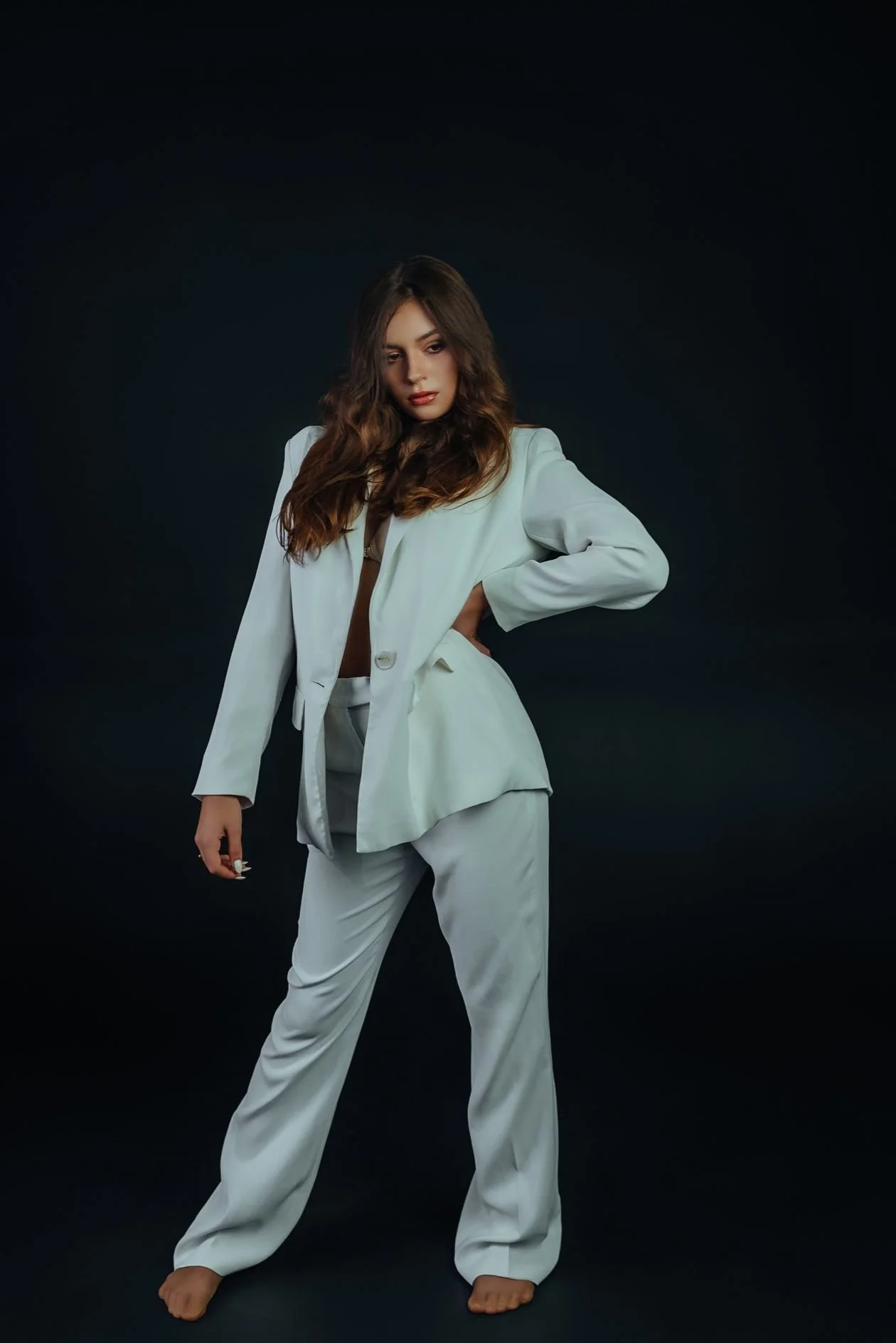
When words fail, and they will, do the pose yourself and let the model mirror you. PetaPixel's working-with-models guide (https://petapixel.com/2017/03/13/working-models-beginners-guide/) calls this out directly: if you have a specific pose in your head, there is no better way to communicate it than demonstrating it with your own body. Yes, it feels ridiculous the first few times. It also gets a laugh, which breaks tension better than any pep talk, and it removes all ambiguity about what you want. I would rather look silly for ten seconds than spend ten minutes describing angles with my hands while the whole set watches the energy drain out of the room.
4. Give Them a Character, Not a Checklist
"Chin down, shoulders back, look fierce" is a checklist, and checklists produce mannequins. Give the model a character or a scenario instead: who they are in this frame, what just happened, what they want. Commercial photographers have taught this for years, and it works because emotion follows imagination. Tell a model to "look confident" and you get a clenched jaw. Tell them they just walked into a room where everyone already knows their name, and the shoulders drop, the chin finds its angle, and the eyes come alive on their own. This is also how you get variety fast: change the story, keep the light and the setup, and the same model gives you five different moods without moving a strobe.
5. Keep the Energy High: Feedback, Music, and Momentum
Your mood is contagious, and the model takes their emotional cues from you. Ortiz's first rule is to give positive feedback constantly, even when things are not working technically, because the moment you grumble about the lighting the model assumes they are doing something wrong. Show them the good frames on the back of the camera as you go; nothing motivates a model like seeing proof that the images are working. Play music the model enjoys, which Ortiz also recommends, because rhythm loosens the body in a way that verbal direction never will. And protect the momentum: PetaPixel's guide suggests telling the whole set you need five minutes to scout the next shot rather than rushing into it, which sounds slow but actually keeps the day moving because every setup lands faster.
6. Direction Is Trust: Respect Every Boundary
None of the techniques above work without trust, and trust is built on respect. PetaPixel's guide lays down the principles plainly: models are people too, the model's comfort is your top priority at all times, and everything on set must stay within what was agreed. Never touch a model or adjust their clothing without asking first, and honestly, you should rarely need to: if you cannot communicate the adjustment verbally or by demonstrating it yourself, the problem is your direction, not their body. Ortiz adds a practical language rule I follow to this day: never describe a model's body in ways that could feel objectifying. Ask them to pull the shoulders back or shift the hip, not to push anything anywhere. Professional, precise language keeps the set comfortable, and a comfortable model gives you braver, more expressive work.
7. Stay Flexible and Let the Model Surprise You
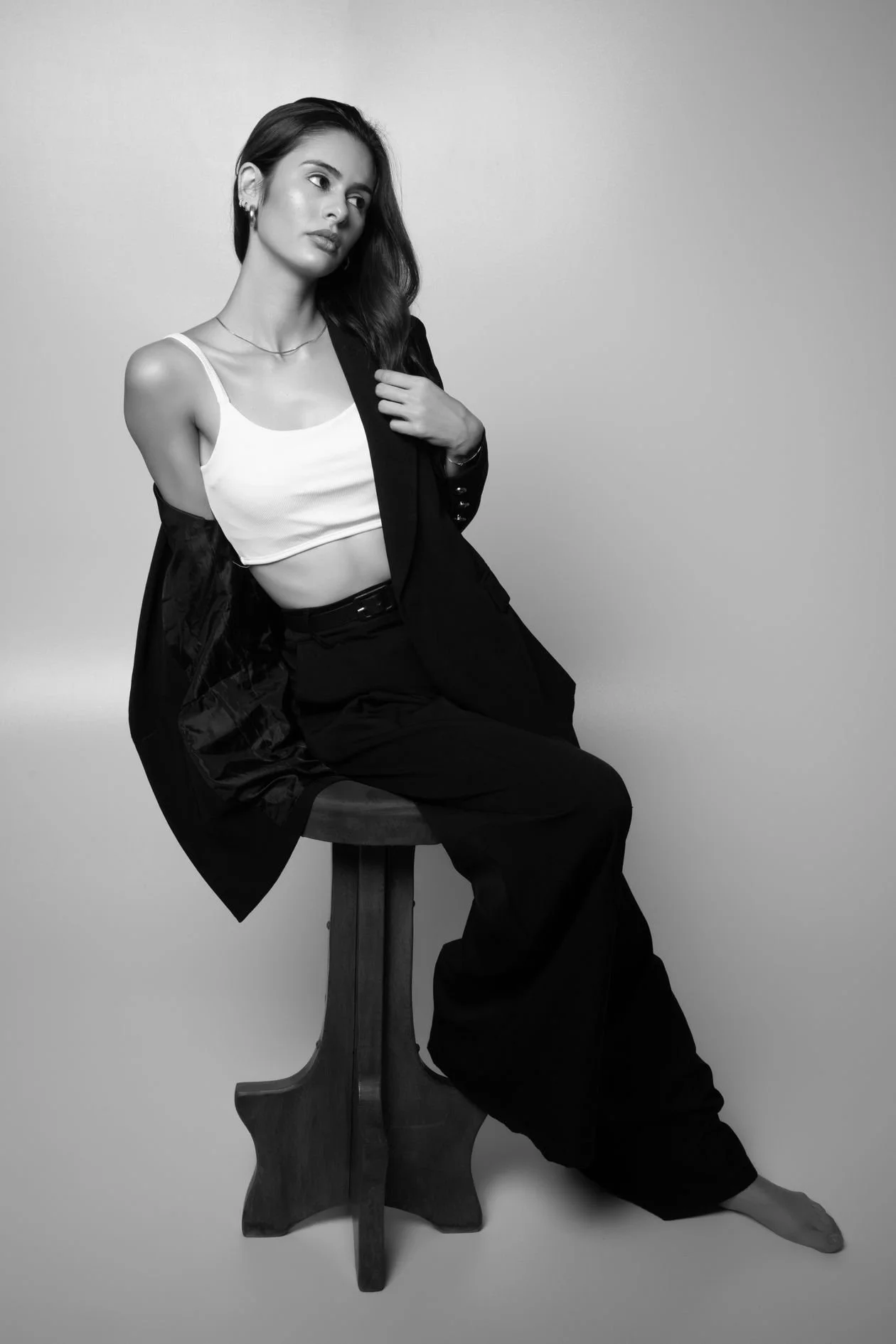
Here is the secret experienced directors rarely say out loud: some of the best frames on every shoot are the ones the model gives you, not the ones you asked for. Once the trust is there and the energy is moving, leave room for the model to interpret, improvise, and offer something you did not plan. iPhotography's guide lands on the same balance: be clear but flexible, and let the model's own creativity into the shoot. Every person in front of your camera is different, and the fastest way to get generic images is to direct every model exactly the same way. The plan gets you to good. Flexibility gets you to great.
Directing Models: What 27 Years Behind the Camera Taught Me
I learned to direct models the hard way: by doing it hundreds of times in four months. Early in my career I spent a season in Miami shooting three to four models a day, every day, after having done only about fifty shoots total before that. There was no preparation, no assistant holding my hand, just a constant rotation of faces, locations, wardrobe, and hair and makeup. It taught me to think on my feet fast. I learned to analyze the situation in front of me, the model, the location, the clothing, the hair and makeup, and decide in minutes how I was going to shoot them.
That volume taught me more about lighting, about working with different skin tones, and about directing models than any workshop ever could. I shot every combination you can imagine, and I learned that every single person is different. I once photographed twins, and even though they looked identical, the nuances of their faces were different and their personalities were completely different, so I had to work with each of them differently. There is no universal direction that works on everybody. That is the whole job: reading the person in front of you.
The biggest lesson was about trust. Directing models, especially celebrities with limited time and strong opinions, comes down to establishing trust and creating the right energy on set, and that is the photographer's job, nobody else's. I talk to my subjects while they are in hair and makeup. I ask about their day. If they are a celebrity, I research what they are working on so they know I did my homework. People can feel whether you are prepared and whether you respect their time, and it shows in the images.
A set has a lot of moving parts and a lot of creative energy, and creative energy turns into chaos fast without someone steering it. I control it with a good team and clear guidance on the overall vision, so everyone from the stylist to the assistant knows what we are building. And I run every shoot on one rule I learned the hard way: under-promise and over-deliver. Manage expectations honestly, then exceed them. Do that consistently, and models, celebrities, and clients all do the same thing: they trust you, they relax, and they give you the frame you could never have directed them into.
If you want the mechanics that sit underneath this directing philosophy, read my full system for directing people who have never modeled, which breaks down the pose-by-pose flow I use when the subject has zero experience in front of a camera: https://www.dclee.net/blog/how-to-pose-people-who-are-not-models. And for how directing fits into the business side of a shoot, from first inquiry to final gallery, here is my nine-step portrait session workflow: https://www.dclee.net/blog/portrait-photography-workflow-9-steps-from-first-inquiry-to-final-gallery.
Frequently Asked Questions
How do I direct models during a fashion shoot?
Start before the shoot with a clear concept and visual references like a mood board, so the model understands the story. On set, communicate with specific, actionable direction rather than vague adjectives: give movements and scenarios instead of static poses, demonstrate anything words cannot convey, and keep feedback positive and constant. iPhotography's fashion photography guide summarizes it well: be clear but flexible, give the model an idea of the poses and expressions you want, and let them bring their own creativity to the shoot.
How do you direct a model with no experience?
Slow everything down and build from simple to complex. Start with easy, repeatable movement, like Adler's bounce step from the video above, so the model never has to hold a stiff pose while they are nervous. Demonstrate every pose yourself first, show them the good frames on the camera so they build confidence, and give them a character or scenario to play rather than technical posing instructions. New models respond to encouragement far better than correction, so praise what is working and quietly adjust the rest.
Should you physically adjust a model's pose?
Almost never, and never without explicit permission. Both PetaPixel guides on working with models are firm on this: direct with words and demonstration instead of touching the model to reposition them. It is a matter of basic respect and professionalism, especially with models you do not know well. If you find yourself wanting to reach out and move someone, treat it as a signal that your verbal direction needs work, not that your hands need to get involved.
How do you get natural expressions instead of stiff smiles?
Stop asking for expressions and start directing situations. Give the model a scenario, a character, or a small repeatable action, and photograph the genuine reactions in between the poses. Keep them moving so they cannot overthink their face, keep the energy light with music and real positive feedback, and shoot through the in-between moments. Some of the most natural frames happen right after the "official" pose breaks, so keep shooting.
Book Your Fashion Shoot in Los Angeles
Directing is the difference between pictures of clothes and photographs with a pulse, and it is the part of the job I have spent 27 years refining. If you are planning a fashion editorial, a lookbook, a campaign, or a portfolio-building test shoot in Los Angeles, bring me the concept and I will bring the direction. Get in touch here and tell me about your shoot.
You can also browse my portfolio to see the directing philosophy above in finished work, and if you found this guide useful, my headshot direction techniques apply the same principles to tighter, more intimate framing: https://www.dclee.net/blog/headshot-photography-tips-7-pro-techniques-2026
Now I want to hear from you: what is the hardest part of directing models for you, getting genuine expressions, keeping the energy up, or communicating the pose in your head? Drop a comment below.