How to Focus a Leica Rangefinder: 7 Pro Tips (2026)
Learning how to focus a Leica rangefinder feels like learning to drive a stick shift. The first week is clumsy. The second week, something clicks. By week three, you wonder why anyone does it any other way. There is no autofocus to rescue you, no joystick, no glowing focus point. There is a small patch in the center of the viewfinder, a focus ring, and your own eyes. That is the whole system, and once you learn it, it is faster than autofocus for the way many of us actually shoot.
This guide covers exactly how to focus a Leica rangefinder, from the mechanics of the focusing patch to the beginner mistakes that ruin sharp shots. The backbone is a video by David Farkas of Red Dot Forum and the Leica Store Miami, whose seven rangefinder focusing tips are some of the clearest instruction on YouTube. I have expanded his tips with the fundamentals, low-light technique, and the practice routine that thin online guides never give you. Watch the video, read the guide, then go shoot. The patch will make sense faster than you expect.

In this guide:
- The video that sparked this guide
- How to focus a Leica rangefinder: the mechanics
- 7 tips for focusing a Leica rangefinder fast
- 5 beginner mistakes that kill sharp shots
- How to focus a Leica rangefinder in low light
- Do you need a viewfinder magnifier?
- What 27 years behind Leica viewfinders taught me
- Frequently asked questions
The Video That Sparked This Guide
The video above is by David Farkas, a Leica expert who runs Red Dot Forum and works with the Leica Store Miami. He opens by explaining what a rangefinder is and how focusing works on the Leica M, then walks through seven tips: keep the rangefinder windows clean, use hyperfocal distance, try zone focusing, pick the right focal point, learn to estimate distance, memorize your focus ring positions, and use small body movements to fine tune focus. His point, which I agree with completely, is that with a little practice, rangefinder focusing becomes second nature, freeing you to think about the picture instead of the camera. The sections below put his seven tips in order and add the beginner context around them.
How to Focus a Leica Rangefinder: The Mechanics
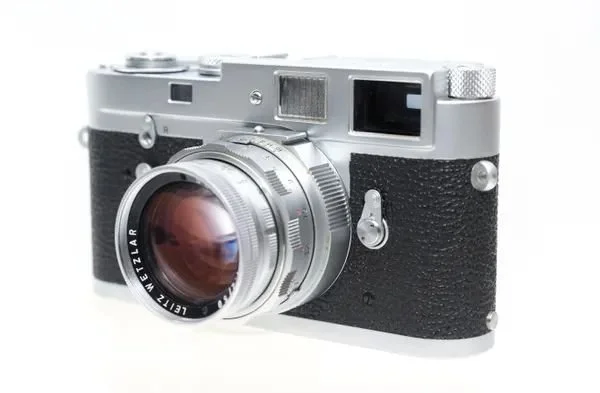
Forget everything autofocus taught you. A Leica M has two small windows on the front of the camera. The big one is the viewfinder window, showing the scene with framelines for your lens. The small one is the rangefinder window. Inside the viewfinder, in the center, sits a bright rectangular patch. That patch shows a second, offset image of whatever is in the middle of your frame. Turn the focus ring, and the patch image slides sideways. When the two images of your subject line up into one, the lens is focused at that distance. That alignment is the entire mechanism. No motors, no sensors, just triangulation done with glass.
Two ways to read the patch
Experienced Leica shooters use the patch two ways, and the L-Camera-Forum community thread "Tips for a new Leica user" describes both well. First, the broken-line method: put a vertical edge, like a doorframe or a lamppost, in the patch. When the line runs straight and unbroken from the main viewfinder field through the patch, you have focus. Second, the coincidence method: on texture, patterns, or faces, watch the doubled image in the patch merge into one. When the images coincide, contrast inside the patch takes a visible leap. That jump in contrast is your confirmation. Both methods work. Use whichever reads faster for the subject in front of you.
Your eyes are part of the camera
A rangefinder does not correct your vision. If you wear glasses, shoot with them on. If the patch looks soft even when the two images align perfectly, the problem is your eyesight, not the camera, and a diopter correction lens for the viewfinder eyepiece will fix it. Beginners often blame the camera for missed focus when the real issue is that they never got the viewfinder matched to their eyes. Get that sorted on day one and you remove a whole category of frustration.
7 Tips for Focusing a Leica Rangefinder Fast
Here are Farkas's seven tips, expanded with the field detail that makes each one actually usable.
1. Keep the rangefinder windows clean
The rangefinder window is small, and fingerprints, smudges, and dust kill the contrast in the focusing patch. A dirty window makes the patch dim and the alignment hard to read, which beginners mistake for a focusing problem. Wipe both front windows with a microfiber cloth every time you pick up the camera. It takes five seconds and it is the cheapest sharpness upgrade you will ever make.
2. Use hyperfocal distance
Hyperfocal distance is the focus setting that gives you the maximum depth of field, from half that distance all the way to infinity. On a Leica lens, the depth-of-field scale is engraved right on the barrel. Set the focus so the infinity mark lines up with the far depth-of-field mark for your aperture, and everything from half the hyperfocal distance to infinity will be acceptably sharp. For street shooting, this means you can preset the lens and shoot without focusing at all. It is the fastest focusing method there is, because it involves no focusing.
3. Try zone focusing
Zone focusing is the working photographer's version of hyperfocal. Pick a distance where your subject will be, set the focus ring there, stop down to f/8 or f/11, and shoot everything inside that zone. A 35mm lens at f/8 with focus set around three meters gives you a generous zone of sharpness for street and documentary work. The discipline is in the presetting: choose the distance before you raise the camera, not after. When the moment happens, you are already focused.
4. Pick the right focal point
Where you put maximum sharpness is a creative decision, not a technical one. In a portrait, that is the near eye, almost always. Place the rangefinder patch exactly on the detail you want sharpest, align the images, then recompose carefully. Recomposing tilts the focus plane slightly, so keep the movement small, or better yet, frame loosely and crop later. One more thing worth knowing, echoed in the forum thread: depth of field extends roughly one third in front of your focus point and two thirds behind it. Knowing that helps you decide whether to focus on the eye, the nose, or split the difference.
5. Learn to estimate distance
Rangefinder focusing gets dramatically faster when you can guess distances. Practice this without the camera: look at a subject, guess the distance in meters, then pace it off. One meter, two meters, three, five. Do it on walks until your guesses land within half a meter. The old Leica hands on the forums call it developing lens-specific eyesight, the ability to see a scene and know the distance before you raise the camera. Once you can estimate, presetting the focus ring before the camera reaches your eye becomes automatic, and zone focusing starts working the way it should.
6. Learn your focus ring positions
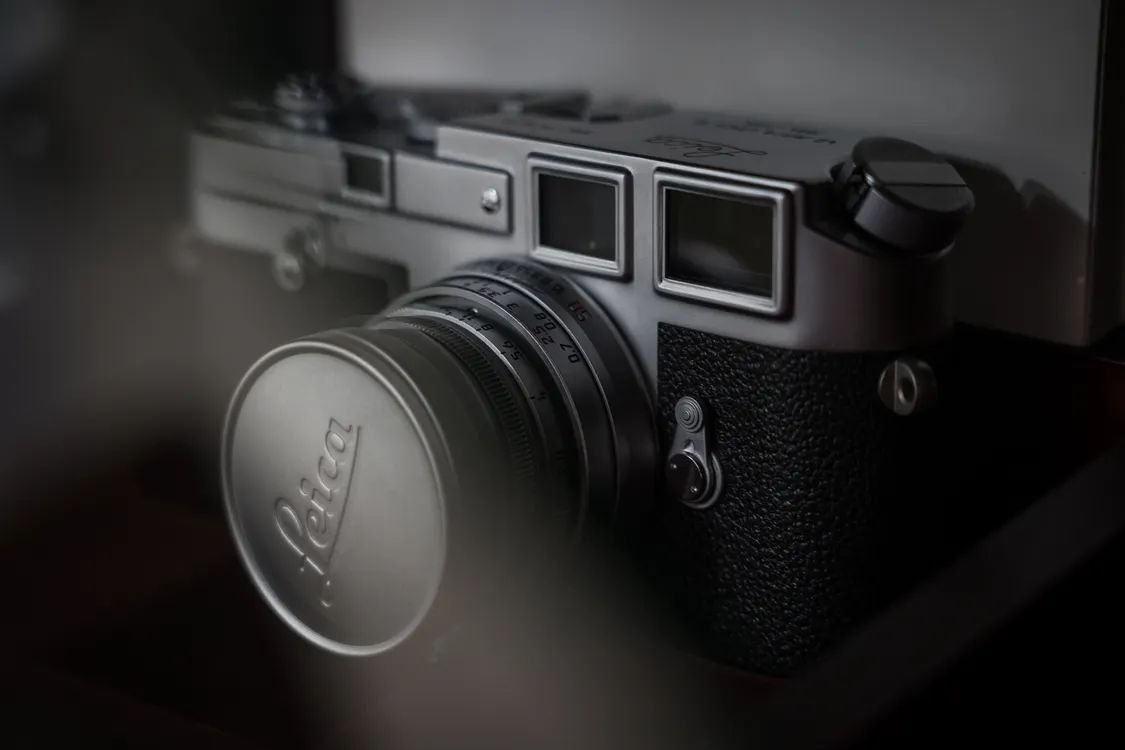
Every Leica lens has a focus throw you can memorize. Learn where infinity is, where one meter is, where three meters is. Many M lenses have a focusing tab that gives your finger a physical reference, so you can feel the position without looking. One piece of advice from the L-Camera-Forum thread that I want to pass on verbatim in spirit: always start with the lens set to infinity. That way you always know which direction to turn the ring, and a few millimeters of rotation is usually all it takes. Starting from infinity removes the hunting. You are always turning one way, toward you, toward the subject.
7. Use your body to fine tune focus
For the last small correction, do not touch the ring. Lean. Once the focus is close, rocking your body forward or back a few centimeters shifts the focus plane with more precision and less fuss than micro-adjusting the ring. This is especially useful for portraits, where the difference between a sharp eye and a sharp eyelash is tiny. Big moves with the ring, small moves with the body. That combination is how experienced rangefinder shooters nail focus at wide apertures without slowing down.
5 Beginner Mistakes That Kill Sharp Shots
1. A finger over the rangefinder window
The rangefinder window sits where your left fingers naturally want to grip the camera. Cover it and the patch goes dark or the second image disappears entirely. If your patch suddenly looks dead, check your grip before you blame the camera. Hold the lens barrel from below, fingers clear of the front windows.
2. Rocking the focus back and forth
Beginners overshoot, then undershoot, then overshoot again, chasing perfect alignment. The patch does not need perfection. When the images coincide and contrast jumps, commit and shoot. Micro-hunting costs you the moment and rarely improves the result. Trust the mechanism.
3. Starting with five lenses
The forum thread's best advice is also its simplest: do not buy the 75mm yet. Learn the M with one lens first, ideally a 35 or 50, until the field of view and the focus throw are second nature. Every new focal length resets your distance estimation and your ring memory. One lens, a few hundred frames, then add the second. If you are buying that first body used, read my guide on how to buy a used camera without getting scammed before you spend the money.
4. Ignoring the depth-of-field scale
That engraved scale on the lens barrel is not decoration. It tells you exactly what will be sharp at every aperture. Beginners treat focusing as a single-distance game and miss shots that the scale would have saved. Glance at it when you set the aperture. Zone focusing and hyperfocal distance both live on that scale.
5. Shooting everything wide open
An f/1.4 lens wide open gives you a focus plane measured in centimeters. That is a fine tool once you have the skill, and a punishing one while you are learning. Stop down to f/4 or f/5.6 while the patch is still new to you. The depth of field will forgive the small errors your eyes are still making, and your keeper rate will stay high enough to keep you motivated. Open up as your accuracy improves. I break down the M system in detail in my Leica M11 review, including how these lenses behave at different apertures.
How to Focus a Leica Rangefinder in Low Light
Low light is where beginners lose faith in the rangefinder, and it is mostly a technique problem. The patch needs contrast to read, and dim scenes have less of it. The fix is to focus on something bright at the same distance as your subject: a lit sign, a streetlamp edge, a window frame. Align the patch on that bright edge, hold the focus, recompose, shoot.
When there is no bright edge to borrow, switch strategies. Preset with zone focusing or hyperfocal distance before the light drops, or estimate the distance and set it on the scale. Night street shooters live on this: set the 35mm to f/8 at three meters and the whole sidewalk is in range. Also, keep the windows clean, because tip one matters twice as much in the dark. The patch is always harder to read at night, but it is never unreadable. It just asks more of your technique.
Do You Need a Viewfinder Magnifier?
Probably not yet. Leica makes screw-in viewfinder magnifiers, typically 1.25x and 1.4x, that enlarge the patch and make precise focusing easier, especially with longer lenses like a 75mm or 90mm shot wide open. They help, but they also crop the framelines and add bulk. For a beginner on a 35 or 50, the standard viewfinder is plenty. Learn the patch first. If you later find yourself shooting a 75mm at f/1.4 and consistently missing by a hair, that is when a magnifier earns its place in the bag. It is a precision tool, not a learning tool.
What 27 Years Behind Leica Viewfinders Taught Me
Here is the truth about rangefinder focusing that no tutorial quite says out loud: it is not a technical skill, it is a discipline skill. The mechanism is simple. A child could understand it in five minutes. What takes time is the patience to practice it until it is unconscious, and that is where most people quit.
I have shot Leica M bodies for years. I brought my Leica M10 to a commercial shoot and ended up photographing the client with it while she shot me with the medium format camera. I brought my Leica M10 P to Quincy Jones's hand cement ceremony at the Chinese Theatre because I knew celebrities would be there and I wanted the small camera. Snoop Dogg looked at it and told me he was a big fan of Leicas, that he knew I was not messing around. Then he told his manager he was going to do what I said, because I was the man. That moment did not happen because of the camera. It happened because I had put in the years to be fast and certain with the camera in my hands.
People ask how you get 27 years, 300 plus celebrities, and pages in GQ, Vogue, InStyle, People, Teen, Men's Health, and Departures. The answer is unglamorous. When I was eight, I decided I was going to find a 1914 D penny at a coin show, and I sat at the kids' table for four hours while my parents told me to give up. I found the penny. That is the same muscle as rangefinder focusing: decide what you want, stay with it past the point of boredom, and trust the process. As one veteran Leica shooter put it on the forums, the more I practice, the luckier I get.
So here is my advice, and it is the same advice I would give any craft. Shoot one lens. Shoot it every day. Miss focus, look at why, shoot again. The patch will stop being something you read and start being something you feel. That transition is the whole game, and no autofocus system will ever give it to you. If you are curious why these cameras command the prices they do, I wrote about why Leica cameras are so expensive, from hand assembly in Germany to the resale market.
Frequently Asked Questions
How do you focus a Leica rangefinder?
Look through the viewfinder and find the bright patch in the center. It shows a second, offset image of your subject. Turn the focus ring and the patch image slides sideways. When the two images line up into one, with a visible jump in contrast, the lens is focused at that distance. Two reading methods help: the broken-line method, where you align a vertical edge so it runs unbroken through the patch, and the coincidence method, where you merge the doubled image into one on texture or faces.
Is it hard to learn to focus a Leica rangefinder?
Not really. Most people get reliable results within one to two weeks of daily shooting. The mechanism takes minutes to understand. What takes practice is speed: estimating distance, presetting the ring, and trusting the patch without hunting. Start with one lens, stop down to f/5.6 while learning, and shoot every day. The learning curve is short and the skill is permanent.
Do you need a viewfinder magnifier for a Leica?
No, not to start. Leica's 1.25x and 1.4x magnifiers enlarge the focusing patch and help with longer lenses like a 75mm or 90mm shot wide open, but they crop the framelines and add bulk. Learn the standard patch first on a 35mm or 50mm. Add a magnifier later only if you are consistently missing focus by a small margin on longer glass.
How do you focus a Leica rangefinder in low light?
Borrow contrast. Focus the patch on a bright edge at the same distance as your subject, like a lit sign or window frame, then hold focus and recompose. When no bright edge exists, preset with zone focusing or hyperfocal distance before shooting. Keep the rangefinder windows spotless, since a dirty window makes the patch much harder to read in the dark.
What is zone focusing and hyperfocal distance on a Leica?
Zone focusing means presetting the lens to a chosen distance and shooting everything within the resulting depth of field, typically at f/8 or f/11, without refocusing between shots. Hyperfocal distance is the specific focus setting that maximizes depth of field, from half that distance to infinity. Both are set using the depth-of-field scale engraved on the lens barrel, and both let you shoot without touching the focus ring at all.
Ready to Book? Let's Talk
If you are planning a portrait session, an event, or a commercial shoot in Los Angeles, I would love to hear what you have in mind. Contact me here and tell me about your project. You can browse the portfolio at dclee.net to see the work, and if you are still building your kit, my Leica M11 review and my guide to how to buy a used camera without getting scammed will help you spend wisely.
Now your turn: what is the one rangefinder focusing trick that finally made the patch click for you, or what is still tripping you up? Leave a comment below.