# What Should You Never Wear in a Headshot?
Everyone asks what to wear. Almost nobody asks what to avoid, and the avoid list is where headshots actually get ruined. I have spent 27 years photographing people for GQ, Vogue, InStyle, People, Teen, Men's Health, and Departures, and I can tell you that most headshot disasters are wardrobe disasters. The lighting was fine. The expression was fine. The shirt fought the face for attention and won.
This is the don'ts list. The positive version, colors, fits, and fabrics that work, lives in [my complete guide to what to wear for headshots](https://www.dclee.net/blog/what-to-wear-headshots). Read this first so you know what to leave in the closet, then read that one to build the outfit.
## Why the Don'ts Matter More Than the Dos
A headshot is a portrait of your face. Everything else in the frame, the shirt, the jewelry, the background, exists to support the face or it exists to compete with it. There is no neutral. A recruiter gives your photo a fraction of the 7.4 seconds that Ladders found recruiters spend on their first look at a resume in its 2018 eye-tracking study. In that fraction of a second, the viewer's eye goes to the highest contrast, busiest, brightest thing in the frame. If that thing is your shirt instead of your eyes, you have lost.
The camera also exaggerates what the mirror forgives. Fine patterns shimmer on screen. Wrinkles you cannot see in person become topography under studio light. Colors that look fine in a closet look radioactive under the wrong white balance. Wardrobe mistakes are the one part of a headshot you can completely prevent before you arrive, so prevent them.
## The Avoid List
### Busy Patterns
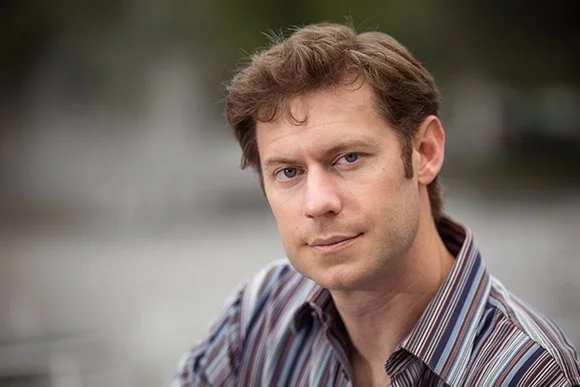
Stripes, small checks, herringbone, polka dots, loud florals. Put them all back. Fine patterns create a shimmering interference effect on camera called moiré, where the pattern of the fabric fights with the pattern of the sensor. The result looks like your shirt is vibrating. Even when moiré does not appear, a busy pattern is visual noise sitting directly under your chin, pulling the eye down and away from your face.
This is the most common wardrobe mistake I see, because patterned shirts look great in person. The camera disagrees. Solid colors win every time. If you love pattern, save it for the full-length portrait, not the headshot.
### Logos, Text, and Graphics
No brand logos. No text. No graphics, no matter how cool. A logo turns your headshot into an advertisement for someone else's company. Text is worse, because the human eye is drawn to words automatically. The viewer will read your shirt before they look at your face, every single time.
This includes the subtle stuff. The tiny embroidered alligator. The golf brand on the chest. The conference lanyard you forgot to take off. Strip it all. Your headshot is selling you, not your wardrobe sponsors.
### Neon and Fluorescent Colors
Neon green, hot pink, electric orange, highlighter yellow. These colors do three bad things at once. They reflect colored light up onto your chin and neck, tinting your skin. They blow out on camera, losing all detail and becoming a flat glowing shape. And they scream for attention in exactly the way your face should be screaming for attention.
There is a difference between a rich, saturated color and a fluorescent one. A deep burgundy or a strong cobalt can look fantastic. If the color looks like it could direct traffic, leave it home. For the colors that do work, see the best colors to wear in a headshot.
### Wrinkles
This one is unglamorous and non-negotiable. Iron or steam everything the night before. A wrinkled shirt reads as careless in a headshot in a way it never does in person, because the camera and the lighting carve every fold into sharp relief. I have watched clients show up in beautiful, expensive shirts that looked sloppy on camera for want of five minutes with a steamer.
Pack your wardrobe in a garment bag, not a gym bag. Hang it the moment you arrive. And bring a lint roller. Cameras see lint the way microscopes see bacteria.
### Turtlenecks That Swallow the Jaw
Turtlenecks are not automatically banned, but most of them commit the same crime. They erase the jawline. The jaw is one of the most structurally important parts of a headshot. It defines the shape of the face, separates the head from the neck, and carries a huge amount of the impression of confidence and definition.
A turtleneck that bunches up under the chin turns the lower face into a single continuous column of fabric. The jaw disappears. The neck disappears. What is left is a head floating above a sweater. If you love turtlenecks, choose one with a lower, looser neck that sits below the jaw, and check the jawline on the camera screen before we move on. Better yet, bring a crew neck or a collared shirt as well, so you have the option.
### All White or All Black (Worn Wrong)
White shirts are a classic headshot choice, but they are unforgiving. A white shirt in the wrong light blows out to pure white with no detail, and it reflects light up under your chin, flattening your features. If you wear white, it needs to be crisp, well-fitted, and shot with the exposure watched carefully.
Black has the opposite problem. It absorbs light and can turn into a shapeless dark mass, especially against a dark background. Black works beautifully against a light background with good separation, but head to toe black with a dark backdrop makes you look like a floating head.
The fix for both is contrast with the background and fit. A well-fitted white shirt against a gray background is timeless. A black top against a light background is striking. Match the shirt to the backdrop, not just to your mood.
### Sleeveless Tops and Tank Tops
A headshot crops at the chest or shoulders. Sleeveless tops put bare shoulders and arms right at the edge of the frame, where they become prominent geometric shapes competing with the face. They also read as casual in a way that undermines the professional purpose of most headshots.
There are exceptions. Fitness professionals, actors with specific casting needs, and some creative fields can make it work. For corporate, legal, finance, tech, and job search headshots, cover the shoulders.
### Sunglasses, Hats, and Face Coverings
This should not need saying, but I have been asked. No sunglasses. No hats. Nothing covering any part of your face. Your eyes are the entire point of the photograph. "The eyes are definitely the most important. I just have to make sure their eyes are open, that there is a catch light, that there is a great expression in the eyes." You cannot have a catch light behind sunglasses. Take them off.
### Distracting Jewelry
Jewelry should be invisible in the sense that nobody remembers it. Small studs, a simple watch, a thin necklace, all fine. Statement necklaces, large dangling earrings, stacked bracelets, and anything reflective will catch the light and the eye. Big earrings also create a framing problem, drawing lines across the jaw and neck that fight the composition.
When in doubt, take one thing off before we shoot. You can always add it back for the second look.
### Heavy, Trendy Makeup
The headshot is not the place to debut a new look. Heavy contouring, dramatic eyeshadow, and bold trendy lip colors photograph as costume. The camera amplifies makeup significantly, so what looks moderate in the mirror looks heavy on screen. Aim for polished and natural. Men, this applies to you too, which is why I wrote a full guide on whether men should wear makeup for headshots.
## The Tie Question
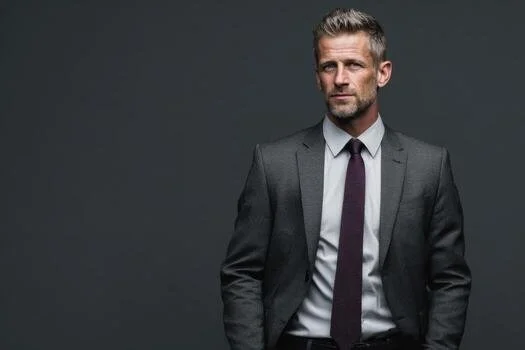
Clients always ask about ties. My rule is the simplest one I own: "Always shoot the tie and shoot the no tie. You always want to have that option." Bring the tie. Shoot with it for the formal look, then lose it, open the collar, and shoot the approachable version. Two headshots from one shirt. The tie itself should be simple, no novelty patterns, no shiny satin that reflects every light in the room.
## What to Do Instead
The formula that has never failed: solid colors, crisp and clean, fitted but not tight, neckline that frames the jaw, nothing that competes with your face. Bring options. I would rather spend two minutes choosing between three good shirts than spend the whole session working around one bad one.
For the full positive playbook, fabrics, fits, colors for your skin tone, and layering, read my complete guide to what to wear for headshots and these outfit selection and styling tips for portrait sessions. Between the don'ts list and those guides, you will walk in dressed for the best headshot of your life.
## The Bottom Line
Your wardrobe has one job in a headshot: disappear just enough that your face can do its job. Busy patterns, logos, neon, wrinkles, jaw-swallowing turtlenecks, distracting jewelry, and heavy makeup all break that deal. Leave them in the closet, bring solid options including the tie and the no-tie, and let your eyes carry the photograph. That is what they are for.
My headshot sessions start at $1,500 for two looks, which means we can shoot the formal look and the relaxed look in the same sitting. A look is a full wardrobe and styling change, so bring the options and we will build both versions of you. And if you are unsure about any piece in your bag, bring it anyway. Deciding together on set beats regretting it at home.