# New Sigma 50-120mm F2.8: A Headshot Photographer's Dream Lens?
On October 8, 2026, Sigma announced the lens that APS-C portrait shooters have been asking for for years. The Sigma 50-120mm F2.8 DC OS Contemporary. It ships October 22, 2026, priced at $799, for Sony E, Fujifilm X, and Canon RF mounts. On paper, it is a constant aperture telephoto zoom that weighs 390 grams and covers the classic portrait range. That combination used to be impossible. So the question I keep hearing from photographers is simple. Is this the headshot lens to buy?
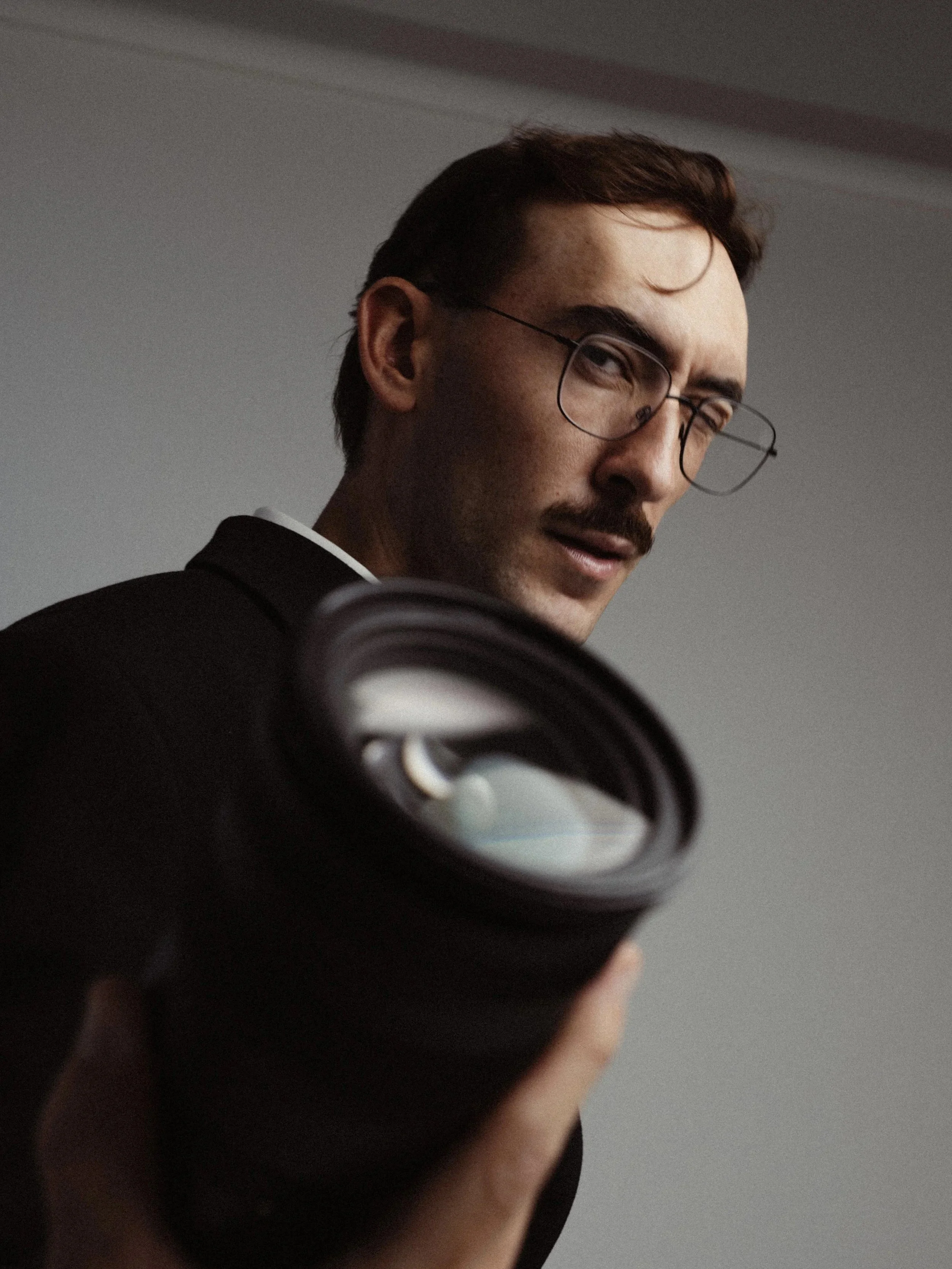
I am going to give you my honest answer. But first, full disclosure on where I stand. I shoot a Leica M11 with a 50mm lens, natural light only, no strobes. The 50mm is, in my words, "the same view as the human eye, I just prefer it." I have written my honest take on the Leica M11 before, and my position has not changed. I am a prime lens shooter. A zoom has to earn its place in my thinking. Let us see if this one does.
## What Sigma Actually Announced
Here are the verified specifications, straight from Sigma's October 8 announcement.
The 50-120mm F2.8 DC OS Contemporary is a telephoto zoom built for APS-C mirrorless cameras. On Sony E and Fujifilm X bodies, it frames like a 75-180mm lens on full frame. On Canon RF, with its slightly different crop factor, it is closer to 80-192mm. The aperture is a constant f/2.8 across the whole zoom range, with 11 rounded aperture blades and a minimum aperture of f/22.
It weighs 390 grams on Sony E and Fujifilm X, 410 grams on Canon RF, and measures about 99mm long. That is the headline number. A constant f/2.8 telephoto zoom under 400 grams is genuinely remarkable. Sigma says it fills the role of the classic 70-200mm f/2.8, the go-to lens for portraits, events, and indoor sports, at a fraction of the size and weight.
The feature list is strong. Optical stabilization rated at 6.5 stops at the 50mm end and 4.5 stops at the 120mm end, using Sigma's OS2 algorithm. A fast HLA linear autofocus motor. A dedicated aperture ring, the first on any APS-C zoom in Sigma's Contemporary line. Minimal focus breathing for video work. Dust and splash resistant construction with a water and oil repellent front element. Minimum focus distance of 23cm at the wide end and 55cm at the telephoto end. Eighteen elements in 13 groups, including one FLD element, three SLD elements, and four aspherical elements. A 55mm filter thread.
It also completes a set. Paired with the existing 10-18mm F2.8 DC DN and 18-50mm F2.8 DC DN Contemporary lenses, APS-C shooters on Sony, Fujifilm, and Canon now have ultra wide to telephoto coverage at a constant f/2.8, in three lenses that together weigh less than a lightweight laptop.
## Why the 75-180mm Equivalent Range Matters for Portraits
Here is where my 27 years of photographing faces kicks in. The classic portrait focal lengths on full frame are 85mm to 135mm. There is a reason every portrait photographer on earth keeps coming back to that range, and it is physics, not fashion.
Longer focal lengths compress facial features flatteringly. Shoot a headshot at 35mm and the nose grows, the face distorts, the subject looks like a caricature. Shoot the same face at 105mm and everything sits where it should. The face looks natural, the background melts away, and you get working distance, meaning you are not invading the subject's personal space to fill the frame. That working distance is also why subjects relax. Nobody looks good with a camera six inches from their face.
The Sigma's 75-180mm equivalent range (80-192mm on Canon RF) plants you directly in that sweet spot and a little beyond. At the 85mm equivalent mark, you are shooting classic headshots. At 135mm equivalent, you are in the zone for tight, compressed portraits with beautiful background separation, even though f/2.8 on APS-C gives you the depth of field of roughly f/4 on full frame. At 180mm equivalent, you are reaching into the territory where you can shoot candids across a room without anyone knowing.
For headshot and portrait work on APS-C, this is the right range. Sigma aimed at the target and hit it.

## Who This Lens Is Really For
Let me be direct about the audience, because this lens is not for everyone.
It is for you if you shoot portraits or events on an APS-C body from Sony, Fujifilm, or Canon. Wedding photographers shooting crop sensor bodies. Event photographers who need to reach across a ballroom. Portrait photographers building a business on a Fujifilm X system. Content creators who shoot talking head video and want flattering compression with minimal focus breathing. At $799 and 390 grams, it is priced and sized for working photographers who carry their gear all day, not collectors.
It is not for you if you shoot full frame. This is a DC lens, meaning it only covers the APS-C image circle. Mount it on a full frame body and you will get heavy vignetting or an automatic crop that wastes most of your sensor. It is also not for you if you already own a 70-200mm f/2.8 for full frame and you are happy carrying it. This lens does not replace that lens. It gives crop sensor shooters their own version of it.
One more honest note. This lens will not make you a portrait photographer. The photographers asking me whether to buy it are often really asking whether gear will fix their portraits. It will not. What fixes portraits is light, direction, and the ability to make a nervous subject relax in front of your camera. I have covered six portrait lighting setups every photographer should know, and every one of them matters more than which zoom you mount. The lens is the last 10 percent. Be honest with yourself about whether you have the first 90 percent handled.
## The Tamron Alternative: A Different Lens for a Different Shooter
Sigma was not the only company announcing glass on October 8. Tamron brought its 20-40mm F2.8 Di III VXD (Model A062) to Nikon Z mount, shipping the same day, October 22, at $729.
Do not confuse these two lenses. The Tamron is a full frame, wide to normal zoom: 20mm to 40mm at constant f/2.8, weighing 380 grams with a 67mm filter thread, a VXD linear autofocus motor, 12 elements in 11 groups, and a 17cm minimum focus distance. It has moisture resistant construction and a fluorine coated front element, but no optical stabilization, so you are relying on your camera body's stabilization.
The Tamron is an everyday carry lens for Nikon Z shooters: travel, street, interiors, environmental portraits. It is not a headshot lens. At 40mm on full frame, you are still in distortion territory for tight faces. If you are a Nikon Z portrait shooter looking at the Sigma announcement with envy, the Tamron 20-40mm is not the answer to that envy. It is a fine lens for a different job. For portraits on Nikon Z, you are still looking at an 85mm prime or a 70-200mm.
## Why I Still Reach for My 50mm
Now the part you actually came for. What does the Leica M11 guy think?
I respect this lens enormously. Sigma looked at what APS-C portrait shooters needed, a fast telephoto zoom that does not break your back or your budget, and built exactly that. The 390 gram weight is the real story. Anyone who has carried a full frame 70-200mm f/2.8 through an eight hour wedding knows what that weight does to your shoulder by hour six. This lens removes that tax.
But I am not buying one, and the reason is simple. I shoot full frame, and I shoot primes. My 50mm on the M11 sees the world the way I see the world. When I raise the camera, there is no zooming, no hunting for the framing. I move my feet, I find the light, I make the picture. That constraint is not a limitation I tolerate. It is the discipline that made me good.
A zoom gives you convenience. A prime gives you consistency. Every frame I shoot at 50mm has the same perspective, the same relationship between subject and background, the same visual signature. Clients hire me for that signature. After 27 years, I know exactly what my 50mm will do before I press the shutter, and that certainty is worth more to me than any zoom range.
That is not an argument against this Sigma. It is an argument about knowing yourself as a photographer. If you are a zoom shooter who works fast across changing distances, weddings, events, busy portrait sessions, this lens looks like one of the best values in its class. If you are a prime shooter who has found your focal length, no zoom will convert you, and that is fine too.
## The Verdict
The Sigma 50-120mm F2.8 DC OS Contemporary is the most interesting portrait lens announcement of the year for APS-C shooters. Verified specs: $799, shipping October 22, 2026, for Sony E, Fujifilm X, and Canon RF. Constant f/2.8, 390 grams, 75-180mm equivalent range, 6.5 stops of stabilization, aperture ring, minimal focus breathing. It completes Sigma's f/2.8 Contemporary trio and gives crop sensor photographers the fast telephoto zoom they have been waiting for.
Is it a headshot photographer's dream lens? If you shoot APS-C and you shoot people, yes, it is the closest thing to a dream lens this mount class has ever had. Just remember that the lens is the last 10 percent. The light, the direction, and the human being in front of your camera are the other 90. Get those right, and this Sigma will do beautiful work for you.
And if you ever want to argue about primes versus zooms, I will be over here with my 50mm. I have written about where I stand on gear before, including my picks for the best cameras for street photography, and I am always happy to have that fight.