# Should You Hire a Photographer or Videographer for Your Corporate Event?
It is a question I hear constantly from marketing directors and office managers. We have one budget line for event coverage. Do we get a photographer or a videographer? Sometimes it is asked with real anxiety, like choosing wrong will ruin the event. It will not. But choosing right will decide whether the money you spend keeps working for you for years or evaporates the week after the event.
I have spent 27 years photographing people for GQ, Vogue, InStyle, People, and every kind of corporate stage in between. I am a photographer, so I am biased toward stills. But I have also watched hundreds of events from the sidelines, and I know exactly what each craft does that the other cannot. Here is the honest breakdown.
## They Do Different Jobs
This is the part most people get wrong. A photographer and a videographer are not two versions of the same service. They are two different professions that happen to both point cameras at your event.
A photographer captures frozen moments. A single frame of your CEO mid laugh on stage, the room packed with three hundred attendees, your team applauding a product reveal. Each frame is a finished product. It can go on your homepage tomorrow, into a press release, onto a trade show banner, into the annual report, into a recruiting ad. Still images are marketing assets. They live for years.
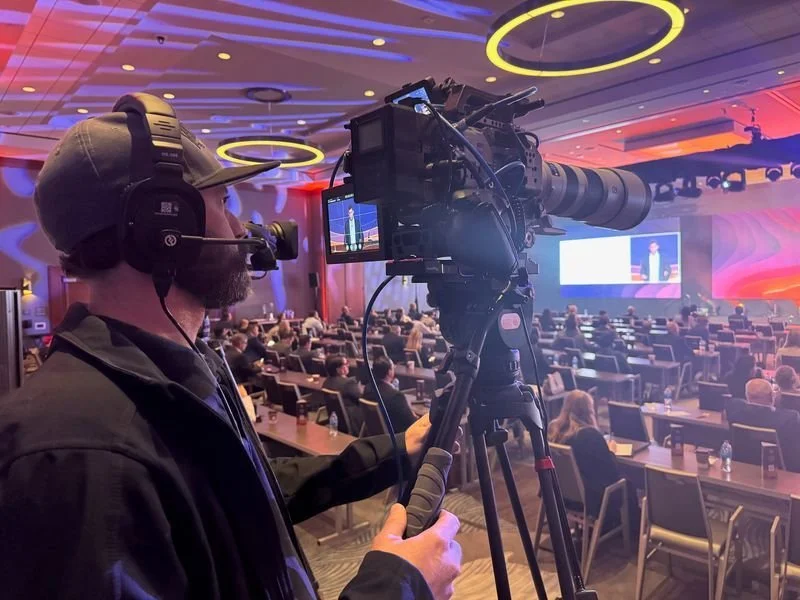
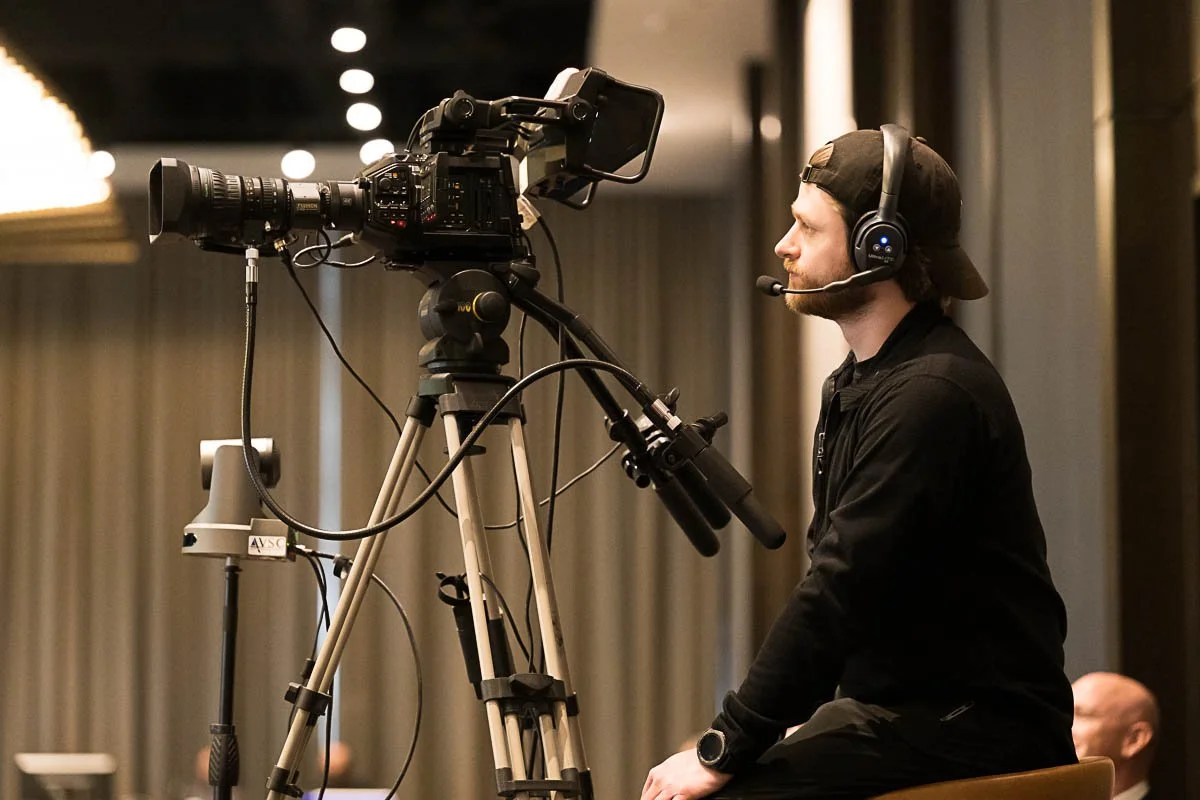
A videographer captures the event as an experience. Motion, sound, atmosphere, applause swelling, the keynote speaker's voice cracking with emotion at the right line. Video tells the story of the night. It is a highlight reel, a sizzle cut, a thirty second clip your social team posts the next morning. Video is emotion and narrative. It is also perishable. Nobody watches last year's corporate highlight reel in 2028. Your 2026 event photos will still be on your website in 2029.
Neither is better. They are ammunition for different wars. The question is which war you are fighting.
## What Photos Give You That Video Cannot
Photos are the workhorse of corporate marketing, and the data backs it up. Ninety one percent of businesses now use video as a marketing tool, according to Wyzowl's 2026 State of Video Marketing report, but that same report exists because video needs a constant feed of fresh content. Still photos are the content that fills every gap video leaves behind.
Consider everywhere one strong photograph travels. Your website hero image. The press release about the event. LinkedIn posts from your executives. The recruiting page that shows candidates your culture is real. The slide deck your sales team carries into every pitch. The sponsor report that justifies next year's funding. I have clients still using event photos I shot five years ago. Try that with a highlight reel.
Photos also move fast. My standard is next day delivery of 200 to 300 edited images. Your comms team wakes up the morning after the event with a gallery ready to deploy. Most video needs days or weeks of editing before you see anything usable. If your event has news value, a same week turnaround matters, and stills win that race every time.
Photos are also discreet. One photographer with a camera can move through a cocktail reception, a gala, a keynote, without changing the energy of the room. Video crews bring tripods, lights, cables, and often a second person. That footprint matters when your event is intimate.
For a fuller picture of the stills side, read the difference between corporate photography and event photography, and what a professional event photographer actually delivers on event day so you know exactly what you are buying.
## What Video Gives You That Photos Cannot
Now the other side. Video does something no photograph can. It makes people feel like they were there.
A thirty second recap of your conference, cut to music, with the crowd cheering and your keynote speaker landing the line that got the standing ovation, will outperform any photo album on social media. Wyzowl's 2026 data shows 93 percent of video marketers call video an important part of their overall strategy, and 82 percent say it delivers good ROI. If your event's goal is buzz, FOMO for next year, or a story your CEO can share, video is the weapon.
Video also captures sound, and sound is meaning. The exact words of the keynote. The customer testimonial caught on camera in the hallway. The product demo where the founder explains it in thirty seconds better than any brochure. These are things a still image can suggest but never deliver.
Video wins when the event itself is the product. Think launch events where the reveal moment is the whole point, concerts and performances, awards shows where the acceptance speeches matter, or anything your remote audience will watch later as a recording. If people are going to experience your event through a screen, video is not optional.
## The Budget Math
Here is where I get practical. My corporate event rates are public: $750 per hour, $2,500 for a half day of four hours, $4,500 for a full day of eight hours. Professional videography typically runs higher than still photography for the same hours, because video usually means more crew and much more post production. A highlight reel is not shot, it is built in the edit bay.
So the realistic question for most companies is not photo or video. It is how much of each, in what order.
My rule of thumb: if you have to choose one, choose photography. One photographer for four hours ($2,500 on my rate card) gives you 200 to 300 finished images by the next morning, and those images feed your website, press, social, recruiting, and sponsor reports for a year or more. It is the highest return per dollar in event coverage.
If the budget stretches, add video for the moments that matter most. You do not need eight hours of video. You need the keynote, the reveal, the awards, the energy of the room. A videographer for the key two to three hours, cut into a sixty to ninety second sizzle reel, gives you the social media weapon while the photographer builds your asset library. That combination is what the biggest events run, just scaled down.
One more cost reality. Post production for video is where budgets go to die. Always get the edit included in the quote, with a defined deliverable: one highlight reel of a set length, delivery date in writing. Do not accept "we will cut something together." Vague video promises produce vague video.
## When You Need Both
Some events genuinely need both crafts, and skimping shows. Full day conferences with multiple keynotes. Product launches with press attending. Milestone anniversaries where the company history matters. Investor days where the recording has legal and financial weight. Fundraising galas where the recap video drives next year's donations.
At these events, the photographer and videographer should be briefed together, on the same shot list, with one coordinator both report to. Two crews tripping over each other is the fastest way to ruin both products. If you are hiring a corporate event photographer for a dual coverage event, tell them on the booking call so they can plan around the video crew instead of fighting them.
## When One Clearly Wins
Photography alone wins for: networking mixers, holiday parties, headshot booth setups, award ceremonies where you need the handshake shot for the press release, and any event where the deliverable is a gallery by morning.
Video alone wins for: training content, executive interviews, product demos, livestreams where remote attendance is the point, and performance events where the motion is the message.
Notice that video alone almost never wins for general corporate events. Still images are the default, and video is the upgrade. That is not photographer bias. That is how the assets get used.
## The Bottom Line
Stop asking which one is better. Ask what job the coverage has to do. If you need assets that market your company for years, hire the photographer. If you need the story of the night told with sound and motion, hire the videographer. If the event is big enough that both jobs exist, hire both and brief them together.
And if you can only afford one, make it the photographer. A great photo from your event will be working for you long after the highlight reel has been forgotten.
I shoot corporate events across Los Angeles with next day delivery as standard. Half day (4 hours) is $2,500, full day (8 hours) is $4,500, with 200 to 300 edited images delivered the next morning. Payment is half to book, half on shoot day, and the deposit is non refundable with the date reschedulable. If your event needs stills that keep working for years, let us talk.