It is the first question almost every client asks me when they sit down in front of my camera. Should I smile? The answer is not as simple as yes or no, and anyone who tells you there is one correct expression for every headshot has not spent 27 years photographing people for a living.
I have shot celebrities for GQ, Vogue, InStyle, and People. I have photographed executives, actors, lawyers, founders, and job seekers. The right expression depends on what the headshot is for, who is going to see it, and what you want that person to feel in the first two seconds they look at your face.
Here is my honest breakdown.
The Short Answer: It Depends on the Job the Photo Has to Do
A headshot is a tool. A LinkedIn photo has a different job than a theatrical acting headshot, which has a different job than a law firm partner page. Before you decide on a smile, decide what you need the photo to say about you.
If the goal is approachable, trustworthy, and easy to work with, a smile is your best asset. If the goal is authority, intensity, or dramatic range, a neutral or serious expression may serve you better. Most of my clients end up shooting both, because having the option costs nothing extra during the session and gives you flexibility later.
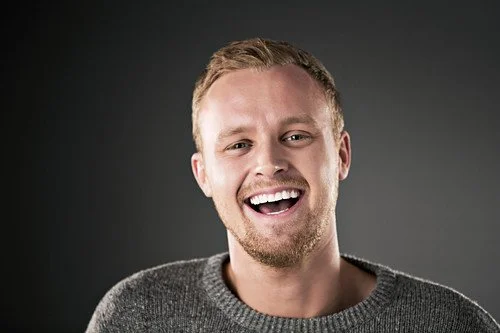
When a Smile Works
Corporate and LinkedIn Headshots
For corporate headshots, smile. People do business with people they like, and a warm, genuine smile is the fastest way to look like someone others want to work with. Recruiters, clients, and colleagues all respond to approachability. A serious corporate headshot can read as stern or unapproachable on a small LinkedIn thumbnail, where your face is barely an inch wide.
The smile does not need to be big. A soft, confident smile with relaxed eyes often reads better than a huge grin, especially for senior roles. Think of the expression you would wear walking into a meeting you are looking forward to. That is the one.
Personal Branding and Creative Fields
If you are a founder, coach, consultant, realtor, or creative professional, your headshot is doing marketing work. Smile like you mean it. Your audience is deciding whether they trust you, and a genuine smile builds that trust instantly. For personal branding shoots, I usually direct clients through a whole range of expressions, from big laugh to subtle smirk, so they have options for different platforms. It is worth reviewing what to wear for your headshot before the session too, because wardrobe and expression work together to tell your story.
When a Serious Expression Works Better
Acting Headshots
Actors are the exception to the smile rule. Casting directors want to see your range, your bone structure, and what your face does at rest. A theatrical headshot with a neutral, intense expression shows them the canvas they would be working with. That does not mean every acting headshot must be serious. Commercial headshots for actors usually call for warmth and a smile. The smart move is to shoot both looks in the same session.
Executive Authority Shots
Some industries still reward gravitas. A managing partner at a law firm, a fund manager, or a C-suite executive in a traditional industry may want a headshot that projects command. A slight, confident closed-mouth expression with strong eye contact can do that without looking unfriendly. The key is the eyes. Even in a serious headshot, the eyes should be alive and engaged, never blank.
The Kind of Smile Matters More Than Whether You Smile
Here is what 27 years behind the camera has taught me. The question is never really smile or no smile. It is real or fake.
The Genuine Smile vs the Forced Grin
A genuine smile reaches your eyes. The muscles around your eyes contract, your whole face softens, and the camera reads it as warmth. A forced smile lives only in the mouth. It looks tight, a little pained, and everyone who sees the photo can tell, even if they cannot explain why.
Getting a genuine smile on demand is a directing skill. I talk to my clients, I make them laugh, I ask them to think about something specific. Nobody looks good thinking about the fact that they are being photographed. The trick is to get your mind somewhere else for a split second and let your face follow.
Teeth or No Teeth
Both work. A full toothy smile reads joyful and outgoing. A closed-lip smile reads composed and confident. I shoot both in every session because the right choice often depends on the client seeing the options side by side. One thing I watch for: if you are self-conscious about your teeth, tell me. I would rather know and direct around it than have you spend the session worrying.
What I Look for as the Photographer
When I am directing a headshot session, I am analyzing your face the entire time. Jawline, cheekbones, the shape of your eyes, how light falls across your features. I am finding your best angles and building the pose and the lighting around them.
But above all of it, the eyes are everything. I need your eyes open, engaged, with catch lights in them, carrying real expression. A perfect smile with dead eyes is a failed headshot. A subtle expression with electric eyes is a great one. This is the part of the craft that no app can replicate, and it is one reason the debate around AI headshots vs real photography keeps coming back to authenticity. An algorithm can paste a smile onto your face. It cannot direct the life behind your eyes.
How to Get a Natural Smile on Camera
If you are nervous about looking stiff, these are the techniques I use with clients every week:
- Breathe through a slightly open mouth. It relaxes your jaw and keeps your lips from pressing into a thin line.
- Think of something genuinely funny, not the camera. A real memory beats a posed expression every time.
- Let your eyes smile first. Squint just slightly, like you are greeting an old friend across the room.
- Do not hold the smile. I shoot in bursts, so you can relax your face between frames and let the smile come fresh each time.
- Laugh out loud if you need to. Some of the best headshot frames I have ever taken are the half second after a real laugh, when the face is still lit up.

A Note on Retouching
Whatever expression you choose, the final image should still look like you. My retouching philosophy is simple: "I leave the things that give people character. If it is a mole or something like that, it stays. If it is a blemish like a pimple, I take it out." A smile that has been retouched into something plastic defeats the whole purpose. You want to look like yourself on your best day, not like a rendering.
The Bottom Line
Smile for corporate, LinkedIn, and branding work. Go serious for theatrical acting and high authority roles. Shoot both whenever you can, because options are free during the session and expensive to wish for later. And whatever you choose, make it genuine, because the camera always knows.
If you are still deciding whether professional headshots are worth the investment, consider this: the expression question is exactly the kind of thing a professional photographer solves for you in the session. You do not need to arrive knowing how to smile. That is my job.
My headshot sessions start at $1,500 for two looks, and every session includes full direction, so you never have to guess what your face should be doing. A look is a full wardrobe and styling change, which means we can shoot your warm approachable smile and your serious authority look in the same sitting. You will leave with options, and you will know exactly which expression belongs where.