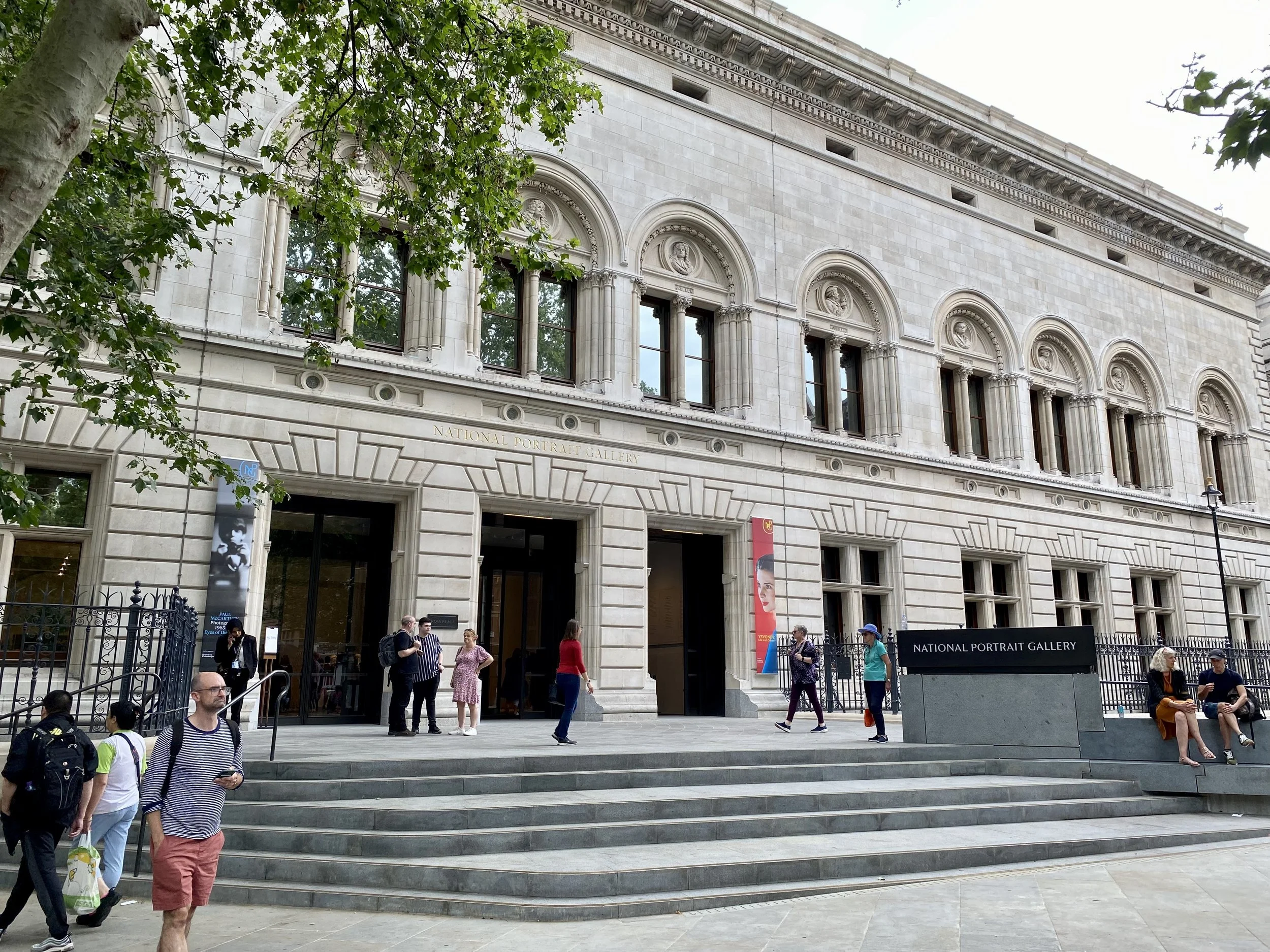
Tim Walker's Fairyland: Love and Legends opened at the National Portrait Gallery in London on October 9, 2026, and runs through February 7, 2027. Around 250 specially created portraits. Five years of work. One photographer placing himself, in his own words, in the queer realm with confidence.
I have spent 27 years shooting portraits and editorials in Los Angeles, for magazines including GQ, Vogue, InStyle, People, Teen, Men's Health, and Departures. When a show like this opens, I do not go for the celebrities on the wall. I go for the craft decisions behind them. Here is what Fairyland teaches working portrait photographers, plus the Harry Styles portrait everyone is searching for.
## The exhibition in numbers
The facts, verified from the National Portrait Gallery's own exhibition page and the press coverage of opening week:
- Dates: October 9, 2026 to February 7, 2027. The gallery opened the show to the public at 1:30 PM on October 9.
- Scale: around 250 portraits, all created over the past five years, of activists, artists, performers, and cultural figures.
- Curator: Susanna Brown. Exhibition design: Shona Heath, Walker's longtime collaborator.
- Sitters include Isaac Julien, Ian McKellen, Chappell Roan, Björk, Lady Gaga, Frank Ocean, Hunter Schafer, Boy George, Ncuti Gatwa, Fiona Shaw, Ben Whishaw, Jean Paul Gaultier, Michaela Stark, Paul O'Grady, David Hoyle, Alan Carr, Sue Perkins, Marc Almond, Holly Johnson, and Jimmy Somerville.
- A new book accompanies the show with contributions from Travis Alabanza, Susanna Brown, Russell T Davies, Shon Faye, Lisa Power, and Joelle Taylor.
- Tickets: 23 pounds, or 25.50 with donation, off peak Monday to Thursday. 25 pounds, or 27.50 with donation, peak Friday to Sunday. The gallery is open daily 10:30 to 18:00, and Friday and Saturday until 21:00. The show sits on Floor 0, entered via Ross Place at St Martin's Place, London WC2H 0HE.
- Content guidance, worth knowing before you send a client: the exhibition contains adult themes and language, nudity, and some images of a sexual nature. A clearly signposted space in the final room contains sexually explicit images and is not recommended for under 18s.
The title reclaims the word "fairy," historically used as a homophobic slur, as an expression of identity and belonging. That framing choice is the first craft lesson, and it has nothing to do with cameras.
## The Harry Styles portrait everyone is searching for
Yes, it is in the show. An unpublished nude portrait of Harry Styles, an outtake from the 2019 Fine Line album sessions that Walker photographed. It was left out of the final album presentation seven years ago and now appears in an institutional exhibition with a completely different function.
Why does this matter to photographers? Because it is a masterclass in the afterlife of a portrait. The image did not change. The context did. A commercial outtake becomes a museum object because Walker kept it, archived it, and understood what it would mean years later. Most photographers delete their outtakes or let them rot on old drives. Walker built a body of work out of sustained relationships and a long memory. The Styles portrait is not the center of this exhibition, the gallery is clear about that, but it is the proof that your archive is an asset that compounds.
Shoot everything like it might hang somewhere in seven years. Edit and keep like you mean it.
## Craft lesson 1: let the sitter bring the story
One of the smartest decisions in Fairyland is that Walker asked sitters to bring objects of personal significance to their sessions. Author Jane Cholmeley brought the original shop sign from Silver Moon Women's Bookshop, founded in 1984. Photographer Sunil Gupta held his camera. Filmmaker Isaac Julien clasped a conch shell connected to his 1989 film Looking for Langston.
This is a directing technique, not a styling trick. A prop with real personal history does three things at once. It gives a nervous sitter something to do with their hands. It gives the portrait a specific narrative anchor that no art director could invent. And it shifts the power dynamic of the session, because the sitter arrives as a collaborator with something to show, not a subject waiting to be arranged.
I use a version of this in my own portrait work. Ask people to bring the thing that matters to them and half your directing problems disappear. The object tells you how they want to be seen. Your job becomes framing that, not manufacturing it.
## Craft lesson 2: steal from the masters, openly
Walker makes no secret of his references, and Fairyland wears them proudly. Portraits of 1970s and 1980s activists, including founding members of the Gay Liberation Front and Stonewall such as Olivette Cole-Wilson, Andrew Lumsden, Lisa Power, and Tom Robinson, draw on sixteenth-century Tudor portraiture by Hans Holbein the Younger and Nicholas Hilliard. The effect is deliberate: people who were marginalized are presented as an imagined queer aristocracy, inside the visual tradition of power and official remembrance.
Elsewhere, Walker photographs many subjects against simple white backgrounds, directly recalling Richard Avedon. Walker assisted Avedon in the 1990s, so this is not imitation. It is lineage, declared.
The lesson for working photographers: reference with intent, and let the reference do conceptual work. A white seamless background is not a default. In Walker's hands it says these sitters deserve the Avedon treatment. Every visual choice in your portraits should be making an argument. If it is not, it is decoration.
## Craft lesson 3: build the world, not just the face
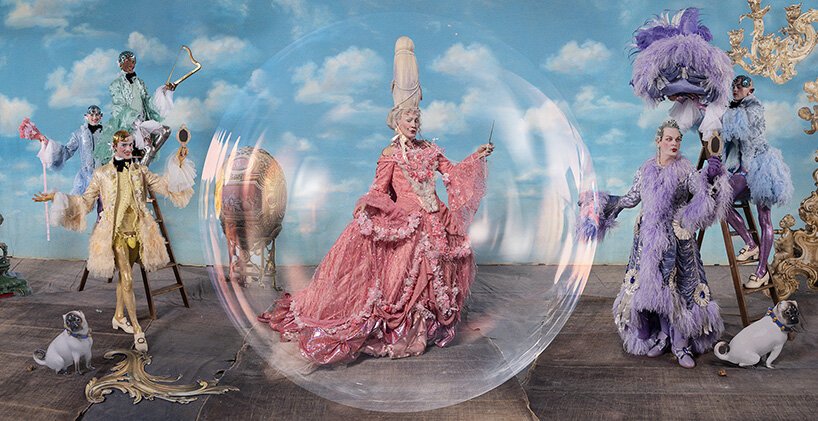
The exhibition design by Shona Heath is part of the photography, not separate from it. One room contains suspended mirrors that reflect light and create flashing effects. Another is ringed with bright fairy lights around the ceiling and walls. The show moves from rooms of activists into fashion, performance, and transformation, then ends in staged erotic scenes that rework fairy tales and nursery rhymes through a queer lens.
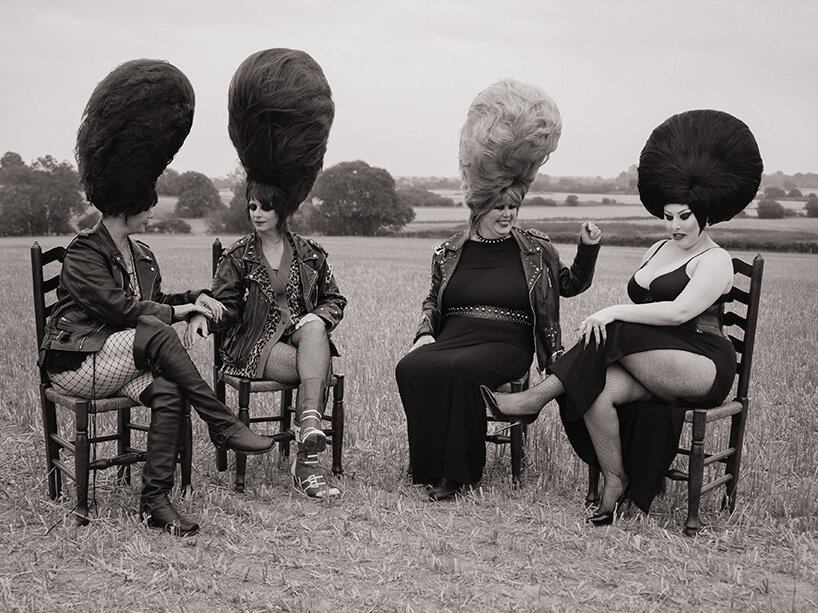
Walker's career was built on constructed worlds. The Rebel Dykes room, a post-punk collective photographed in large-scale group portraits inspired by Karlheinz Weinberger's 1960s biker gang photographs, shows the method at full strength. He did not just photograph a group. He researched a visual precedent, built the set, cast the scene, and shot a short film alongside the stills so the women could reflect on their own history.
For portrait photographers who work commercially, the takeaway is about production value as storytelling. Clients hire an editorial photographer in Los Angeles for images that carry a story, and the story lives in the world around the face as much as in the expression. Location, set, light, and styling are not background. They are the other half of the portrait. Budget them like it.
## Craft lesson 4: sequence like an editor
Fairyland spans just over fifty years of queer activism, community, and love, and Walker sequences it like a magazine story. It opens with the activists of the 1970s and 1980s. It moves through the HIV and AIDS crisis of the 1980s, with portraits of healthcare workers alongside Marc Almond, Holly Johnson, and Jimmy Somerville, whose music Walker describes as the disco he wanted to bring to the ward. Then fashion, drag, and performance. Then the erotic fairy tale rooms.
This is narrative structure applied to portraiture, and it is the single most transferable skill in the show. A portrait session is not twenty good frames. It is a story with a beginning, a middle, and an end. When I shoot fashion photography in Los Angeles, I think in the same terms: the quiet frames first, the energy building, the strongest emotional image last. Edit your client galleries like Walker edits a museum wall. Sequence is meaning.
The gallery supports this with a free 18-stop audio guide on Bloomberg Connects, featuring dialogues between Walker and the curator plus sitters discussing their own portraits, and a Spotify playlist curated by Walker himself. The portraits do not stand alone. They are embedded in voices and music. Another reminder that the frame is never the whole product.
## What this means for working portrait photographers
Strip away the museum scale and Fairyland is a demonstration of four disciplines most working photographers underinvest in:
1. The archive. Keep everything, keyword it, revisit it. Your outtakes are future exhibitions, future books, future licensing.
2. The pre-production conversation. Walker's object prompt is a five-minute conversation that transforms a session. Steal it.
3. The declared reference. Know your visual history and use it to make arguments, not just pretty pictures.
4. The sequence. Shoot and edit in narrative order. A gallery of singles is a portfolio. A sequence is a story, and stories are what clients pay for.
Walker spent five years on this project. That is the part nobody wants to hear. The craft lessons are free. The time is not.
## If you go
Fairyland: Love and Legends, National Portrait Gallery, St Martin's Place, London WC2H 0HE. October 9, 2026 through February 7, 2027. Off-peak tickets 23 pounds, peak 25 pounds, with donation options at 25.50 and 27.50. The gallery runs late on Fridays and Saturdays. The NPG is also running an exhibition dining experience on October 27, 2026, at 117.50 pounds per person, with out-of-hours access to the show. If you are a photographer visiting London this winter, this is the one show to build a day around. Bring a notebook. Leave the camera at home and actually look.
*David Christopher Lee is a Los Angeles celebrity and portrait photographer with 27 years of experience. His editorials have appeared in GQ, Vogue, InStyle, People, Teen, Men's Health, and Departures. He writes about the craft of portraiture for working photographers and the clients who hire them.*
## Sources read
- National Portrait Gallery official exhibition page: https://www.npg.org.uk/whatson/exhibitions/2026/tim-walkers-fairyland-love-and-legends (dates, tickets, hours, curator, book contributors, content guidance, audio guide, accessibility)
- NPG ticketing page: https://my.npg.org.uk/31386/31418 (age guidance, hours, address)
- Designboom, "tim walker explores queer history through 250 portraits" (Oct 9, 2026): https://www.designboom.com/art/tim-walker-five-decades-queer-activism-portraiture-national-portrait-gallery-london-fairyland/ (250 portraits, 5 years, Shona Heath, sitter list, Holbein/Hilliard reference, Avedon background, object prompt, Rebel Dykes/Weinberger, Walker quote)
- Playback.gr, "Harry Styles: Unpublished portrait from Fine Line in London" (Oct 2026): https://en.playback.gr/Fine-Line-Unpublished-Portrait-of-Harry-Styles-Is-Exhibited-in-London-After-Seven-Years/ (nude portrait, Fine Line 2019 outtake, dates)
- Kate Bush News (Oct 11, 2026): https://www.katebushnews.com/2026/10/11/new-exhibition-by-photographer-tim-walker-features-kate-portrait/ (250 portraits, 5 years, Kate Bush 2011 Director's Cut outtake)
- Artlyst, "Tim Walker's Fairyland: Celebrating Queer Narratives": http://artlyst.com/tim-walkers-fairyland-redefining-queer-photography-national-portrait-gallery-london/ (dates, book contributors, sitter list)
- Hube Magazine, "Through Tim Walker's lens": https://hubemag.com/a-fantastical-stage-for-queer-icons-at-the-national-portrait-gallery (dates, 250 portraits, HIV/AIDS section)
- NPG dining experience page: https://www.npg.org.uk/whatson/event-root/october/tim-walker-dining-experience (Oct 27 dinner, 117.50 pounds)
- Amateur Photographer exhibition listing: https://amateurphotographer.com/latest/exhibitions/dont-miss-legendary-photographer-tim-walkers-stunning-new-exhibition-with-its-whimsical-erotic-energy/ (dates, ticket prices)
## Could not verify / left out
- The exact portrait count varies by outlet ("around 250," "nearly 250," "250"). I used "around 250" throughout.
- I did not claim the Harry Styles portrait's exact placement or room within the exhibition; outlets describe it as featured but not central.
- The Kate Bush portrait is reported by a fan news site as a 2011 Director's Cut outtake; I mentioned the exhibition's breadth rather than asserting unverified details about that specific image.
- Image 1 alt text describes Paul O'Grady and Julian Clary as the Glitter Queens per the designboom caption; the designboom image URLs are press images hosted by designboom, credited to Tim Walker.