The best cameras for street photography are not the ones with the longest spec sheets. They are the ones you actually carry, raise without thinking, and fire before the moment is gone. A missed frame is a missed frame, and no sensor rescues it. After 27 years of photographing everything from red carpets to quiet side streets, I have learned that street work rewards three things above all: a camera small enough to disappear, controls fast enough to keep up, and a focal length you have committed to before you leave the house.
This guide rounds up the 7 best cameras for street photography in 2026, from the pocketable Ricoh GR IV to the premium Leica Q3, plus the honest tradeoffs each one asks you to accept. No affiliate listicle logic, no spec reciting. Just what matters when you are walking the city with a camera in your hand.
In This Guide
- The video that sparked this guide
- Quick picks: the short version
- What makes a great street photography camera
- The 7 best cameras for street photography in 2026
- Fixed lens or zoom: the one decision that matters
- Which focal length: 28mm, 35mm, or 50mm
- Mistakes I see photographers make
- David's Take: what 27 years taught me about the camera in your hand
- Frequently asked questions
The Video That Sparked This Guide
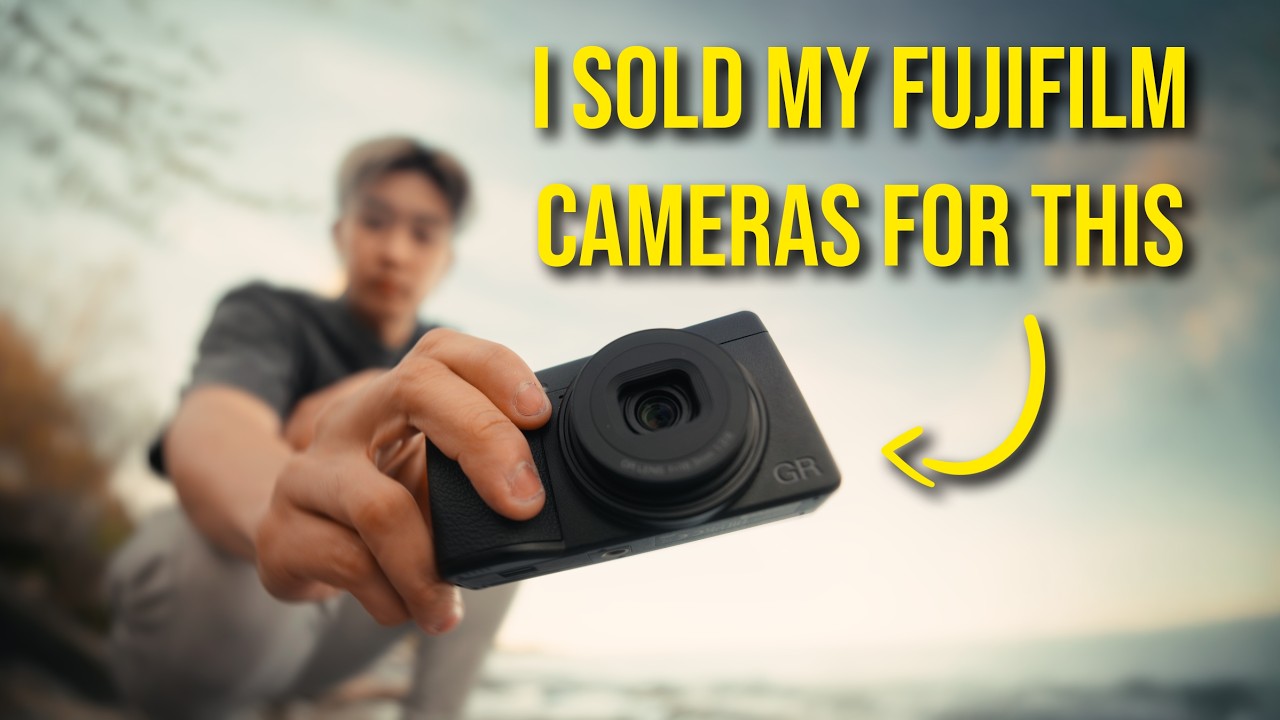
Photographer and filmmaker herokme published a video with a refreshingly honest title: "I REGRET BUYING THIS CAMERA..." He sold his Fujifilm cameras, bought the Ricoh GR IV chasing the ultimate pocketable street camera, and now he kind of regrets it. The video walks through the GR IV against the Fujifilm X100VI, the Fujifilm X-M5, and other everyday carry cameras for street photography, travel, and daily use, covering autofocus, film simulations, portability, image quality, and pocketability, and asking whether the GR IV is actually worth it in 2026.
His structure is what makes it worth watching. He opens with what he genuinely likes about the GR IV, then details what is different about the new model, then gets honest about what he does not like, and closes with the alternatives. It is a real-world shooter's comparison, not a spec readout, and the tension he wrestles with is the exact tension every street photographer faces: the smaller and more discreet the camera, the more it asks you to give up somewhere else. As someone who currently shoots a Sony A7IV for main photo work and a Fujifilm X-E5 as his everyday camera, his conclusions come from carrying all of these bodies in real situations, which is the only test that counts.
One honest note: like many gear videos, it centers on cameras he owns, and your mileage depends on your hands and your streets. The decision framework is universal, and that is what this guide is built around.
Quick Picks: The Short Version
If you want the answer now, here is the list. The details, tradeoffs, and buying logic are below.
- Best overall / most pocketable: Ricoh GR IV. A true coat-pocket APS-C camera with Snap Focus.
- Best with a viewfinder: Fujifilm X100VI. Hybrid optical and electronic finder, 35mm fixed lens, film simulations.
- Best interchangeable-lens option: Fujifilm X-E5. Same 40.2MP sensor as the X100VI in a lighter body with lens choice.
- Best premium full-frame: Leica Q3. 60.3MP full-frame sensor and a 28mm f/1.7 Summilux.
- Best premium for tighter framing: Leica Q3 43. The Q3 formula with a 43mm f/2 lens.
- Best zoom flexibility in a pocket: Sony RX100 VII. 24-200mm reach and strong autofocus.
- Best purist rangefinder: Leica M11. Manual focus, full-frame, and the discipline of the rangefinder.
What Makes a Great Street Photography Camera
Before the list, the criteria. Camera Times put it well in their 2026 guide: the best street camera is the one you can carry without negotiation, bring to shooting position without drawing attention, and configure fast enough to respond when gesture, light, and background align. A 40MP file does not rescue a missed moment, and a tiny body is not automatically discreet if its controls slow you down.
Here is how I evaluate every camera on this list:
- Carryability. If it lives in the bag at home, it is a zero. Coat-pocket or jacket-pocket cameras get carried. Big bodies stay home.
- Speed of operation. Startup time, autofocus acquisition, and the ability to shoot without the camera getting in the way. Ricoh's Snap Focus, preset to a focus distance, exists precisely for this.
- Discretion. Size, shutter sound, and how the camera looks to strangers. A leaf shutter is nearly silent. A big DSLR announces itself.
- Focal length commitment. Street rewards photographers who know their framing before they raise the camera. Fixed lenses train this instinct.
- Low-light honesty. Streets are dark. Stabilization helps static scenes, but it cannot freeze a walking person. Shutter speed still governs human motion.
Weight matters more than most people admit. A camera you carry for six hours is a different tool than one you carry for one. Keep that in mind as you read the weights below.
The 7 Best Cameras for Street Photography in 2026
1. Ricoh GR IV, best overall and most pocketable
The Ricoh GR IV is the consensus street camera of 2026, and it earns the title honestly. It packs a 25.7MP APS-C sensor and a fixed 28mm-equivalent f/2.8 lens into a body that weighs just 262g with battery and card. That is a genuine jeans-pocket camera with a serious sensor inside, and it is why veteran street shooters keep coming back to the GR line.
The decisive feature is Snap Focus. You preset a focus distance, and a full press of the shutter fires immediately without waiting for autofocus to acquire. With an appropriate aperture and a working knowledge of depth of field, you can shoot subjects entering a patch of light or passing a fixed background with zero lag. It also has five-axis sensor-shift stabilization for static night scenes, over 50GB of built-in memory as a fallback when no card is fitted, and sub-one-second startup for run-and-gun shooting.
The compromises are real: no built-in viewfinder, a fixed rear screen, and a 28mm field of view that demands confidence working close to people. MicroSD storage is fiddlier than full-size SD. But if being present with a camera matters more to you than having every possible interface, this is the most coherent street camera you can buy in 2026. Amateur Photographer names it their best compact for street photography, and Camera Times ranks it their top overall pick.
2. Fujifilm X100VI, best with a viewfinder
The Fujifilm X100VI is the camera most street photographers actually shoot, and the numbers explain why: a 40.2MP APS-C X-Trans 5 sensor, a fixed 23mm f/2 lens (35mm equivalent), a hybrid optical and electronic viewfinder, five-axis in-body stabilization, a quiet leaf shutter, and 20 film simulations including the new REALA ACE mode. It weighs about 521g with battery and card, which is heavier than its silhouette suggests, but the hybrid finder is the feature that justifies it. You can compose through a bright optical window and watch action enter the frame, or switch to the EVF when exposure and white balance matter more.
The leaf shutter is a quiet advantage most people underestimate. It operates nearly silently and syncs with flash at speeds focal-plane shutters cannot match, which makes subtle daylight fill flash possible on the street. The 35mm-equivalent lens sits in the sweet spot: wide enough for layered scenes, tight enough for subject emphasis. The fixed lens is a commitment, and weather resistance needs an adapter and filter, but for photographers who frame through a finder, this is the safer choice over the GR IV. Canon Rumors lists it as their street pick among premium compacts, and it remains the best-selling camera in this category for a reason.
3. Leica Q3, best premium full-frame
The Leica Q3 is in a league of its own, and the price reflects it: $6,295 for a fixed-lens camera. What that buys is a 60.3MP full-frame sensor, a 28mm f/1.7 Summilux lens with optical stabilization, a 5.76-million-dot electronic viewfinder, and a tilting touchscreen, all in a magnesium body with the manual focusing feel Leica is famous for. The sensor is a triple-resolution type, so you can shoot at 36MP or 18MP when card space matters more than detail. Autofocus is phase-detection with subject recognition, much improved over earlier Q models, and the ISO range stretches from 50 to 100,000 for genuine low-light street work.
Is it worth it? For most people, no, and that is an honest answer. The Q3 is heavier and more conspicuous than every compact alternative here, and 28mm is still 28mm. But if you want full-frame rendering, a silent leaf shutter, and the best fixed 28mm ever bolted to a digital body, nothing else comes close. If the Leica price makes you curious about what the red dot actually costs and why, my breakdown of why Leica cameras are so expensive goes through all eight reasons, from hand assembly in Germany to resale value. And if you are hunting the used market, read how to buy a used camera without getting scammed first.
4. Fujifilm X-E5, best interchangeable-lens option
The X-E5 answers a simple question: what if you like the X100VI's rangefinder-style body but refuse a permanent 35mm lens? It puts the same 40.2MP X-Trans 5 sensor and processor in a 445g body, lighter than the X100VI, with the Fujifilm X mount, five-axis stabilization rated up to seven stops, and a tilting touchscreen. Pair it with a compact 18mm, 23mm, or 27mm prime and you get 28mm, 35mm, or roughly 40mm equivalent perspectives in a genuinely small system.
The tradeoff is discipline. Lens choice is a gift until it becomes indecision, and a compact street body stops being compact the moment you bolt on a big zoom. Build it around one small prime, set a minimum shutter speed in Auto ISO, and configure the AF for street, and it becomes a responsive everyday system. The X-E5 also gets you a UHS-II card slot and serious video capability the fixed-lens picks lack. For existing Fujifilm shooters with compact primes in the drawer, it is the most flexible route on this list.
5. Leica Q3 43, best premium for tighter framing
Leica's Q3 43 takes the Q3 formula and swaps the 28mm for a fixed 43mm f/2 APO-Summicron, which produces a materially different kind of street photograph: a natural-looking perspective with cleaner subject separation, closer to how the eye sees. Everything else carries over, including the 60.3MP full-frame sensor with its extensive cropping latitude, the high-resolution EVF, and an IP52-rated magnesium body that is more reassuring in variable urban weather. At 772g with battery, it is the heaviest camera here, and the most conspicuous, and 43mm can feel restrictive in dense crowds.
This is a specialist's camera, and it belongs on the list because focal length is a creative decision, not a spec. Some of the best street work ever made was shot at 50mm, and 43mm sits right in that tradition. If you are drawn to the premium end of this list, my Leica M11 review covers what it is like to actually work with a Leica digital body day to day, and buying a used Leica is worth reading before you touch the secondhand market.
6. Sony RX100 VII, best zoom flexibility in a pocket
Every other camera here has a fixed lens. The Sony RX100 VII is the exception, and that is its entire argument: a 24-200mm zoom and a 20.1MP 1-inch sensor in a genuinely pocketable body, with sophisticated autofocus that handles moving subjects well. For travel street work, where you cannot control your distance from the scene, zoom reach is a real advantage. It is also the most versatile camera here for hybrid shooters who want stills and video from one pocket.
The smaller 1-inch sensor is the price. It gives up low-light performance and depth-of-field control to the APS-C picks, and the ergonomics are menu-driven rather than dial-driven. But for photographers who want maximum flexibility without changing lenses, and for anyone whose street shooting is really travel shooting with people in it, the RX100 VII remains the pragmatic choice. Canon Rumors calls it their best all-round premium compact, and the zoom-vs-fixed decision below will tell you which camp you are in.
7. Leica M11, best purist rangefinder
No street photography camera list is complete without the rangefinder that started it all. The Leica M11 is a full-frame digital rangefinder with a 60MP triple-resolution BSI sensor and manual rangefinder focusing, built purely for stills and the discipline of the rangefinder. It is slow by design: you set the focus distance yourself, you compose through an optical rangefinder, and you shoot. That discipline is the entire point. The rangefinder forces you to see the scene, anticipate the moment, and commit before you press the shutter, which is the whole curriculum of street photography in one camera.
It is also expensive, manual focus is genuinely hard to learn (my field guide to how to focus a Leica rangefinder will save you weeks), and it is the opposite of discreet in the wrong neighborhood. But for the photographer who wants the craft itself to be the reward, nothing on this list teaches you more. I reviewed the M11 as a working pro, and it remains the camera I reach for when I want to slow down and see properly.
Fixed Lens or Zoom: The One Decision That Matters
This is the fork in the road, and it is worth more than any spec comparison. As Canon Rumors frames it in their buying guide, neither approach is inherently better, but they produce different photographers.
Fixed-lens cameras like the X100VI and GR IV give you a simpler, more focused shooting experience. One perspective, learned deeply. You stop thinking about focal length and start thinking about position, timing, and light. The constraint is the teacher. This is why so many of the great street photographers worked one lens for decades.
Zoom cameras like the RX100 VII give you flexibility. You handle the subjects you did not plan for, you shoot from positions you cannot change, and one body covers the street, the family, and the trip. The cost is the discipline problem: the camera never forces you to learn a way of seeing.
My rule: if you are buying your first dedicated street camera, buy fixed. Learn the 35mm or 28mm view until it is instinct. You can always add the zoom later, and the fixed lens will have taught you more in six months than the zoom teaches in two years.
Which Focal Length: 28mm, 35mm, or 50mm
The street photography world has argued about this for a century, and the consensus is refreshingly narrow: 28mm, 35mm, and 50mm are the focal lengths that matter. Here is how to choose.
28mm is the inclusive view. It shows the person inside their environment: signage, architecture, the crowd around them. It demands that you get close, and it rewards layered compositions with foreground, subject, and background all working. The GR IV and Q3 live here. It is the hardest of the three to learn and the most rewarding once you do.
35mm is the balanced view. It captures enough environment for storytelling while letting subjects stand out. It remains the most popular street focal length for a reason: it is close to natural vision with just enough context. The X100VI lives here, and it is the focal length I recommend to anyone starting out.
50mm is the selective view. It isolates. It is tighter, more portrait-like, and it lets you work from a respectful distance. The Q3 43's 43mm sits in this family. It is excellent for gesture and expression, weaker for environmental storytelling.
Pick one, shoot it exclusively for three months, and only then decide whether to change. The photographer matters more than the millimeters, but only after you have committed to the millimeters.
Mistakes I See Photographers Make
- Buying for the spec sheet instead of the carry. The camera with the best sensor is the one left at home. Buy the one you will carry for six hours in the rain.
- Zooming instead of moving. A zoom lets you stay put. Street photography is a physical sport. Move your feet and the pictures get better.
- Ignoring shutter sound and startup speed. A loud shutter kills candid moments. A slow startup kills the first moment of every walk. Both matter more than megapixels.
- Chasing full-frame when APS-C would do. Most of the cameras on this list are APS-C, and they produce professional results. Sensor size is not the bottleneck. You are.
- Never learning one focal length deeply. Switching lenses every week keeps you a beginner forever. Commit to one view and master it.
- Shooting at f/1.4 on the street. Shallow depth of field is for portraits. On the street, zone focus at f/5.6 to f/8 and let the scene stay sharp.
David's Take: What 27 Years Taught Me About the Camera in Your Hand
I will be honest with you: I am not a full-time street photographer. I am a portrait and celebrity photographer who has spent 27 years carrying a camera everywhere, and the street is where I learned the lesson that built my career. The best camera is the one in your hand when the moment happens.
I learned this with my dad's Minolta film camera in middle school. I was taking a darkroom photography class, and my dad told me to call the Long Beach Ice Dogs hockey team to cover a game for my school paper. I knew nothing about hockey. I walked in with that Minolta, got a backstage pass, met the players, and took pictures. Then I started shooting for the Rafu Shimpo, riding the bus from the suburbs to skid row in downtown Los Angeles to type up articles and take pictures. Nobody taught me street photography. The street taught me, one frame at a time, with a manual film camera and no safety net.
The lesson got sharper in 2000 at the Teen Choice Awards. I showed up as a high school senior with a 2.1 megapixel Nikon Coolpix 950 while every other photographer in the room shot film. They had better cameras. I had a digital file I could send over a 56k modem that same night. They developed film and printed slides. I delivered. The publicist paid me $1,250 for one picture because I was fast, not because I had the best gear. That night taught me something I have never forgotten: presence and delivery beat specifications every single time. The photographer who is there, with any working camera, wins over the photographer with the perfect camera who stayed home.
That is the whole philosophy behind this list. The Ricoh GR IV matters because it is in your pocket. The X100VI matters because its finder makes you want to shoot. The Leica M11 matters because manual focus teaches you to see. I discovered what I was good at and perfected my craft by doing it consistently, over and over again, for 27 years. The camera is the instrument. The discipline is the photographer.
One more thing. The industry changes constantly, and the only consistent thing about this business is change. Cameras will get smaller, sensors will get better, and the GR V will replace the GR IV. None of that matters as much as the habit: carry a camera, walk, look, shoot. Do that every day for a year and you will be a street photographer, whatever is in your hands.
Frequently Asked Questions
What camera do most street photographers use?
The Fujifilm X100 series and the Ricoh GR series dominate working street photographers' bags. Veteran shooters also run the gamut from Leica M rangefinders to whatever was in their pocket, including phones.
Is a fixed-lens camera good for street photography?
Yes, and most experienced street photographers prefer them. A fixed lens gives you a simpler, more focused shooting experience and trains your framing instincts.
Is full-frame necessary for street photography?
No. Most of the best street cameras in 2026 use APS-C sensors, including the Ricoh GR IV, the Fujifilm X100VI, and the X-E5. Full-frame helps in low light and for cropping latitude, but it is not a requirement.
What focal length is best for street photography?
The classic street focal lengths are 28mm, 35mm, and 50mm. 35mm is the most popular all-rounder: wide enough for context, tight enough for subject emphasis. Read the focal length section above for the full breakdown.
Book a Photographer Who Shows Up With the Camera in Hand
Gear talk is fun, but pictures are the point. If you need portraits, headshots, or event coverage in Los Angeles from a photographer with 27 years of experience and a camera that is always in hand, I would love to hear about your project. Contact me here to book your session, and browse my recent work at dclee.net to see the style. If you are weighing the premium end of this list, my Leica M11 review and why Leica cameras are so expensive will help you decide with open eyes. And if you buy used, start with how to buy a used camera without getting scammed.
Which of these seven cameras matches the way you shoot, and what is the one focal length you would commit to for three months? Leave a comment and tell me where you land.