Buying a used Leica is the smartest way most photographers will ever get into the Leica system. A new M11 body lists near $9,000, but the used market regularly turns up the same camera for thousands less, and Leica's strange pricing gravity means a well-bought used body barely depreciates further. The catch is that a bad used Leica is one of the most expensive mistakes in photography. Rangefinder realignment alone can run $500 to $1,200, and a fungus-infected lens is simply dead glass.
The video for this post comes from Jonathan Harris of Worldwide Camera Exchange, who has spent 35 years buying and selling Leica cameras. In fourteen minutes he walks through the M6 variants and then inspects a secondhand body across four areas: cosmetics, mechanics, optics, and electronics. What follows is his framework expanded into the full 9-point checklist I would use before handing over a single dollar, plus current market pricing and where to buy without getting burned.
In this guide:

The Video: A 35-Year Dealer's Four-Area Inspection
Jonathan Harris structures his Leica M6 buying guide around four inspection areas, and the structure works for any used Leica, film or digital. Here is the framework in my own words.
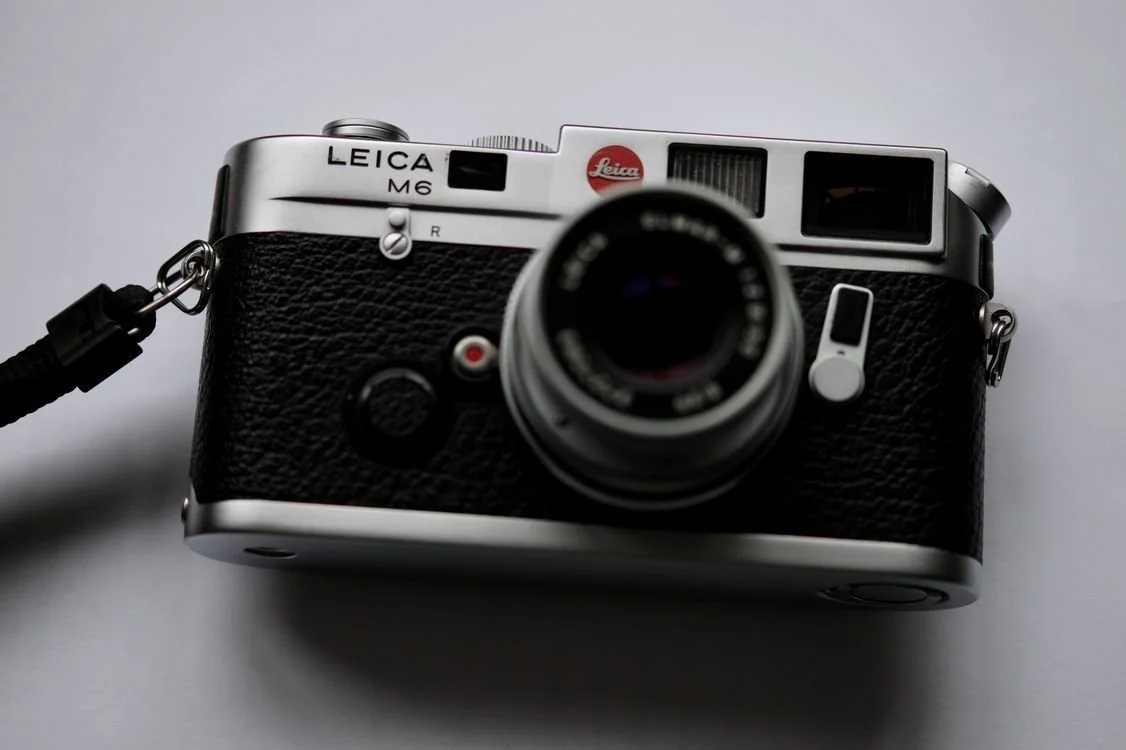
Cosmetics. Overall condition tells the story of how the camera lived. Check the top plate, the leatherette, and the strap lugs for wear. Look inside the battery compartment for corrosion, which hints at neglect. On the M6 specifically, know the three versions before you shop: the Classic (1984 to 1998), the TTL (1998 to 2002, with TTL flash metering and a larger shutter dial), and the 2022 reissue. The video walks the variants at the start because mixing them up is an easy way to overpay.
Mechanics. Wind the film advance and feel for smoothness. Fire the shutter through the speeds and listen: the slow speeds should sound even and unhurried. On a film body, open the back and inspect the shutter curtain for pinholes, wrinkles, or sticky blades.
Optics. Look through the viewfinder and rangefinder for clarity, haze, or separation. Inspect any included lens element by element. Check that the focus ring turns smoothly and the aperture ring clicks cleanly through every stop.
Electronics. Confirm the meter responds correctly. On the M6 that means both red arrows lighting in the viewfinder as you adjust aperture or shutter speed. Compare the reading against a known-good meter or a phone app before you trust it.
That is the dealer's pass. The nine checks below go deeper, because a fourteen-minute video cannot cover what a $5,000 purchase deserves.
Why Buying a Used Leica Is the Smartest Way In
Leica prices do not behave like normal camera prices. GearFocus market data shows the M11 averaging $6,205 across 47 verified sales, and holding near that level for almost a year after its initial depreciation from the $8,995 launch price. Once a Leica finds its floor, it tends to stay there. The M9, despite its well-known sensor issues, still commands over $2,000. The original Q still trades around $2,500 to $3,000.
That pricing floor is your safety net as a buyer. Buy a clean used Leica at the market price and you can usually shoot it for two years and sell it for close to what you paid. Try that with any other camera brand.
Timing helps too. The same GearFocus data shows December bringing a wave of motivated sellers, with year-end deductions and holiday bills pushing prices down $400 to $800 on bodies like the M11. Set your alerts in October, watch through November, and buy in December.
There is also a value play most rangefinder romantics miss. The SL2 and SL2-S average around $2,300 to $2,400 used, less than half an M11, with full-frame sensors, autofocus, and image stabilization. If you want Leica image quality without the rangefinder learning curve or the rangefinder repair bills, start there.
The 9-Point Inspection Checklist
1. Verify the serial number and provenance
Ask for the serial number before you meet the seller and check it against Leica's production records to confirm the model and year match what is advertised. Original boxes, papers, and service receipts add real resale value and tell you the camera was owned by someone careful. A Leica that has changed hands five times with no paperwork is not automatically bad, but it deserves a harder inspection and a lower offer.
2. Test rangefinder alignment first, because it is the expensive fix
This is the check that separates Leica buying from ordinary used-camera buying. Look through the viewfinder at a distant object and confirm the vertical and horizontal rangefinder images coincide exactly. Then mount a fast lens, open it wide, and focus on a flat surface at minimum distance. If you cannot nail focus there, walk away. Rangefinder realignment is a $500 to $1,200 repair, and it is not a bargaining chip. It is a reason to leave. My guide to how to focus a Leica rangefinder explains what correct alignment should feel like in practice.
3. On digital bodies, interrogate the sensor and EVF
Shoot a dark frame and inspect it at full magnification for dead or stuck pixels and the vertical-line faults that plagued some early digital M bodies. For SL bodies, check the electronic viewfinder for dead pixels and internal fogging from moisture. Run the camera through a full power cycle. Any lag, stuttering, or random shutdown points at mainboard trouble, and you should walk away the same as with a misaligned rangefinder.
4. Check shutter health, but do not obsess over the count
Shutter count matters less on a Leica than on most cameras. These mechanisms are rated for 200,000 or more actuations, and service history matters more than the number. A 50,000-shot body with a recent CLA, that is clean, lube, and adjust, beats a 10,000-shot body that has never seen a technician. On film bodies, inspect the shutter curtain visually for pinholes by shining a light through with the back open, and listen to the slow speeds. Uneven or dragging slow speeds mean a service is due.
5. Inspect the lens like your money depends on it, because it does
Hold every element up to a strong light. Dust is normal. Light cleaning marks depend on severity. Haze or fungus is a deal breaker, full stop. That milky fog between elements is not character, it is optical decay, and no discount justifies buying infected glass. Check that the aperture blades are oil-free and snap crisply, and that the focus ring moves smoothly through its whole range without grinding.
6. Read the cosmetics for what they really say
Brassing on edges is honest wear and often just cosmetic. Dents are different. A dented top plate or a bent hot shoe suggests a drop, and drops knock rangefinders out of alignment, which brings you back to check number two. On the M6 specifically, know that the original bodies used a die-cast zinc top plate, and on some copies the finish lifts into small bubbles. That is cosmetic and does not affect function, but it should affect what you pay. Heavy wear on the strap lugs tells you the camera lived on a strap outdoors, which is fine, but factor a CLA into your budget.
7. Verify the meter and electronics
On the M6, both meter arrows should light in the viewfinder as you work through aperture and shutter combinations, and the reading should agree with a phone light-meter app or the sunny 16 rule. Check that the battery cap is not seized or stripped, and look for corrosion in the battery compartment. On electronic film bodies like the M7, confirm every button responds without delay, since parts and repairs for electronic film cameras get harder every year.
8. Prefer service history over low mileage
This is the single most counterintuitive rule in used Leica buying. A camera that sat in a drawer for a decade can need more work than one that was shot regularly and serviced on schedule. Ask when the last CLA was done and by whom. Budget for a CLA on any body without recent service records, and subtract it from your offer. The full guide to buying any used camera covers the general version of this inspection if you are cross-shopping brands.
9. Vet the seller and protect the payment
Demand extensive photos. Any seller moving five-figure gear who cannot produce twenty detailed images is hiding something. Treat urgency as a red flag: phrases like priced to move and first offer takes it are not how confident Leica sellers talk. Prefer sellers who volunteer flaws you would never have noticed. Never wire money, never pay in crypto, and never pay outside the platform where you found the listing. When the camera arrives, photograph everything and test every function inside the return window. Put a roll through a film body in the first week.
Where to Buy a Used Leica Safely
Specialist used dealers. This is the safest lane. Established dealers inspect, grade, and warranty their stock, and dealers who specialize in Leica, like Worldwide Camera Exchange in the video above, know exactly what goes wrong with each model. You pay a premium over private sellers, but the inspection and return policy are worth it on your first Leica.
Marketplaces with buyer protection. Platforms built for camera trading give you an inspection window, usually around 48 hours, to verify everything in this checklist. Check seller verification status and sales history before you commit.
Leica's own channels. Leica offers trade-in programs, and its certified pre-owned stock comes with the one thing no private seller can give you: a factory warranty.
Forums and private sellers. The best prices live here, and so does the most risk. Forum classifieds with feedback systems beat anonymous listings. If you go the eBay or Craigslist route, apply check number nine ruthlessly, meet in person when possible, and bring a lens and a test roll.
What to avoid. Sellers who cannot explain the camera's history. Listings with stock photos. Prices far below the market cluster, which on Leica almost always means something is wrong, because fairly priced Leicas sell in under two weeks and outliers sit or vanish for a reason.
What Fair Pricing Looks Like Right Now
Ground your offer in actual sold prices, not asking prices. Current GearFocus market data puts the used M11 around $6,205, the M11-P around $7,464, and the SL2 and SL2-S near $2,300 to $2,400. The M9 holds above $2,000 despite its sensor history. The original Q trades around $2,500 to $3,000.
On the film side, the math is simple. Leica reissued the M6 in November 2022 at $5,295 body only, with a solid brass top cover and coated finder optics. A clean used M6 does the same job on the same film for far less, which is exactly why used prices stay strong. If a used M6 approaches reissue money, buy the reissue and take the warranty.
For the full picture of what Leica pricing means, my breakdown of why Leica cameras are so expensive covers the hand assembly, the limited production, and the resale math. And if you are still deciding between digital and film, my Leica M11 review is the working photographer's honest take after real assignments.
What 27 Years Behind the Lens Taught Me About Buying Gear
This is my personal take. Everything in this section comes from my own career and my book.
I shoot a Leica M10 and an M10-P, and I did not buy them as trophies. They are working cameras. I brought the M10 to a commercial shoot at Bella Thorne's house, working it right alongside a Hasselblad H6D, and I brought the M10-P to Quincy Jones's hand ceremony at the Chinese Theatre because I knew celebrities would be there and I wanted the camera that would not get in the way. Snoop Dogg looked at the Leica, said he was a big fan of Leicas, and told me he knew I was not messing around. Then he did exactly what I asked him to do in front of his manager. That is what the right tool does. It earns trust before you say a word.
Here is what buying gear for 27 years has actually taught me. First, buy the camera you will shoot, not the camera you want to own. The M10-P earned its place because it goes where the work is. Second, inspect with the same discipline you shoot with. I learned everything the hard way in this business, and the hard way always costs more than the careful way. A twenty-minute inspection using the checklist above is the cheapest insurance in photography. Third, remember that the camera is the least interesting part of the photograph. A used M6 with a clean rangefinder and honest glass will make better pictures than a new M11 in the hands of someone who has not learned to see. The tool matters, but the eye matters more, and the eye is built by shooting, not shopping.
If you are building a portrait business and want to see what this philosophy produces on real assignments, look at my portrait work and then get in touch about a session. I photograph everything I cover, and I bring the same discipline to a client shoot that I bring to buying the camera.
Frequently Asked Questions
Is it worth buying a used Leica?
Yes, for most buyers it is the rational entry point. Leica depreciation follows a curve with a hard floor: once a model finds its market price it tends to hold there for years, so a fairly priced used body costs you very little in depreciation while you own it. The M11 holding near $6,205 for almost a year is the textbook example. Just make sure the inspection checklist above is clean, because one missed repair wipes out the savings.
What should I check first when buying a used Leica?
Rangefinder alignment and lens fungus, in that order. Both are the expensive, sometimes unfixable problems. Everything else, shutter count, cosmetics, even meter accuracy, is either cheap to service or negotiable in price. If the rangefinder images do not coincide or the lens shows haze or fungus, walk away no matter how good the price looks.
Do used Leicas hold their value?
Better than any other camera brand. Limited production runs, discontinued models, and steady demand create pricing floors that last for years. The M9 still commands over $2,000 despite known sensor issues, and clean film bodies like the M6 have appreciated enough that Leica put the camera back into production in 2022.
Where is the safest place to buy a used Leica?
A specialist dealer with a written return policy. You pay more than a private sale, but you get professional inspection, accurate grading, and a window to test everything yourself. Whatever route you choose, buy from a seller who offers a return period, document the camera on arrival, and test every function before the window closes.
How do I test rangefinder alignment before buying?
Point the camera at a distant object and check that the double image in the rangefinder patch merges into one, both vertically and horizontally. Then mount the fastest lens available, open it fully, and focus on a flat detailed surface at the closest focusing distance. If focus is accurate there and at infinity, the rangefinder is correctly calibrated.
Booking: Planning portraits that deserve this level of care? I shoot headshots, celebrity portraits, and editorial sessions across Los Angeles. Contact me to book a session.
Have you ever bought a used Leica, or are you hunting for one right now? What is on your shortlist, and what is holding you back? Tell me in the comments.