The single most common Leica buying question I hear in 2026 is this: Leica M11 vs Q3, which one should I actually buy? Both have a 60MP full-frame sensor. Both wear the red dot. Both cost more than most photographers' entire kits. And they could not be more different cameras. One is a manual-focus rangefinder system you build lenses around for decades. The other is a fixed-lens autofocus compact that does almost everything for you, out of the box.
I shoot Leica M bodies. My M11 review is one of the most-read posts on this blog, and I have brought Leica rangefinders to red carpets, celebrity shoots, and commercial sets for years. So this is not a spec-sheet comparison from someone who read the brochures. This is the Leica M11 vs Q3 decision the way a working photographer actually makes it: what each camera asks of you, what it gives back, and which shooter each one is really for. The video below gives you the honest version of the debate from another Leica shooter, then we go point by point.
Contents
- The short answer: who should buy which
- Watch: the brutal truth about the Q3 vs the Leica M
- Leica M11 vs Q3 specs, side by side
- The 7 differences that decide it
- My take after 27 years with Leica rangefinders
- Leica M11 vs Q3 FAQ
- Book a session
The short answer: who should buy which
If you want the two-sentence version before the deep dive, here it is. Buy the Leica M11 if you want a system: interchangeable M lenses, a true optical rangefinder, and a camera you will still be building on in twenty years. Buy the Leica Q3 if you want one complete camera: a 60MP sensor with a fixed 28mm f/1.7 Summilux, fast autofocus, weather sealing, and video, with no lens decisions left to make. Everything else below is the evidence behind that sentence.
| You are this kind of shooter | Buy this |
|---|---|
| A photographer who wants to own lenses for decades and shoot manual focus | Leica M11 |
| A street, travel, or everyday photographer who wants one camera that does it all | Leica Q3 |
| Someone whose eyes struggle with rangefinder focusing | Leica Q3 |
| Someone who shoots video as well as stills | Leica Q3 |
| Someone building a portrait or fashion kit around 35mm, 50mm, and 75mm primes | Leica M11 |
| Someone who wants the lowest total cost of entry into modern Leica | Leica Q3 |
Watch: the brutal truth about the Q3 vs the Leica M
Street photographer and Leica shooter Tudor Mateescu lays out the M vs Q debate in his video "Leica Q3 vs Leica M: The Brutal Truth," and the framing is exactly right. This is not really a contest between two cameras. It is a contest between two philosophies. In the video he walks through what the Q3 actually is as a complete package: a 60MP full-frame compact with a fixed 28mm f/1.7 Summilux lens, weather sealing, fast autofocus, and excellent dynamic range, which he calls one of the best all-in-one cameras for travel, street photography, and everyday shooting. He also covers the Q3 43, the same body with a 43mm f/2 APO lens for photographers who prefer a more natural, near-50mm perspective, which he positions as the portrait and everyday-detail option. On the M side he gets into the lens ecosystem, including the Summicron line and the case for starting with a 35mm, and why the M remains a system you build rather than a camera you buy. His "brutal truth" is the same one I will give you below: the specs are nearly identical where it matters, so the decision comes down to how you see and how you shoot.

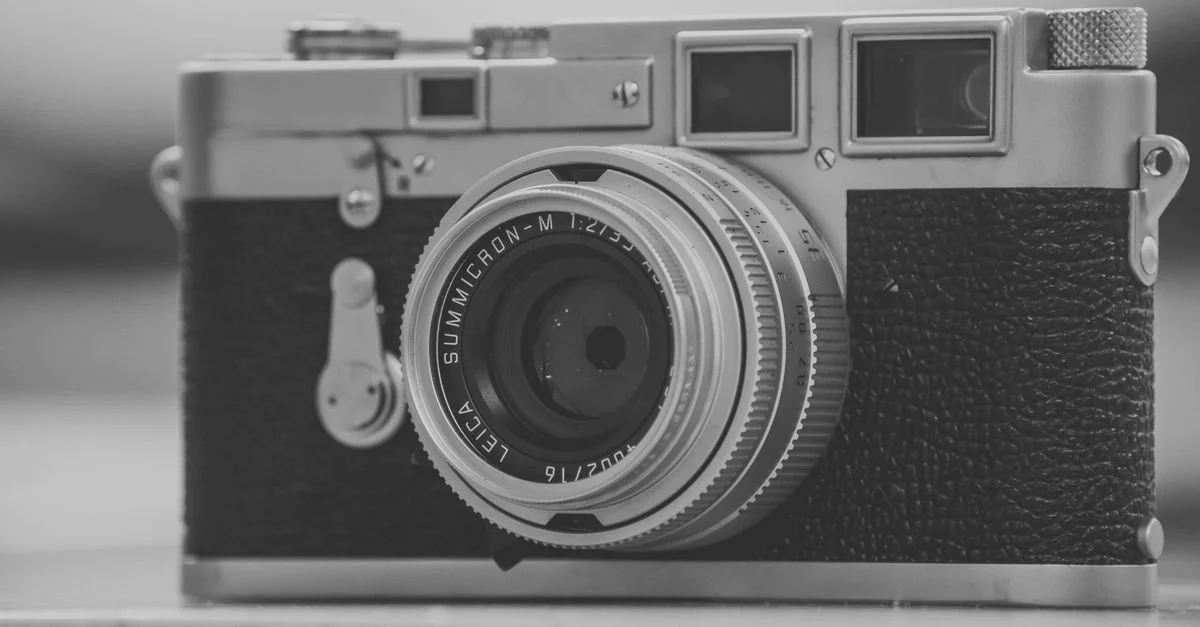
A Leica rangefinder camera body photographed for a Leica M11 vs Q3 comparison
Leica M11 vs Q3 specs, side by side
Here is the head-to-head on the numbers that actually matter, compiled from the spec comparison data. Notice how similar the imaging cores are and how different everything around them is.
| Specification | Leica M11 | Leica Q3 |
|---|---|---|
| Sensor | 60MP full-frame BSI CMOS, triple resolution (60/36/18MP) | 60.3MP full-frame BSI CMOS |
| Lens | Interchangeable Leica M bayonet (lenses since 1954 fit) | Fixed Summilux 28mm f/1.7 ASPH (no lens changes) |
| Focusing | Manual focus, optical rangefinder | Autofocus with phase detection, 315 focus points |
| Viewfinder | Optical rangefinder window (optional Visoflex 2 EVF) | 5.76M-dot OLED EVF, 100% coverage |
| Screen | 2.95-inch fixed touchscreen, 2.33M dots | 3-inch tilting touchscreen, 1.84M dots |
| Max shutter | 1/4000s mechanical, 1/16000s electronic | 1/2000s mechanical, 8K video |
| Continuous | 4.5 fps | 15 fps |
| Stabilization | None | Optical image stabilization in lens |
| Video | None | 8K/30p, mic input, continuous AF |
| Weather sealing | No | Yes, splashproof |
| Battery (CIPA) | 700 shots | 350 shots |
| Internal storage | 64GB | None listed (SD UHS-II) |
| Weight | 640g (silver), 530g (black) | 743g |
| New price | Just under $9,000 (body only) | Around $6,000-$6,735 |
Same sensor generation. Same resolution. After that, almost nothing is the same.
The 7 differences that decide it
Specs are the easy part. The decision lives in these seven differences, because each one asks you a question about how you photograph.
1. One lens or a lifetime lens system
This is the entire debate in a single question. The Q3 gives you a fixed 28mm f/1.7 Summilux, permanently mated to the body. Leica designed the lens and sensor as one unit, and the optical quality is on par with many interchangeable M lenses. If 28mm is how you see the world, you will never think about lenses again. If it is not, no amount of build quality fixes that, because the lens never comes off. The Q3 43 exists for exactly this reason: same camera, 43mm f/2 APO, for photographers who find 28mm too wide.
The M11 gives you the M bayonet and with it one of the longest lens continuities in photography: M-mount lenses made since 1954 fit the body. A 35mm Summicron you buy today works on a film M6, on the M11, and on whatever digital M body Leica makes next. That is the economic argument the spec sheets hide. The Q3 is one purchase that never grows. The M11 is the first purchase in a system that can last your whole career. The catch is that the M11 body is only the start: at just under $9,000 for the body, adding a single 35mm f/1.4 lens runs roughly another $5,400, so a working M11 kit easily doubles the price of a Q3.
2. Rangefinder focusing vs autofocus (and your eyes, honestly)
The M11 is manual focus, full stop. The optical rangefinder shows you framelines and a focusing patch, and you align them. It is fast once learned, silent, and it keeps both eyes open to the scene, which is why generations of street and documentary photographers swear by it. But it demands practice, good eyesight, and confidence. There is a reason my guide to focusing a Leica rangefinder is one of the most practical posts on this blog: it is a skill, and skills take reps.
The Q3 has modern autofocus with phase detection, 315 focus points, subject tracking, and a bright EVF that shows you exactly what the sensor sees. For anyone whose eyes are not what they were at twenty-five, for fast-moving subjects, for close focus work, the Q3 is simply the more capable camera. One honest rule: if you have never used a rangefinder and do not feel drawn to learning one, buying an M11 because Leica represents prestige is an expensive way to discover you hate focusing manually. The Q3 asks nothing of you here and delivers keepers immediately.
3. The price math, new and used
New, the gap is stark. The Q3 launched at $5,995 and currently lists around $6,735, complete: body and lens, done. The M11 body lists just under $9,000 with no lens, and a single fast 35mm adds roughly $5,400, putting a basic one-lens M11 kit near $14,000. The Q3 costs less than half of an equivalent M11 kit. That is not a small difference; it is a different purchase category.
Used, the market tells its own story. Tracked 2026 sales data shows the Q3 averaging $5,100 to $5,400 used, about a 10 percent discount off launch for a camera that is essentially current. The M11 averages $6,205 across 47 verified sales, holding remarkably steady, with M-series bodies typically selling in under two weeks. Two things matter here. First, December is historically the best buying month for used Leica, with year-end sellers creating dips that can save $600 to $800 on an M11. Second, M bodies hold value partly because the lenses hold value: a used M lens is a liquid asset in a way few camera products are. If you buy the M11 used and buy your lenses used, your total cost of ownership over five years can be lower than the sticker prices suggest. My used Leica buying guide walks through exactly how to inspect a body before you pay.
4. Video and speed: the Q3 is a modern camera, the M11 is not trying to be
The Q3 shoots 8K video at 30p, takes a microphone, holds focus while recording, and fires 15 frames per second. The M11 shoots no video at all and tops out at 4.5 fps. If your work includes any motion, behind-the-scenes clips, or hybrid stills-plus-video delivery for clients, the comparison is over: the Q3 is the only one of the two that does the job. The M11's 1/4000s mechanical shutter (versus the Q3's 1/2000s) is a genuine advantage for wide-aperture daylight shooting on the M, and the M11's triple-resolution sensor lets you drop to 36 or 18MP for smaller files. But on speed and video, the Q3 is a generation ahead, because it is a different kind of camera.
5. The viewfinder experience
This one is subjective but decisive. The M11's optical rangefinder shows you the world, not a screen: bright framelines floating over reality, both eyes open, zero lag, zero blackout. Photographers who love it describe it as seeing the photograph before it exists. The Q3's EVF shows you the exposure, the white balance, and the depth of field exactly as the sensor will record them, which is the better tool for precise work and for anyone who wants no surprises. Neither is objectively better. But you will look through one of them thousands of times, so this matters more than a spec row. If you can, handle both in a store before you decide. Ten minutes with each viewfinder answers the question faster than ten articles.
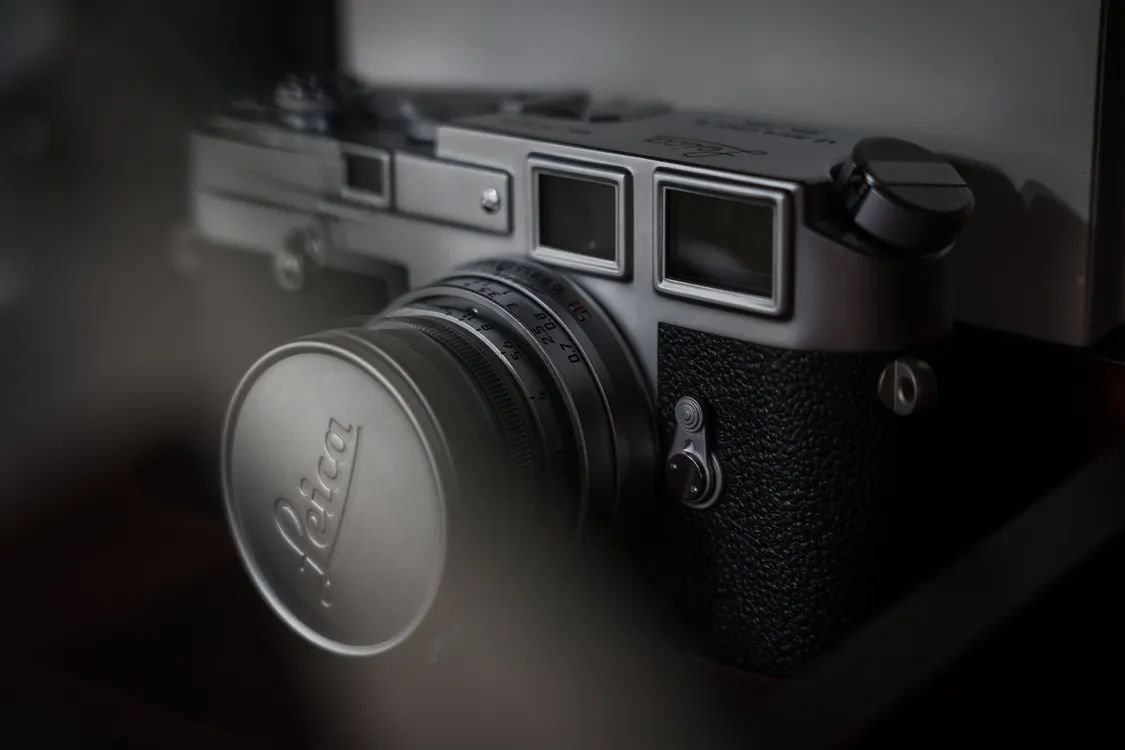
Hands manually focusing a Leica M lens on a rangefinder body, the experience no Q3 can duplicate
6. Weather sealing, flip screen, and daily practicality
The Q3 is weather-sealed and splashproof; the M11 is not. The Q3 has a tilting touchscreen; the M11's screen is fixed. The Q3 has optical stabilization in the lens. On battery, the M11 wins by a wide margin: 700 shots per charge versus the Q3's 350, and both use removable batteries, so a spare in the bag solves the Q3's weakness. On a rainy travel day, the Q3 keeps shooting while the M11 goes back in the bag. On a long wedding day, the M11 keeps shooting while the Q3 needs its second battery. Pick the weakness you would rather manage.
7. Resale value and the long game
Leica depreciation does not follow normal camera curves. The data shows M11 bodies holding around $6,200 for nearly a year after the initial drop from $8,995, and M lenses barely depreciate at all when bought well. The Q3 holds value like an M body but with a fixed lens there is no lens portfolio appreciating alongside it. The long-game math favors the M system if you buy lenses once and keep them: the body depreciates, the glass mostly does not. It favors the Q3 if you want one purchase, one camera, and no further decisions. Either way, buy the camera because you want to photograph with it. Resale is a consolation prize, not a strategy.
My take after 27 years with Leica rangefinders
Here is what the spec tables will never tell you: a Leica rangefinder changes how a room treats you. I brought my Leica M10 P to the hand cement ceremony for Quincy Jones at the TCL Chinese Theatre, because I knew there would be celebrities there worth photographing. Snoop Dogg looked at the camera in my hands and said yes to the portrait before I finished asking. He told me he was a big fan of Leicas and that he knew I was not messing around. Then he told his own manager to stand down and do what I said, because, in his words, I was the man. That is not a spec. That is what twenty-seven years of showing up with the right tool buys you: instant credibility in a room full of people who are photographed for a living.
I have shot commercials with the M10 next to a Hasselblad H6D, and I have carried a rangefinder through situations where a big DSLR rig would have killed the mood. The rangefinder is small, quiet, and honest. It does not hide behind autofocus or burst mode. It makes you commit to the frame before you press the button, and that discipline shows up in the work.
So which would I buy? I already answered that question with my own money: the M system, because I am a working photographer who directs people, and the rangefinder is the camera that gets me the portrait. But I am not you. If you want one camera that handles street, travel, family, and video without a second thought, the Q3 is the smarter purchase and it is not close. If you want to learn the rangefinder the way I did, start with my guide to focusing a Leica rangefinder, then read my M11 review for the full working-pro verdict, and buy your first M lens used. Either way, buy the camera you will actually carry. The best Leica is the one that leaves the house.
If the Leica math is new to you, two posts on this blog go deeper on each side of it. My Leica M11 review is the full honest take from a working photographer who shoots the camera for a living. And my guide to buying a used Leica shows you how to get into either of these cameras without getting burned, including the December timing trick.
Leica M11 vs Q3 FAQ
Is the Leica Q3 better than the Leica M11?
Neither is better in absolute terms. The Q3 is the better all-in-one camera: autofocus, 8K video, weather sealing, stabilization, and a fixed 28mm f/1.7 lens, for roughly half the cost of an M11 kit. The M11 is the better system camera: interchangeable M lenses with decades of compatibility, an optical rangefinder, and a body that anchors a kit you can build for life. Better depends entirely on whether you want one complete camera or a system.
Can the Leica Q3 replace an M11 for professional work?
For many kinds of professional work, yes. The Q3's 60MP sensor, fast autofocus, and 8K video cover weddings, events, travel, and commercial lifestyle work, and its fixed 28mm Summilux is a genuinely professional optic. Where it cannot replace the M11 is in lens choice: a portrait photographer who needs an 75mm or 90mm look, or a photographer whose style depends on specific M lenses, needs the interchangeable system. The M11 also remains the choice when the rangefinder shooting experience itself is part of how you work.
How much does a Leica M11 with a lens actually cost?
A new M11 body lists just under $9,000, and a fast 35mm M lens adds roughly $5,400, putting a basic one-lens kit near $14,000. A new Q3, complete with its fixed 28mm f/1.7 Summilux, costs around $6,000 to $6,735. On the used market, M11 bodies average about $6,205 and Q3 bodies about $5,100 to $5,400, with December historically the best month to buy.
Should I buy a used Leica Q3 or M11?
Both hold value well, but buy used only from verified sellers with detailed photos, service history, and return protection. For the M11, test the rangefinder coupling with a fast lens wide open, since misalignment is a $500 to $1,200 repair. For the Q3, check the EVF for dead pixels and confirm the autofocus is accurate at f/1.7. Either way, track prices for about 30 days before buying; properly priced Leicas typically sell in under two weeks, so outliers are usually either snapped up fast or hiding a problem.
Does the Leica Q3 have the same sensor as the M11?
Effectively yes. The Q3 uses a 60.3MP full-frame BSI CMOS sensor that Leica describes as a modified version of the M11's 60MP sensor, adapted with on-sensor phase-detection autofocus and a different microlens array for the Q3's fixed-lens optical design. In real-world image quality the two are in the same league; the differences that matter are the lens, the focusing system, and everything around the sensor.
Book a session
Reading about Leica cameras is fun. Being photographed by someone who has spent 27 years mastering them is better. I shoot portraits, headshots, and events across Los Angeles with the same rangefinder discipline this post is about: commit to the frame, direct with confidence, deliver images worth keeping. If you want that eye on your next shoot, get in touch here. And if you are a photographer working out the business side of all this beautiful gear, these nine client-getting strategies are how the calendar actually fills up.
So, M11 or Q3: which philosophy matches the way you actually shoot, one perfect lens or a system for life? Tell me in the comments, I read every one.