Maternity photography packages and pricing in Los Angeles, from $450 mini sessions to $1,150 galleries. What each package includes and how to book.
Read MoreMaternity Photography Packages and Pricing Los Angeles

Maternity photography packages and pricing in Los Angeles, from $450 mini sessions to $1,150 galleries. What each package includes and how to book.
Read MoreThe best headshot photographer in Los Angeles in 2027 is the one whose portraits look like you on your best day, today, and survive a casting director's two second thumbnail scan. AI generators now produce a polished portrait in minutes, so a real session has to deliver what software cannot: direction, honest likeness, and images that hold up when you walk into the room.
Read MoreYes, in most cases. If your old headshot still sells the job you are leaving, it works against the job you want next. A new headshot is not about looking different. It is about looking like the person who belongs in the room you are trying to enter. I have spent 27 years behind the camera in Los Angeles, and I have watched good people get passed over because their photo told the wrong story.
Read MoreDelete your old headshot from every public profile the moment it stops looking like you, keep one archived copy, and reuse the image only where the older version still fits, like a throwback post. The photo is not the problem. Where it is still working for you decides its fate.
Read MoreCorporate event venues are lit for humans, not cameras. The ballroom glows amber from chandeliers. The breakout room flickers under fluorescents. The keynote stage blasts magenta from LED panels while the audience sits in near darkness. And somewhere in the middle of it all, the client expects crisp, flattering photos of every moment.
Read MoreHeadshot photographer in Santa Monica for actors, founders and executives. Leica M11, natural light, from $1,500. Book your consultation.
Read MoreCorporate event photographer in Beverly Hills for galas, summits and launches. Next day galleries, from $750 an hour. Book your date.
Read MoreLeica M11 settings for portraits: aperture, shutter, ISO and focus for natural light portraits, plus the field notes from my sessions.
Read MoreHeadshot photographer in downtown Los Angeles, shot on Leica M11 in natural light from $1,500. DTLA session locations, pricing, and booking.
Read MoreCelebrity photographer Los Angeles David Christopher Lee photographed Kim Kardashian at Dash in Calabasas in 2007. The story behind the portrait.
Read MoreIllustrative photo: a Leica M6 film rangefinder camera with a prime lens. This is not the Light Lens Lab 40mm f/2 Hua.
Light Lens Lab opened orders for the 40mm f/2 “Hua” on November 23, 2026, a limited special-project lens for Leica M-mount cameras, priced at $250 in Black Chrome or Silver Chrome, with shipping starting in December 2026. Every copy mixes restored vintage Chinese glass from the founder’s personal collection with new Light Lens Lab glass, so no two copies render a scene the same way. At $250 it costs 96.4 percent less than Leica’s current Summilux-M 35mm f/1.4 ASPH.
That is the headline, but it is not the whole story. The Hua is the first new lens I have seen that celebrates sample variation instead of trying to eliminate it. PetaPixel put it plainly on November 23: as far as it is aware, this is the first time a new lens has celebrated sample variation rather than sought to eliminate it. Two copies of the same lens can render the same scene very differently. That is either a charming piece of photographic history you can buy for $250, or a focusing gamble, depending on how you shoot.
Light Lens Lab’s founder, Mr. Zhou, collected vintage Chinese lenses long before he started the company. The 40mm f/2 “Hua” is his brand’s newest special project, and it is a tribute to the Chinese manufacturers that came before it. The company says it plainly: “We are proud to announce a small, fun, but special project: the Light Lens Lab 40mm f/2 ‘Hua.’ A token of appreciation for all Light Lens Lab patrons and supporters since 2016.”
The history behind it is specific. In December 1953, Wang Daheng and his colleagues in Changchun produced China’s first successful batch of optical elements. In the decade that followed, Shanghai produced the Shanghai 58-I, the first domestically produced camera from China, with Seagull twin-lens reflex cameras shortly following. Shanghai’s No. 2 Camera Factory also built the Hongqi 20, a 35mm rangefinder camera built to showcase domestic precision engineering. Light Lens Lab says these companies and their skill set form the backbone of Chinese optical and photographic manufacturing excellence, and the Hua is its tribute to them.
Every Hua incorporates select, restored glass elements from Mr. Zhou’s personal collection. According to the company, the vintage elements have been cleaned of historical defects and recoated to match their original specifications, then combined with new Light Lens Lab glass. The combination varies from lens to lens, so two copies can render the same scene differently. Each lens gives photographers, in the company’s words, “a chance to make new photographs with glass shaped by an earlier generation of Chinese lens makers.”
Orders opened November 23, 2026, through Light Lens Lab’s website and partner retailers worldwide. Shipping begins in December 2026. Because this is a limited-edition release built with vintage glass elements, the company will produce it in small batches as capacity allows. If your preferred finish sells out, there is a waitlist on the product page.
The Light Lens Lab 40mm f/2 “Hua” costs $250 in either finish: Black Chrome or Silver Chrome. Both are the same $250 MSRP, according to Leica Rumors and the company’s own product page.
A 5 percent discount code brings it to $237.50. Leica Rumors publishes the code RUMORS for 5 percent off, and the Fred Miranda forum thread lists the code FREDMIRANDA for the same 5 percent, which the forum prices at $237 with the code applied. Either way, the saving is $12.50 on a $250 lens.
The lens comes with a one-year manufacturer’s warranty from Light Lens Lab covering malfunctions during normal use. Front and rear lens caps are included.
The full verified spec sheet, from Leica Rumors’ November 22 report of the company’s own specifications:
Focal length: 40mm, full-frame (135 format, 36 x 24mm)
Maximum aperture: f/2, minimum aperture f/16
Optical construction: 6 elements in 4 groups, Double-Gauss design
Aperture blades: 10, preset diaphragm with full-stop locks
Minimum focus distance: 0.5 meters (1.6 feet)
Rangefinder coupling range: infinity to 0.7 meters
Filter thread: 39mm (E39)
Dimensions: approximately 51 x 32mm, excluding mount and protrusions
Weight: 162 grams
Focus: manual focus, with a focus tab and a clicked aperture ring
Mount: Leica M-mount quick-change bayonet
Barrel: aluminum and brass, modeled on the company’s current 50mm f/2
Finishes: Silver Chrome, and a brand-new Black Chrome process
Three specs deserve a closer look. First, the weight. At 162 grams, the Hua is barely heavier than a smartphone, and it is 158 grams lighter than the 320-gram limited-edition Summilux-M 35mm f/1.4 that Notebookcheck weighed in October 2026, a 49.4 percent saving. On a Leica M11, a 162-gram lens disappears. That matters for a lens meant to be carried every day.
Second, the rangefinder coupling. The lens is rangefinder-coupled from infinity down to 0.7 meters. From 0.5 meters to 0.7 meters, the rangefinder is uncoupled, so you focus with Live View at those distances. The 0.5-meter minimum focus is close for an M-mount lens, and it is the zone where the Hua can do near-macro style detail work, but only with the screen, not the rangefinder patch.
Third, the 10-blade preset diaphragm. Ten blades is a generous count, and a preset diaphragm with full-stop locks is an old-school design: you set the aperture, it locks at each full stop from f/2 to f/16. It is simple, mechanical, and consistent with the lens’s vintage character.
Quotable summary: At $250, the Light Lens Lab 40mm f/2 Hua costs 96.4 percent less than Leica’s $6,900 Summilux-M 35mm f/1.4 ASPH, weighs 162 grams, and is the only new M-mount lens where no two copies render a scene the same way.
Here is the comparison I compiled on November 24, 2026, from current retailer listings. Every price below was verified the same day.
Against Leica’s Summilux-M 35mm f/1.4 ASPH, the current 2022 version: the Leica costs $6,900 at Crutchfield and Adorama. The Hua at $250 saves $6,650, or 96.4 percent. The Leica is 27.6 times the price. The Hua is one stop slower at f/2 against f/1.4, and 5mm longer at 40mm against 35mm, but it is the same mount, the same manual-focus discipline, and the same full-frame coverage.
Against Leica’s Summicron-M 35mm f/2 ASPH: the Leica costs $4,275 at Crutchfield. The Hua saves $4,025, or 94.1 percent. The Leica is 17.1 times the price. The aperture matches exactly at f/2, and the focal lengths are 5mm apart, 40mm against 35mm, which is a 14.3 percent longer reach. For a photographer who wants a compact f/2 M-mount prime and does not need the Leica badge, the price gap is the whole argument.
Against the Voigtlander Nokton 40mm f/1.2 Aspherical in Sony E-mount: the Voigtlander is on sale at B&H Photo for $749 against a $1,099 list price. Against the $749 sale price, the Hua saves $499, or 66.6 percent. The mounts differ, so this is a price comparison, not a direct alternative: the Voigtlander is a stop and a third faster, but it does not fit an M-mount rangefinder, and it costs three times as much.
Against the used market: MPB lists the original Leica 40mm f/2 Summicron-C, the 1970s collapsible 40mm, at $594 to $709 used. The Hua at $250 new costs less than half of a fifty-year-old used Leica 40mm, and it comes with a warranty, a new Black Chrome finish, and glass that was restored and recoated this year.
The pattern is consistent. The Hua is the cheapest new M-mount prime from a known maker by a wide margin, the lightest lens in the comparison at 162 grams, and the only one where the glass itself is the story. The trade-off is the one Light Lens Lab states openly: the glass varies from copy to copy, and that variation can affect rangefinder accuracy, even within the coupled range.
This is the part that decides whether the Hua is right for you, and Light Lens Lab is unusually honest about it.
Because each lens mixes vintage elements in a different combination, individual copies can render the same scene with slight variations in character. That is the feature. The consequence is that variations in the glass elements can affect rangefinder accuracy, even within the coupled range from infinity to 0.7 meters. In plain terms: the rangefinder patch and the actual plane of focus may not agree perfectly on your copy, because your copy’s glass is not identical to the copy the factory calibrated against.
PetaPixel draws the practical conclusion: the sample photos Light Lens Lab published may not be truly indicative of all copies of the lens. What you see in the launch gallery is what one copy did, not necessarily what yours will do.
For a street photographer who zones focuses at f/8, this barely matters. Depth of field covers small errors. For a portrait photographer shooting wide open at f/2 with the rangefinder patch on an eye, it matters a lot. If you buy the Hua, test it the day it arrives: shoot a focus chart or a ruler at f/2, check where the sharp plane actually lands against the rangefinder patch, and decide whether your copy is within tolerance for the way you shoot. Light Lens Lab’s one-year warranty covers malfunctions, not character, so know your copy before the return window closes.
M-mount shooters who already own a Leica body get the most from this lens. If you shoot a Leica M11, M10, or a film M, the Hua is a $250 experiment with a story behind it, a focal length that sits between the classic 35mm and 50mm, and a rendering no other copy shares. At 162 grams it is a genuine everyday carry lens, and the 40mm focal length is a natural walk-around choice: wider than a 50mm, tighter than a 35mm.
Collectors and Light Lens Lab supporters are the audience the company names directly. The lens is a token of appreciation for patrons since 2016, produced in small batches, in two finishes, with a new Black Chrome process that will carry over to future optics. If you collect LLL lenses, this one is the special project of the year.
Film M shooters get a native M-mount lens that adapts to nothing, because it does not need to. It mounts directly, couples to the rangefinder down to 0.7 meters, and the 39mm filter thread takes the same filters as a Summicron. The vintage glass character suits film particularly well, where the rendering differences between copies read as personality rather than defect.
Mirrorless shooters can adapt it, since it is a native M-mount lens, but the Hua is built for rangefinders first. If you shoot Sony or Nikon and want a 40mm f/2, buy a native lens. The Hua’s value is the M-mount experience.
I shoot a Leica M11 with a 50mm, in natural light, and I have not shot with the Light Lens Lab 40mm f/2 “Hua.” It went on sale yesterday, November 23, 2026, and no review unit has been in my hands. What follows is what I would check before spending $250, based on 27 years of buying lenses that looked good on a spec sheet.
First, rangefinder accuracy on your copy. Shoot a focus target at f/2 at 1 meter, 2 meters, and 5 meters, and check whether the sharp plane lands where the rangefinder patch said it would. The company warns that glass variation can affect accuracy even within the coupled range. Believe the warning and test for it.
Second, rendering character. Shoot the same scene at f/2, f/2.8, and f/4, and look at the bokeh, the contrast, and the color. Your copy’s vintage elements will give it a signature. Decide whether you like that signature, because you cannot swap it for another copy’s signature without buying another copy.
Third, the preset aperture. The 10-blade diaphragm locks at each full stop. Make sure the locks feel positive and the ring does not drift between stops in the bag. A preset diaphragm is mechanical and simple, which is good, but only if the detents hold.
Fourth, the finish. The new Black Chrome process is a first for Light Lens Lab and will carry over to future lenses. Look at it in person if you can. Black Chrome is the finish that will either look like a classic or look like a coating, and photographs do not settle that question.
None of that is a reason not to buy it. At $250, the lens only has to be good, not perfect, to be worth it, and the small-batch limit means waiting has a cost: if your preferred finish sells out, you join the waitlist. It is a reason to test your copy the day it arrives, before you trust it on a paid job.
The launch was covered within 24 hours by three independent outlets plus the manufacturer’s own channels, which is the evidence this term is breaking out right now rather than surfacing from an old listing:
PetaPixel, November 23, 2026: full story, specs, price, sample photos, and the sample-variation observation
Leica Rumors, November 22, 2026: availability, RUMORS discount code, full specifications from the company
Light Lens Lab official site, November 2026: product page, $250 MSRP for both finishes, orders open November 23, shipping December 2026
Fred Miranda forum, November 22, 2026: orders open, FREDMIRANDA discount code, $237 with code, specifications
Photographer Keith Wee, Threads and Instagram, November 23, 2026: studio photos of both finishes, $250 price, 5 percent code, Double-Gauss design
$250 in Black Chrome or Silver Chrome. Orders opened November 23, 2026. A 5 percent discount code, RUMORS or FREDMIRANDA, brings it to $237.50.
Leica M-mount, native, manual focus, full-frame. It adapts easily to modern mirrorless cameras, but it is built for M-mount rangefinders.
Every copy mixes restored vintage Chinese glass elements from the founder’s personal collection with new Light Lens Lab glass, in a combination that varies from lens to lens. The vintage elements were cleaned of historical defects and recoated, but the mix differs, so two copies can render the same scene differently.
It can. Light Lens Lab states that variations in the glass elements can affect rangefinder accuracy, even within the coupled range from infinity to 0.7 meters. Test your copy at f/2 against a focus target when it arrives.
Shipping begins in December 2026. It is a limited release produced in small batches as capacity allows, so a preferred finish can sell out and move to a waitlist.
The apertures match at f/2, and the focal lengths are 5mm apart. The Leica costs $4,275 new at Crutchfield. The Hua costs $250, a $4,025 saving, and adds a 0.5-meter minimum focus and a unique vintage-glass rendering no Leica offers.
PetaPixel, Jeremy Gray, “No Two Copies of Light Lens Lab’s New 40mm f/2 ‘Hua’ Lens Are the Same,” November 23, 2026
Leica Rumors, “Light Lens Lab 40mm f/2 ‘Hua’ limited special-project lens for Leica M-mount is now available for purchase ($237 with included discount code),” November 22, 2026
Light Lens Lab official site, “Special Project, Light Lens Lab 40mm f/2 ‘Hua’ Available November 23, 2026”
Fred Miranda forum, “Light Lens Lab 40mm f/2 ‘Hua’, Now Open for Orders,” November 22, 2026
Leica Summilux-M 35mm f/1.4 ASPH price $6,900, Summicron-M 35mm f/2 ASPH price $4,275: Crutchfield, November 24, 2026
Voigtlander Nokton 40mm f/1.2 Aspherical price $749 sale / $1,099 list: B&H Photo, November 24, 2026
Leica 40mm f/2 Summicron-C used price $594 to $709: MPB, November 24, 2026
Limited-edition Summilux-M 35mm weight 320g: Notebookcheck, October 2026
Illustrative photo: a Leica M6 film rangefinder camera with a prime lens. This is not the TTArtisan AF 12mm f/2.8 ASPH.
TTArtisan announced the AF 12mm f/2.8 ASPH on November 24, 2026, a full-frame autofocus ultra-wide prime for Sony E-mount and Nikon Z-mount cameras, priced at $489 with pre-orders open now. It is a 122-degree lens that weighs 336 grams, takes 82mm front filters, and focuses as close as 0.18 meters. At $489 it costs about one sixth of Sony’s 12-24mm f/2.8 GM.
That last number is the story. Ultra-wide f/2.8 glass has always been a four-figure purchase. TTArtisan just put an autofocus 12mm f/2.8 on the market for less than the price of a mid-range 50mm. The question working photographers will ask is not whether $489 is cheap. It is whether a $489 ultra-wide can hold up on a paid job.
TTArtisan unveiled the AF 12mm f/2.8 ASPH on November 24, 2026, according to PetaPixel, Nikon Rumors, and Photo Rumors, all reporting the same day. The lens is a full-frame autofocus ultra-wide prime, built for landscapes, architecture, and night-sky photography, the three jobs where a 12mm focal length earns its keep.
The optical formula is 16 elements in 10 groups, including two aspherical elements and three extra-low dispersion (ED) elements. TTArtisan promises excellent aberration control and outstanding resolution even when shooting wide open, which is exactly the claim that matters most at 12mm, where coma and corner softness ruin astro frames. I have not tested the lens, so that promise is unverified until independent reviews land. What is verifiable now is the spec sheet, the price, and the math against every rival.
The aperture diaphragm has six blades, a low count by modern standards. Six blades produce distinct, pointed sunstars when the lens is stopped down, which landscape shooters will like, and busier bokeh in out-of-focus highlights, which matters less at 12mm because almost everything is in focus anyway. The aperture range runs f/2.8 to f/16, with a clicked aperture ring.
Autofocus comes from a stepping motor, and TTArtisan says the lens supports eye and face detection on compatible cameras. Minimum focus distance is 0.18 meters, or 7.1 inches, which lets a photographer push a foreground rock, flower, or architectural detail right up to the front element while the background still reads. The field of view is 122 degrees.
The TTArtisan AF 12mm f/2.8 ASPH is available to pre-order now for Nikon Z and Sony E-mount cameras at $489. That price is the same for both mounts, according to PetaPixel and Nikon Rumors.
An L-Mount version is referenced on TTArtisan’s product page but is not listed for sale yet. TTArtisan already makes several lenses for L-Mount, so a third mount later is a reasonable expectation, not a promise. If you shoot Panasonic or Leica L-Mount, wait for an official listing before budgeting for this lens.
There is no announced ship date in the November 24 coverage. Pre-orders are open at B&H Photo in the United States and through TTArtisan’s own store worldwide, per Nikon Rumors.
The full verified spec sheet, from PetaPixel’s November 24 report:
Focal length: 12mm, full-frame
Maximum aperture: f/2.8, minimum aperture f/16
Field of view: 122 degrees
Optical construction: 16 elements in 10 groups, 2 aspherical, 3 ED
Aperture blades: 6
Minimum focus distance: 0.18 meters (7.1 inches)
Filter thread: 82mm, via an included extending adapter
Weight: 336 grams (Sony E) to 349 grams (Nikon Z)
Length: 72 to 74 millimeters
Autofocus: stepping motor, eye and face detection supported
Mounts at launch: Sony E, Nikon Z
Two specs deserve a closer look. First, the weight. At 336 to 349 grams, this is roughly the weight of a single 85mm f/1.8. Most full-frame ultra-wide zooms weigh twice as much or more, which is why they stay in the bag on long hikes. Second, the filter thread. Most 12mm lenses have a bulbous front element and no front filter thread at all. The TTArtisan takes 82mm filters through an extending adapter that ships in the box. That means a circular polarizer or a neutral-density filter screws on like any normal lens, which is a real workflow advantage for landscape work.
The front element is still bulbous, so the adapter is not optional. It adds minimal bulk, according to PetaPixel, and it is included, so there is no extra purchase. Lose it and you lose the filter option, so it is worth keeping in the lens case.
Quotable summary: At $489, the TTArtisan AF 12mm f/2.8 ASPH costs 84.5 percent less than Sony’s 12-24mm f/2.8 GM, weighs 60.3 percent less, focuses 10 centimeters closer, and is the only 12mm f/2.8 with autofocus and a front filter thread under $500.
Here is the comparison I compiled on November 24, 2026, from current retailer listings and PetaPixel’s spec database. Every price below was verified the same day.
Against Sony’s FE 12-24mm f/2.8 GM, the professional benchmark for this focal length: the Sony lists at $3,148 at Abt and Adorama, against a $2,999.99 launch price from July 2020. The TTArtisan at $489 saves $2,659, or 84.5 percent. The Sony is 6.44 times the price. The Sony weighs 847 grams, so the TTArtisan at 336 grams is 511 grams lighter, or 60.3 percent lighter. The Sony focuses to 0.28 meters; the TTArtisan focuses to 0.18 meters, 10 centimeters closer, or 35.7 percent closer. Per gram, the TTArtisan costs $1.46 against the Sony’s $3.72.
Against Sony’s FE 12-24mm f/4 G, the lighter Sony zoom: the Sony costs $2,298 at Crutchfield and Adorama, against a $1,698 launch price from May 2017. The TTArtisan saves $1,809, or 78.7 percent, and costs 4.70 times less. The Sony weighs 565 grams, so the TTArtisan is 229 grams lighter, or 40.5 percent lighter. The Sony takes no front filters at all. The TTArtisan is also one full stop faster, f/2.8 against f/4, which is twice as much light, a difference that decides whether a Milky Way frame is clean or noisy.
Against Nikon’s NIKKOR Z 14-24mm f/2.8 S, the Nikon shooter’s pro option: the Nikon lists at $2,696.95 with a current sale price of $1,896.95 at Crutchfield. Against the sale price, the TTArtisan saves $1,407.95, or 74.2 percent. The Nikon weighs 650 grams, so the Nikon Z version of the TTArtisan at 349 grams is 301 grams lighter, or 46.3 percent lighter. The Nikon also reaches only 14mm at its widest, while the TTArtisan reaches 12mm, a visibly wider frame.
Against the Laowa 12mm f/2.8 Zero-D, the closest direct rival in focal length and aperture: the Laowa lists at $849 at Adorama. The TTArtisan saves $360, or 42.4 percent, and adds autofocus, which the Laowa does not have. That is the sharpest comparison in the set, because the Laowa is the lens a budget-conscious 12mm shooter would otherwise buy. The TTArtisan undercuts it by more than $350 and focuses itself.
The pattern is consistent across all four rivals. The TTArtisan is the cheapest 12mm f/2.8 with autofocus by a wide margin, the lightest option in the comparison, the closest focusing, and the only one under $500. The trade-off is the unknown: no independent sharpness tests, no coma test, no weather-sealing claim, and a six-blade aperture against the nine or more blades on the pro zooms.
Landscape photographers get the most from this lens. A 12mm f/2.8 at 336 grams is a lens that actually goes on the hike instead of staying in the hotel room, and the 82mm filter thread means a polarizer and a 6-stop ND work the way they do on every other lens in the bag. The 0.18-meter minimum focus turns a foreground boulder into a composition instead of a blur.
Astrophotographers get a real tool at a price that used to buy only a manual-focus novelty. At f/2.8, a 12mm lens gathers twice the light of an f/4 zoom, which is one full stop of cleaner Milky Way frames. The open question is coma control in the corners, which TTArtisan promises and nobody has independently verified yet. If the corners hold up wide open, this becomes the cheapest credible astro prime on either mount. If they do not, it is still a strong stopped-down landscape lens.
Architecture and real estate photographers get a 122-degree field of view that fits a whole room from a doorway, with autofocus for fast walkthroughs. The 0.18-meter close focus helps with detail shots of fixtures and finishes without a lens change.
Event and wedding photographers who shoot on Nikon Z or Sony E and want one ultra-wide for the dance floor or the venue establishing shot can justify $489 as a specialty tool rather than a $3,000 commitment. That is the buying logic this lens is built for: a focal length most photographers use 5 percent of the time, priced like a 5-percent lens.
Read this before pre-ordering. TTArtisan says the lens works seamlessly on Nikon Z-mount bodies, but Sony E-mount compatibility has limits on older cameras.
The Sony a7 III is fully compatible for photo modes but only partially compatible for video. The original a7 and a7 II lack full compatibility. TTArtisan notes that autofocus performance may be limited on certain bodies, and that firmware updates are in development for others. Full compatibility details are on TTArtisan’s website.
If you shoot a recent Sony body, an a7 IV, a7R V, a7C II, or anything in the current lineup, this is unlikely to affect you. If you shoot an a7 III and need video autofocus from this lens, check the compatibility page before you buy. If you shoot an original a7 or a7 II, expect limited function.
I shoot a Leica M11 with a 50mm, in natural light, and I have not shot with the TTArtisan AF 12mm f/2.8 ASPH. It was announced today, November 24, 2026, and no review unit has been in my hands. What follows is what I would check before spending $489, based on 27 years of buying lenses that looked good on a spec sheet.
First, coma. Shoot a night sky wide open at f/2.8 and look at the stars in the extreme corners. If they stretch into seagull shapes, the lens is a landscape lens, not an astro lens. TTArtisan promises excellent aberration control. Promises are free. Corner stars are the test.
Second, edge sharpness at f/2.8 and f/5.6. A 12mm lens lives or dies at the edges, and the difference between f/2.8 and f/5.6 tells you whether the lens is usable wide open or needs stopping down. If it needs f/5.6 to clean up, the f/2.8 aperture is a focusing aid, not a shooting aperture.
Third, the filter adapter. Screw on a polarizer, shoot into a bright sky, and check for vignetting in the corners. An extending adapter on a 122-degree lens is exactly where vignetting hides. TTArtisan includes the adapter, but inclusion is not the same as invisibility.
Fourth, autofocus reliability on your exact body. The stepping motor and eye detection are welcome, but the compatibility caveats on older Sony bodies are a reminder that third-party autofocus is a negotiation between the lens and the camera. Test it on the body you will actually use it on, in low light, at f/2.8.
None of that is a reason not to buy it. At $489, the lens only has to be good, not perfect, to be worth it. It is a reason to wait for the first independent tests, which should land within days of the announcement, before treating the spec sheet as a review.
The announcement was covered the same day by three independent outlets plus the manufacturer’s own channels, which is the evidence this term is breaking out right now rather than surfacing from an old listing:
PetaPixel, November 24, 2026: full specs, price, compatibility notes, sample photos
Nikon Rumors, November 24, 2026: Z-mount announcement, $489, pre-order links to B&H Photo and TTArtisan
Photo Rumors, November 24, 2026: announcement for E, Z, and L mounts
TTArtisan’s own YouTube launch video, November 24, 2026: $489 launch price, E and Z mounts, 122-degree field of view, 0.18-meter minimum focus, 6-point sunstars
Retailer and community posts the same day, including Pergear and PC Fever Nepal, confirm the $489 price and the E and Z mounts independently of the press coverage.
$489 for Sony E-mount and Nikon Z-mount. Pre-orders opened November 24, 2026, at B&H Photo and through TTArtisan’s own store. No L-Mount price has been announced.
Sony E and Nikon Z at launch. An L-Mount version is referenced on TTArtisan’s product page but is not for sale yet.
Yes. It takes 82mm front filters through an extending adapter that TTArtisan includes in the box. Most 12mm lenses take no front filters at all, so this is a genuine advantage for landscape photographers who use polarizers and ND filters.
On paper, yes. It is a 12mm f/2.8, which gathers twice the light of an f/4 zoom, and TTArtisan promises excellent aberration control. Whether the corners hold up wide open is unverified until independent astro tests appear. Wait for a coma test before buying it specifically for Milky Way work.
The TTArtisan costs $489 against the Laowa’s $849, a $360 saving, and adds autofocus, which the Laowa lacks. The Laowa has a longer track record and a known distortion profile. The TTArtisan is cheaper, lighter in the hand at 336 grams, and focuses itself.
The a7 III is fully compatible for photos but only partially for video. The original a7 and a7 II lack full compatibility. TTArtisan says firmware updates are in development for some bodies. Check the compatibility page on TTArtisan’s site for your exact model.
PetaPixel, Jeremy Gray, “TTArtisan’s AF 12mm f/2.8 Is a $489 Ultra-Wide Prime for Full-Frame Cameras,” November 24, 2026
Nikon Rumors, “TTArtisan announced a new AF 12mm f/2.8 full-frame autofocus ultra-wide angle lens for Nikon Z-mount,” November 24, 2026
Photo Rumors, “New TTartisan AF 12mm f/2.8 full-frame autofocus ultra-wide angle lens announced (E/Z/L),” November 24, 2026
Sony FE 12-24mm f/2.8 GM launch price $2,999.99 and current $3,148: PetaPixel PixelMeter, Abt, Adorama, November 24, 2026
Sony FE 12-24mm f/4 G price $2,298, weight 565g, launch $1,698: Crutchfield, Adorama, PetaPixel PixelMeter, November 24, 2026
Nikon NIKKOR Z 14-24mm f/2.8 S price $1,896.95 sale / $2,696.95 list, weight 650g: Crutchfield, November 24, 2026
Laowa 12mm f/2.8 Zero-D price $849: Adorama, November 24, 2026

She was already famous. That is the first thing to say, because this story breaks this series' own rule in the best way.
When I photographed Bella Thorne in 2019, she had grown up on the Disney Channel and become an Instagram superstar with 22 million followers. Everybody knew her face. What nobody had quite seen yet was the person she was becoming once she stopped letting Disney decide who that was. I caught her mid-break — in a house she designed herself, shooting a commercial and shooting me right back.
My friend Johnny, of the EDM group Hotel Lobby, had become friends with Bella in 2019. He asked if I wanted to shoot with her at her Sherman Oaks house. Of course I said yes. The job was a commercial for a lip plumper serum — on paper. In reality it became a tour of the most personal house I have ever shot in.
Bella's house is called the Trippy Twins Funhouse — it even has its own Instagram. It is 4,500 square feet, bought for $2 million in 2016, designed by Bella and her sister, with light-up stairs, a colorful mural, and a 12-foot unicorn statue.
In the living room sits a hand-painted rainbow coach with a T. rex behind it. Bella sleeps in a tipi — she wanted something weird, something that felt like a safe space. Her closet holds around 4,000 pieces of clothing and 600 pairs of shoes. She has 17 cats, with a cat castle in the pink room.
I walked through the hallway to the kitchen, where I met Bella and her manager. She was eating McDonald's Chicken McNuggets, and she offered me one. No entourage wall, no velvet rope — just a girl in her own funhouse, sharing her lunch.
I set up the lights with Johnny, and Bella sat down in front of her dinosaur. I brought both of my cameras: the Leica M10 and the Hasselblad H6D.
When I started shooting her with the Hasselblad, she got curious — she had never seen one before. I told her it was a 100-megapixel medium format camera, probably the best on the market, then did what you do when a subject is curious: I showed her the camera and let her take some pictures with it.
So I shot her with my Leica while she shot me with the Hasselblad — there are funny pictures of us taking pictures of each other — and after that the whole shoot opened up. I shot her all over the house: colorful furniture, a plastic ball chair, the backyard. She grew up in the Disney mold, told what she could and could not do. Now she gets to do whatever she wants.
That is the before-and-after here. Not unknown to famous — molded to free. She was rebelling against her Disney heritage, directing, writing books, acting in her own projects, and the house was the proof. Her own line says it best: "Don't try to impress people. Always be yourself." Her book of poems, "Life of a Wannabe Mogul: Mental Disarray," chronicled that break in her own words. My assignment was a lip serum commercial; what I actually photographed was a person mid-escape from a brand she did not choose.
Here is the lesson Bella Thorne taught me: when your subject gets curious about your gear, hand it over.
I could have kept the Hasselblad to myself. Instead I let her shoot me with it, and she stopped performing for the camera and started playing with it. The pictures after that moment are looser and more honest, because she was a collaborator, not a subject.
On any portrait where the person in front of you feels guarded — a fashion photographer in Los Angeles session or otherwise — find the thing they are curious about and give it to them. Curiosity beats any direction shouted from behind the lens.
And if you are hiring a celebrity photographer in Los Angeles, ask how they handle a subject who wants to play. The ones who say yes get the pictures nobody else gets.
Was Bella Thorne famous when David Christopher Lee photographed her? Yes, and this edition does not pretend otherwise: Disney Channel star, 22 million Instagram followers in 2019. The "before" here is before the world fully saw the post-Disney Bella — director, author, independent artist — breaking out of the mold she grew up in.
Where was the shoot? At her Sherman Oaks home, the Trippy Twins Funhouse, designed with her sister. A lip plumper serum commercial, shot around the house — colorful furniture, a plastic ball chair, the backyard.
What cameras did he use? A Leica M10 and a Hasselblad H6D, a 100-megapixel medium format camera. Bella had never seen a Hasselblad, so he let her use it — and she shot him while he shot her.
How do I book a shoot? Get in touch here. I have spent 27 years as a celebrity photographer in Los Angeles and New York, and every session gets the same standard.
About the author: David Christopher Lee is a Los Angeles celebrity photographer with 27 years of experience, shooting for GQ, Vogue, InStyle, People, and brands around the world.
Book a Shoot: Book your shoot. If you want pictures of who you actually are — not who a brand told you to be — that is what I do.

The frame is all attitude. Snoop Dogg in a black fur jacket and dark sunglasses, shot in the lobby of the Chinese Theatre, glowing with soft flattering light against the darker room behind him. He is standing where I put him, looking straight at the camera, and the portrait has the ease of a man who has been photographed a million times but was actually enjoying this one.
Then there is the second frame. Usher in a long green jacket and sunglasses, same lobby, same soft light, listening to every word of direction I gave him. Two of the biggest names in music, shot minutes apart, in a quiet pocket of the theatre after the ceremony ended. No crew. No entourage in the frame. Just me, my Leica, and two legends who decided to trust the guy with the camera.
A friend invited me to the hand cement ceremony of Quincy Jones at the TLC Chinese Theatre in Hollywood. I brought my Leica M10 P, because I knew there would be celebrities there, and I have learned to never leave the camera at home when that is true.
I got there about a half hour early and there were no celebrities. Then, minutes before the ceremony, the front row filled in: Kareem Abdul-Jabbar, Quincy Jones, Rashida Jones, Snoop Dogg, Usher, and Patrick Soon-Shiong. Snoop and Usher went on stage and gave a speech recognizing their idol, Quincy Jones.
Rashida followed them and spoke about her father's career: more than 60 years in entertainment, a record 80 Grammy nominations, Oscar nominations, and production credits on Michael Jackson's Off the Wall, Thriller, and Bad. In 1985 he produced "We Are the World." Watching him press his hands into the cement, then raise them for the audience, was a sight I will not forget.
After the ceremony came the VIP reception inside the theatre, basically just for the celebrities and Quincy's family. I met Snoop and told him I was a good friend of one of his good friends, Bishop Don Magic Juan. He gave me a hug. I asked if I could take pictures of him. He looked at my camera and said yes, of course. He is a big fan of Leicas, and he knew I was not messing around.
I asked if we could move to the light. His manager came over and said Snoop could not move. Snoop told the manager he was going to do what I said, because, and I quote, "I was the man."
I shot Snoop in the lobby in various poses and showed him the pictures. He absolutely loved them. He was having so much fun that he brought Usher over and told Usher to listen to whatever I said, repeating, "he's the man." Usher listened to everything I said. Snoop cheered me on while their publicists and managers snickered in the background.
I got my shots, and I had a lot of fun doing it. I am still in touch with Snoop, and I am sure we are going to shoot again soon.
For photographers, the lesson is this: find the light, then move the person into it, even when everyone around them says the person cannot move.
The lobby of that theatre was not a studio. But there was a pocket of soft, flattering light, and I knew it would give Snoop a nice glow for a serious portrait. When the manager said Snoop could not move, I did not argue and I did not settle for the bad light. I stayed calm, and Snoop overruled his own manager on my behalf. That only happened because I had already shown him I knew what I was doing, and because I kept showing him the pictures on the back of the camera as we went.
That is the discipline I have carried through 27 years as a celebrity photographer in Los Angeles and New York: never let the room dictate the portrait. You do not need a studio. You need one good pocket of light, the nerve to ask for it, and the habit of showing your subject proof the direction is working. Proof beats equipment. Every time.
It is also why I love ceremonies and red carpets. Most red carpet photographers shoot fast and move on. The real portraits happen in the quiet pockets afterward, when the speeches are over and the subject has a minute to actually be photographed.
Where did David Christopher Lee photograph Snoop Dogg and Usher? At the hand cement ceremony of Quincy Jones at the TLC Chinese Theatre in Hollywood, during the VIP reception inside the theatre after the ceremony.
What were Snoop Dogg and Usher wearing? Snoop wore a black fur jacket and sunglasses. Usher wore a long green jacket and sunglasses.
How do I book a portrait session? Get in touch here and tell me about the shoot. I photograph celebrities, executives, and anyone who needs a portrait with presence, in Los Angeles and New York.
One frame can change how the world sees you. I have spent 27 years making portraits like this one. If you need a celebrity photographer in Los Angeles who knows how to find the frame in any room, book your shoot.
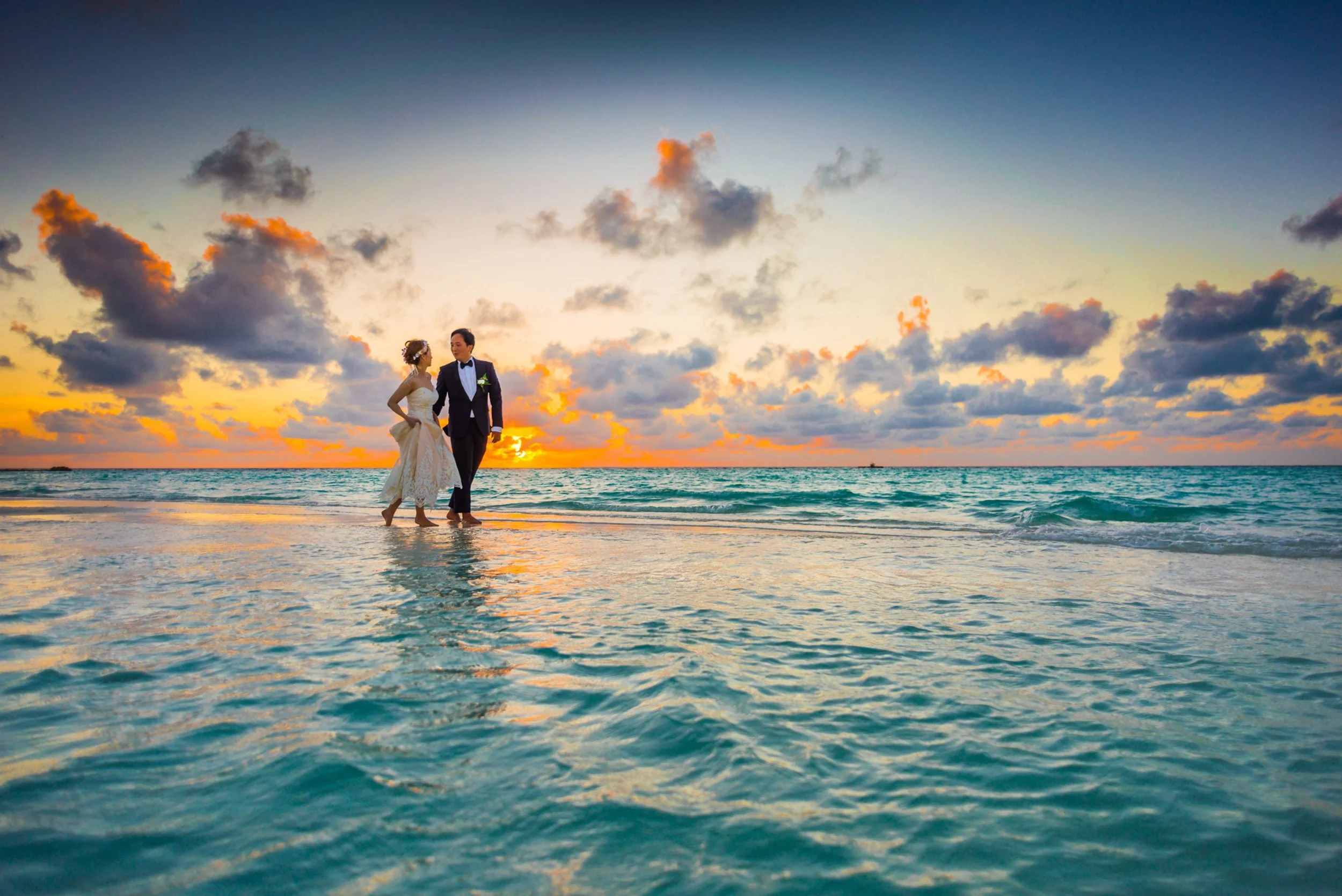
An elopement is not a wedding with the guest list crossed out. It is a different kind of day entirely: two people, a handful of witnesses at most, and a location chosen because it means something, not because it seats 200. And because the day is smaller, the photographs carry more weight. There is no big reception to remember it by. The gallery is the memory.
I have been photographing people in Los Angeles for 27 years, from red carpets to courthouse steps. Here is how to hire an elopement photographer in Los Angeles, what it should cost, where to do it, and the mistakes I see couples make.
A traditional wedding photographer runs a production: timelines, shot lists, a second shooter, a DJ to coordinate with. An elopement photographer runs a two-person expedition. The job is part photographer, part location scout, part calm presence.
A good elopement photographer helps you pick a location that photographs well at the hour you will actually be there, not just at noon on a scouting trip. They know which Malibu cliffs are in shadow by 4 p.m., which downtown spots need a permit, and how to get a clean frame when a public beach has twenty other people in it. They also know when to step back. The best elopement photos happen in the minutes nobody staged.
Ask any photographer you are considering how much of the day they plan versus how much they let happen. If the answer is a rigid shot list, they are selling you a small wedding, not an elopement.
Elopement coverage costs less than a full wedding day because the hours are shorter, but the hourly rate is the same professional rate. In the Los Angeles market, published elopement packages cluster in a clear range:
What moves the price: a second shooter, film photography, drone coverage, rush delivery, and travel to locations outside central Los Angeles. What should make you suspicious: a rate far below $1,000 for a full elopement with editing included. Editing is where the hours go, and a price that ignores it usually means unedited dumps or a photographer building a portfolio on your wedding day.
Get the deliverable in writing: how many edited images, what the turnaround time is, and whether you get a print release. A typical elopement delivery runs 100 to 200 edited images for a half-day.
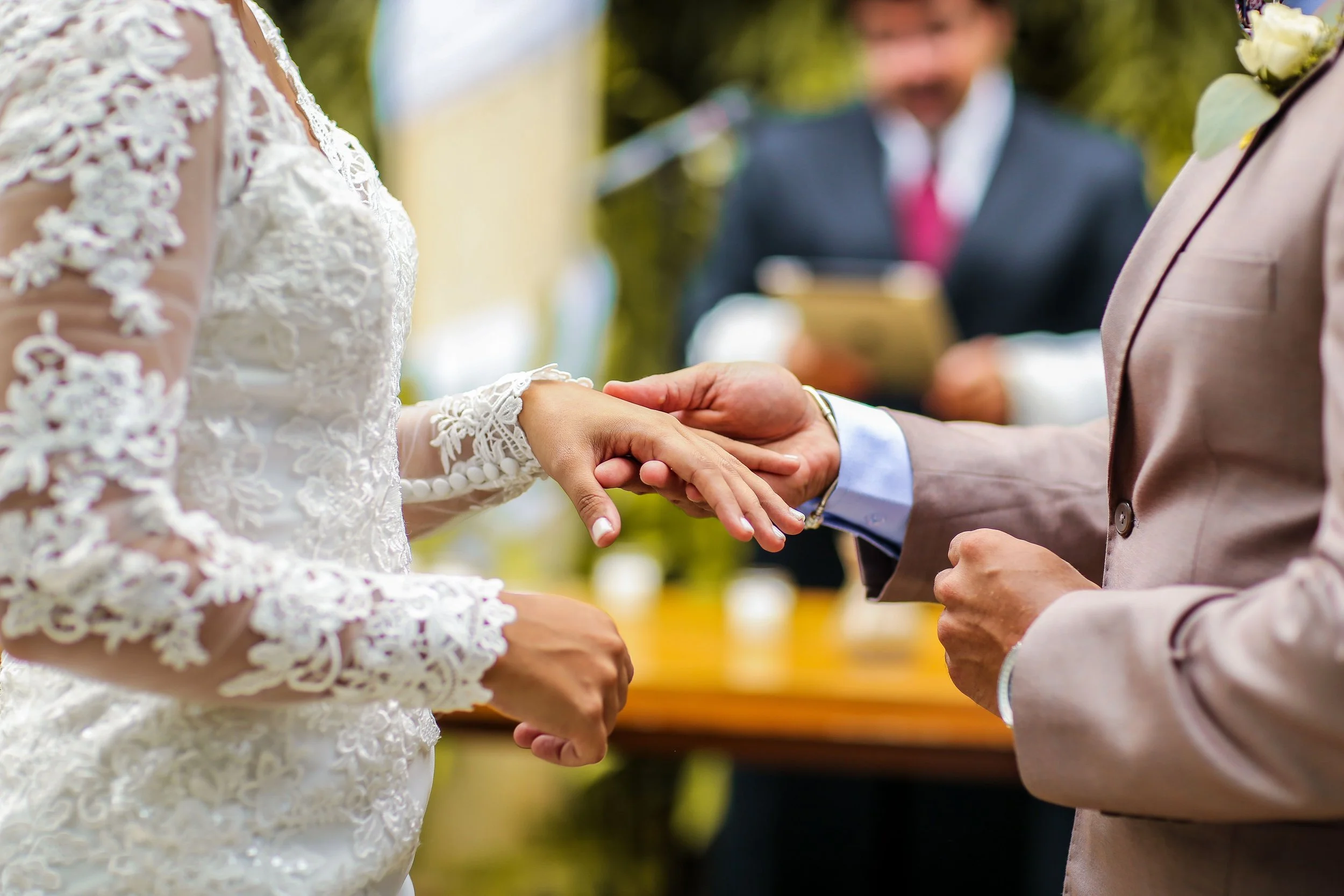
Los Angeles gives eloping couples something almost no other city can: ocean, desert, mountains, and a skyline within an hour of each other. These are the locations I see work best:
Malibu cliffs and beaches. Golden hour on a Malibu bluff is the classic Los Angeles elopement image for a reason. El Matador and Point Dume are the famous names, which means crowds and permit requirements. A good photographer will have quieter backups.
Griffith Observatory and Griffith Park. City views, Art Deco architecture, and sunset light. The park requires permits for professional photography, so confirm that before you fall in love with the spot.
Vasquez Rocks. The dramatic rock formations north of the city photograph like another planet. Popular with elopement photographers for a reason, and worth the drive for couples who want something that does not look like a beach wedding.
Beverly Hills Courthouse. If the legal ceremony is the point, the courthouse is clean, classic, and photogenic. My guide to Beverly Hills Courthouse wedding photography covers what the day actually looks like there.
Downtown Los Angeles. Union Station, the Arts District, and the Bradbury Building give an elopement an urban, editorial feel. Great for couples who want their photos to look like Los Angeles, not just like a beach.
Wherever you choose, visit at the same time of day as your ceremony before you commit. Light at 10 a.m. and light at 5 p.m. are different weddings.
The paperwork is simpler than most couples expect, but it is not optional.
Marriage license. A public marriage license in Los Angeles County costs $91, and a confidential license costs $85. A civil ceremony at a county clerk office adds $35, and a county-provided witness is $20. California licenses are valid for 90 days from issue, and there is no blood test and no waiting period. Both of you need valid photo ID, and if either of you was previously married, bring the dissolution paperwork. A detailed walkthrough lives in this Los Angeles marriage license guide.
Witnesses. A public license ceremony in California requires at least one witness. A confidential license requires none, but the couple must already be living together. If your elopement is just the two of you, your photographer can often serve as witness, so ask.
Permits. County beaches, Griffith Park, and most City of Los Angeles parks require permits for professional photography, and several require proof of liability insurance naming the agency. Your photographer should know which locations need what, but the permit is ultimately your responsibility. Budget a few weeks for processing, and do not assume a public place means a free place.
Officiant. Anyone ordained or a Deputy Commissioner for a Day can perform the ceremony. Los Angeles County's Deputy Commissioner for a Day program costs $75. Many elopement photographers work regularly with officiants they trust, so ask for an introduction rather than searching cold.
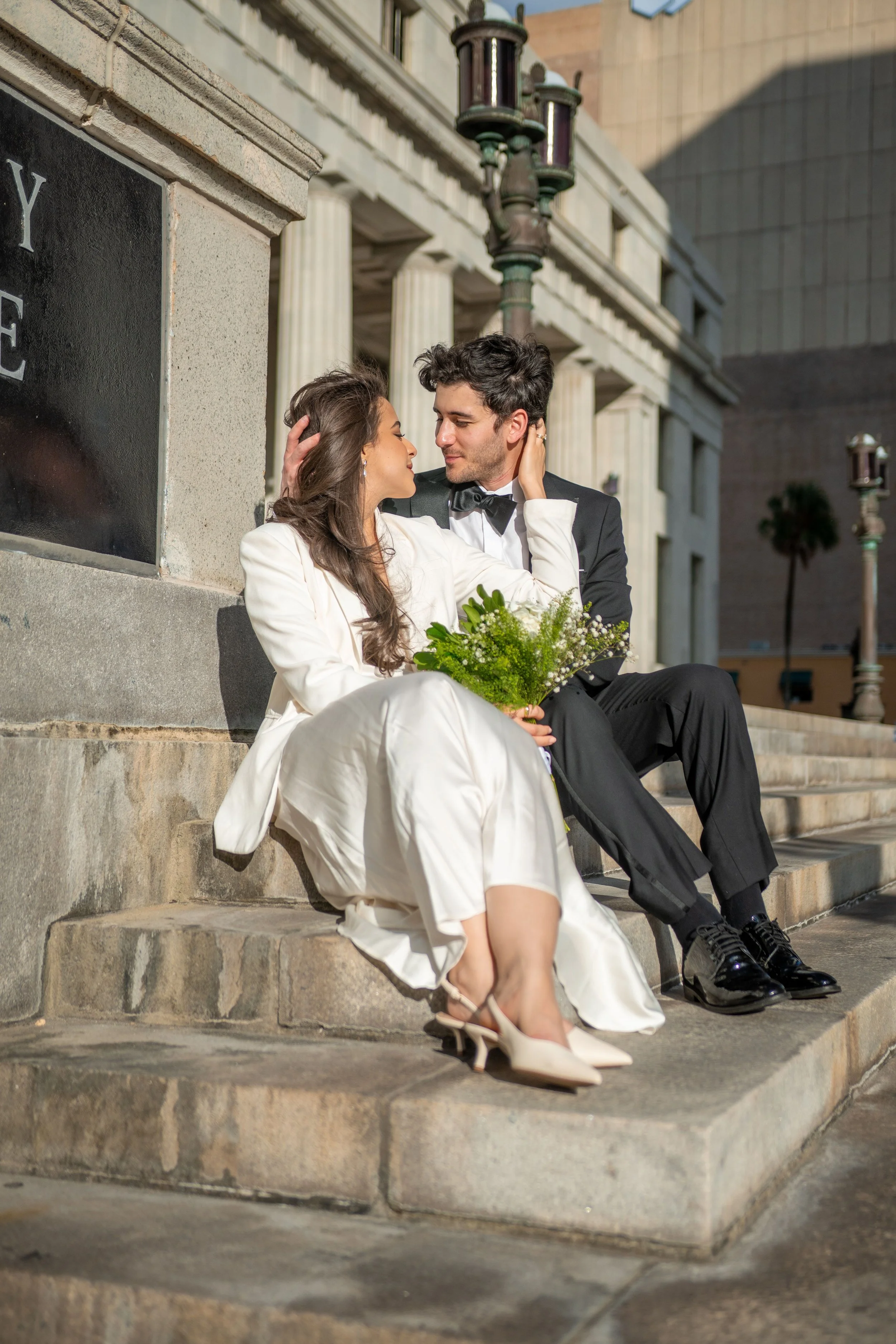
Elopement portfolios are easy to fake and hard to judge, because every photographer posts their ten best frames. Look past them:
Ask for a full gallery. One complete elopement delivery, start to finish, tells you more than a hundred highlight images. Look at the in-between moments: the walk to the location, the waiting, the family groupings. That is what your day will actually look like.
Check the hard light. Los Angeles elopements live in harsh midday sun and deep shade. Look for clean skin tones in direct sun, detail in white dresses that are not blown out, and backgrounds that look chosen rather than accidental.
Match the location to yours. A photographer whose portfolio is all desert elopements may not know beach permits, tides, or coastal wind. If your heart is set on Malibu, hire someone who has shot Malibu.
Read the words, not just the pictures. Testimonials from elopement couples specifically, not wedding couples, tell you whether the photographer handled the intimacy of the day well. Elopements are emotional in a way big weddings are not, and the photographer is the only vendor in the room for most of it.
Couples use these words interchangeably, and photographers price them differently, so get precise:
If you are comparing quotes, make sure every photographer is quoting the same kind of day. A $1,200 quote for a two-hour courthouse session and a $2,800 quote for a four-hour coastal elopement are not competing offers.
If your plans are growing toward a bigger celebration, read my guide to wedding photographer costs in Los Angeles to see where the full-day numbers land, and if you are still at the question-popping stage, my Los Angeles proposal photographer guide covers surprise proposals.
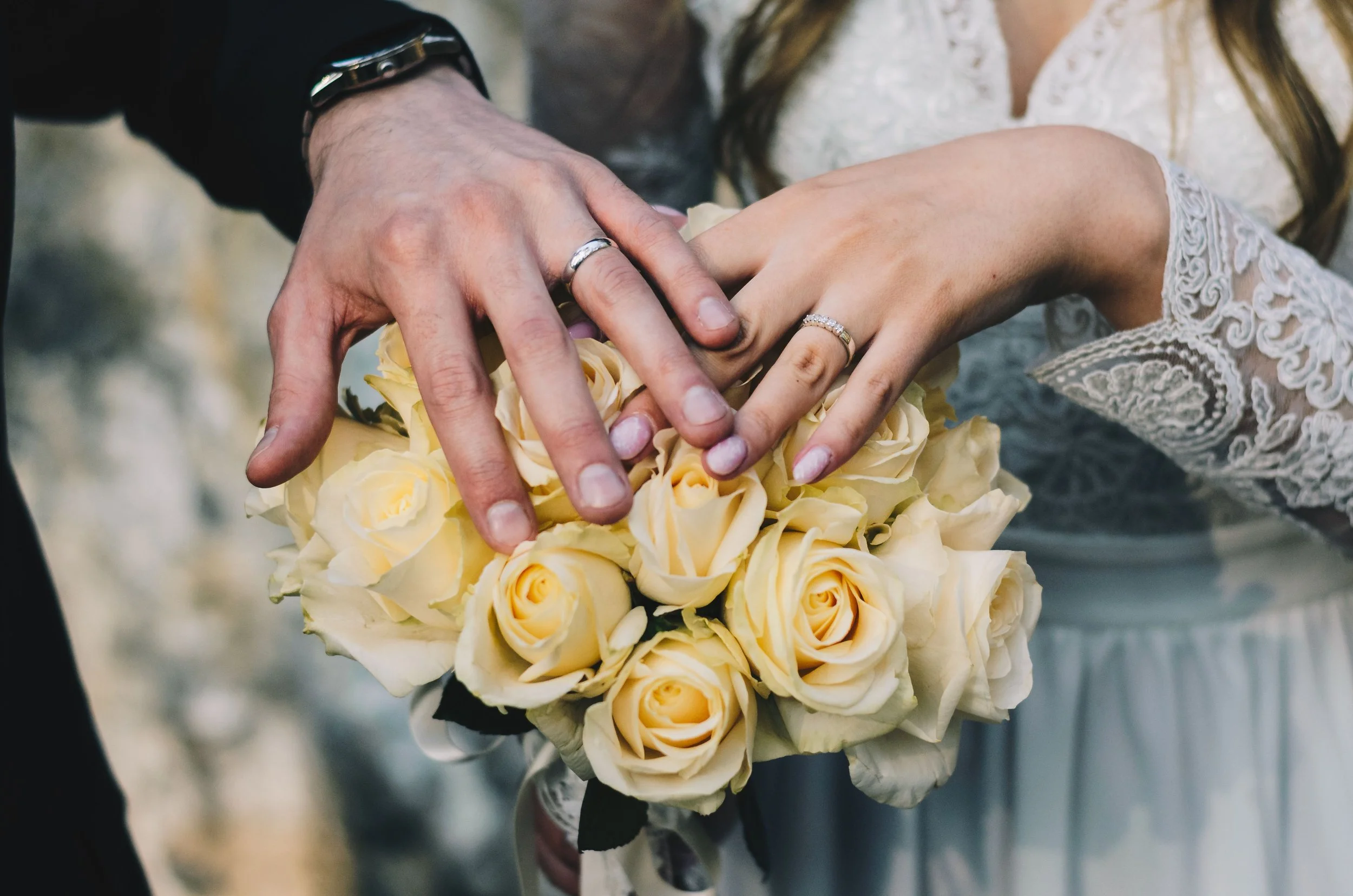
Elopements move faster than weddings, but the good photographers still book out. For a Saturday in spring or fall, the prime Los Angeles elopement season, book 2 to 4 months ahead. Weekdays are far more flexible, often available within a few weeks, and locations are quieter. Permits are the long pole: apply as soon as your location is set, not the week before.
A simple timeline: pick your location and photographer 2 to 4 months out, get the license within 90 days of the ceremony, confirm permits 4 to 6 weeks out, and do a final light check with your photographer the week of the day.
Walk away if you see any of these: no contract, no backup equipment, no permit discussion for a location that clearly needs one, a portfolio of only styled shoots with no real couples, or full payment demanded upfront. A retainer to hold the date is standard; 100 percent upfront is not. And if a photographer cannot show you a single full elopement gallery, they have not shot one.
How much does an elopement photographer cost in Los Angeles? Most Los Angeles elopement packages run $1,200 for two hours to around $2,800 for four hours, with six-hour coverage starting near $3,000. The price depends on hours, locations, and add-ons like film or drone coverage.
Do we need a permit to elope on a Los Angeles beach? Yes, in most cases. County beaches and city parks require permits for professional photography, and some require liability insurance. Your photographer should flag the requirement, but confirm it with the managing agency before the day.
How many guests can we have at an elopement? There is no legal limit tied to the word elopement. Most photographers treat anything under 10 to 20 guests as an elopement or micro wedding. Past 20 guests, you are planning a small wedding, and the coverage, timeline, and price change with it.
Can our elopement photographer be our witness? Yes. A public-license ceremony in California requires at least one witness, and your photographer can serve as that witness. Confirm it before the day so nobody is scrambling at the ceremony.
When should we book our elopement photographer? Book 2 to 4 months ahead for a weekend in spring or fall. Weekday elopements can often be booked within a few weeks, and the locations will be quieter.
An elopement strips a wedding down to the two people it is about. That is why the photographs matter so much: there is no crowd, no reception, no 300-guest blur to remember the day by. There is just the two of you, the place you chose, and the person you trusted to capture it. Hire that person like it matters, because it does.
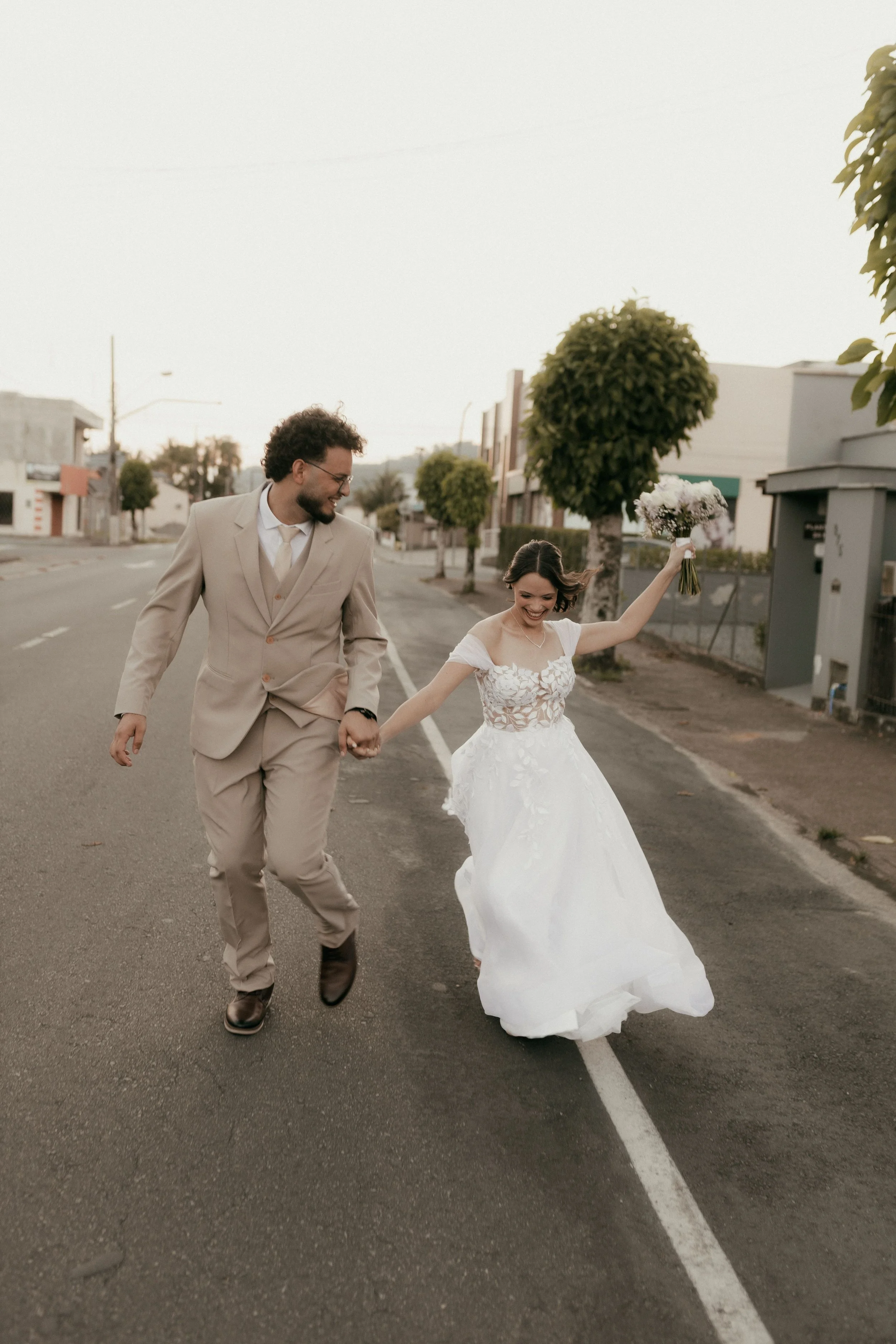
If you are planning an elopement in Los Angeles, get in touch and tell me about the day you have in mind. I will tell you honestly whether I am the right photographer for it.
External sources:
Fujifilm announced the instax mini Evo 2 on October 27, 2026. It is a hybrid instant camera that shoots digitally, lets you pick which shots to print, and prints only those shots on 2 inch by 3 inch instax mini film. It costs $289.95 in the United States and is expected at the end of November 2026.
The instax mini Evo 2 is the successor to the original instax mini Evo, which Fujifilm released in 2021. Like the original, it is a hybrid camera, not a purely analog instant camera. You shoot digitally, review the shot on the back screen, apply effects if you want them, and then pull the print lever to print the shots you choose. Shots you do not like never become prints, which is the whole point of the hybrid design.
Fujifilm North America announced the camera from Valhalla, New York, alongside an updated instax mini Evo smartphone app. The camera also works as a smartphone printer, and remote shooting through the app lets the phone act as a remote control.
Fujifilm North America says the instax mini Evo 2 will be available at the end of November 2026 at a manufacturer's suggested retail price of $289.95 in the United States and $379.99 in Canada. Fujifilm's Tokyo announcement puts the Japanese launch on November 27, 2026, at an estimated market price of about 42,900 yen. An Amazon listing spotted on October 27 showed a pre-order price of $289.95 with a November 30, 2026 release date, which fits the end of November window rather than contradicting it.
What is in the box is refreshingly short: the camera, a shoulder strap, a USB Type-C cable, a quick start guide, and a 1 year limited warranty. What is not in the box matters just as much. Instax mini film is sold separately. A microSD card is sold separately, and you need one for the top resolution stills and for the Immersive Movie feature. An optional camera case follows in early December 2026, according to the October 27 announcement coverage.
The original mini Evo earned its following because it looked like a classic camera, shot digitally, and printed only the keepers. The Evo 2 keeps that formula and upgrades the parts you touch every time you shoot.
The screen grows from 3.0 inches to 4.5 inches, and it gains touch control, the first touchscreen in the instax line. The original screen carried 460,000 dots; the new screen carries 1.23 million dots. That is the single biggest usability change, because the screen is the viewfinder, the editor, and the print preview in one panel.
The sensor grows from a 1/5 inch CMOS sensor to a 1/2.77 inch CMOS sensor, and the lens widens from a 28mm equivalent to a 21mm equivalent, both at f/2.0. A wider lens changes the framing: group shots and rooms fit more easily. The camera gets slightly larger and heavier to hold the bigger screen and sensor, at 330 grams against the original's 285 grams, and 87.5 by 125.3 by 43.7 millimeters against 87 by 122.9 by 36 millimeters.
Still resolution rises, but with a catch worth stating plainly. RedShark reports still resolution of 2,144 by 2,860 pixels, or 6.1 megapixels, from internal memory, and 3,100 by 4,128 pixels, or about 12.8 megapixels, with a microSD card and Expanded View switched off. Lowyat and other October 27 coverage describe the maximum as 13 megapixels. Those numbers agree once you read them together: about 13 megapixels is the maximum, and reaching it requires the microSD card.
Printing gets a little faster and a little shorter lived per charge. RedShark reports a print time of about 14 seconds, against roughly 16 seconds for the original, and about 90 prints per charge, against 100 for the original. Internal memory holds about 45 shots, and the microSD slot expands that. Print resolution stays at 600 dpi, with a choice of instax-Rich Mode for vivid color or instax-Natural Mode for a more classic look.
What does not change is the creative core: 10 lens effects and 10 film effects, combinable into 100 combinations, plus analog inspired dials, adjustable exposure, white balance presets, flash controls, a macro mode, and a built-in selfie mirror. The print lever stays.
This is the original research in this article: a same day, multi-market price comparison compiled from the October 27 announcement coverage, plus a launch price to launch price calculation against the original mini Evo. No other October 27 article I read put these four market figures side by side.
The figures are: $289.95 in the United States and $379.99 in Canada, both from Fujifilm North America's own announcement; about 42,900 yen in Japan, which BigGo converts to about $270; and about RM1,185 in Malaysia, which is Lowyat's conversion of the United States price, not a confirmed Malaysian retail price, because Lowyat notes Malaysian pricing itself remains under wraps.
Against the original mini Evo's $199 launch price, reported by RedShark, the Evo 2 costs $90.95 more. That is an increase of about 46 percent. RedShark rounds the same gap to $90 and 45 percent. The increase buys a touchscreen that is 50 percent larger on the diagonal, a larger sensor, a wider lens, a higher maximum resolution, and two new features, Expanded View and Immersive Movie. It does not buy a bundled film pack or a bundled microSD card, neither of which Fujifilm lists in the box.
Quotable summary: The instax mini Evo 2 costs $289.95 in the United States, $379.99 in Canada, and about 42,900 yen in Japan, which is roughly $91 more than the original's $199 launch price for a bigger touchscreen, a larger sensor, and a wider lens.
The October 27 coverage itself is part of the story. At least 9 outlets carried the announcement on the same day: PetaPixel, Fuji Rumors, Notebookcheck, Lowyat, RedShark, NewsATW, AiSeek, FujiAddict, and BigGo. A camera that only its maker announced is a press release. A camera that 9 independent outlets cover on day one is a product people are actually searching for.
Expanded View is a composition aid, not a wider photo. Fujifilm says it gives a wider field of view than the shooting area, with an on-screen framing guide, so you see more of the scene while you compose. PetaPixel and Lowyat both stress the same limit: it does not increase the field of view of the captured image.
Immersive Movie records the moments just before each photo as a short video clip, so the still print keeps a moving companion. Fujifilm North America's announcement and RedShark both put the clip at four seconds. Lowyat's October 27 report describes it as a five-second clip. I am reporting both figures because the outlets disagree, and the honest statement is that the clip is a few seconds long, with the United States announcement saying four seconds. The clip saves as a vertical 9:16 MP4 at 560 by 992 pixels and 24 frames per second, according to NewsATW's report citing DPReview. No audio is recorded. A microSD card is required, and the camera cannot record movies to internal memory.
That combination of limits is worth understanding before you buy. The movie feature is a memory aid, not a video camera. It captures atmosphere around a still, and it does so silently, vertically, and only with a card installed.
The camera body is the fixed cost. The running costs are film, a microSD card, and, if you want it, the optional case. Fujifilm does not bundle film with the Evo 2, so your first pack of instax mini film is a separate purchase, and every print after that costs a frame of film. The hybrid design softens that cost in one specific way: because you preview digitally and print only the shots you choose, you do not burn film on shots you would have thrown away. A purely analog instant camera prints every press of the shutter. The Evo 2 prints only the keepers.
The microSD card is a small one time cost, but it is not optional if you want the headline features. Without it, you lose the maximum still resolution and the entire Immersive Movie feature. Buy the card before the camera arrives, so the first weekend with the camera is not spent shooting at the lower resolution. The app itself is free, and smartphone printing through the app costs nothing beyond the film it uses. Battery life is the other running limit: about 90 prints per charge, down from 100 on the original, means a full day event with instant prints for guests will need a mid-day charge or a second plan.
I have not shot with the instax mini Evo 2 yet. It does not go on sale until the end of November 2026, and any article claiming hands-on impressions on announcement day would be inventing them. What I can say, after 27 years behind the camera, is where a camera like this earns its keep in working photography, and where it does not.
I shoot with a Leica M11 and a 50mm lens, in natural light only, no strobes, because that focal length sees the way the human eye sees and flatters without distortion. The Evo 2 is not that camera, and it should not pretend to be. Its 21mm equivalent lens is wide, its sensor is small, and its print is 2 inches by 3 inches. Nobody hires it to shoot a headshot. But headshot work is not the only photography that happens on a shoot day, and that is where instant prints have always had a job.
At events, a print a guest can hold beats a link they will open later. At a portrait session, a printed proof handed to a client on the spot changes the conversation from "we will see" to "this is what we made." The Evo 2's advantage over a purely analog instant camera is that you choose the print after seeing it, so the print you hand over is the good one, not the blinked one. The touchscreen matters for that use more than the megapixels do: choosing, cropping, and printing becomes a quick decision, and for event work, speed is the feature.
The limits matter too. A 21mm lens will stretch faces near the edges if you shoot close portraits with it, so keep people near the center or step back and crop. The print is small, so it is a keepsake, not a portfolio piece. The video clip has no sound, so it cannot carry a speech or a laugh on its own. Used inside those limits, the Evo 2 is a strong second camera for a working photographer. Used outside them, as a primary portrait camera, it will disappoint.
For more on how instant film sits beside digital work, see our film versus digital portrait comparison. For how this launch compares with a serious full-frame announcement from the same month, see our Sigma FP2 coverage. And for the standard a portrait camera actually has to meet, see our piece on AI headshots versus a real photographer and what actually matters in a portrait camera.
Buy it if you already liked the original mini Evo and wanted a bigger screen, if you print at events or hand prints to clients, if you want a camera guests can use without a lesson, or if you want phone photos printed on real film without a separate printer. Skip it if you want a primary portrait camera, if you need video with sound, if you want interchangeable lenses or manual exposure control beyond compensation, or if you already own the original and the screen was never your complaint. Notebookcheck notes the first generation currently sells for about $235 on Amazon, which makes the upgrade a $55 street price decision, not just a $91 launch price decision, for anyone comparing what they would actually pay today.
Wait until launch reviews land if your decision turns on image quality at the maximum resolution, on how the touchscreen behaves in bright sunlight, or on 21mm distortion in group shots. Those are hands-on questions, and no announcement day article, including this one, can answer them honestly.
Fujifilm announced a second instant camera alongside the Evo 2 in Tokyo on October 27: the instax SQUARE 2, an analog square format camera. The Evo 2 is digital first: shoot, review, choose, print. The SQUARE 2 is analog first: shoot on square film and live with the result. It adds a Mood Filter Switch for warm or cool tones, uses square film, and is priced at $119.95 in the United States, with a United States launch on October 28, 2026, and a November 13, 2026 launch in Japan at about 16,500 yen.
$289.95 in the United States and $379.99 in Canada, per Fujifilm North America's announcement. Japan's estimated price is about 42,900 yen. Film and a microSD card are sold separately.
End of November 2026 in the United States, with November 27, 2026 named for Japan. An Amazon pre-order listing spotted on October 27 showed November 30, 2026, which fits the same end of November window.
About 13 megapixels, or 3,100 by 4,128 pixels, when a microSD card is used. Without a card, RedShark reports stills at 2,144 by 2,860 pixels. The sensor itself is a 1/2.77 inch CMOS sensor.
Yes, through Immersive Movie, which saves a short clip from just before each photo. Fujifilm North America and RedShark put the clip at four seconds; Lowyat describes it as five seconds. The clip is silent, vertical, and requires a microSD card.
It is worth it if the bigger touchscreen, wider lens, larger sensor, or movie feature solves a problem you actually had with the original. It is not worth it if you were happy with the original's screen and shooting experience, since the effects, print modes, and print lever are unchanged.
Sources checked on October 27, 2026: Fujifilm North America announcement via Fuji Rumors, PetaPixel, Notebookcheck, Lowyat, RedShark, NewsATW, AiSeek, FujiAddict, and BigGo. Disagreements between them, on the movie clip length and on the Malaysian price, are noted where they occur.
No. If you are applying for a job in the United States, leave the photo off your resume. Your resume is a record of what you can do, and a photo hands the reader something they are not supposed to judge you on before they read a single word of it.
That is the short answer, and it is also the consensus answer. The exceptions are real, though, and the headshot you already paid for still has to live somewhere. This guide covers why the no photo rule exists, what a photo does to an applicant tracking system, what ten published resume advice sources actually say, and the cases where a photo is expected.
The reason is not that employers dislike photos. The reason is that a photo tells them things they are legally supposed to ignore. A photo reveals your approximate age, your gender presentation, and your ethnicity. United States equal employment law bars hiring decisions based on those traits, and the safest way for an employer to prove they did not consider them is to never see them in the first place.
That is why many companies strip photos from applications before a hiring manager ever sees them. Recruitment firms do the same. Robert Half, one of the largest staffing firms in the world, states publicly that it edits out any photo before forwarding a resume to clients. When the firm handling your application removes your photo as a matter of policy, including one did not help you.
There is also the bias problem nobody can measure after the fact. A 2021 study published in the Journal of Business and Psychology found that attractive candidates were rated higher on competence even when their qualifications were identical. You cannot prove a hiring manager was swayed by your photo, and the hiring manager often cannot prove it to themselves either. The photo free resume removes the trigger entirely.
Then there is the professionalism signal. A resume with a photo looks out of step with how American hiring works right now. Recruiters read it the way they read an objective statement or a references available upon request line: as evidence that the applicant does not know the current norms. One career coach quoted by The Muse put it bluntly, saying the first thing that comes to mind on seeing a resume photo is a big red x and a danger sign. You do not want your first impression to be a warning sign.
Yes, and this is the most practical reason of all, because it has nothing to do with anyone's opinions. Most mid sized and large companies run your resume through an applicant tracking system, software that scans the document for keywords, skills, job titles, and dates, then ranks you against other applicants. These systems are built to read text. They are not built to read images.
A photo can confuse that parsing in two ways. First, the system may fail to read the text near the image, garbling your contact details or dropping a section. Second, the photo itself eats space on a one page document that is already tight. Every square inch given to your face is an inch taken from an achievement, a metric, or a skill keyword the system is actually scanning for.
The stakes are higher than most applicants realize. Insight Global cites a Forbes figure that nearly 75 percent of qualified candidates have been rejected by an applicant tracking system because the system could not read their resumes. A photo is not the only formatting choice that causes that kind of failure, but it is one of the easiest to avoid. A clean single column text resume with no photo is the safest format you can submit, and it costs you nothing.
Here is the original research for this article. I read ten published resume advice sources in October 2026 and recorded each one's verdict on putting a photo on a resume for a United States job application. The sources span resume builders, university career centers, staffing firms, and career publications, so this is not one outlet's house view repeated ten times.
The verdict was unanimous. All ten sources say no for a standard United States corporate resume. Here is the count:
The sources: Resume.io, ResumeGenius, Teal HQ, Climb the Ladder, Career.io, the PennWest University career center, Money.com, UMass SBS Pathways, Headshotphoto.io, and Distinctive Resume Templates. Resume.io publishes a country grid that puts the United States, Canada, the United Kingdom, Ireland, and Australia in the do not include column, and France, Germany, and Spain in the include column. Money.com quotes a career coach, a resume writer, and a human resources manager, and all three say never.
Quotable summary: All 10 resume advice sources I checked say the same thing about a US corporate resume, leave the photo off, and 9 of the 10 name acting or modeling as the exception.
That unanimity matters because resume advice is an industry that disagrees about almost everything else. Templates, summaries, objectives, skills sections, two page resumes: experts fight about all of it. On this question they do not fight. When ten competing sources agree, the debate is effectively over for the standard case, and the interesting work is in mapping the exceptions.
There are four real exceptions, and they are worth knowing precisely, because getting an exception wrong in either direction costs you.
First, acting and modeling. If you are submitting for a role where your appearance is the product, a headshot is not optional, it is the application. Casting directors expect a headshot attached to or submitted alongside the resume. The same applies to on camera presenting, commercial print modeling, and background work where casting is done from photos. Note the format, though: the headshot is submitted as its own item, not pasted into the top corner of a corporate resume.
Second, some countries expect a photo on a CV. France, Germany, Spain, Austria, and Switzerland are the most commonly named. If you are applying to a job in one of those markets, follow the local norm, not the American one.
Third, real estate and some client facing sales roles. This is the softest exception. Some brokerages use agent photos on marketing materials, and some agents include a photo on a personal branding one sheet. But even here, the photo usually lives on the agent's profile page, business card, or listing page, not inside the resume submitted to the brokerage. If a brokerage asks for a photo, send it as a separate file.
Fourth, the employer explicitly asks for one. Some application portals include a photo upload field, and some international employers request a photo as part of the application packet. When the employer asks, comply, and send the photo as its own file rather than embedding it in the resume document.
Put it where people are supposed to look at your face. LinkedIn is the obvious home, and it is the one every source in my audit named. Recruiters will look you up there anyway, and when they do, a strong headshot works in your favor because by then they have already read your qualifications. The order matters. Resume first, face second. LinkedIn preserves that order. A photo embedded in the resume reverses it. If you are still weighing whether a professional headshot is worth it for a job search, the LinkedIn photo alone answers the question, because it is the photo every recruiter will actually see.
Your headshot also belongs on your personal website, your portfolio, your speaker bio, and your company team page. These are places where a photo is expected and where it helps.
This is also where the question of whether you need a professional headshot at all gets its real answer. You do not need one for the resume document, but you do need one for everything around it. Recruiters form an impression from your LinkedIn photo in seconds, and the difference between a phone selfie and a directed portrait is the difference between looking like you take your career seriously and looking like you did not think about it.
If you are choosing which image to use on LinkedIn, the rules are different from the rules for a resume photo, and they reward a warmer, more open expression. A LinkedIn headshot should look like you on a good day, approachable and confident, with a clean background and natural light. That is a different brief from a corporate team page photo, and it is worth reading a dedicated guide before you pick one.
I have shot headshots for 27 years, and the sessions where a photo actually matters are the ones where the details matter most. I shoot with a Leica M11 and a 50mm lens because that focal length sees the way the human eye sees, flattering without distortion. I work in natural light only, no strobes, because I have spent decades learning to read a window the way a chef reads a flame.
My retouching rule has not changed in all that time: character stays, blemishes go. Your mole is you. The pimple from last Tuesday is not. That distinction matters for any photo attached to an application, because the photo has to look like the person who walks into the interview. Over retouching breaks that promise, and interviewers notice the gap before they notice anything else. If you are unsure how much retouching is too much, show the photo to someone who knows you well. If they say it looks like you, it passes.
My rate structure is simple and I state it up front: a two look session is 1,500 dollars, half due to book and half due on shoot day. A look is a full wardrobe and styling change, shot and directed, not a quick outfit swap. I turned down Getty when they wanted to pay me 300 dollars per shoot while billing the client 5,000 dollars, because I would rather sit home than let my work be sold for a fraction of its value.
When a client comes to me for an acting or modeling headshot, the brief is specific: one clean commercial look, one theatrical look, both shot tight enough to read at thumbnail size, because casting directors scroll fast. When a client comes to me for a corporate headshot, the brief is different: approachable authority and a background that does not compete. Either way, the photo is delivered as its own file, never pasted into a resume.
Comply, but do it on your terms. Send the photo as a separate attachment, not embedded in the resume. Use a professional headshot, not a cropped vacation photo or a selfie. Name the file clearly, with your name in it, so it does not get lost in the employer's system. And keep the resume itself photo free even in this case, because the resume may be forwarded, parsed, or stripped of attachments as it moves through the hiring process, and you want the document to survive that journey intact.
If the request comes from a recruiter rather than the employer, ask where the photo will go. A recruiter who wants your photo for a client submission packet is normal in some industries. A recruiter who wants your photo before they will present you at all is a yellow flag, and you are entitled to ask what it will be used for.
The cleanest system is one photo, several destinations, one rule: the photo goes where photos are expected, and nowhere else. Your LinkedIn profile gets your best professional headshot. Your personal website gets the same headshot or a second look from the same session. Your acting profiles get your theatrical and commercial headshots as separate files. Your resume gets no photo at all.
Update the photo when you change materially. A new hairstyle, a significant weight change, glasses you now wear every day: any of these is a reason to refresh. If someone meeting you for the first time would be surprised by the difference between the photo and the person, the photo is out of date.
No. For a standard US job application, leave the photo off. It introduces bias risk, it can confuse applicant tracking systems, and many employers remove it before a hiring manager sees it. Put your professional headshot on LinkedIn instead.
Only in the exceptions: acting, modeling, and other appearance based roles, some European CV markets, and cases where the employer explicitly asks for a photo. For a standard corporate, tech, healthcare, academic, or government role in the US, a photo does not help and can hurt.
It can. Applicant tracking systems are built to read text, and images can garble the parsing of nearby text or cause the document to fail. A clean single column text resume with no photo is the safest format for automated screening.
Yes, but as a separate file, not pasted into the resume document. Casting expects a headshot alongside the resume, and actors carry a dedicated resume format built around that pairing.
LinkedIn first, then your personal website, portfolio, speaker bio, and company team page. These are places where a photo is expected and where it works in your favor.
Do not panic. If the application went through a portal, resubmit a photo free version if the system allows it, or send a corrected version to the recruiter with a brief note.
Every corporate event planner learns this lesson exactly once, usually the hard way. You paid the photographer. The event is over. The photos are beautiful. Then your marketing team wants to use them in an ad campaign, and the photographer says that use was not included. Or you want the raw files, and the photographer says no. Or you assume that because you paid for the shoot, you own the images outright.
Here is the truth that surprises almost everyone: under U.S. law, the photographer owns the copyright to your event photos by default. Paying for the shoot does not change that. Being the subject of the photos does not change that. The only thing that changes it is a written agreement.
I am a photographer, not a lawyer, so treat this as practical guidance from 27 years in the business, not legal advice. But I have been on both sides of this conversation hundreds of times, and I can tell you exactly where the misunderstandings happen and what your contract needs to say to prevent them.
Under the Federal Copyright Act of 1976, photographs are protected by copyright from the moment of creation. The U.S. Copyright Office is clear on who owns that copyright: generally, the photographer. This holds even when someone hires the photographer to take the pictures. As one photography law guide puts it, even if a person hires a photographer to take pictures of a wedding, the photographer will own the copyright in the photographs unless the copyright is transferred in writing and signed by the copyright owner.
Read that again, because it is the single most misunderstood fact in event photography. You hired the photographer. You paid the photographer. The photographer still owns the copyright. The subject of the photograph, your CEO on stage, your team at the gala, generally has nothing to do with ownership of the copyright either.
What did your payment buy? It bought the photographer's time, talent, and the deliverables spelled out in your contract: a set number of edited images, delivered by a certain date, with certain usage rights. Ownership of the copyright itself is a separate thing entirely, and it stays with the photographer unless the contract explicitly transfers it.
This is not photographers being difficult. It is how the entire creative industry works. Authors own their books. Musicians own their songs. Photographers own their photographs. The system is designed so the creator keeps control of the work, and clients license the specific uses they need.

The most common objection I hear: "But we hired them, so it is work for hire, right?" Almost always, no.
Work for hire is a specific legal term with a narrow meaning. There are two routes to it. The first is an employee creating work within the scope of their employment. If your company employs a staff photographer and shooting the event is their job, the company owns the copyright. That is straightforward.
The second route is for commissioned work from independent contractors, and this is where the myth dies. For a commissioned photograph to qualify as work for hire, two conditions must both be met. First, the work has to fit into one of nine specific categories in the Copyright Act: a contribution to a collective work, part of a motion picture or audiovisual work, a translation, a supplementary work, a compilation, an instructional text, a test, answer material for a test, or an atlas. Second, the parties must expressly agree in a written, signed instrument that the work will be considered a work made for hire.
Corporate event photography does not fit any of those nine categories. A gala, a conference, a product launch, none of them qualify. So even with a signed agreement calling it work for hire, the claim would likely fail. The written agreement that actually works is a copyright assignment or transfer, which is a different document from a work-for-hire clause, and it must be in writing and signed by the copyright owner.
What does this mean practically? If your contract says "work for hire" but the photographer is an independent contractor shooting your event, you probably do not own the copyright the way you think you do. What you need instead is either a proper written copyright transfer or, much more commonly, a clear license granting you the usage rights you actually need.
Since the photographer keeps the copyright, what you are really negotiating is a license: permission to use the photos in specific ways. Think of it like renting versus owning a building. The license defines what you can do, where, for how long.
Here are the usage dimensions every event contract should address.
Social media use. Can you post the photos on LinkedIn, Instagram, X, and Facebook? Most event photographers include this. Make sure it covers both organic posts and paid promotion, because those are different rights and some photographers price them differently.
Website and marketing use. Can the photos go on your company website, in email campaigns, in pitch decks, in brochures? Get specific. "Marketing use" is better than silence, but listing the channels removes all doubt.
Print and advertising use. Billboards, magazine ads, trade show booths. This is the tier where licensing fees climb, because the photos are directly generating revenue. If your marketing team might want the keynote shot in a national ad, negotiate that now, not after the campaign launches.
Duration. Is the license perpetual or time limited? One year, three years, forever? A perpetual license costs more than a one year license. Know which one you are buying.
Exclusivity. Can the photographer also license the same images to a sponsor, a publication, or use them in their own portfolio? Most photographers retain portfolio rights. That is standard and reasonable. But if you need exclusivity, say so upfront.
Raw files. Edited, retouched deliverables are the standard product. Raw, unedited files are the photographer's working materials, and most professionals do not release them. If you think you need raws, ask before booking, not after delivery.
A good event photography contract is not long, but it is specific. Before you sign, confirm it covers these points.
Deliverables: the number of edited images, the delivery date, and the delivery method. My corporate event clients get 200 to 300 images delivered the next day through an online gallery, because next day delivery is my standard. Whatever your photographer promises, get the count and the date in writing.
Usage rights: the license terms above, spelled out in plain language. If it is not in the contract, assume you do not have it.
Payment terms: the fee, the deposit, and when the balance is due. My terms are half to book and half on the shoot day, which is standard for professional event work. If you want to understand the logic, read my explanation of why photographers require payment before the event. It is about commitment on both sides, not mistrust.
Cancellation and rescheduling: what happens if the event moves or cancels. Get the refund terms in writing before anything goes wrong. My guide to understanding refund and rescheduling terms before you book walks through what fair terms look like.
Credit and portfolio: whether the photographer gets a photo credit and whether they can use the images in their portfolio. Decide this in advance to avoid an awkward conversation later.
The most expensive contract is the one that says nothing. If a photographer sends you a one paragraph email confirmation with a price and a date, you have no usage rights defined, no delivery timeline, no cancellation terms, and no clarity on raw files. That is not a bargain. It is a dispute waiting for a deadline.
Other warning signs: a photographer who cannot explain their licensing terms, one who promises "all rights" verbally but will not put it in writing, or one with no contract at all. I keep a running list of red flags to watch for when hiring a photographer. The contract conversation is where most of them surface.
Also watch for the opposite problem: a contract that demands a full copyright transfer for a standard event fee. Transfers are legitimate when the client genuinely needs full ownership, but they command a premium because the photographer is giving up all future use of the work. If you do not need ownership, do not pay for it. A broad license costs less and covers everything most companies actually do with event photos.
The photographer owns your event photos unless a signed written agreement says otherwise. That is the default under U.S. copyright law, and no amount of payment changes it without paperwork.
This does not have to be adversarial. In 27 years, I have never had a real dispute over image ownership, because every engagement starts with a clear contract. The clients who get burned are the ones who assumed. Assume nothing. Read the usage terms. Ask about the specific uses your marketing team will want. Get it in writing.
Do that, and the photos will do their job for years: on your website, in your campaigns, in your recruiting decks, everywhere your brand needs to look like the room felt that night. That is what you are really buying. Make sure the contract says you can use it.
Everyone asks what to wear. Almost nobody asks what to avoid, and the avoid list is where headshots actually get ruined. I have spent 27 years photographing people for GQ, Vogue, InStyle, People, Teen, Men's Health, and Departures, and I can tell you that most headshot disasters are wardrobe disasters. The lighting was fine. The expression was fine. The shirt fought the face for attention and won.
This is the don'ts list. The positive version, colors, fits, and fabrics that work, lives in [my complete guide to what to wear for headshots](https://www.dclee.net/blog/what-to-wear-headshots). Read this first so you know what to leave in the closet, then read that one to build the outfit.
A headshot is a portrait of your face. Everything else in the frame, the shirt, the jewelry, the background, exists to support the face or it exists to compete with it. There is no neutral. A recruiter gives your photo a fraction of the 7.4 seconds that Ladders found recruiters spend on their first look at a resume in its 2018 eye-tracking study. In that fraction of a second, the viewer's eye goes to the highest contrast, busiest, brightest thing in the frame. If that thing is your shirt instead of your eyes, you have lost.
The camera also exaggerates what the mirror forgives. Fine patterns shimmer on screen. Wrinkles you cannot see in person become topography under studio light. Colors that look fine in a closet look radioactive under the wrong white balance. Wardrobe mistakes are the one part of a headshot you can completely prevent before you arrive, so prevent them.
Stripes, small checks, herringbone, polka dots, loud florals. Put them all back. Fine patterns create a shimmering interference effect on camera called moiré, where the pattern of the fabric fights with the pattern of the sensor. The result looks like your shirt is vibrating. Even when moiré does not appear, a busy pattern is visual noise sitting directly under your chin, pulling the eye down and away from your face.
This is the most common wardrobe mistake I see, because patterned shirts look great in person. The camera disagrees. Solid colors win every time. If you love pattern, save it for the full-length portrait, not the headshot.

No brand logos. No text. No graphics, no matter how cool. A logo turns your headshot into an advertisement for someone else's company. Text is worse, because the human eye is drawn to words automatically. The viewer will read your shirt before they look at your face, every single time.
This includes the subtle stuff. The tiny embroidered alligator. The golf brand on the chest. The conference lanyard you forgot to take off. Strip it all. Your headshot is selling you, not your wardrobe sponsors.
Neon green, hot pink, electric orange, highlighter yellow. These colors do three bad things at once. They reflect colored light up onto your chin and neck, tinting your skin. They blow out on camera, losing all detail and becoming a flat glowing shape. And they scream for attention in exactly the way your face should be screaming for attention.
There is a difference between a rich, saturated color and a fluorescent one. A deep burgundy or a strong cobalt can look fantastic. If the color looks like it could direct traffic, leave it home. For the colors that do work, see the best colors to wear in a headshot.
This one is unglamorous and non-negotiable. Iron or steam everything the night before. A wrinkled shirt reads as careless in a headshot in a way it never does in person, because the camera and the lighting carve every fold into sharp relief. I have watched clients show up in beautiful, expensive shirts that looked sloppy on camera for want of five minutes with a steamer.
Pack your wardrobe in a garment bag, not a gym bag. Hang it the moment you arrive. And bring a lint roller. Cameras see lint the way microscopes see bacteria.
Turtlenecks are not automatically banned, but most of them commit the same crime. They erase the jawline. The jaw is one of the most structurally important parts of a headshot. It defines the shape of the face, separates the head from the neck, and carries a huge amount of the impression of confidence and definition.
A turtleneck that bunches up under the chin turns the lower face into a single continuous column of fabric. The jaw disappears. The neck disappears. What is left is a head floating above a sweater. If you love turtlenecks, choose one with a lower, looser neck that sits below the jaw, and check the jawline on the camera screen before we move on. Better yet, bring a crew neck or a collared shirt as well, so you have the option.
White shirts are a classic headshot choice, but they are unforgiving. A white shirt in the wrong light blows out to pure white with no detail, and it reflects light up under your chin, flattening your features. If you wear white, it needs to be crisp, well-fitted, and shot with the exposure watched carefully.
Black has the opposite problem. It absorbs light and can turn into a shapeless dark mass, especially against a dark background. Black works beautifully against a light background with good separation, but head to toe black with a dark backdrop makes you look like a floating head.
The fix for both is contrast with the background and fit. A well-fitted white shirt against a gray background is timeless. A black top against a light background is striking. Match the shirt to the backdrop, not just to your mood.
A headshot crops at the chest or shoulders. Sleeveless tops put bare shoulders and arms right at the edge of the frame, where they become prominent geometric shapes competing with the face. They also read as casual in a way that undermines the professional purpose of most headshots.
There are exceptions. Fitness professionals, actors with specific casting needs, and some creative fields can make it work. For corporate, legal, finance, tech, and job search headshots, cover the shoulders.
This should not need saying, but I have been asked. No sunglasses. No hats. Nothing covering any part of your face. Your eyes are the entire point of the photograph. "The eyes are definitely the most important. I just have to make sure their eyes are open, that there is a catch light, that there is a great expression in the eyes." You cannot have a catch light behind sunglasses. Take them off.
Jewelry should be invisible in the sense that nobody remembers it. Small studs, a simple watch, a thin necklace, all fine. Statement necklaces, large dangling earrings, stacked bracelets, and anything reflective will catch the light and the eye. Big earrings also create a framing problem, drawing lines across the jaw and neck that fight the composition.
When in doubt, take one thing off before we shoot. You can always add it back for the second look.
The headshot is not the place to debut a new look. Heavy contouring, dramatic eyeshadow, and bold trendy lip colors photograph as costume. The camera amplifies makeup significantly, so what looks moderate in the mirror looks heavy on screen. Aim for polished and natural. Men, this applies to you too, which is why I wrote a full guide on whether men should wear makeup for headshots.
Clients always ask about ties. My rule is the simplest one I own: "Always shoot the tie and shoot the no tie. You always want to have that option." Bring the tie. Shoot with it for the formal look, then lose it, open the collar, and shoot the approachable version. Two headshots from one shirt. The tie itself should be simple, no novelty patterns, no shiny satin that reflects every light in the room.
The formula that has never failed: solid colors, crisp and clean, fitted but not tight, neckline that frames the jaw, nothing that competes with your face. Bring options. I would rather spend two minutes choosing between three good shirts than spend the whole session working around one bad one.
For the full positive playbook, fabrics, fits, colors for your skin tone, and layering, read my complete guide to what to wear for headshots and these outfit selection and styling tips for portrait sessions. Between the don'ts list and those guides, you will walk in dressed for the best headshot of your life.
Your wardrobe has one job in a headshot: disappear just enough that your face can do its job. Busy patterns, logos, neon, wrinkles, jaw-swallowing turtlenecks, distracting jewelry, and heavy makeup all break that deal. Leave them in the closet, bring solid options including the tie and the no-tie, and let your eyes carry the photograph. That is what they are for.
My headshot sessions start at $1,500 for two looks, which means we can shoot the formal look and the relaxed look in the same sitting. A look is a full wardrobe and styling change, so bring the options and we will build both versions of you. And if you are unsure about any piece in your bag, bring it anyway. Deciding together on set beats regretting it at home.
On October 8, 2026, Sigma announced the lens that APS-C portrait shooters have been asking for for years. The Sigma 50-120mm F2.8 DC OS Contemporary. It ships October 22, 2026, priced at $799, for Sony E, Fujifilm X, and Canon RF mounts. On paper, it is a constant aperture telephoto zoom that weighs 390 grams and covers the classic portrait range. That combination used to be impossible. So the question I keep hearing from photographers is simple. Is this the headshot lens to buy?
I am going to give you my honest answer. But first, full disclosure on where I stand. I shoot a Leica M11 with a 50mm lens, natural light only, no strobes. The 50mm is, in my words, "the same view as the human eye, I just prefer it." I have written my honest take on the Leica M11 before, and my position has not changed. I am a prime lens shooter. A zoom has to earn its place in my thinking. Let us see if this one does.
Here are the verified specifications, straight from Sigma's October 8 announcement.
The 50-120mm F2.8 DC OS Contemporary is a telephoto zoom built for APS-C mirrorless cameras. On Sony E and Fujifilm X bodies, it frames like a 75-180mm lens on full frame. On Canon RF, with its slightly different crop factor, it is closer to 80-192mm. The aperture is a constant f/2.8 across the whole zoom range, with 11 rounded aperture blades and a minimum aperture of f/22.
It weighs 390 grams on Sony E and Fujifilm X, 410 grams on Canon RF, and measures about 99mm long. That is the headline number. A constant f/2.8 telephoto zoom under 400 grams is genuinely remarkable. Sigma says it fills the role of the classic 70-200mm f/2.8, the go-to lens for portraits, events, and indoor sports, at a fraction of the size and weight.
The feature list is strong. Optical stabilization rated at 6.5 stops at the 50mm end and 4.5 stops at the 120mm end, using Sigma's OS2 algorithm. A fast HLA linear autofocus motor. A dedicated aperture ring, the first on any APS-C zoom in Sigma's Contemporary line. Minimal focus breathing for video work. Dust and splash resistant construction with a water and oil repellent front element. Minimum focus distance of 23cm at the wide end and 55cm at the telephoto end. Eighteen elements in 13 groups, including one FLD element, three SLD elements, and four aspherical elements. A 55mm filter thread.
It also completes a set. Paired with the existing 10-18mm F2.8 DC DN and 18-50mm F2.8 DC DN Contemporary lenses, APS-C shooters on Sony, Fujifilm, and Canon now have ultra wide to telephoto coverage at a constant f/2.8, in three lenses that together weigh less than a lightweight laptop.
Here is where my 27 years of photographing faces kicks in. The classic portrait focal lengths on full frame are 85mm to 135mm. There is a reason every portrait photographer on earth keeps coming back to that range, and it is physics, not fashion.
Longer focal lengths compress facial features flatteringly. Shoot a headshot at 35mm and the nose grows, the face distorts, the subject looks like a caricature. Shoot the same face at 105mm and everything sits where it should. The face looks natural, the background melts away, and you get working distance, meaning you are not invading the subject's personal space to fill the frame. That working distance is also why subjects relax. Nobody looks good with a camera six inches from their face.
The Sigma's 75-180mm equivalent range (80-192mm on Canon RF) plants you directly in that sweet spot and a little beyond. At the 85mm equivalent mark, you are shooting classic headshots. At 135mm equivalent, you are in the zone for tight, compressed portraits with beautiful background separation, even though f/2.8 on APS-C gives you the depth of field of roughly f/4 on full frame. At 180mm equivalent, you are reaching into the territory where you can shoot candids across a room without anyone knowing.
For headshot and portrait work on APS-C, this is the right range. Sigma aimed at the target and hit it.

Let me be direct about the audience, because this lens is not for everyone.
It is for you if you shoot portraits or events on an APS-C body from Sony, Fujifilm, or Canon. Wedding photographers shooting crop sensor bodies. Event photographers who need to reach across a ballroom. Portrait photographers building a business on a Fujifilm X system. Content creators who shoot talking head video and want flattering compression with minimal focus breathing. At $799 and 390 grams, it is priced and sized for working photographers who carry their gear all day, not collectors.
It is not for you if you shoot full frame. This is a DC lens, meaning it only covers the APS-C image circle. Mount it on a full frame body and you will get heavy vignetting or an automatic crop that wastes most of your sensor. It is also not for you if you already own a 70-200mm f/2.8 for full frame and you are happy carrying it. This lens does not replace that lens. It gives crop sensor shooters their own version of it.
One more honest note. This lens will not make you a portrait photographer. The photographers asking me whether to buy it are often really asking whether gear will fix their portraits. It will not. What fixes portraits is light, direction, and the ability to make a nervous subject relax in front of your camera. I have covered six portrait lighting setups every photographer should know, and every one of them matters more than which zoom you mount. The lens is the last 10 percent. Be honest with yourself about whether you have the first 90 percent handled.
Sigma was not the only company announcing glass on October 8. Tamron brought its 20-40mm F2.8 Di III VXD (Model A062) to Nikon Z mount, shipping the same day, October 22, at $729.
Do not confuse these two lenses. The Tamron is a full frame, wide to normal zoom: 20mm to 40mm at constant f/2.8, weighing 380 grams with a 67mm filter thread, a VXD linear autofocus motor, 12 elements in 11 groups, and a 17cm minimum focus distance. It has moisture resistant construction and a fluorine coated front element, but no optical stabilization, so you are relying on your camera body's stabilization.
The Tamron is an everyday carry lens for Nikon Z shooters: travel, street, interiors, environmental portraits. It is not a headshot lens. At 40mm on full frame, you are still in distortion territory for tight faces. If you are a Nikon Z portrait shooter looking at the Sigma announcement with envy, the Tamron 20-40mm is not the answer to that envy. It is a fine lens for a different job. For portraits on Nikon Z, you are still looking at an 85mm prime or a 70-200mm.
Now the part you actually came for. What does the Leica M11 guy think?
I respect this lens enormously. Sigma looked at what APS-C portrait shooters needed, a fast telephoto zoom that does not break your back or your budget, and built exactly that. The 390 gram weight is the real story. Anyone who has carried a full frame 70-200mm f/2.8 through an eight hour wedding knows what that weight does to your shoulder by hour six. This lens removes that tax.
But I am not buying one, and the reason is simple. I shoot full frame, and I shoot primes. My 50mm on the M11 sees the world the way I see the world. When I raise the camera, there is no zooming, no hunting for the framing. I move my feet, I find the light, I make the picture. That constraint is not a limitation I tolerate. It is the discipline that made me good.
A zoom gives you convenience. A prime gives you consistency. Every frame I shoot at 50mm has the same perspective, the same relationship between subject and background, the same visual signature. Clients hire me for that signature. After 27 years, I know exactly what my 50mm will do before I press the shutter, and that certainty is worth more to me than any zoom range.
That is not an argument against this Sigma. It is an argument about knowing yourself as a photographer. If you are a zoom shooter who works fast across changing distances, weddings, events, busy portrait sessions, this lens looks like one of the best values in its class. If you are a prime shooter who has found your focal length, no zoom will convert you, and that is fine too.
The Sigma 50-120mm F2.8 DC OS Contemporary is the most interesting portrait lens announcement of the year for APS-C shooters. Verified specs: $799, shipping October 22, 2026, for Sony E, Fujifilm X, and Canon RF. Constant f/2.8, 390 grams, 75-180mm equivalent range, 6.5 stops of stabilization, aperture ring, minimal focus breathing. It completes Sigma's f/2.8 Contemporary trio and gives crop sensor photographers the fast telephoto zoom they have been waiting for.
Is it a headshot photographer's dream lens? If you shoot APS-C and you shoot people, yes, it is the closest thing to a dream lens this mount class has ever had. Just remember that the lens is the last 10 percent. The light, the direction, and the human being in front of your camera are the other 90. Get those right, and this Sigma will do beautiful work for you.
And if you ever want to argue about primes versus zooms, I will be over here with my 50mm. I have written about where I stand on gear before, including my picks for the best cameras for street photography, and I am always happy to have that fight.