M11 or Q3? A working photographer compares Leica's two flagship 60MP cameras on price, autofocus, the rangefinder, video, and resale, with a clear verdict for every kind of shooter.
Read MoreLeica M11 vs Q3: 7 Differences That Decide It [2026]
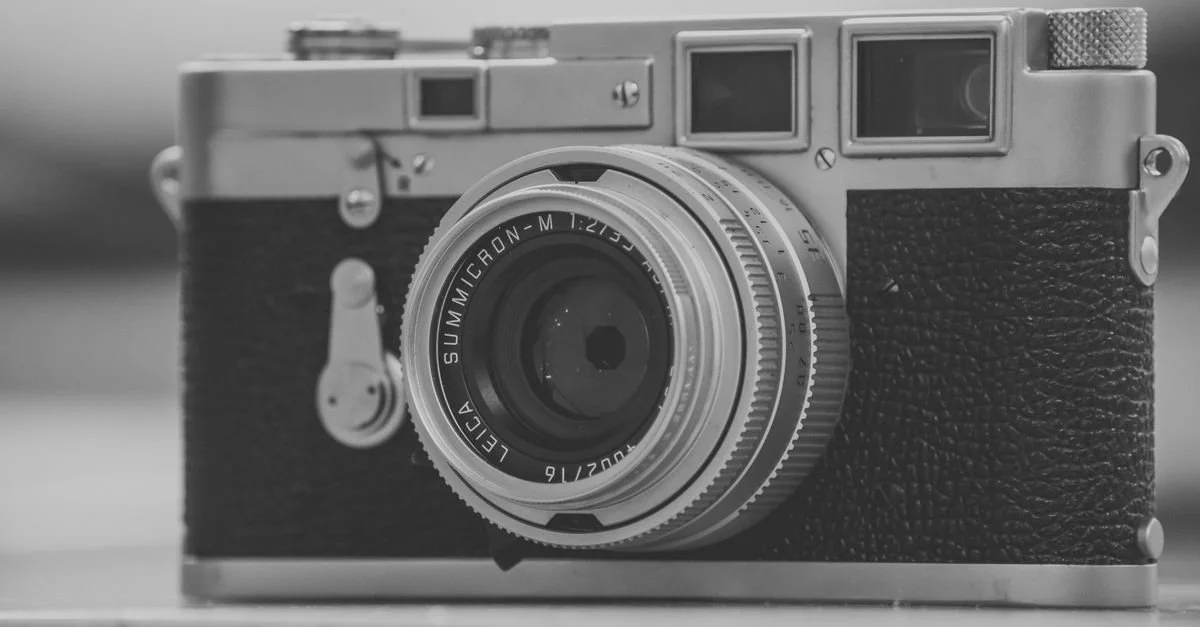
M11 or Q3? A working photographer compares Leica's two flagship 60MP cameras on price, autofocus, the rangefinder, video, and resale, with a clear verdict for every kind of shooter.
Read MoreOctober is the month when smart photographers stop thinking about this year's money like artists and start thinking about it like business owners. Every photographer tax deduction you are going to claim for 2026 has to be locked in by December 31. The gear you buy in January will not help you this year. The mileage you never logged is gone. The home studio you never measured stays unclaimed. The good news is that the system rewards the organized: a freelance photographer earning $75,000 typically writes off $15,000 to $22,000 in ordinary and necessary business expenses, which can cut the federal tax bill by roughly $4,000 to $6,000, according to Jupid's 2026 photographer tax guide. This post is the year-end checklist I would hand any photographer who asks me how the business side actually works, plus a video that explains the one tax form every photographer needs to understand: Schedule C.
A necessary disclaimer up front: I am a photographer, not a CPA. This is general information about photographer tax deductions, not tax advice. Tax rules change, and individual situations vary. Check everything here against the current IRS rules and talk to a qualified tax professional before you file.

Contents
A photographer tax deduction is any ordinary and necessary cost of running your photography business, reported on Schedule C of your personal tax return. That includes camera bodies, lenses, and lighting expensed under Section 179, business mileage, a qualifying home studio, editing software and gallery platforms, business insurance, contract labor like second shooters, advertising, professional education, and half of your self-employment tax. Expenses that are personal, like everyday clothing or commuting, do not qualify even if they feel work-related.
Photographer and tax educator Heather Marie breaks down Schedule C, the form where every photographer tax deduction lives. In her video "What Is a Schedule C, and How Do Photographers Use It?", she explains what Schedule C is and why it is essential whether you are a sole proprietor or a single-member LLC, walks through the form's two key sections, reporting your income and deducting your expenses, flags the biggest mistakes photographers make on it, and lays out simple steps to make tax season easier. She also runs a free masterclass, "Maximizing Your Tax Deductions as a Photographer," covering five commonly missed deductions. She says she cut her own taxable income by $12,817 last year using them, which tells you how much money disorganization costs the average photographer.
Every item below has a hard deadline or a number that changes for 2026. Work through them in order. Each one is sourced from the current-year guides linked at the end of this post.
Section 179 is the single biggest lever a photographer has. It lets you deduct the full purchase price of cameras, lenses, lighting, computers, and other qualifying equipment in the year you place it in service, instead of depreciating it over five years. For 2026 the Section 179 limit is $2,560,000, so in practice your entire gear budget is deductible in year one. Three catches, straight from the Jupid 2026 guide: the gear must be used more than 50 percent for business to qualify, Section 179 cannot exceed your business taxable income for the year (the excess carries forward), and if business use later drops to 50 percent or below you have to recapture the excess deduction as income. The election goes on Form 4562. The year-end play is simple: if you already planned to buy a body, a lens, or a computer for 2027, buying it before December 31 pulls the whole deduction into this year's return. One alternative worth knowing: 100 percent bonus depreciation is permanently available for qualifying property placed in service after January 19, 2025, and unlike Section 179 it can create a loss. For smaller items, the de minimis safe harbor lets you expense anything costing $2,500 or less per item outright, memory cards, hard drives, and modifiers included.
Driving to shoots, scouting locations, picking up rentals, and meeting clients all generate deductible mileage, reported on Schedule C line 9. For 2026 the standard rate is split: 72.5 cents per mile for miles driven January 1 through June 30, and 76 cents per mile from July 1 onward. The part photographers botch is documentation. A mileage log reconstructed from memory at tax time is exactly what auditors reject. Log each drive as it happens with the date, destination, business purpose, and miles, then apply the rate that was in effect when the miles were driven. One underused fact from the LegalClarity guide: if your qualifying home office is your principal place of business, drives from home to a shoot count as deductible business mileage. Without a home office, the drive to your first appointment of the day is nondeductible commuting. The home office section below is worth more than it looks.
If you edit, cull, invoice, and run client communication from a dedicated space in your home, the home office deduction is likely the most underclaimed write-off in photography. The IRS imposes two tests: the space must be used regularly and exclusively for business, and it must be your principal place of business or a place where you meet clients. A spare room set up as an editing suite qualifies. The corner of a bedroom you also sleep in does not. You calculate it two ways. The simplified method is $5 per square foot up to 300 square feet, a $1,500 maximum, with no receipt tracking. The actual expense method takes your business-use percentage of the home's square footage and applies it to rent or mortgage interest, utilities, insurance, and repairs, which often produces a much larger number, especially for renters. It is reported on Form 8829 and flows to Schedule C line 30. Measure the room before year end so the number is ready when your CPA asks.
The modern photographer's software stack is a quiet five-figure expense over a career and it is 100 percent deductible in the year you pay for it. Adobe Creative Cloud, Capture One, gallery delivery (Pixieset, ShootProof, Pic-Time), studio management (HoneyBook, Dubsado), cloud storage, and backup services all go on Schedule C line 27a as other expenses. Jupid's 2026 example stack, Creative Cloud, a gallery platform, studio management, cloud storage, and backup, totals about $1,640 a year. Before December 31, pull one statement from each and confirm every subscription is actually business. Kill the ones you do not use, and prepay the ones you do if the annual plan is cheaper, the deduction lands in 2026 either way.
Every second shooter, assistant, retoucher, and editor you paid this year is a deductible business expense on Schedule C line 11. The compliance step photographers forget is the paperwork going the other direction: for each contractor you paid $600 or more, you generally need to issue a Form 1099-NEC, and the deadline to furnish it is early in the new year. January-you will thank December-you for collecting W-9s now, while everyone still remembers the gig. Keep invoices for every contractor payment regardless of amount. If the IRS ever asks, the paper trail is the deduction.
No employer withholds taxes from photography income, so the IRS expects you to pay as you go. If you expect to owe $1,000 or more in federal tax for the year after withholding and credits, quarterly estimated payments are required, made with Form 1040-ES. For the 2026 tax year the four deadlines are April 15, 2026, June 15, 2026, September 15, 2026, and January 15, 2027, which covers your September through December income. Missing them triggers an underpayment penalty calculated as interest on the shortfall. The safe harbor most photographers should know: pay at least 100 percent of last year's total tax liability across the four quarters, 110 percent if your adjusted gross income exceeded $150,000, and the penalty does not apply even if you end up owing more at filing. December is when you true up the final quarter.
On top of every write-off above, most freelance photographers qualify for the Section 199A qualified business income deduction, which removes up to 20 percent of net business income from taxable income. It is not an expense, it is a flat percentage reduction you claim on Form 1040 whether or not you itemize, and it does not reduce self-employment tax, only income tax. For 2026 the full 20 percent is available without limitation when total taxable income is below $201,750 single or $403,500 married filing jointly. Photography is generally not classified as a specified service trade or business, so the deduction survives at higher incomes where fields like law and consulting lose it. On $80,000 of net profit, that is up to $16,000 removed from taxable income for doing nothing but operating as a sole proprietor or single-member LLC.
This is the section that saves you from an audit adjustment. Everyday clothing is not deductible, even if you bought it specifically for shoots or client meetings, because it is suitable for daily wear. Wardrobe your subjects wear is a different category. Commuting is not deductible. The personal-use share of any mixed-use asset is not deductible, only the business percentage. The value of your own unpaid time, editing until 2 a.m., shooting for exposure, is never a deduction. Entertainment is not deductible at all, and business meals are capped at 50 percent. And if your photography is not run for profit, post-2017 rules disallow deducting expenses against other income, so keep separate books, a separate bank account, and a clear profit motive. When in doubt, the IRS test is two words: ordinary and necessary.
Nobody hands you a finance degree when you pick up a camera. I learned the business side the way most photographers do, by getting it wrong early and paying for the lesson. There is a chapter in my book called Take Control of Your Life, and the line that has stayed with me all these years is this: when you are running your own business, you need to take control of your life, whether or not people support you, you need to achieve your goals and do what you love. Taxes are the least glamorous part of that sentence, but they are part of it.
Early in my career I was selling pictures to magazine editors, shooting red carpets like the Teen Choice Awards, making real money for the first time and meeting the managers and agents who ran Hollywood. Back then the magazine business was thriving and the checks were big. What I understand now, that I did not understand then, is that the money you keep is a skill, separate from the money you make. A great shoot with no bookkeeping behind it is just an expensive hobby with good lighting.
Here is what discipline looks like in practice, after 27 years. I keep a separate business bank account and every client payment runs through it. Every business drive gets logged. Every receipt for gear, software, travel, and insurance goes into one system, not a shoebox, not a camera bag pocket. And I pay professionals for the parts I should not do myself: my bookkeeper and my CPA are deductible on Schedule C line 17, and they have saved me multiples of their fees. The photographer who treats the business like a business is the one still standing in year ten, year twenty. The craft gets you hired. The books keep you in business. If you take one thing from this checklist, take this: do the boring paperwork in December, and April becomes a non-event.
If the money side of photography is new to you, two posts on this blog pair naturally with this one. My guide to photography licensing covers how usage rights and buyouts decide what your work is actually worth, which is the income half of this equation. And my playbook for raising your rates for 2027 walks through setting prices that survive taxes, insurance, and slow months, because a rate that does not account for the 15.3 percent self-employment tax is not a real rate.
Yes. Section 179 lets you deduct the full purchase price of cameras, lenses, lighting, and editing computers in the year you start using them for business, up to $2,560,000 in 2026. The equipment must be used more than 50 percent for business, and you elect it on Form 4562. Bonus depreciation offers a second route to a first-year write-off, and items costing $2,500 or less each can be expensed outright under the de minimis safe harbor.
No, not if the clothing is suitable for everyday wear. The IRS disallows outfits you wear to client meetings or shoots when you could also wear them in daily life, even if you bought them specifically for work. Clothing and wardrobe worn by your subjects as props or costumes is a different category and is deductible.
If you expect to owe $1,000 or more in federal tax for the year, yes. The IRS requires quarterly estimated payments on Form 1040-ES, with 2026 deadlines of April 15, June 15, September 15, and January 15, 2027. Paying 100 percent of last year's total tax across the four quarters, 110 percent if your adjusted gross income exceeded $150,000, satisfies the safe harbor against underpayment penalties.
Yes, if the space is used regularly and exclusively for your photography business. The simplified method gives you $5 per square foot up to 300 square feet, a $1,500 maximum, with no expense tracking. The actual expense method applies your business-use percentage to rent or mortgage interest, utilities, insurance, and repairs, and often yields a larger deduction. Report it on Form 8829.
Schedule C is the tax form where sole proprietors and single-member LLCs report business income and expenses. Every photographer tax deduction on this checklist flows through it: gross income on line 1, expenses on their respective lines, and net profit on line 31, which then feeds Schedule SE for the 15.3 percent self-employment tax. Heather Marie's video above walks through the whole form.
Year end is also booking season. Holiday portraits, updated headshots for the new year, and brand sessions for 2027 launches all get scheduled in October and November, and my calendar fills fast. If you want portraits with the kind of lighting and direction that only comes from 27 years behind the camera, get in touch here and tell me what you are planning. And if you are a photographer building your own business, these nine client-getting strategies are the revenue side of everything this post covers. Revenue first, deductions second, profit always.
Which of these eight moves will you handle before December 31? Tell me in the comments, I read every one.
For most portraits in 2026, digital wins on speed, cost, and consistency. It is not close. But film still wins one thing that digital cannot manufacture: a specific look that clients now request by name, and a discipline that changes how you shoot. Whether film "wins" depends entirely on which game you are playing. I have played both, sometimes on the same night, and here is the honest breakdown from 27 years behind the camera.
My position on this debate is not theoretical. It was settled for me on a red carpet in the late 1990s, and the story has never left me.
I was credentialed to cover an awards show with a 2.1-megapixel digital camera, which at the time was treated as a toy. Every other photographer on that carpet shot film, because the consensus was that digital was not good enough to publish. It was not. Film was sharper, richer, and more professional in every measurable way.
But a publicist needed one specific picture that night: the publisher of Seventeen Magazine with N Sync. She offered me $1,250 for the image if I could deliver it before morning. After the show, every film shooter packed up their rolls and headed to the lab to develop and print slides for the magazines. I went home, connected a 56k modem, and sent the picture digitally over a few hours. Two megapixels turned out to be just enough for print. I got the sale, an all-access pass, and a career lesson I have carried for decades: the format that wins is the format that delivers what the client actually needs, when they need it.
Film was the better image. Digital was the better business. That split has defined the entire debate ever since, and it still does in 2026.
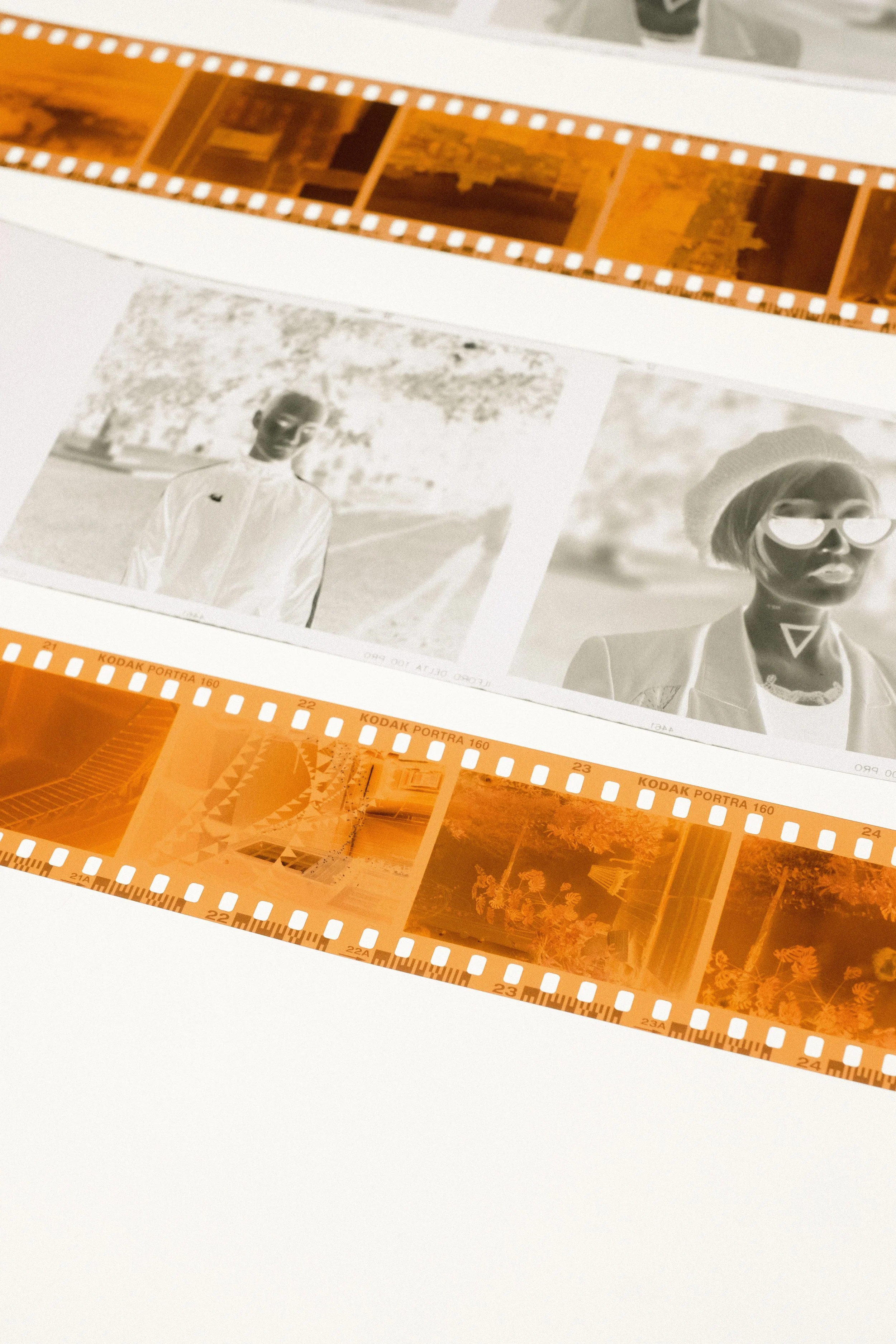
The romance of film survives until the first invoice. Let me put real 2026 numbers on it, because this is where most "should I shoot film" conversations die.
The film itself. Kodak Portra 400, the professional color negative stock most portrait photographers mean when they say "film look," runs roughly $16 to $26 per 36-exposure roll at 2026 retail. Budget color stocks like Kodak Gold 200 run closer to $11 to $15 per roll, and black and white stocks like Tri-X 400 or Ilford HP5 sit in the $13 to $17 range. Those prices do not include anything else. A roll of film is a roll of potential, not a roll of pictures.
Developing and scanning. A professional lab charges around $17 per 35mm roll for C-41 developing, and high-resolution scans add another $8 to $16 depending on size. Boutique Film Lab, for example, charges $17 for developing and $12 for large scans that resolve close to 20 megapixels, so about $29 per roll all in before shipping. The Darkroom's develop-plus-scan bundles run $14 to $20 per roll depending on scan resolution. Turnaround at professional labs averages four to six business days, plus shipping both ways.
The per-frame math. Add it up for one roll of Portra 400: roughly $22 for the film, $29 for develop and scan, and you have 36 exposures. That is about $1.40 per frame, before you factor in the frames you will throw away. In a portrait session where you might burn three rolls to get forty keepers, you have spent over $150 in consumables before the client pays you a dollar. The marginal cost of a digital frame is zero.
The hidden line items. Film cameras need maintenance. Light seals rot. Shutters drift. A used film body that was affordable to buy can become expensive to keep accurate. Expired stock is a gamble. And every roll introduces a week of waiting into your delivery pipeline, which is a real cost when clients expect galleries in days.
This is the math behind every working photographer's answer. Digital did not win because it looked better. It won because the economics are not a contest.
Now the part the film faithful are waiting for, and I will give it to them straight: the look is real. It is not nostalgia. It is physics.
Film handles highlights the way digital still struggles to. Overexpose Portra 400 by two stops and the highlights roll off gracefully into a warm, glowing shoulder. Overexpose a digital sensor by two stops and the highlights clip into a hard, ugly white. For portraits, where skin is mostly highlight, this is the entire ballgame. Film forgives. Digital punishes.
The grain is real too. Film grain is a random silver structure that sits in the image like texture in paper. Digital noise is a pattern the camera invents when it runs out of light, and it always looks like a mistake. Nobody has ever looked at Portra grain and called it noise. That distinction matters in a portrait, where the viewer's eye goes straight to the skin.
And the color science of professional stocks was engineered for people. Portra 400 was designed, literally, to render skin tones beautifully under mixed and imperfect light. That is why wedding and portrait photographers adopted it as a standard. The warmth, the gentle contrast, the way reds and oranges behave: it flatters the human face by design, not by preset.
Here is the contrarian part, from someone who shoots for a living: that look is now replicable enough that the gap is a preference, not a quality tier. Twenty-seven years of directing light has taught me that the light matters more than the medium. My own setup is a Leica M11 with a 50mm lens, which I call the same view as the human eye, shot in natural light only, no strobes. I have never needed a film camera to make skin look extraordinary, because the window does the work the stock used to do. The photographer who understands light will beat the photographer with the expensive film habit every time. The craft is the constant. The medium is the variable.
Let me be blunt about the rest of the scorecard, because the film revival conversation sometimes pretends these do not exist.
Instant review. On a portrait session, seeing the frame immediately is not a luxury. It is the difference between catching a bad expression in the moment and discovering it at the lab a week later. Tethering a digital camera to a monitor lets the client participate in the shoot. That collaboration is worth more than any stock's color science.
Volume and consistency. A corporate headshot day with forty people is a digital job. Full stop. The consistency of exposure, white balance, and delivery across forty subjects is what the client is buying, and film introduces variance at every step: the roll, the lab, the scan. Variance is charm in art and liability in commerce.
Low light. Modern digital sensors see in the dark. A fast prime on a current body shoots clean at ISO levels that would turn film into a grain storm. For event and backstage portraits in bad light, this is not a preference. It is the only option.
Delivery speed. Clients expect galleries in days, sometimes hours. My corporate event work delivers 200 to 300 images the next day. Film cannot touch that pipeline. The Teen Choice Awards lesson, delivered on a 56k modem, has only become more true.
Cost at scale. Zero marginal cost per frame means you can shoot freely, bracket, experiment, and overshoot without a meter running in your head. For a working photographer, that freedom is a creative tool, not just a budget line.
This is also why the AI headshots versus a real photographer debate resolves the same way this one does. The technology question is never really about the technology. It is about what the client needs and what the craft delivers. Digital won the working world for the same reason the real photographer beats the AI generator: reliability, judgment, and delivery.
And yet I am not here to bury film, because film is not dead and the obituary is premature. There are places where film genuinely wins, and they are worth naming precisely.
When the client asks for it. This is the biggest one, and it is growing. A meaningful segment of portrait, wedding, and editorial clients now specifically request film. They grew up on digital perfection and they want the texture. When the client names the medium, the medium wins. Arguing them into digital is bad business.
The discipline. Twelve or thirty-six frames changes your brain. You stop machine-gunning and start seeing. Every film photographer I know, including me, shoots more deliberately on digital because film trained the instinct. If you want to become a better portrait photographer, shooting a few rolls of film is one of the fastest teachers available. It is expensive tuition, but the lesson sticks.
The editorial aesthetic. For fashion editorials, album art, and personal projects, film's imperfections are the point. The grain, the halation, the slight color shifts: these read as intention in a gallery and as atmosphere in print. Digital can emulate them, but emulation is a filter and film is a fact. Some viewers can feel the difference even when they cannot name it.
The archive. Properly stored negatives outlast every digital storage medium we have invented. Hard drives die. Cloud accounts lapse. File formats rot. A negative in an archival sleeve is readable with light and a lens, no software required. For portraits meant to outlive the photographer, that is not a small thing.
If you are learning portrait photography now, here is my direct answer: learn on digital, study on film.
Digital is the correct learning tool because feedback is instant and free. You need ten thousand frames of feedback to build your eye, and film would make that education cost a fortune and take a decade. Master camera settings for portraits on digital first. Learn to see light, direct a face, and expose properly with the training wheels of the histogram and the LCD.
Then buy a roll of film and a simple camera, and shoot it slowly. Not because film is better, but because the constraint will show you what you actually know. Film is the exam. Digital is the classroom. Every serious portrait photographer benefits from sitting the exam at least once.
Does film still win in 2026? For the working portrait business, no. Digital won on cost, speed, consistency, and low light, and the margin is wide. For the craft of portraiture, the answer is more interesting: film still owns the highlight rolloff, the grain, the discipline, and the archive, and clients are asking for the look by name again.
The format was never the point. The light, the direction, and the delivery were always the point. I learned that on a red carpet with a 2.1-megapixel camera while the film shooters waited for their slides. The tools change. The job does not.
If you are booking portraits and want to talk about what actually matters, the light, the direction, and the final image, that conversation starts with the photographer, not the medium. My actor headshots in Los Angeles work is shot on digital and lit by windows, and the clients keep coming back for the look, not the stock.
No, you are not expected to tip your headshot photographer. The session fee is a professional rate, and that rate already covers the photographer's time, skill, equipment, and business costs in full. A tip is a discretionary thank-you, never an obligation. If you are wondering whether tipping your headshot photographer is required, the answer from the working photographer side of the camera is simple: it is not.
I have been photographing people for 27 years. I have shot headshots in studios, on location, on sets, and backstage. The tipping question comes up quietly, usually at the end of a session, usually with a little embarrassment in it. So let me give you the answer the way I give everything else in my business: directly.
Photography is a fee-for-service profession, not a hospitality job. When a waiter serves you, the tip is part of the wage structure. When you hire a photographer, the price you agreed to is the complete wage structure. The price is a finished sentence. It covers the session, the direction, the equipment, the studio overhead, the insurance, the editing, and the profit margin the photographer needs to stay in business. There is no secret second line item where your tip makes up the difference.
This matters more than people realize. If you have ever looked at how professional headshots are priced, you know a proper session involves far more than a camera and a click. There is the consultation about wardrobe and use. There is the lighting design. There is the direction, the part of the job where a photographer earns the fee by getting a genuine, confident expression out of someone who arrived nervous. There is the selection and the retouching direction. All of that is already in the number you paid. A client who pays that number has paid in full.
Premium work carries premium positioning. That cuts both ways. A photographer who knows their value sets a price that needs no subsidy, and a client who respects the work pays the price without apology and never out of guilt. Tipping anxiety does not belong in that relationship. If a photographer did the job you hired them to do, the checkmark next to the paid invoice is the complete transaction.
Tipping is not expected. But there are moments when a tip is genuinely earned, and it is worth knowing what they are so your gratitude lands where it counts.
Tip when the photographer went clearly above and beyond the agreed scope. That means things like accommodating a last-minute schedule change that cost them another booking, staying late because your hair and makeup ran long, shooting extra looks without charging for them, or coaching you through wardrobe on set when you arrived with the wrong outfit. It also applies when the conditions were genuinely difficult: a scorching rooftop at noon, a noisy office floor with forty people waiting, a subject who needed an extra hour of patient direction to relax. These are the situations etiquette guides describe as "service beyond the standard professional contract," and they are right.
Do not tip out of awkwardness. Do not tip because the photographer is standing right there when you hand over the card. And do not tip because you feel the fee was low and you want to quietly correct it. If the fee was low, that was the photographer's pricing decision, not your problem to solve. In my own studio, my rate sheet is the rate sheet: 2 looks $1,500, 3 looks $1,900, 4 looks $2,300, 5 looks $2,500. A look is a full wardrobe and styling change, shot and directed by me. The number is the number. I would rather a client pay it with confidence than inflate it with guilt.
If you have decided a tip is warranted, keep it simple. The etiquette guides that cover this specific question are consistent, and their numbers agree with what I have seen in practice.
For a headshot or small portrait session, a flat tip between $20 and $50 is the customary range for a session that went well and included something extra. This is not a percentage calculation. Nobody expects you to do restaurant math on a photography invoice, and a flat amount reads as a thank-you rather than a valuation of the work. For large wedding and event packages, the norms scale up: guides typically cite $50 to $200 for the lead photographer on a full-day event, or roughly 5 to 10 percent of the package price if you prefer a percentage.
Cash in a sealed envelope at the end of the session is the classic move. It is immediate, private, and unambiguous. If you are tipping after the fact, after you have seen the final gallery, a digital payment through Venmo or PayPal is completely normal now. A note with it matters more than the amount. "You were patient with my team and the results are exactly what we needed" turns money into a message the photographer will remember.
One more thing on timing: you do not have to tip on the day. Some clients wait until they receive the final images, which lets them judge the complete experience including post-production. That is a reasonable approach, and no professional photographer will think less of it.
Yes, and this one is more of a real norm than tipping the photographer. Assistants and second shooters are often paid a day rate by the photographer, and their extra effort is the most direct, visible labor in the room. They hold the reflector. They steam the wardrobe. They keep the line of waiting subjects moving.
Etiquette guides generally suggest $50 to $100 per assistant or second shooter for event work. For a headshot session with an assistant who genuinely helped, a smaller amount is fine. If the photographer brought a hair and makeup artist, tipping them follows salon norms, roughly 15 to 20 percent of their service fee. These are the people whose effort is closest to hourly labor, and a tip reaches them in a way that feels proportional.
Here is the part most articles on this topic skip, and it is the part working photographers actually care about. A tip is spent in a week. A review compounds for years.
If you want to genuinely repay a photographer who did excellent work, do these things, roughly in this order:
Write a specific review. A Google review that names what the photographer did well is worth more than any envelope. "David got our entire executive team shot in one morning and every single person looks confident" is a review that books the next client. "Great photographer, five stars" is not.
Refer one person. One referral to a colleague who books a session is worth more than a lifetime of tips. Tell the photographer who you sent. We remember, and we take care of referrers.
Give a usable testimonial. A two-sentence quote the photographer can put on their website, with your name and title, is marketing gold. Offer it before being asked.
Tag and credit publicly. When you post the headshot on LinkedIn or your company site, tag the photographer or credit them in the caption. Visibility is currency.
Book them again. The highest compliment in a service business is a second booking. Bring the team back next year. Send the new hires. That is the thank-you that pays the studio rent.
I will say it plainly, in the premium register I use for all of my business: a photographer who needs tips to survive has a pricing problem, not a tipping problem. The correct price, paid in full, by a client who returns and refers, is the entire model. Everything else is garnish.
Corporate and team headshot sessions are business agreements, usually billed to a company, and tipping is even less customary there than in individual sessions. The photographer quoted a day rate or per-head rate for a defined scope. The company pays it. The transaction is complete.
If you are the marketing manager or office coordinator who ran the session and the photographer handled forty people with patience and kept every look consistent, the move is the same as above: a review from the company account, a referral to another department or another company, and a rebooking for next year's new hires. That is how you thank a vendor in a B2B relationship. Cash tips on corporate shoots can even create awkwardness around procurement policies, so skip it and send the referral instead.
For context on what these sessions involve and whether the investment makes sense, are professional headshots worth it is the companion question most corporate clients ask first, and the answer there explains the ROI side of the same decision.
Is it rude not to tip my headshot photographer?
No. Tipping is not customary in professional photography. No working photographer expects it, and no professional judges a client for not doing it. Pay the agreed fee, on time, and you have done everything etiquette requires.
I already paid a high fee. Should I still tip?
No, and the size of the fee is actually an argument against tipping. A high fee means the photographer priced their work confidently. Respect that pricing by treating it as complete.
Can I give a gift instead of cash?
Yes. A thoughtful gift, a photography book, a bottle of something good, is a fine gesture and sometimes lands better than cash because it is clearly personal rather than transactional. A public review plus a gift is the strongest combination.
Should I tip for retouching or extra edits?
If you requested additional retouching beyond what was included and the photographer delivered it well, especially on a rush, a tip or a bonus on that line item is appropriate. Extra work beyond the contract is exactly the situation tipping was designed for.
What if I was unhappy with the photos?
Do not tip. Talk to the photographer instead. Most professionals would rather hear the concern and fix it, with a reshoot or additional editing, than receive a tip over silence. Communication is the professional move.
Tipping your headshot photographer is never required and never expected. The fee is the fee, and a professional price is a finished sentence. Tip when someone clearly exceeded the agreement, tip the assistant who carried the heavy end, and beyond that, spend your gratitude where it multiplies: the review, the referral, the rebooking, the public credit. Those are the tips that build a photographer's business. Cash just spends.
If you are still deciding on the session itself, the practical questions around paying your photographer before the shoot and what the session includes are worth settling before you worry about the envelope afterward. Book the photographer whose work you trust, pay their rate with confidence, and the tipping question answers itself.
My portrait editing workflow: 8 pro steps from backup and culling to retouching and client delivery, with real pro timing benchmarks and Lightroom tips.
Read MoreOne flash, high overhead, on axis with the camera. That is the backbone of group portrait lighting, and these 7 setups scale it from 3 people to 30.
Read MoreYes. Photographers should let AI handle the labor of editing and keep the judgment for themselves. AI photo editing is a tool, not a replacement. After 27 years behind the camera, my rule is simple. The camera work is mine. The eye is mine. The edit is labor, and I will automate labor all day so I can spend my time on the bigger picture.
This is my honest guide to AI photo editing for photographers: what I automate, what I refuse to automate, and where I think the line belongs. No hype. No panic. Just what actually works in a working studio.
AI photo culling is the part of the workflow nobody romanticizes and everybody dreads. You come back from a shoot with two thousand frames. Somebody has to look at every single one and throw away the blinks, the misfires, the frames where the light fell apart. That somebody used to be you, at midnight, hating your life.
AI culling software looks at every frame and flags the technical rejects for you. Closed eyes. Soft focus. Bad exposure. It does in minutes what used to eat hours. I do AI-assisted culling and I love it. It saves me a ton of time. It gets rid of all the pictures where the eyes are closed or the lighting is bad, before I ever have to look at them.
Here is what it does not do. It does not pick the hero shot. It cannot tell which frame has the real laugh versus the posed one. It does not know that the slightly imperfect frame is the one with the soul. Culling is triage, not taste. AI handles the triage. The taste stays with me.
The tools have moved fast. On October 13, 2026, Imagen launched Intelligent Studio, a workspace with a full editor built in. Photographers can now cull, edit, and deliver in any order, all in one place, with no round trip to Lightroom. That is a real shift. The old assembly line of cull here, edit there, export somewhere else is breaking apart.
Beyond that, the AI inside the tools most photographers already own keeps getting better. Adobe's Generative Fill can extend a background, remove a distraction, or rebuild a missing corner of a frame. I use it. I also use Claude, ChatGPT, and Gemini in my workflow, for everything from planning a shoot to writing the shot list to thinking through a concept.
And then there is the dedicated software I have not tried yet. Imagen. Aftershoot. Tools built specifically to learn your editing style and apply it across a whole gallery. Friends of mine use them and love them. I have not tried them, and I am not going to pretend I have. That is probably my next step, and I will report back honestly when I take it.
The honest summary: AI photo editing for photographers today means the boring parts are disappearing. Exposure matching across a gallery. Straightening horizons. Removing the exit sign from the background. The machine does the repetitive work in seconds.
People ask what my actual process looks like, so here it is. No secrets.
### What AI handles
Culling comes first. AI-assisted culling clears the technical rejects: closed eyes, missed focus, bad lighting. What used to be the most draining hour of the job is now the fastest.
Then cleanup. Generative Fill removes the distractions I would have spent twenty minutes cloning out by hand. The trash can in the corner. The stranger walking through the background. Gone in seconds.
I also lean on AI before the shoot, not just after it. Claude, ChatGPT, and Gemini help me plan concepts, research locations, and think through lighting approaches. The camera work starts long before I pick up the camera.
Everything that requires judgment. Which frame is the one. How far to push the contrast before it stops looking like the person. Whether the image needs warmth or honesty. AI can match an exposure. It cannot decide what the photograph is supposed to feel like.
My retouching philosophy has not changed, and AI does not change it. I keep what gives character. Moles stay. I remove what is temporary. Pimples go. A good retouch is invisible. The person should look like themselves on their best day, not like a different person. No software gets to overrule that. The eye is mine.
This is the question everyone argues about, so let me give you my answer straight.
The camera work is mine. Nobody automates being in the room. Directing a nervous executive through a headshot session, reading the moment a celebrity drops the public mask, knowing when to keep shooting and when to put the camera down. That is the job. If you want to understand the difference a real session makes, read my breakdown of [AI headshots vs a real photographer](https://www.dclee.net/blog/ai-headshots-vs-real-photographer). The direction is the product.
The eye is mine. Which frame. How it feels. What stays and what goes. Judgment is not labor. Judgment is the whole business.
The edit is labor. Color correction across 400 frames. Exposure matching. Distraction removal. This is skilled work, but it is repetitive skilled work, and I will automate repetitive work all day long. Every hour the machine saves me is an hour I spend on the concept, the client, or the next shoot. That is the bigger picture, and the bigger picture is where careers are built.
Here is the line in one sentence: automate the labor, never the judgment.
Photographers who refuse every AI tool are not protecting craft. They are protecting tedium. I said it on LinkedIn and I will say it here. The photographers who direct the machine will outshoot the ones competing with it. Every time.
This is not just my opinion. The market is moving whether individual photographers move with it or not.
The AI headshot market passed $350 million in 2025 and is projected to top $450 million in 2026, according to Narkis.ai. A Tech.co survey found 44 percent of Americans would consider using an AI-generated headshot for professional purposes. That is the low end of the market going to machines. The high end, the work where a face is their brand, still belongs to photographers who direct real sessions. My [corporate headshots](https://www.dclee.net/blog/corporate-headshots-los-angeles) clients keep choosing the real thing, and the numbers explain why.
The fear underneath all of this is jobs. Economist Joseph Politano analyzed federal labor data and found the United States lost more than 200,000 creative jobs in four years across film, TV, publishing, and design. That number is real and it is ugly.
But read the fine print of that same analysis. The jobs tied to in-person experiences, museums and performing arts, kept growing. The human-present work survives. A portrait session is human-present work. A red carpet is human-present work. Nobody is hiring a prompt to stand in a room and make a nervous person feel powerful. That is what a [Los Angeles photographer](https://www.dclee.net/) actually sells, and no model can ship it.
The pattern is clear. AI takes the predictable work. It cannot take the present work. So the winning move is obvious: let AI have the predictable parts, and double down on being present.
If you are a working photographer, here is what I would actually tell you over coffee.
Start with culling. It is the lowest risk, highest reward entry point. You are not giving up any creative control. You are just skipping the part where you stare at two thousand thumbnails.
Try Generative Fill for cleanup if you have not. It is already in the Adobe subscription most of us pay for.
Then look at the dedicated tools, Imagen or Aftershoot, with clear eyes. I have not tried them yet. My friends who have tried them love them. I am going to try one and I will tell you the truth about it, good or bad.
And keep the judgment. That is the part nobody can automate, because judgment is taste plus experience, and taste plus experience is the only thing clients cannot download.
Where is your line with AI? What will you never let it touch?
Getty Images is suing Stability AI because the AI company trained its image generator on millions of Getty's copyrighted photos without permission or payment. A UK court already ruled the training infringed Getty's trademarks. The US case goes to mediation in October 2026, with a jury trial set for January 2028. Karma is a bitch.
For three decades, Getty Images built an empire on other people's photographs. The company sold licenses for thousands of dollars while paying the photographers who shot the images a fraction of that. Now an AI company has done to Getty exactly what Getty did to photographers, and suddenly unauthorized use is a tragedy worth suing over.
I have watched this from the losing side. I am a [celebrity photographer Los Angeles](https://www.dclee.net/) clients call when they want the real thing, and for years I lost work I should have won because I was not on Getty. Clients would rather pay Getty's hefty fees just to get on the wire service. I could not compete with a monopoly, so I built my own lane.
Countless. That is not an exaggeration for effect. Event after event, the call would come in, the budget would be real, and then the client would go with Getty because Getty meant the wire. The wire meant every outlet on earth would see the photos within minutes. One independent photographer, no matter how good, could not offer that distribution.
The wire was everything. In the age of print deadlines and broadcast slots, speed of distribution decided who got hired. Getty owned the pipes. Independent photographers owned their talent. Guess which one the client paid for.
So Getty got the gig. Getty sent a photographer. The client paid Getty thousands. And the photographer who actually showed up and shot the event got a few hundred bucks. That was the business model, and it worked beautifully for everyone except the person holding the camera.
Let me lay out the math plainly, because the numbers tell the whole story.
A typical corporate event: the client pays Getty somewhere between $3,000 and $5,000 for coverage. The photographer Getty sends to shoot it gets $300 to $400. Read that again. The person doing the actual work, the person with 27 years of experience reading a room and catching the moment, takes home roughly ten percent of what the client paid. Getty keeps the other ninety percent for owning the wire and the brand name.
At $300 for a full event, the math stopped making sense for me a long time ago. I would rather sit home than shoot under those terms. And I did sit home, many times, while Getty collected thousands off work I could have done better.
This is not ancient history or one bad deal. This was the standard arrangement, repeated thousands of times across the industry, for years. Getty's entire empire was built on this spread: charge the client thousands, pay the photographer hundreds, pocket the difference at scale.
Here is the part nobody wants to say out loud: yes. Getty is right.
Training an AI image generator on someone's copyrighted photographs without permission or payment is stealing. It does not matter whether the thief is a photo agency or a software company. The principle is identical. Someone made the image. Someone else used it to make money without asking. That is theft.
Getty just spent 30 years proving this point from the wrong side of it. The company that paid photographers $300 while charging clients $5,000 is now in court arguing that its own work deserves protection and compensation. The argument is correct. The messenger is the problem.
I know what it feels like to be on the receiving end. I once shot an editorial of a luxury condo building in downtown LA. Six months later I saw my pictures being used in an ad. I had a lawyer send a cease and desist. They kept using the pictures anyway. So I filed in small claims court, and I won. They ended up paying me. Most photographers never fight back. The system counts on that.
Two cases, two countries, both moving.
In the United Kingdom, Getty already won the first round. In November 2025, the High Court ruled that Stability AI's inclusion of Getty trademarks in AI-generated images constituted trademark infringement, and that the model provider, not the user, bears responsibility. The court also confirmed that Getty's copyrighted works were used to train Stable Diffusion. That ruling matters because it kills the industry's favorite defense: that the model is just math and nobody is responsible.
In the United States, the case is in the Northern District of California. Mediation was ordered for October 2026, and a jury trial is scheduled for January 2028. That is a long road, and AI companies know it. Lawsuits take years. Training took weeks. The incentives are obvious.
Watch what happens in mediation. If Getty settles for a licensing deal, every AI company will treat that as the price list. If it goes to a jury in 2028 and Getty wins big, the entire training-data economy gets rewritten.
Here is my position, and it is specific. AI companies should pay ongoing royalties when they use a photographer's images to create other images. Not a one-time buyout. Not an opt-out buried in terms of service. Royalties.
Think about how music works. When a song gets played, the songwriter gets paid, every time, through a system the industry built a century ago. Photography never got that system, which is exactly why Getty could pay $300 on a $5,000 job. But AI training is the perfect use case for it. Every image in a training set is identifiable. Every model knows what it trained on. The accounting is possible. The will is what is missing.
A royalty model would change the math for everyone. The [corporate photography](https://www.dclee.net/blog/corporate-photographer-los-angeles) I shoot for brands, the events covered at [rates that respect the work](https://www.dclee.net/corporate-event-photographer-los-angeles), all of it becomes training data the moment it hits the internet. If every use paid a fraction of a cent back to the photographer, the people who actually make the images would finally participate in the value they create.
The broader numbers back up the urgency. The global photographic services market was worth $37.51 billion in 2025 and is forecast to reach $39.21 billion in 2026, on its way to $48.91 billion by 2031, according to Mordor Intelligence. Meanwhile economist Joseph Politano found the US has lost more than 200,000 creative jobs in four years. The money is growing. The jobs are shrinking. That gap is where the stolen value goes.
So here we are. Getty, the company that built a fortune paying photographers pennies, is suing Stability AI for doing the same thing to them. The thief is crying theft. And the worst part is that the thief is right.
I do not feel sorry for Getty. But I want them to win, because a win for Getty is a win for every photographer who ever got $300 on a $5,000 job. If the courts establish that training on copyrighted images without payment is infringement, that precedent protects all of us, including the people Getty spent decades underpaying.
That is the karma. Not that Getty suffers. That Getty has to argue our case to save itself.
So I will ask you the question I keep asking myself: who is the villain here? The monopoly that robbed photographers, or the machine robbing the monopoly?
Should AI companies pay photographers? Yes. If a model trains on your photos and sells what it makes from them, that is commercial use of your work. Commercial use gets paid. The only honest model is ongoing royalties. When your images help generate revenue, you get a cut of that revenue. Anything less is theft with better branding.
I have been a working photographer in Los Angeles for 27 years. I have shot celebrities, campaigns, and editorials. I know exactly what it costs to build a style: years of bad light, missed moments, and frames that taught you something. So when I say it takes years to develop a style and to be ripped off by a computer in an instant is insulting, I am not being dramatic. I am describing the economics of my profession.
This is not a theoretical debate for me. It is my livelihood. And the courts are finally starting to agree that something has to give.
## What is the Midjourney copyright lawsuit about?
In June 2025, Disney, NBCUniversal, and DreamWorks sued Midjourney. Their complaint called the image generator a "bottomless pit of plagiarism." The studios argued that Midjourney reproduces recognizable characters and copyrighted work without permission and without any real safeguards.
Eighteen months later, nothing has changed. A report published October 14, 2026 by VN.ai, a startup that stress tests AI tools for copyright infringement, named Midjourney the worst offender for flouting Hollywood copyright. The company that was sued for mass infringement allegedly kept doing it.
Read that again. Sued by three of the biggest studios on earth. Called a bottomless pit of plagiarism in a federal complaint. And a year and a half later, an independent audit says it is still the worst in the business. That tells you everything about the incentive structure. Theft is free. Lawsuits take years. The math favors the thief.
That is the question every court in the country is wrestling with, and photographers should pay attention to the answers coming in.
The biggest case from working artists is Andersen v. Stability AI, filed by illustrators who discovered their work had been scraped into training data. That case has survived multiple rounds of motions to dismiss. A summary judgment hearing is scheduled for February 2027, with a trial set for April 2027. The artists are still standing. The platforms have not made this go away.
Then there is Getty Images v. Stability AI, which matters for a different reason. In November 2025, the UK High Court ruled that Stability AI's use of Getty's trademarks inside generated images was trademark infringement. More importantly, the court held that the model provider, not the user, bears responsibility. Read that carefully. The company that built the model is on the hook, not the person who typed the prompt.
That ruling cuts straight through the industry's favorite defense. AI companies love to say they are just a tool, like a camera. A camera does not ingest five billion images and sell the statistical residue. When the provider is responsible, the provider has to pay. That is the direction the law is moving, and photographers should be cheering it on.
Most people in this debate stop at "pay the artists" and never say how. That vagueness is convenient for the platforms, because a demand without a mechanism is easy to ignore.
Here is my mechanism: ongoing royalties. If an AI company uses my images to create other images, and those images generate revenue, I get a cut of that revenue for as long as it flows. Not a one time buyout. Not a flat licensing fee that undervalues the work. Royalties.
This is not a radical idea. Musicians get royalties when their songs play. Photographers already license images with usage based pricing. [What a celebrity photographer actually costs](https://www.dclee.net/blog/how-much-does-a-celebrity-photographer-cost) depends on usage, because usage is where the value lives. AI training is usage. Massive, industrial scale usage. Price it that way.
The platforms will say this is technically impossible, that you cannot trace which training images influenced which outputs. That is their engineering problem, not mine. They built systems that ingest the entire visual internet. Figuring out how to pay for it is the cost of doing business. If your business model only works when the raw material is free, your business model is broken.
This is not theory for me. I have lived the small version of this fight, and I want working photographers to hear how it went.
Years ago I shot an editorial of a luxury condo building in downtown Los Angeles. It was a real assignment. I scouted it, lit it, and delivered the work. Six months later I saw my pictures being used in an ad for the building. Nobody asked me. Nobody paid me. They just took the images and ran a campaign with them.
I had a lawyer send a cease and desist. They ignored it and kept running the ad. So I filed in small claims court.
And I won. They paid me.
I tell this story for one reason. The system works when you use it. Most photographers never file. They complain to friends, post about it, and let it go because lawyers are expensive and court sounds intimidating. Small claims court exists precisely for this. The filing fee is small. You do not need a legal team. You need your contract, your images, and the evidence that they used them.
Now scale that up. If one photographer can beat one condo developer in small claims, imagine what happens when thousands of photographers stop accepting theft as the cost of doing business. The AI companies are counting on our silence. Every artist who fights makes their math worse.
Because photographers are just first in line. The same fight is coming for every creative profession.
An analysis by economist Joseph Politano found that the United States has lost more than 200,000 jobs across creative industries in the past four years. Film and TV alone lost more than 100,000 jobs, nearly a third of the sector's workforce. Written publishing lost over 70,000. Politano is careful about how much of that is directly caused by AI versus consolidation and offshoring, and he is right to be careful. But the timing lines up with the generative AI boom, and nobody serious thinks these forces are unrelated.
Look at what is happening inside photography specifically. The AI headshot market exceeded $350 million in 2025 and is projected to pass $450 million in 2026, according to Narkis.ai. That is nearly half a billion dollars of revenue built on a simple proposition: why hire a photographer when software can fake the result? If you want the honest comparison between the two, read my breakdown of AI headshots vs a real photographer. The short version is that software can copy a look but cannot direct a human being.
Here is what the platforms do not want to discuss. Every AI headshot generator was trained on real photographers' work. The poses, the lighting patterns, the retouching styles. All of it came from people who spent careers learning those things. The $450 million market exists because photographers spent decades building the visual language it copies. Royalties are not charity. They are back pay.
First, register your copyrights. In the United States, registration with the Copyright Office is a prerequisite for bringing an infringement lawsuit. Some of the artists suing the AI platforms had claims dismissed simply because they had not registered. Do not give the other side a free procedural win. Register the work.
Second, document everything. Keep your RAW files, your contracts, and your delivery records. My condo case was winnable because I could prove the images were mine and prove they were used without permission. Paper trails win cases.
Third, stop giving your work away for exposure. Every free image you post without terms is training data with your name scrubbed off. License your work like it has value, because it does.
Fourth, support the cases that are already moving. Andersen v. Stability AI goes to a summary judgment hearing in February 2027. The Getty cases are grinding forward on two continents. These rulings will set the terms for the next decade. Pay attention to them.
And fifth, say it out loud. I am a celebrity photographer with 27 years behind the camera, and I am telling you plainly: AI companies should pay photographers for copyright infringement. The more working professionals who say it on the record, the harder it gets for the platforms to pretend this is a fringe complaint.
Midjourney got sued by Disney and kept going. An independent report says it is still the worst offender. The courts are slowly catching up, from the UK trademark ruling to the Andersen trial in 2027. The direction is clear, but direction is not payment. Payment comes when photographers demand it, document it, and sue for it when they have to.
It took me years to develop my style. A computer ripped it off in an instant and the industry called it innovation. I sued a condo developer in small claims court and won. The AI companies are bigger, but the principle is identical. My work has value. Use it, pay for it.
Should AI companies pay every photographer whose work trained their models, with ongoing royalties for as long as that work generates revenue?
Use a clean, professional headshot on LinkedIn: your face filling most of the frame, a simple background, natural light and a genuine expression. Dress one notch above your industry's everyday standard. A professional photographer gets you there fastest, but a well-shot phone photo beats a cropped wedding picture every time.
A job seeker coming out of academia asked exactly this question on a forum recently: what kind of headshot is commonly used on LinkedIn, is there an app for it, and is a professional photographer really worth the money when you have a phone? The replies split three ways. Some said use an AI app like Headshot Pro and skip the $400. Some said a phone works fine with good light. Some said the professional shot shows initiative and wins. I have shot headshots for 27 years, and I will give you the straight answer on all three.
## What kind of headshot works best on LinkedIn?
The formula is simple. Face forward, eyes to camera, your face filling about 60 percent of the frame. Clean background, nothing competing with you. Natural light, which is the most flattering light there is. And an expression that looks like you on a good day, not you posing for a passport.
Dress one notch above what your industry wears every day. If your office is business casual, wear the blazer. If your industry is suits, wear the suit. This is not the place for a tuxedo or a tank top. Solid colors photograph best. Busy patterns fight with your face for attention, and your face should win.
There is research behind the fuss. Princeton psychologists Willis and Todorov found that people form first impressions from a face in as little as one tenth of a second (Psychological Science, 2006). Your LinkedIn photo is doing that work before anyone reads a single word of your profile. MDG Advertising's research found that people remember 65 percent of information when it is paired with a relevant picture, versus 10 percent without. Your face is the picture people remember you by.
## Should I hire a professional photographer for my LinkedIn headshot?
Here is the honest math. A professional photographer is not selling you a sharper image. Your phone is sharp. A professional is selling you three things your phone cannot give you: light that flatters instead of exposes, angles that work for your specific face, and direction while you shoot.
That third one is the one people underestimate. In the forum thread, one woman wrote that her husband took 1,782 photos of her face in the backyard and one of them was decent. That is the DIY tax: thousands of frames, a sore face, and a photo you settled for. A good photographer gets it in an hour because directing people is the job. I shoot with a Leica M11 and a 50mm lens, natural light only, no strobes, and the session is built around making you look like yourself at your best, not like a mannequin.
There is also the signal it sends. In that same thread, multiple people said a professional headshot shows you took initiative, and that a random iPhone grab just does not have the same impact. They are right. Hiring managers read effort. A polished headshot says you take your career seriously before they read a word.
On price: in Los Angeles, professional headshot sessions run from a few hundred dollars for a quick session up to premium multi-look shoots. My sessions start at $1,500 for two looks, which includes full wardrobe changes and direction. If that is outside your budget right now, a solid mid-range photographer still beats every shortcut below. For the full breakdown of what headshots cost in Los Angeles and what drives the price, see my headshot pricing guide.
## Can I take my LinkedIn headshot on my phone?
Yes, with conditions. A phone photo can work if you get three things right: light, background, and angles. The forum's best DIY advice was also the most correct: shoot in natural light without harsh sunlight, because an overcast day is perfect. Stand in front of a fence, a brick wall, a bank of trees, or any neutral background. Take a lot of angles and a lot of expressions. One commenter nailed the formula: if you have a friend with a good eye, buy them lunch and have them take your photo.
What phones cannot fix is the lens. A phone's wide lens, held at arm's length, subtly distorts your face. It is the reason selfies look a little off. A 50mm lens sees roughly what the human eye sees, which is why professionals use it for portraits. If you must use a phone, prop it up and use the rear camera with a timer from six to eight feet away instead of a selfie. The distance flattens the distortion and the photo looks immediately more professional.
## Are AI headshot apps good enough for LinkedIn?
This is where I will be blunt. AI headshot apps have one problem: the headshot is not real. One commenter in the thread worried the results would look too brushed and unnatural, and that instinct is correct. Recruiters look at faces all day. They can spot the over-smoothed skin, the slightly wrong ear, the background that does not quite make sense. And when someone meets you on a video call and you do not match your own photo, trust takes a hit before you have said a word.
There is nothing wrong with AI headshots except they are not real. Your LinkedIn photo is a promise about what shows up to the interview. Keep the promise. If you want the full breakdown of where AI images help and where they hurt a working photographer or job seeker, read my comparison of AI headshots vs a real photographer.
## What should I wear in a LinkedIn headshot?
Bring options. Shoot both with a tie and without, so you have the choice. Solid colors, no busy patterns, no logos. Make sure the collar sits clean and the jacket is pressed. Do a test run of your outfit and hair before the shoot, not during it. If you wear glasses, keep them, but watch for glare. And update the photo when your look changes. A headshot from ten years and forty pounds ago is a small lie that unravels on the first video call.
## Does your LinkedIn headshot change by industry?
Yes, and this is where most generic advice fails. In the forum thread, someone in the environmental industry noted that outdoorsy photos are common in their field, which would look wrong in banking. Another commenter gave the best rule in the whole thread: look at your supervisors' headshots and copy that tone. They set the culture.
Banking, law, and finance skew formal: suit, studio or clean office background, confident and composed. Tech skews smart-casual: blazer or collared shirt, softer background, approachable. Creative fields give you room for personality, but the face-forward, well-lit fundamentals do not change. The goal is always the same: look like the version of you that gets hired in your industry.
For the record, this is different from an acting headshot, which is about showing range for casting directors. If you are curious where the line sits, here is my breakdown of LinkedIn headshots vs acting headshots.
## How often should you update your LinkedIn headshot?
Every two to three years, or whenever your appearance changes enough that a stranger would do a double take. New glasses, significant weight change, a very different hairstyle: update the photo. An outdated headshot does not just look stale, it creates a small moment of distrust when the real you shows up. Fresh and accurate beats perfect and old.
## The biggest LinkedIn headshot mistakes
The forum thread supplied the hall of fame. Do not crop a group photo, because someone can always tell. Do not use a cropped wedding photo. One commenter said they can spot the boutonniere in men's photos, and they are not wrong. No sunglasses, no vacation backgrounds, no photos where you are clearly having more fun than the viewer. And skip the heavy filters. LinkedIn is a professional network, not a dating app. Your photo should look like you on your best day, not like a rendering of you.
## The bottom line
The best LinkedIn headshot is a real photo of your real face, well lit, simply framed, dressed for the job you want. A professional photographer gets you there in an hour with light and direction no app can fake. A careful DIY shoot with natural light and a neutral background gets you most of the way. An AI app gets you a stranger who looks a little like you. Choose accordingly.
If you are in Los Angeles and want it done right, I shoot corporate headshots in my natural light studio in downtown LA. Two looks, full direction, photos that look like you. Call or text +1 (510) 326-4934 for a free 15-minute consultation.
Source question (REAL, verified 2026-10-15): DC Urban Mom forum thread "LinkedIn headshot" — https://www.dcurbanmom.com/jforum/posts/list/1190685.page
Verbatim question: "When setting up your LinkedIn profile, what kind of headshot is commonly used? Any app that's recommended? An acquaintance who does resume editing told me to go to a professional photographer for the best results, but I'm not sure it's worth the money if you can somehow do it on your phone."
Poster: anonymous job seeker coming out of academia, entering industry. Thread replies split three ways: AI apps (Headshot Pro), DIY phone shots, and pro photographers. The $400 figure, the banking-vs-environmental-industry debate, and the cropped-wedding-photo horror stories all come from this thread.
CANNIBALIZATION CHECK (skill: seo-cannibalization-check, run 2026-10-15):
1. Registry check: "what kind of headshot for linkedin" is NOT in the registry. Adjacent entries: /blog/linkedin-vs-acting-headshots (comparison of two headshot TYPES, different query) and /blog/do-i-really-need-a-professional-headshot-for-my-job-search (general job-search piece, different query). Neither is listed for this cluster.
2. Live-site check: no published slug targets "what-headshot-for-linkedin" or close variants.
3. SERP-overlap judgment: "what kind of headshot for linkedin" (buyer advice: style, pro vs DIY vs apps) vs "linkedin vs acting headshots" (type comparison) would return different result sets. Distinct clusters, PASS with mitigation: the new article links to the comparison piece with a real anchor to strengthen the cluster instead of competing.
Result: CLEAR to draft. Log to registry on publish.
The exact camera settings for portraits I use after 27 years shooting celebrities: aperture, shutter speed, and ISO recipes for sharp, flattering portraits in any light.
Read MoreThe national average for a wedding photographer sits at $3,000, according to The Knot 2026 Real Weddings Study of 10,474 couples married in 2025. That number is accurate and almost useless at the same time. A couple marrying in Manhattan and a couple marrying in Minneapolis are not shopping in the same market. In New York City, experienced professionals start around $5,500 for full day coverage. In the Midwest, experienced photographers deliver full days at $2,500 to $3,500. Same job title, nearly double the price.
This guide lays out what wedding photography costs across major US cities in 2026, where those numbers come from, how they have moved over the last five years, and what is inside the packages at each price point. Every dollar figure below comes from a published survey or a working photographer. No invented statistics.
If you want one number for the whole country, The Knot says $3,000. Zola says $4,400. WeddingWire says $2,000. All three are telling the truth about different things, and understanding why they disagree will save you from misreading every quote you receive.
The Knot 2026 Real Weddings Study surveyed 10,474 US couples married in 2025. The average they paid for a wedding photographer was $3,000, with a median of $2,800. The lower cost quartile sat at $1,500 and the upper quartile at $4,700. That study averages what couples actually paid for any photography at all, including short coverage and elopements, which pulls the average down.
Zola's Wedding Cost Index, updated February 2026, puts the national average at $4,400, with most couples paying $3,500 to $5,300. Zola's figures sit closer to what full day professional packages actually cost. Zola also notes that photography accounts for roughly 9 percent of a total wedding budget.
WeddingWire's widely cited $2,000 figure draws from an even wider spread of bookings, including part time and entry level photographers. Measured against the survey average, a ten hour day with two photographers will always look expensive. Measured against Zola's premium tier, it looks normal. The practical takeaway: a quoted price anywhere from $1,500 to $5,300 can be entirely ordinary. The only way to compare two quotes is to compare what is inside them.
The table below uses 2026 market data from With Joy's annual cost guide, which tracks what couples pay in the top US wedding markets. Averages reflect typical full day professional bookings. Ranges show the spread from entry level to luxury in each market.
| City | Average Cost | Typical Range |
|---|---|---|
| San Francisco / Bay Area | $5,500 | $4,000 to $12,000 |
| New York City | $5,000 | $3,500 to $12,000+ |
| Los Angeles | $5,000 | $3,000 to $15,000 |
| Chicago | $4,800 | $2,500 to $12,000 |
| Boston | $4,500 | $3,500 to $8,000 |
| Seattle | $4,500 | $3,000 to $10,000 |
| Miami / South Florida | $4,500 | $3,000 to $9,000 |
| Washington DC | $4,200 | $3,000 to $10,000 |
| Nashville | $3,800 | $2,500 to $6,000 |
| Dallas / Houston | $3,500 | $2,000 to $6,500 |
| Atlanta | $3,200 | $2,000 to $6,000 |
| Minneapolis / Midwest | $2,800 | $1,800 to $5,000 |
A few things jump out. San Francisco tops the list at $5,500 average, and anything under $4,000 in the Bay Area is typically an early career photographer or limited hours. New York and Los Angeles tie at $5,000, though LA has the widest range in the country, stretching to $15,000, thanks to its celebrity adjacent luxury market. In Manhattan specifically, the floor for experienced professionals is around $5,500. Chicago at $4,800 runs higher than most people expect, and suburban Chicago photographers price 10 to 25 percent below city based studios.
At the other end, Minneapolis and the broader Midwest offer the best value in the country, with experienced photographers at $2,500 to $3,500. Dallas and Houston sit at $3,500 average, which With Joy calls excellent value, while noting Austin skews higher on tech and luxury demand. Nashville deserves a special mention: prices there are up 25 to 30 percent since 2022 as it has grown into a destination wedding city.
Boston is worth a closer look because one local study went deeper than most. Research covering just under 100 Boston wedding photographers found an average of $6,627 for one photographer over eight hours, with a range of $3,600 to $11,000. Two photographers for eight hours averaged $7,746, ranging from $4,200 to $16,000. The second shooter add on alone averaged $1,020. Boston's market prices significantly higher than the US average, which tracks with its New England location and high cost of living.
Los Angeles has its own detailed data from The Knot. The average wedding photographer in LA costs $3,180, with a range of $1,410 on the low end to $3,610 on the high end. That is 4 percent higher than the California statewide average and 9 percent higher than the US average. Note that this figure describes partial day coverage more than full day work. Full day LA studios quote differently, which is exactly why the With Joy full day average of $5,000 looks so much higher than The Knot's $3,180. They are measuring different products.
It is worth slowing down on methodology, because this is where most couples get confused and where most budget articles quietly mislead.
The Knot Real Weddings Study is the longest running annual survey in the industry, now in its twentieth year. The 2026 edition drew from 10,474 couples married in 2025. Photographer was the third most popular vendor hired, with 87 to 88 percent of couples booking one, and the fourth most expensive vendor on average. The study found an average hourly rate of roughly $375, based on an eight hour wedding day at the $3,000 average.
Zola's index works differently. It models what couples should expect to pay for professional grade service, which is why its $4,400 national average runs about 47 percent higher than The Knot's. Its city figures, like $5,000 for New York City and $3,600 for Salt Lake City, describe full day professional bookings rather than all bookings.
The honest way to use these numbers: The Knot tells you what couples actually spent. Zola tells you what a professional full day typically costs. If you are hiring an established photographer for eight to ten hours, Zola's range is the more relevant benchmark. If you are trying to understand the whole market including short coverage, The Knot's quartiles ($1,500 to $4,700) give you the real spread.
Wedding photography prices have climbed steadily since the pandemic, with one flat year in the middle. Here is The Knot's national average by wedding year:
| Wedding Year | Average Photographer Cost | Source |
|---|---|---|
| 2022 | $2,600 | The Knot Real Weddings Study |
| 2023 | $2,900 | The Knot Real Weddings Study |
| 2024 | $2,900 | The Knot Real Weddings Study |
| 2025 | $3,000 | The Knot Real Weddings Study (10,474 couples) |
| 2026 | $4,400 | Zola Wedding Cost Index (modeled full day average) |
The jump from $2,600 in 2022 to $3,000 in 2025 is a 15 percent increase over three years, roughly in line with broader inflation in the wedding industry. The 2023 to 2024 plateau at $2,900 suggests the post pandemic surge cooled before ticking up again.
For longer context, The Knot's 2007 survey put the average wedding photographer at $2,651. That means the nominal average has risen only about 13 percent in nearly two decades according to The Knot's measure, which mostly reflects that the survey keeps capturing the full market including budget bookings. The professional full day market, the one Zola measures at $4,400, has moved much faster.
The direction is clear even if the exact slope depends on the source. Costs are rising, driven by the same pressures hitting every skilled trade: equipment, labor, insurance, and demand for a more produced final product.
The Knot's 2025 data breaks the country into six regions, and the gap between the most and least expensive is nearly 50 percent:
| Region | Average Photographer Cost |
|---|---|
| Mid-Atlantic | $3,800 |
| New England | $3,700 |
| Midwest | $2,900 |
| West | $2,900 |
| South / Southeast | $2,700 |
| Southwest | $2,600 |
The Mid-Atlantic, which includes New York, New Jersey, and Pennsylvania, leads at $3,800. New England follows at $3,700. The Southwest closes the list at $2,600. A couple willing to marry in the Southwest instead of the Mid-Atlantic saves an average of $1,200 on photography alone, before any other vendor is considered.
Guest count moves the number too. The Knot found that couples with 101 or more guests paid an average of $3,500 for photography in 2025, while smaller weddings paid less. Older Knot data put the spread at $1,850 for weddings of 1 to 50 guests versus $3,364 for weddings over 100 guests. Bigger weddings need more hours, more shooters, and more coordination, and the price follows.
Seven factors explain almost all of the price difference between a $2,000 quote and a $10,000 quote.
This is the single biggest line item. Most photographers build packages around six, eight, or ten hours. A standard eight hour day at the national average works out to roughly $375 per hour. Elopement packages with two to four hours of coverage run $800 to $3,500. Micro wedding packages with four to eight hours run $1,500 to $4,500. Every additional hour typically adds $300 to $600 depending on the market.
A second photographer adds $800 on average nationally according to With Joy, though the Boston market study found $1,020 with a range of $400 to $1,800. The value is real: two angles on the ceremony, simultaneous getting ready coverage, and cocktail hour candids while the lead shooter does portraits. For weddings over 100 guests, most professionals consider it close to essential.
The market stratifies cleanly by experience. Entry level photographers with one to three years of experience charge $1,200 to $2,500, usually for six to eight hours with basic editing. Mid level photographers with three to seven years charge $2,500 to $5,000 with professional equipment, backup gear, and multiple package options. High end photographers with seven or more years charge $5,000 to $15,000 and up, with award winning portfolios and luxury service. At the very top, luxury and celebrity photographers charge $15,000 to $50,000 or more, with full creative teams and destination coverage.
More guests means a longer day, more moving parts, and usually a second shooter. The Knot's data shows the jump clearly: small weddings under 50 guests average well under $2,000 for photography, while weddings over 100 guests average $3,500.
Peak months like June, September, and October carry the highest demand and the firmest prices. Saturday is the premium day. Friday and Sunday weddings often come with modest discounts, and weekday or off season weddings (January through March in most markets) are where photographers have the most flexibility. If your date is flexible, this is the easiest lever you have.
Documentary and photojournalistic styles typically run $2,000 to $4,500. Fine art and editorial styles, which involve extensive post production, run $3,500 to $8,000. Fashion and glamour styles with high end retouching run $4,000 to $10,000 and up. The style premium is really a labor premium. Heavier editing styles can mean 30 to 50 or more hours of post production per wedding.
An engagement session adds about $500 nationally, though Boston's market study found $1,007 with a range of $400 to $3,000. A printed album adds about $1,000. Rehearsal dinner or welcome party coverage in Boston averaged $1,975. These add ons are where two similar sounding packages diverge by thousands.
A professional package in 2026 usually includes eight to ten hours of wedding day coverage, a lead photographer plus an optional second shooter, professional editing of every delivered image, a private online gallery with high resolution downloads and print rights, and a sneak peek gallery within 48 to 72 hours. Many include an engagement session. Albums, prints, and rehearsal coverage are usually add ons.
What the price actually pays for goes well beyond the wedding day. One fine art photographer told The Knot she arrives at each wedding with a minimum of $100,000 worth of equipment, including backups for every piece, and budgets $200 to $1,000 per repair. Another reported paying for more than 12 monthly software subscriptions, with Adobe Suite costs alone running $2,400 per month. Add insurance, backup storage systems, client communication, timeline planning, and 30 to 50 hours of editing, and a single wedding represents a full week or more of professional labor.
Travel is the add on couples forget to ask about. WeddingWire notes that travel fees commonly kick in beyond 60 miles, at up to $2 per mile. Destination weddings add flights, hotels, and per diem, which is why destination quotes look so different from local ones.
I have spent 27 years behind the camera, and the couples who get the best value are not the ones who negotiate hardest. They are the ones who ask the best questions. Here is the list that matters.
How many hours are included, and what does overtime cost? Timelines slip. Know the overtime rate before the wedding day, not during it.
Is the second shooter your employee or a freelancer you just met? A second shooter who has worked with the lead photographer for years produces a different gallery than a hired gun.
How many weddings do you take per year? A photographer shooting 40 weddings a year and one shooting 12 are running different businesses with different attention levels.
What is the turnaround time for the full gallery? Four to eight weeks is standard. Twelve weeks is slow but not unreasonable in peak season. Get it in writing.
Do I get the RAW files? Almost no professional includes them, and you should be wary of one who does without discussion. What you want is high resolution edited files with print rights.
What happens if you are sick or have an emergency? The answer should involve a named backup photographer and a studio network, not a shrug.
Can I see three full galleries from the last year? Not highlight reels. Full galleries, start to finish, in lighting conditions similar to your venue. This is the single most revealing thing you can ask for.
What is the payment schedule? Standard practice is a retainer to reserve the date with the balance due before or on the wedding day. Get the cancellation and rescheduling terms in writing.
Budget $3,000 as a national baseline, then adjust for your city. In New York, San Francisco, or Los Angeles, plan $5,000 for an experienced professional. In Chicago or Boston, plan $4,500 to $4,800. In Dallas, Houston, or Atlanta, $3,200 to $3,500 gets you strong mid range options. In the Midwest, $2,800 is the average. Most couples allocate 10 to 15 percent of their total wedding budget to photography.
No. At $4,000 you are in the mid to premium range nationally, which typically gets you an experienced photographer with a strong portfolio, eight hours of coverage, an engagement session, and a full digital gallery. In major metro areas like New York, Los Angeles, or Chicago, $4,000 is closer to the entry level threshold for established professionals. The real question is value: wedding photos are the one vendor product you will still use 20 years later.
Because a wedding is not a photo shoot, it is a one time live event with no reshoots. The fee covers eight to ten hours of wedding day coverage, 30 to 50 hours of editing, $100,000 or more in equipment with backups, software subscriptions, insurance, a second shooter, client communication, and timeline planning. When you divide a $4,000 package by the actual hours worked, the hourly rate looks a lot less dramatic.
Couples book their photographer about 11 months before the wedding on average, according to industry data. In competitive markets like New York and San Francisco, sought after photographers book 12 to 18 months out for peak Saturdays. If your date is flexible or off season, six months can be plenty.
For weddings over 100 guests, yes, in most cases. A second shooter captures the partner getting ready simultaneously, covers cocktail hour while the lead does portraits, and gives you two angles on the ceremony. It adds roughly $800 nationally. For intimate weddings under 50 guests, one experienced photographer is usually enough.
Tipping is not required the way it is for catering staff, but it is appreciated for exceptional service. If the photographer owns the studio, a tip is entirely optional and a glowing review is often valued more. If you are working with an associate shooter or assistant, $50 to $200 per person is a common gesture. What matters more than the tip is the review you leave afterward.
The OM SYSTEM PEN ships October 30, 2026. OM Digital Solutions Japan has now confirmed what the preorder queues already suggested: demand blew past projections, and some configurations will not reach customers until Spring 2027 or later. A $999 camera with a waiting list measured in seasons.
I have shot professionally for 27 years. I have watched camera trends cycle the way fashion cycles. The PEN backlog is not really about one camera. It is about what photographers actually want in 2026, and why the industry spent a decade building the opposite. Here is the full breakdown: the specs, the backlog details, the math that made the price possible, and what the preorder crowd is saying.
Announced September 9, 2026. Confirmed shipping date October 30, 2026. The core specifications, verified from OM System's official materials and launch coverage:
- Body: rangefinder-style Micro Four Thirds mirrorless, 393 grams with battery and memory card. Available in silver or black.
- Sensor and processor: 20.37-megapixel Live MOS sensor, TruePic IX image processor.
- Viewfinder: 2.36-million-dot OLED electronic viewfinder in the corner of the body, rangefinder style. This is the first PEN with a built-in EVF.
- Stabilization: 5-axis in-body image stabilization, rated up to 5.5 stops of compensation at the center under the manufacturer's test conditions.
- Autofocus: 121 cross-type phase-detection points with AI subject detection for people, cats, and dogs.
- Screen: 3-inch articulating touchscreen, 1,040,000 dots.
- Video: 4K30, vertical video support, slow and quick motion.
- Weather sealing: IPX1-rated splash resistance with dust protection. The first weather-sealed PEN in the line's history. The sealing applies when paired with a compatible dust and splash resistant lens, and not during charging or HDMI use.
- Creative controls: a front-mounted switch for Color and Monochrome Profile Control with film-inspired presets, plus a dedicated computational photography button for high-resolution capture, Live ND, and focus stacking. Art Filters return.
- Battery: new BLS-7 rechargeable battery, rated 410 shots per charge, with USB-C charging.
- Pricing: $999.99 body only. $1,099.99 with the new M.Zuiko Digital 14-42mm F3.5-5.6 III kit lens. $1,299.99 for the double zoom kit adding the M.Zuiko Digital ED 40-150mm F4.0-5.6 R. A launch offer bundles a free Clever Supply leather wrist strap valued at $54 while supplies last.
The historical context matters. The PEN line began in 1959 with Olympus designer Yoshihisa Maitani's half-frame film camera. It went digital mirrorless in 2009 with the E-P1. Across the entire digital PEN history, through the E-P3, E-P5, E-P7, and the well-regarded PEN-F, no body ever combined a built-in viewfinder with weather protection. This one does both, at $999.
On October 10, 2026, OM Digital Solutions Japan issued an official statement: "OM SYSTEM PEN Mirrorless Camera and Related Accessories: Release Date Announcement and Apology for Delivery Delays." The confirmed release date is October 30, 2026. The company stated it received a very large number of preorders and that even customers who already ordered should expect a considerable wait.
Products facing longer delivery times, per the official announcement:
- OM SYSTEM PEN body, silver and black
- PEN 14-42mm F3.5-5.6 III lens kit, silver and black
- PEN double zoom kit, silver and black
- BLS-7 rechargeable battery
Some configurations are expected to face waits extending into Spring 2027 or later, depending on color allocation and region. The standalone 14-42mm III lens is expected to deliver on a standard schedule.
This is a demand story, not a supply failure story. OM Japan explicitly apologized for preorders far surpassing internal sales projections. When a manufacturer apologizes for selling too many cameras, pay attention to what the market is saying.
The price is the real story. At $999.99 body only, the PEN undercuts its nearest stylistic rival, Fujifilm's X-E5, by $700. The X-E5 costs $1,699 for the body. The PEN is also priced well below where the PEN-F launched a decade ago: $1,200 in 2016, which is roughly $1,700 in today's money. OM System is delivering a viewfinder-equipped, stabilized, weather-sealed PEN for meaningfully less in real terms than its predecessor.
How? Physics and sensor size. Micro Four Thirds sensors are smaller and cheaper to make, the lenses are smaller, and the whole system scales down. Digital Camera World's review noted the PEN costs roughly $650 to $1,000 less than the nearest APS-C cameras combining an EVF, IBIS, and weather sealing. Meanwhile Canon pushes its cheapest full-frame body to $1,899 with the R8 Mark II. OM System is running the opposite play: smaller sensor, smaller body, smaller price.
The spec sheet reads like a checklist of everything the compact-camera market asked for and stopped getting. A real viewfinder, not just a rear screen. Real stabilization, 5.5 stops. Real weather sealing. Physical dials. A 393-gram body. Film-inspired color profiles on a dedicated switch. At $999, there is no other small rangefinder-style camera with in-body stabilization at this price. Fujifilm's X-M5 is the nearest rival in spirit, but it lacks stabilization, a viewfinder, and weather sealing. The Nikon Z50 II lacks IBIS entirely.
The DPReview Micro Four Thirds forums have been the liveliest window into buyer sentiment, and the tone is unusually warm for gear forums. The most telling thread is titled "I really didn't need this OM Pen, but," and it captures the dynamic exactly. The original poster wrote: "having the OM-3, E-P7, and OM-5, 'I REALLY, REALLY, didn't need this'... and resisted the preorder for all of 3 hours" (DPReview Forums). Another poster in the same thread observed: "it makes me think that OMS might have, just for once, really hit upon a camera with the right design, right size, right feature set, and... right price point" (DPReview Forums).
In the "I broke down and preordered" thread, an experienced Olympus shooter offered this on the files: "It produces very nice, malleable files that tolerate a lot of manipulation, more than the 16 MP generation" (DPReview Forums). And on intended use, one buyer put it plainly: "I have one on preorder to use as a EDC" (DPReview Forums). Everyday carry. That is the entire product thesis in three letters.
The skepticism is honest too. One detailed video review from a PEN-F owner declined to preorder, citing the size not being as small as hoped, no pancake kit lens, the on/off switch design, video quality, and build quality, while still calling it a camera that gets a lot right. Another forum poster warned that scarcity dynamics, citing the X100VI and Lumix situations, could turn enthusiasm into frustration if the Spring 2027 waits prove real. Fair concerns. But the dominant sentiment is not hype. It is relief that someone finally built the obvious camera.
Zoom out and the PEN backlog is one data point in the biggest camera story of the last three years. Compact cameras are back, and the demand is structural, not nostalgic.
The pattern is consistent across brands. Fujifilm's X100 series sells out for months at a time. Fixed-lens compacts command waiting lists. Young photographers who grew up on phones want a dedicated camera that is small enough to carry, beautiful enough to want, and simple enough to enjoy. The industry spent the 2010s building bigger sensors, bigger bodies, and bigger prices, optimizing for a professional market that was shrinking. The growth is in cameras people carry everywhere.
The PEN slots into this wave with one structural advantage: it is an interchangeable-lens camera. Fixed-lens compacts are wonderful until you want a different focal length. The PEN gives you the small body and the system behind it. Micro Four Thirds has one of the deepest lens lineups in the industry, including genuinely tiny primes. A 393-gram body with a small prime is a jacket-pocket camera that can also become a serious tool.
For my world, the traveling corporate photographer world, this category matters practically. Destination shoots mean brutal gear decisions: bodies and lenses fly in the cabin, everything else is weight and risk. A 393-gram second body with stabilization and a viewfinder is the camera that rides in the personal bag, shoots the behind-the-scenes frames, covers the dinner, and handles the moments the big kit cannot reach. It is also the camera you hand to an assistant for candids without a training session.
Buy it if you want an everyday carry camera with a viewfinder and stabilization for $999, and you are comfortable with Micro Four Thirds. The 20-megapixel sensor will not match full frame in extreme low light or extreme cropping, but for travel, street, family, and daily photography, it is more camera than most people use. Buy it if you already own Micro Four Thirds lenses, because the system depth is the real value proposition. Buy it if you want the film-profile shooting experience without adapting vintage glass.
Do not buy it expecting a professional workhorse. The 4K30 video is competent, not class-leading. The IPX1 rating is splash resistance, not a submarine. If you need the highest resolution, the shallowest depth of field, or the best high-ISO files, a larger sensor still wins on physics. And do not pay a scalper premium. OM Japan is ramping production, the standalone lens ships on schedule, and Spring 2027 is a wait, not a discontinuation.
One practical note on timing: if you preorder now, assume the backlog is real. Order the configuration you actually want rather than whatever ships first, because the wait applies across bodies and kits. The battery is also backlogged, so a spare BLS-7 ordered separately may arrive after the camera.
The OM SYSTEM PEN is not a revolutionary camera. DPReview's summary, "somewhat throwback, for better and worse," is fair. What is remarkable is the market response: a $999 camera with a Spring 2027 waiting list, in an industry that spent years insisting photographers wanted more specifications. They wanted less weight, a viewfinder, stabilization, weather sealing, and a price that does not require a financing plan. OM System built exactly that, and the preorder numbers are the review that matters.
The compact camera comeback is not nostalgia. It is photographers voting with their wallets for cameras they will actually carry. As an editorial photographer in Los Angeles, I can tell you the best camera has always been the one in your hand when the moment happens. At 393 grams, the PEN has a better chance of being there than anything else I own.
*David Christopher Lee is a Los Angeles celebrity and portrait photographer with 27 years of experience. He writes about cameras and craft for working photographers.*
- OM Digital Solutions Japan official statement via 43 Rumors (Oct 10, 2026): https://www.43rumors.com/om-japan-announces-that-some-pen-version-and-accessories-will-ship-in-spring-2027-only/ (confirmed Oct 30 release date, product list, longer-delivery list, preorder apology)
- Daily Camera News, "OM System PEN Delay: Some Pre-Orders Delayed to Spring 2027" (Oct 11, 2026): https://www.dailycameranews.com/2026/10/om-system-pen-camera-accessories-shipment-delay-spring-2027/ (backlog table, Spring 2027 window, demand vs projections)
- OM System official US store, PEN product page: https://explore.omsystem.com/us/en/cameras/pen (pricing: $999.99 / $1,099.99 / $1,299.99, six kit variations, preorder status, official product images)
- PR Newswire, OM System official launch release (Sep 9, 2026): https://www.prnewswire.com/news-releases/introducing-the-om-system-pen-interchangeable-lens-camera-302871014.html (kit pricing, free wrist strap offer, product website link)
- Hypebeast, "OM SYSTEM PEN Camera Price and Release": https://hypebeast.com/2026/9/om-system-brings-the-pen-back-with-a-viewfinder-and-splash-resistance (20.37MP, TruePic IX, 5.5-stop IBIS, 121 AF points, 393g, IPX1, profile control)
- Photography Life, weekly news roundup: https://photographylife.com/news/photography-news-a-new-pen-rumored-sony-light-telephotos-leica-deals (393g, IPX1, 20.4MP, 2.36M-dot EVF, articulating screen, 4K30, Art Filters, kit pricing)
- TechTimes, "OM System PEN Gets EVF and Weather Sealing: Why MFT Makes $999 Possible": https://www.techtimes.com/articles/327219/20260910/om-system-pen-gets-evf-weather-sealing-why-mft-makes-999-possible.htm (67-year PEN history, 1959 Maitani, E-P1 2009, first EVF and weather sealing, $650-$1,000 gap vs APS-C)
- The Societies of Photographers, OM System PEN announcement: https://thesocieties.net/blog/2026/09/10/om-system-introduces-new-pen-mirrorless-camera/ (key features list, late October release)
- PhotoWorkout, "The OM System PEN Is Back" (Sep 2026): https://www.photoworkout.com/om-system-pen-launch/ ($999 pricing analysis, PEN-F $1,200 in 2016, X-E5 $1,699 comparison, Z50 II no IBIS, DPReview "throwback" summary)
- TechRadar, OM System PEN preorders: https://www.techradar.com/cameras/mirrorless-cameras/om-system-pen-preorders-are-officially-open-here-are-the-best-retailers-plus-where-to-get-a-free-strap (BLS-7 battery, 410 shots, USB-C charging, X-M5 comparison)
- EverydayPost.in, OM System PEN specs: https://everydaypost.in/om-system-pen-camera/ (spec table, 393g, India listing confirmation)
- DPReview Forums, "I really didn't need this OM Pen, but": https://www.dpreview.com/forums/threads/i-really-didnt-need-this-om-pen-but.4868806/ (preorder sentiment, "didn't need this" dynamic, Spring 2027 rumor discussion)
- DPReview Forums, "I broke down and preordered the new OM System Pen": https://www.dpreview.com/forums/threads/i-broke-down-and-preordered-the-new-om-system-pen.4868750/ (file malleability quote, GAS discussion)
- DPReview Forums, "OM Pen ... How OMS is targeting the market": https://www.dpreview.com/forums/threads/om-pen-how-oms-is-targeting-the-market.4868373/ (EDC preorder quote, advanced-user interest)
- DPReview Forums, "OM5 / Pen - AF settings - moving subjects": https://www.dpreview.com/forums/threads/om5-pen-af-settings-moving-subjects.4869072/ (early owner AF discussion)
- YouTube, "6 Reasons Why I'm NOT Preordering the New OM SYSTEM PEN": https://www.youtube.com/watch?v=CEzqev8yYaM (skeptical take: size, no pancake kit lens, on/off switch, video, build quality)
- The exact length of the backlog per region and color is not public; OM Japan says "Spring 2027 or later" depending on allocation. I reported the official wording rather than a precise date.
- Third-party summaries (dailycameranews) describe the delay drivers in stronger terms than OM Japan's own statement; I attributed demand claims to the official apology.
- I did not assert real-world battery life beyond the 410-shot CIPA-style rating or IBIS performance beyond the manufacturer's 5.5-stop rating, since independent testing is still limited pre-shipment.
- The $1,700 inflation-adjusted PEN-F figure comes from PhotoWorkout's analysis; I attributed it as their comparison.
October 22, 2026 is a real date on the camera calendar. Two lenses ship the same day, both constant F2.8, both aimed squarely at photographers who carry their gear all day. The Sigma 50-120mm F2.8 DC OS Contemporary at $799, and the Tamron 20-40mm F2.8 Di III VXD for Nikon Z at $729.
I shoot headshots for a living in Los Angeles. Twenty-seven years, Leica M11 with a 50mm as my personal kit, natural light only. When I evaluate a lens, I ask one question: does this earn a place in the bag on a shoot day? Here is the honest breakdown of both lenses, the portrait math that matters, and what early testers are actually saying.

### Sigma 50-120mm F2.8 DC OS Contemporary
Announced October 8, 2026. Ships October 22, 2026 at $799 USD.
- Mounts: Sony E, Fujifilm X, Canon RF. No Nikon Z or L-Mount at launch, though Sigma will sell it with a mount conversion service later.
- Format: APS-C. Roughly 75 to 180mm full-frame equivalent on Sony E and Fujifilm X, about 80 to 192mm on Canon RF.
- Weight: 390 grams on Sony E and Fujifilm X, 410 grams on Canon RF. Length: 99mm on Sony E. Filter thread: 55mm.
- Aperture: constant F2.8, 11-blade rounded diaphragm, stops down to F22.
- Stabilization: optical stabilization rated 6.5 stops at 50mm and 4.5 stops at 120mm under CIPA guidelines.
- Autofocus: HLA high-response linear actuator motor. Optical design minimizes focus breathing for video.
- Close focus: 23cm at 50mm, 55cm at 120mm. Maximum magnification 1:3 at the wide end, 1:4.7 at the tele end.
- Optics: 18 elements in 13 groups, including one FLD element, three SLD elements, and four aspherical elements.
- Build: dust and splash resistant, water and oil repellent front coating.
- Standout feature: a dedicated aperture ring, the first on any APS-C zoom in Sigma's Contemporary line.
- The big picture: it completes Sigma's constant F2.8 APS-C trio alongside the 10-18mm F2.8 DC DN and the 18-50mm F2.8 DC DN. All three together weigh under 1 kilogram. Sigma points out that a full-frame equivalent set weighs nearly three times that.
Announced October 8, 2026. On sale October 22, 2026 at $729 USD, $999 CAD, 709.99 euros, 614.99 pounds.
- Mount: Nikon Z, full frame. Model A062. Made under a license agreement with Nikon. The Sony E version has existed since 2022 at $699, 365 grams, and 86.5mm long.
- Range: 20 to 40mm, or 30 to 60mm equivalent on APS-C bodies.
- Weight: 380 grams. Length: 88.7mm. Diameter: 74.4mm. Filter thread: 67mm.
- Aperture: constant F2.8, 9-blade circular diaphragm, stops down to F22.
- Stabilization: none in the lens. You rely on the camera body's stabilization where it exists.
- Autofocus: VXD voice-coil extreme-torque drive linear motor. 65-degree zoom ring throw.
- Close focus: 0.17m at 20mm, 0.29m at 40mm. Maximum magnification 1:3.8 at the wide end, 1:5.1 at 40mm.
- Optics: 12 elements in 11 groups, including four low-dispersion elements and two glass-molded aspherical elements, with BBAR-G2 coating.
- Build: moisture-resistant construction, fluorine coating on the front element. Flower-shaped hood included. Supports Tamron Lens Utility software.
This is the interesting one for portrait shooters. A 75 to 180mm equivalent range at constant F2.8 in a 390-gram lens is, functionally, a poor man's 70-200mm F2.8. That phrase comes straight from the DPReview forums, and it is accurate. The classic headshot focal lengths, 85mm, 105mm, 135mm, all live inside this zoom's range.
For headshot work specifically, the telephoto end is where this lens earns its keep. At 120mm, roughly 180mm equivalent, you get real compression. Faces flatten flatteringly, backgrounds melt, and you can work at a comfortable distance from the sitter. That distance matters more than most photographers admit. Subjects relax when the camera is not in their face. Some of my best headshot expressions happen at longer focal lengths precisely because the sitter forgets the lens is there.
The 6.5-stop stabilization rating at the wide end and 4.5 stops at the tele end is meaningful for available-light shooters. My night photography settings I actually use lean on high ISO and wide apertures, and stabilization is what lets you hold a slow shutter when the light drops. On bodies without in-body stabilization, which includes a lot of APS-C cameras this lens will mount on, in-lens stabilization is the difference between a usable frame and a blurry one.
The aperture ring is a genuine differentiator. Sigma's Mark Amir-Hamzeh, president of Sigma Corporation of America, called it out as a control long requested by photographers who prefer to set exposure by hand. For video headshots and interview framing, a physical aperture ring means smooth iris pulls without clicking through camera menus.
The honest caveats, and they matter. Early reviews from PetaPixel and Christopher Frost found the lens practical but noted, in the words of one DPReview forum summary, "clear weaknesses in sharpness when the aperture is wide open and in corner sharpness in general." The same discussion notes the lens shows its limits on high-resolution APS-C sensors and is happiest on 24 to 26 megapixel bodies. For headshot work, where the subject sits in the center of the frame, corner softness is largely irrelevant. Wide-open sharpness on the eyes is not. Test before you commit if you shoot a 40-megapixel body.
Also note what is missing: no focus mode switch, no OS switch on the barrel. Sigma stripped the controls to hit the size and weight. And there is no Nikon Z version, which stings for Z shooters because this focal range would pair beautifully with Nikon's DX bodies.

The Tamron is a different animal and I want to be straight about its limits for headshot work. A 40mm maximum focal length does not give you a tight headshot. On full frame, 40mm is an environmental portrait lens. It puts the person in their world: the founder in the office, the chef in the kitchen, the creative against the city. That is a legitimate and lucrative genre, and it is exactly what this lens is built for.
What it does offer portrait shooters: a true 20mm ultra-wide end at F2.8 for interiors, architecture, and group environmental shots; 380 grams, which means it stays on the camera all day; a 17cm close focus at 20mm with 1:3.8 magnification, which is genuinely close for a zoom; and quiet VXD autofocus that reviewers praise for video.
The Sony E version has been in the wild since 2022, so we have four years of real-world data. PetaPixel's 2022 review found the images "rich, saturated, detailed, and sharp," praised the sun flare and starbursts, and found edge softness at the wide end that improves as you zoom longer. Photography Blog's conclusion called it sharp throughout the zoom range at center and edges, "more than good enough to effectively replace your typical wide-angle and standard f2.8 zooms." Amateur Photographer rated it 4.5 out of 5, praising compact build, image quality, and quiet focusing, while finding continuous autofocus less impressive than its other strengths. The recurring technical note: heavy reliance on software correction for distortion and vignetting, which is standard practice for modern compact mirrorless zooms.
The $729 Nikon Z price is a $30 premium over the $699 Sony E version. The Z version is also slightly larger and heavier than the Sony original: 88.7mm and 380 grams versus 86.5mm and 365 grams. Neither difference changes the buying decision.
For my own work, the Tamron's natural home is the environmental half of a branding session. I regularly shoot studio versus outdoor headshots in the same day, and a lens like this covers the outdoor environmental frames while a longer lens handles the tight portraits. If you shoot Nikon Z and do location branding work, this is the walkaround lens.
Both lenses ship October 22, so treat the Sigma commentary as early reactions from testers and reviewers rather than long-term owner reports. The Tamron benefits from four years of Sony E owner history.
On the Sigma 50-120mm, the DPReview forum thread on the announcement is enthusiastic with clear eyes open. One poster summed up the value proposition: "You can buy the whole trio for less than the price of a single high end OEM f2.8 zoom. Bravo Sigma! The industry needs more of this!" (DPReview Forums). Another, planning to buy for indoor youth basketball, wrote: "I'm buying one with closed eyes... it's going to be perfect for my children indoor basketball games where the 70-300 G was both too long and too slow..." (DPReview Forums). And the balanced counterpoint, summarizing the early video reviews: "Petapixel (formerly DPReview TV) and Christopher Frost were less enthusiastic in their reviews. While they found the lens practical, they also noted clear weaknesses in sharpness when the aperture is wide open and in corner sharpness in general." (DPReview Forums). That matches my read: superb concept and handling, optics that reward realistic expectations.
On the Tamron 20-40mm, FredMiranda forum users who have shot the Sony E version are direct. One wrote: "right now the perfect 2 lens setup would be the Tamron 20-40 f2.8 and Tamron 35-150 f2-2.8" (FredMiranda Forums). Another noted: "the newer 20-40 has tested sharper" than Tamron's own 17-28mm (FredMiranda Forums). The practical takeaway from the owner community: this is a lens people actually carry, not a lens that lives in the dry cabinet.
Buy the Sigma 50-120mm if you shoot Sony E, Fujifilm X, or Canon RF in APS-C, and your work lives at the long end: headshots, portraits, events, indoor sports. At $799 and 390 grams, there is nothing else in this class. The 75 to 180mm equivalent range covers every classic portrait focal length. Just know the optical ceiling before you buy, especially on high-resolution bodies, and test wide-open eye sharpness yourself.
Buy the Tamron 20-40mm if you shoot Nikon Z full frame and need a compact everyday F2.8 zoom for travel, interiors, street, and environmental portraits. At $729 and 380 grams, it is the smallest fast standard zoom in the Z system and there is genuinely nothing else like the 20 to 40mm range. Do not buy it expecting tight headshots. Pair it with an 85mm prime and you have a two-lens location kit that weighs less than most single 24-70mm F2.8 zooms.
Buy neither if you need one lens to do everything. The Sigma starts at 75mm equivalent and the Tamron stops at 40mm. Between them sits the entire normal range, uncovered. That gap is the point. These are specialist lenses priced like generalists, and specialists reward photographers who know exactly what job they are hiring the lens for.
October 22 gives us two honest lenses at honest prices. The Sigma is the portrait shooter's lens: long, fast, stabilized, and light enough to carry all day. The Tamron is the storyteller's lens: wide, fast, tiny, and built for the environmental frames that surround a portrait session. For corporate headshots in Los Angeles, where a session might run from tight studio portraits to environmental office frames in one booking, I can see both earning a place in the bag. The Sigma first. The Tamron when the job leaves the studio.
*David Christopher Lee is a Los Angeles celebrity and headshot photographer with 27 years of experience. He shoots headshots on a Leica M11 with a 50mm lens, natural light only, and writes about gear for working photographers.*
- Sigma Corporation of America official press release (Oct 8, 2026): https://press.sigmaphoto.com/product/10/sigma-announces-50-120mm-f2-8-dc-os-contemporary/ (price, ship date, mounts, weight, dimensions, optics, stabilization ratings, aperture ring, Mark Amir-Hamzeh quote, trio weight)
- Luminous Landscape, "Sigma 50-120mm F2.8 and 16-300mm Lenses Announced": https://luminous-landscape.com/sigmas-50-120mm-f2-8-makes-the-best-case-for-aps-c-in-years/ (spec table, full-frame equivalents, Nikon Z 16-300mm Nov 5)
- RedShark News, "Sigma 50-120mm F2.8 DC OS: price and release date": https://www.redsharknews.com/sigma-50-120mm-f2-8-dc-os-contemporary-aps-c-zoom (390g, removed switches, dust/splash notes)
- Shutterbug, "Tamron Brings Its Compact 20-40mm F/2.8 Zoom to Nikon Z": https://www.shutterbug.com/content/tamron-brings-its-compact-20-40mm-f28-zoom-nikon-z (announcement date, price, dimensions, weight, filter size)
- PetaPixel, "Tamron Offers Nikon Z Owners a One-of-a-Kind Wide-Angle Zoom Lens" (Oct 7, 2026): https://petapixel.com/2026/10/07/tamron-brings-its-unique-20-40mm-f-2-8-compact-zoom-lens-to-nikon-z/ (pricing, Nikon 14-30mm and 24-50mm comparisons)
- Cined, Tamron 20-40mm Nikon Z announced: https://www.cined.com/tamron-20-40mm-f-2-8-di-iii-vxd-for-nikon-z-announced-380g-full-frame-zoom-17cm-close-focus-vxd-linear-motor/ (no aperture ring, no stabilization, EUR/GBP pricing, moisture resistance)
- CameraJabber, Tamron 20-40mm Nikon Z specs: https://camerajabber.com/photography-news/tamron-20-40mm-f-2-8-di-iii-vxd-for-nikon-z-price-specifications-and-availability-announced/ (spec table, $30 premium over Sony E)
- CameraEgg, "Tamron 20-40mm F2.8 Di III VXD for Nikon Z: 380g, and $729 on October 22": https://www.cameraegg.org/tamron-20-40mm-f2-8-di-iii-vxd-for-nikon-z-380g-and-729-on-october-22/ (Sony E dimensions comparison, no VC)
- Ranzware, Tamron 20-40mm Nikon Z key specs: https://ranzware.com/tamron-brings-its-20-40mm-f28-zoom-to-nikon-z-mount-for-729 (full spec table, zoom throw, Tamron Lens Utility)
- Realhacker.news, "Tamron's Compact 20-40mm F2.8 Is Finally Coming to Nikon Z": https://realhacker.news/tamrons-compact-20-40mm-f2-8-is-finally-coming-to-nikon-z/ (review consensus on Sony E version, Nikon Z open questions)
- PetaPixel 2022 review of Tamron 20-40mm (Sony E): https://petapixel.com/2022/11/14/tamron-20-40mm-f-2-8-di-iii-vxd-review-tiny-yet-mighty/ (image quality, flare, edge softness, bokeh)
- Photography Blog conclusion, Tamron 20-40mm review: https://www.photographyblog.com/reviews/tamron_20_40mm_f2_8_di_iii_vxd_review/conclusion (sharpness verdict, value verdict)
- Fotovolo, Tamron 20-40mm F2.8 Di III VXD review: https://fotovolo.com/tamron-20-40mm-f2-8-di-iii-vxd-review (AF verdict, 4.5/5 equivalent assessment)
- DPReview Forums, "Sigma's 50-120mm F2.8 OS DC is an APS-C legend in the making, for just $799": https://www.dpreview.com/forums/threads/sigmas-50-120mm-f2-8-os-dc-is-an-aps-c-legend-in-the-making-for-just-799.4868846/ (community reactions, PetaPixel/Frost critique summary, trio value)
- DPReview Forums, "Sigma 50-120mm f/2.8 (or 18-50 / 10-18) on A7CR": https://www.dpreview.com/forums/threads/sigma-50-120mm-f-2-8-or-18-50-10-18-on-a7cr-iq-sharpness-in-crop-mode.4869017/ (crop-mode discussion, full-frame alternatives)
- AlphaShooters Sony Alpha Forums, Sigma 50-120mm rumor thread: https://www.alphashooters.com/community/threads/new-sigma-apsc-lens-50-120mm-f2-8.11793/ (55mm filter discussion, excitement)
- FredMiranda Forums, Sony forum thread excerpts: https://www.fredmiranda.com/forum/topic/1584193/10 (Tamron 20-40 + 35-150 two-lens setup quote, 20-40 sharpness vs 17-28)
- Tamron EU official newsroom, 20-40mm for Nikon Z: https://www.tamron.eu/en/newsroom/newsroom/20-40mm-f-2-8-di-iii-vxd-for-nikon-z-mount (official product description, close focus, VXD)
- Neither lens has shipped yet (both ship October 22, 2026), so all Sigma commentary is pre-release reaction and early review summary, not long-term ownership. I stated this in the article.
- I did not find Canadian or European pricing for the Sigma 50-120mm; only the $799 USD figure is confirmed.
- The Tamron Z version's autofocus behavior, correction profiles, and edge performance on Nikon bodies are untested by independent reviewers as of writing; I flagged this as an open question rather than assuming Sony E results transfer directly.
- Some outlets describe the Sigma's Canon RF full-frame equivalent as 80-192mm; Sigma's own materials say "roughly 75-180mm." I gave both with attribution.
Tim Walker's Fairyland: Love and Legends opened at the National Portrait Gallery in London on October 9, 2026, and runs through February 7, 2027. Around 250 specially created portraits. Five years of work. One photographer placing himself, in his own words, in the queer realm with confidence.
I have spent 27 years shooting portraits and editorials in Los Angeles, for magazines including GQ, Vogue, InStyle, People, Teen, Men's Health, and Departures. When a show like this opens, I do not go for the celebrities on the wall. I go for the craft decisions behind them. Here is what Fairyland teaches working portrait photographers, plus the Harry Styles portrait everyone is searching for.
The facts, verified from the National Portrait Gallery's own exhibition page and the press coverage of opening week:
- Dates: October 9, 2026 to February 7, 2027. The gallery opened the show to the public at 1:30 PM on October 9.
- Scale: around 250 portraits, all created over the past five years, of activists, artists, performers, and cultural figures.
- Curator: Susanna Brown. Exhibition design: Shona Heath, Walker's longtime collaborator.
- Sitters include Isaac Julien, Ian McKellen, Chappell Roan, Björk, Lady Gaga, Frank Ocean, Hunter Schafer, Boy George, Ncuti Gatwa, Fiona Shaw, Ben Whishaw, Jean Paul Gaultier, Michaela Stark, Paul O'Grady, David Hoyle, Alan Carr, Sue Perkins, Marc Almond, Holly Johnson, and Jimmy Somerville.
- A new book accompanies the show with contributions from Travis Alabanza, Susanna Brown, Russell T Davies, Shon Faye, Lisa Power, and Joelle Taylor.
- Tickets: 23 pounds, or 25.50 with donation, off peak Monday to Thursday. 25 pounds, or 27.50 with donation, peak Friday to Sunday. The gallery is open daily 10:30 to 18:00, and Friday and Saturday until 21:00. The show sits on Floor 0, entered via Ross Place at St Martin's Place, London WC2H 0HE.
- Content guidance, worth knowing before you send a client: the exhibition contains adult themes and language, nudity, and some images of a sexual nature. A clearly signposted space in the final room contains sexually explicit images and is not recommended for under 18s.
The title reclaims the word "fairy," historically used as a homophobic slur, as an expression of identity and belonging. That framing choice is the first craft lesson, and it has nothing to do with cameras.
Yes, it is in the show. An unpublished nude portrait of Harry Styles, an outtake from the 2019 Fine Line album sessions that Walker photographed. It was left out of the final album presentation seven years ago and now appears in an institutional exhibition with a completely different function.
Why does this matter to photographers? Because it is a masterclass in the afterlife of a portrait. The image did not change. The context did. A commercial outtake becomes a museum object because Walker kept it, archived it, and understood what it would mean years later. Most photographers delete their outtakes or let them rot on old drives. Walker built a body of work out of sustained relationships and a long memory. The Styles portrait is not the center of this exhibition, the gallery is clear about that, but it is the proof that your archive is an asset that compounds.
Shoot everything like it might hang somewhere in seven years. Edit and keep like you mean it.
One of the smartest decisions in Fairyland is that Walker asked sitters to bring objects of personal significance to their sessions. Author Jane Cholmeley brought the original shop sign from Silver Moon Women's Bookshop, founded in 1984. Photographer Sunil Gupta held his camera. Filmmaker Isaac Julien clasped a conch shell connected to his 1989 film Looking for Langston.
This is a directing technique, not a styling trick. A prop with real personal history does three things at once. It gives a nervous sitter something to do with their hands. It gives the portrait a specific narrative anchor that no art director could invent. And it shifts the power dynamic of the session, because the sitter arrives as a collaborator with something to show, not a subject waiting to be arranged.
I use a version of this in my own portrait work. Ask people to bring the thing that matters to them and half your directing problems disappear. The object tells you how they want to be seen. Your job becomes framing that, not manufacturing it.
Walker makes no secret of his references, and Fairyland wears them proudly. Portraits of 1970s and 1980s activists, including founding members of the Gay Liberation Front and Stonewall such as Olivette Cole-Wilson, Andrew Lumsden, Lisa Power, and Tom Robinson, draw on sixteenth-century Tudor portraiture by Hans Holbein the Younger and Nicholas Hilliard. The effect is deliberate: people who were marginalized are presented as an imagined queer aristocracy, inside the visual tradition of power and official remembrance.
Elsewhere, Walker photographs many subjects against simple white backgrounds, directly recalling Richard Avedon. Walker assisted Avedon in the 1990s, so this is not imitation. It is lineage, declared.
The lesson for working photographers: reference with intent, and let the reference do conceptual work. A white seamless background is not a default. In Walker's hands it says these sitters deserve the Avedon treatment. Every visual choice in your portraits should be making an argument. If it is not, it is decoration.
The exhibition design by Shona Heath is part of the photography, not separate from it. One room contains suspended mirrors that reflect light and create flashing effects. Another is ringed with bright fairy lights around the ceiling and walls. The show moves from rooms of activists into fashion, performance, and transformation, then ends in staged erotic scenes that rework fairy tales and nursery rhymes through a queer lens.
Walker's career was built on constructed worlds. The Rebel Dykes room, a post-punk collective photographed in large-scale group portraits inspired by Karlheinz Weinberger's 1960s biker gang photographs, shows the method at full strength. He did not just photograph a group. He researched a visual precedent, built the set, cast the scene, and shot a short film alongside the stills so the women could reflect on their own history.
For portrait photographers who work commercially, the takeaway is about production value as storytelling. Clients hire an editorial photographer in Los Angeles for images that carry a story, and the story lives in the world around the face as much as in the expression. Location, set, light, and styling are not background. They are the other half of the portrait. Budget them like it.
Fairyland spans just over fifty years of queer activism, community, and love, and Walker sequences it like a magazine story. It opens with the activists of the 1970s and 1980s. It moves through the HIV and AIDS crisis of the 1980s, with portraits of healthcare workers alongside Marc Almond, Holly Johnson, and Jimmy Somerville, whose music Walker describes as the disco he wanted to bring to the ward. Then fashion, drag, and performance. Then the erotic fairy tale rooms.
This is narrative structure applied to portraiture, and it is the single most transferable skill in the show. A portrait session is not twenty good frames. It is a story with a beginning, a middle, and an end. When I shoot fashion photography in Los Angeles, I think in the same terms: the quiet frames first, the energy building, the strongest emotional image last. Edit your client galleries like Walker edits a museum wall. Sequence is meaning.
The gallery supports this with a free 18-stop audio guide on Bloomberg Connects, featuring dialogues between Walker and the curator plus sitters discussing their own portraits, and a Spotify playlist curated by Walker himself. The portraits do not stand alone. They are embedded in voices and music. Another reminder that the frame is never the whole product.
Strip away the museum scale and Fairyland is a demonstration of four disciplines most working photographers underinvest in:
1. The archive. Keep everything, keyword it, revisit it. Your outtakes are future exhibitions, future books, future licensing.
2. The pre-production conversation. Walker's object prompt is a five-minute conversation that transforms a session. Steal it.
3. The declared reference. Know your visual history and use it to make arguments, not just pretty pictures.
4. The sequence. Shoot and edit in narrative order. A gallery of singles is a portfolio. A sequence is a story, and stories are what clients pay for.
Walker spent five years on this project. That is the part nobody wants to hear. The craft lessons are free. The time is not.
Fairyland: Love and Legends, National Portrait Gallery, St Martin's Place, London WC2H 0HE. October 9, 2026 through February 7, 2027. Off-peak tickets 23 pounds, peak 25 pounds, with donation options at 25.50 and 27.50. The gallery runs late on Fridays and Saturdays. The NPG is also running an exhibition dining experience on October 27, 2026, at 117.50 pounds per person, with out-of-hours access to the show. If you are a photographer visiting London this winter, this is the one show to build a day around. Bring a notebook. Leave the camera at home and actually look.
*David Christopher Lee is a Los Angeles celebrity and portrait photographer with 27 years of experience. His editorials have appeared in GQ, Vogue, InStyle, People, Teen, Men's Health, and Departures. He writes about the craft of portraiture for working photographers and the clients who hire them.*
- National Portrait Gallery official exhibition page: https://www.npg.org.uk/whatson/exhibitions/2026/tim-walkers-fairyland-love-and-legends (dates, tickets, hours, curator, book contributors, content guidance, audio guide, accessibility)
- NPG ticketing page: https://my.npg.org.uk/31386/31418 (age guidance, hours, address)
- Designboom, "tim walker explores queer history through 250 portraits" (Oct 9, 2026): https://www.designboom.com/art/tim-walker-five-decades-queer-activism-portraiture-national-portrait-gallery-london-fairyland/ (250 portraits, 5 years, Shona Heath, sitter list, Holbein/Hilliard reference, Avedon background, object prompt, Rebel Dykes/Weinberger, Walker quote)
- Playback.gr, "Harry Styles: Unpublished portrait from Fine Line in London" (Oct 2026): https://en.playback.gr/Fine-Line-Unpublished-Portrait-of-Harry-Styles-Is-Exhibited-in-London-After-Seven-Years/ (nude portrait, Fine Line 2019 outtake, dates)
- Kate Bush News (Oct 11, 2026): https://www.katebushnews.com/2026/10/11/new-exhibition-by-photographer-tim-walker-features-kate-portrait/ (250 portraits, 5 years, Kate Bush 2011 Director's Cut outtake)
- Artlyst, "Tim Walker's Fairyland: Celebrating Queer Narratives": http://artlyst.com/tim-walkers-fairyland-redefining-queer-photography-national-portrait-gallery-london/ (dates, book contributors, sitter list)
- Hube Magazine, "Through Tim Walker's lens": https://hubemag.com/a-fantastical-stage-for-queer-icons-at-the-national-portrait-gallery (dates, 250 portraits, HIV/AIDS section)
- NPG dining experience page: https://www.npg.org.uk/whatson/event-root/october/tim-walker-dining-experience (Oct 27 dinner, 117.50 pounds)
- Amateur Photographer exhibition listing: https://amateurphotographer.com/latest/exhibitions/dont-miss-legendary-photographer-tim-walkers-stunning-new-exhibition-with-its-whimsical-erotic-energy/ (dates, ticket prices)
- The exact portrait count varies by outlet ("around 250," "nearly 250," "250"). I used "around 250" throughout.
- I did not claim the Harry Styles portrait's exact placement or room within the exhibition; outlets describe it as featured but not central.
- The Kate Bush portrait is reported by a fan news site as a 2011 Director's Cut outtake; I mentioned the exhibition's breadth rather than asserting unverified details about that specific image.
- Image 1 alt text describes Paul O'Grady and Julian Clary as the Glitter Queens per the designboom caption; the designboom image URLs are press images hosted by designboom, credited to Tim Walker.
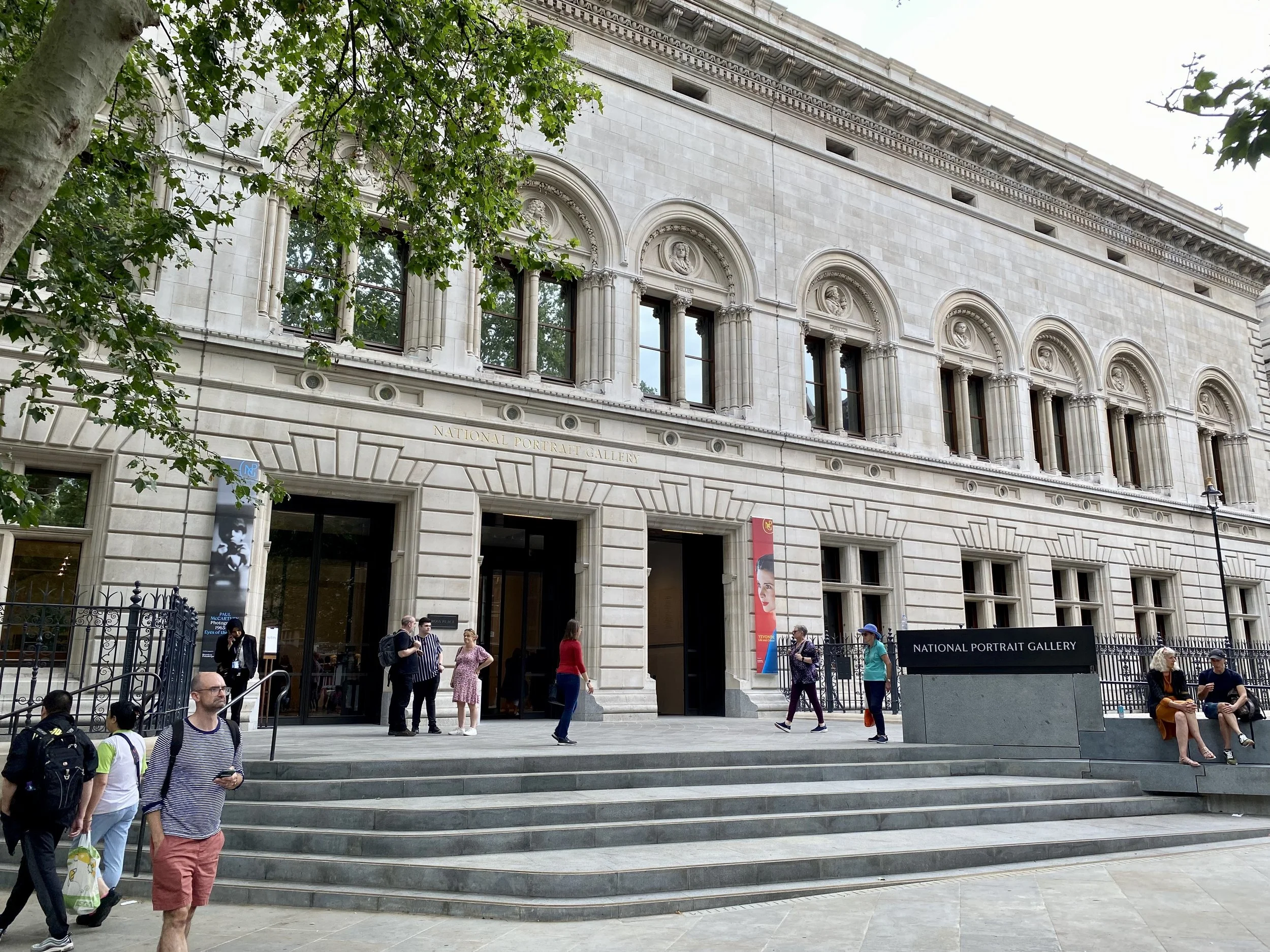
Shoot straight into your laptop, review every frame at full size, and let clients approve shots as you make them. Here is the tethered shooting workflow working pros actually use.
Read MoreYou're about to ask the biggest question of your life, and you get exactly one shot at photographing it. Not a rehearsal, not a second take. The look on her face when she realizes what's happening lasts about three seconds, and then it's gone forever. A Los Angeles proposal photographer exists for those three seconds.
This is a different job than wedding photography. You're hiring someone to be invisible, to read a situation they've never seen, and to nail the exposure while pretending to be a tourist. Here's how to hire one who can actually do it.
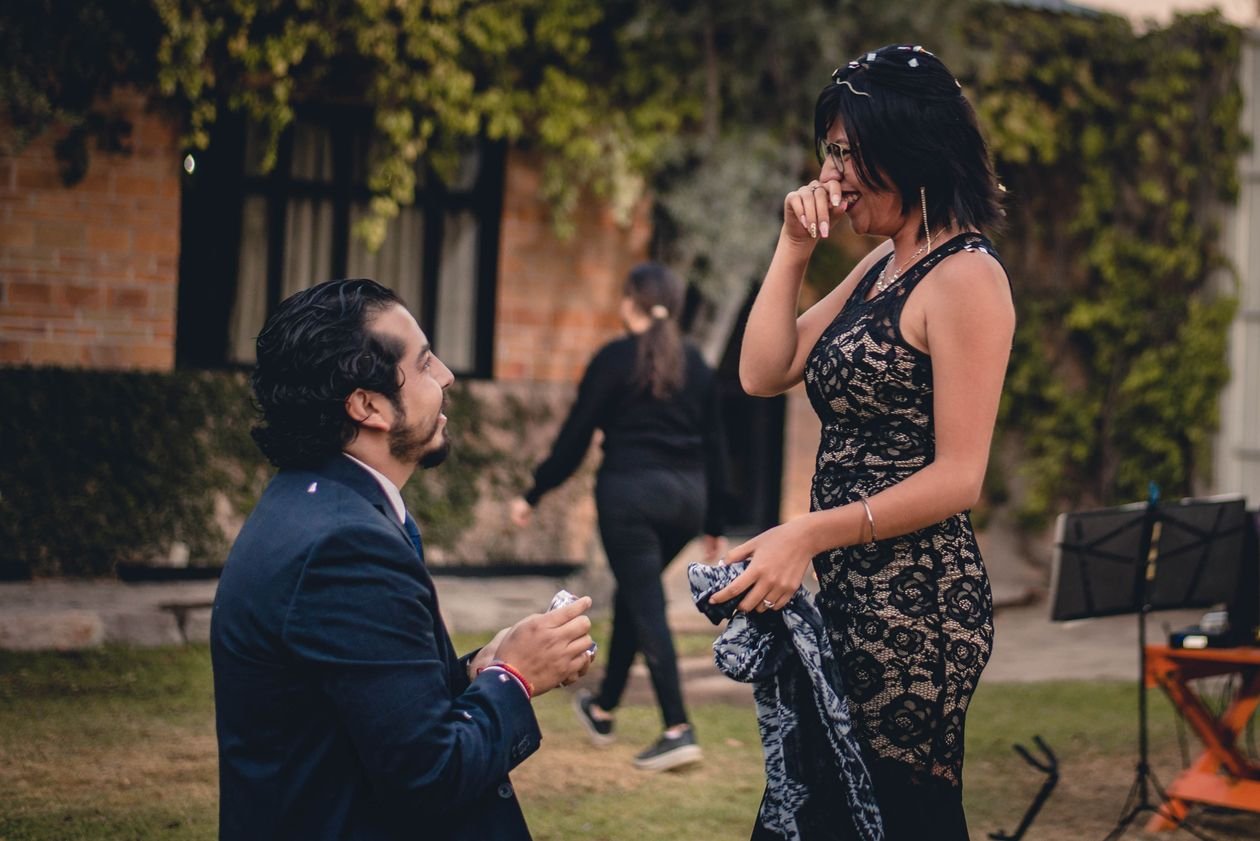
Most people think they're hiring a camera. They're hiring a planner, a location scout, and a professional liar, in that order.
A good proposal photographer in Los Angeles will spend more time on the phone with you before the shoot than behind the camera during it. They'll talk through the exact plan: where you walk, where she stands, which direction the light comes from at 6:40 PM, where the photographer hides, and what the backup plan is if the beach is fogged in or the parking lot at Griffith is full. The shooting itself might be ninety minutes. The planning is what you're paying for.
The shoot has two parts. First, the secret coverage: the photographer poses as a stranger with a camera, a tourist, someone shooting the sunset, and captures the proposal as it happens. Second, the reveal portraits: once she knows, you get twenty to thirty minutes of golden-hour portraits together, the ring shots, the champagne if you brought it. Most LA packages include both.
Straight numbers, because this market has a clear floor.
Hourly-style secret proposal coverage in LA runs roughly $350 to $600 for one to two hours of shooting with edited digital images. Local Lens publishes LA proposal packages at $365 for a 60-minute shoot with 30 edited photos, $450 for 90 minutes with 45 photos, and $595 for two hours with 60 photos. Independent LA photographer Randi Bauer lists a $350 one-hour proposal session and a $600 proposal-plus-engagement-session combo. That is the standard middle of the market.
Fully staged proposals cost much more. LA studios that coordinate florals, picnics, and custom setups start around $1,450 to $1,950, with most clients investing $1,750 to $2,250 for a minimalist setup and up to $5,250 for a full production. That's photographer plus planner plus rentals, not just photography.
What moves the price: how far the photographer travels (Malibu and Palos Verdes add travel fees), how much planning the location needs, whether you want a same-week turnaround on the gallery, and whether you're booking a sunset slot on a Saturday (the most requested hour in the business).
Red flag pricing: anyone offering secret proposal coverage for under $200 in this market. Planning a surprise proposal properly takes hours of coordination. At that price, you're getting someone who shows up and hopes for the best, and hope is not a plan.
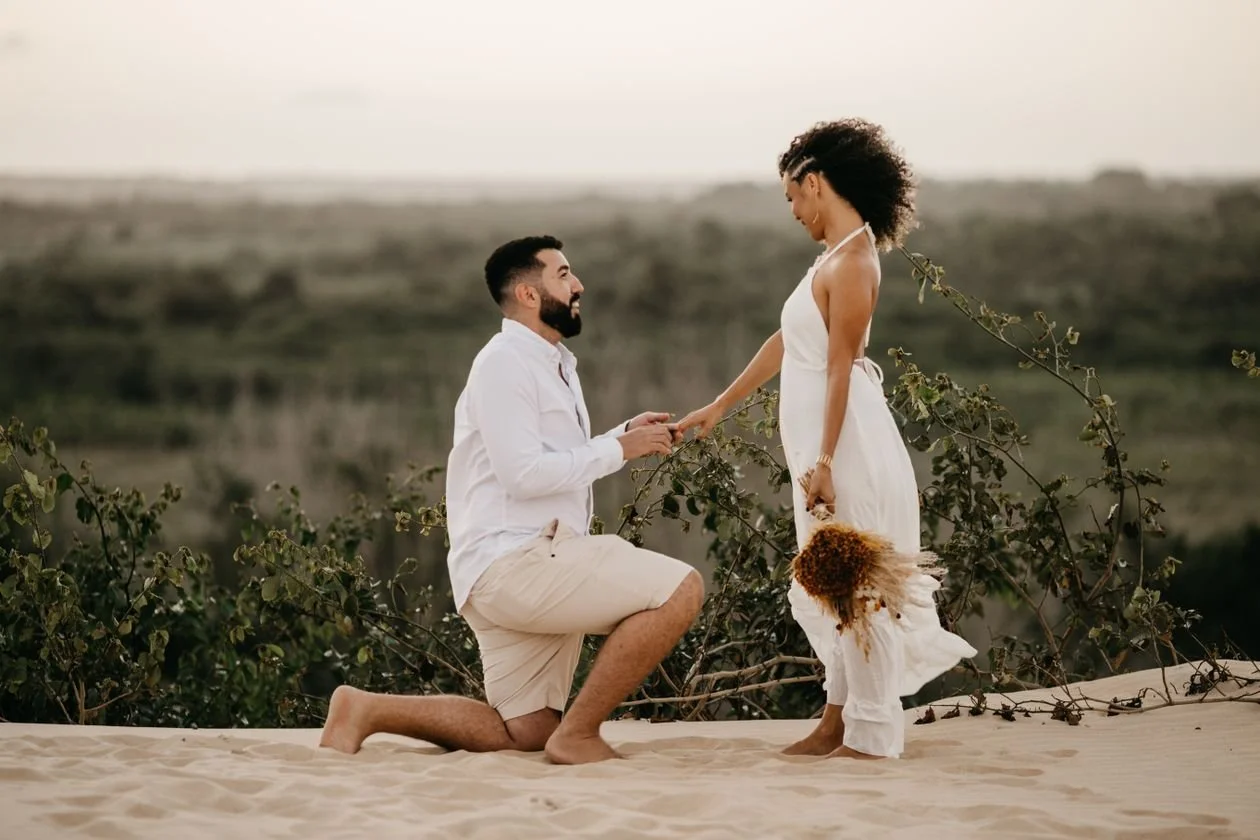
Location is half the photograph. LA gives you options most cities can't touch, but each one has a catch.
Griffith Observatory. The postcard: city skyline, Hollywood Sign, sunset. The catch: crowds, limited parking, and no room for big setups. Local Lens notes that large decorations aren't practical here, so natural, low-key proposals work best. A photographer needs to arrive early and know the terraces behind the building, which are quieter.
Santa Monica Pier. Iconic, playful, great at sunset with the Ferris wheel lit up. The catch: it's public and busy, which is actually an advantage for a secret photographer. Nobody notices one more person with a camera on the pier.
Malibu and El Matador Beach. Golden light, dramatic rock formations, secluded coves. The catch: El Matador requires a short hike down, so heels and proposals don't mix well. Timing matters more here than anywhere, because the beach loses light fast.
The Getty Center. Architecture, gardens, ocean views, and it's free. The catch: it's a museum with rules. Check photography policies before you plan anything elaborate.
Downtown LA rooftops. If your partner is more city than beach, a rooftop at blue hour is hard to beat. These usually need a reservation or a venue contact, so plan further ahead.
Ask any photographer you're considering which of these they've actually shot at. Venue familiarity is the difference between a smooth shoot and a photographer wandering around texting you "where are you guys" while the light dies.
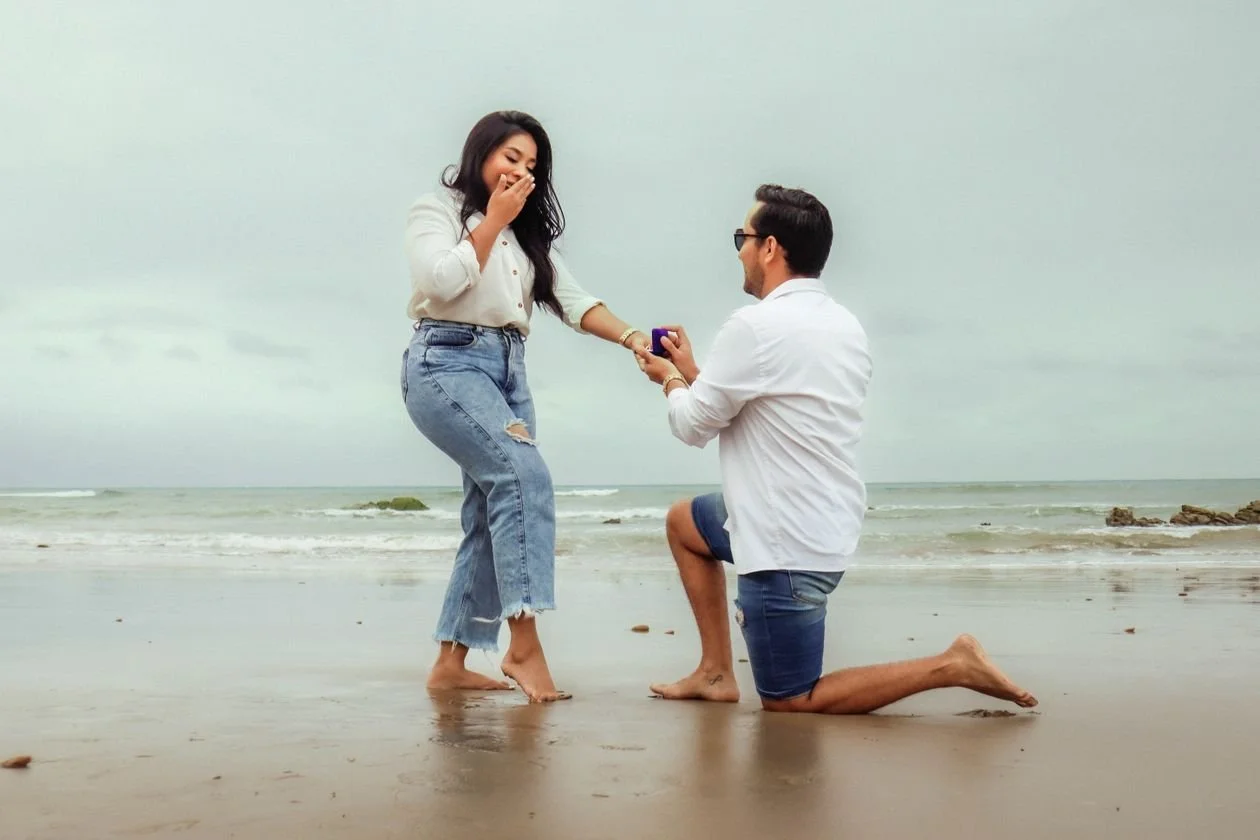
Here's the part nobody explains until you're on the phone, nervous, three days out.
The cover story. You and the photographer agree on a disguise. The photographer might be "shooting the sunset for fun," sitting at a nearby table, or set up with a long lens a hundred yards away. Long lenses are the standard tool: a 70-200mm lets the photographer stay far enough away that your partner never clocks them.
The signal. You need a clear, pre-agreed signal for the exact moment. Dropping to one knee is the obvious one, but the photographer needs to know it's coming thirty seconds before, not when it happens. Most planners use a text: "walking to the spot now" when you start moving, then the knee is the trigger.
The timing math. Sunset in Los Angeles swings from around 4:45 PM in December to nearly 8:10 PM in June. Golden hour, the last hour of light, is when you want the proposal. Book the shoot to start 60 to 90 minutes before sunset so there's time for the walk, the nerves, and the portraits after.
The backup plan. Marine layer fogs out the coast. Griffith parking fills up. Wind ruins beach hair. A professional has a Plan B location within fifteen minutes and tells you about it in advance, not in a panic text at 5 PM.
After the yes. The reveal portraits are where the real value lives. The candid proposal shots are emotional and irreplaceable, but they're shot from a distance in uncontrolled conditions. The twenty minutes after, when the photographer can actually direct you, produce the framed-on-the-wall images. Don't skip them to rush to dinner.
Ask these on the first call. A proposal specialist will have crisp answers. A generalist will hedge.
No full proposal gallery. Anyone can show you five great frames. Ask to see a complete delivery from a recent proposal, start to finish: the hiding, the moment, the portraits after. If they only have wedding work, they're not a proposal photographer.
They want to be obvious. A photographer who suggests setting up a tripod ten feet away "for the best angle" doesn't understand the assignment. The whole point is that your partner doesn't know.
No contract. Deposits, cancellation terms, delivery timelines, image rights. If it's all handled over text messages, you have no recourse when something goes wrong.
They've never shot your location. LA's proposal spots each have quirks. A photographer shooting El Matador for the first time at sunset is learning on your dime.
Hire for the planning, not the portfolio. Every decent photographer in this city can take a pretty picture of a couple at sunset. Very few can coordinate a surprise, stay invisible, read the light at a location they've scouted, and still be in position when the knee hits the ground. That's the job. The photographers who do it well charge $350 to $600 for the shoot because the shoot is the smallest part of what they do.
Book three to four weeks out for a standard proposal, longer if you want a Saturday sunset or a staged setup with vendors. And once it's done, start thinking about the wedding, because the photographer question comes right back around. If you're curious what wedding photography costs in Los Angeles, I broke down the real 2026 numbers.
After the proposal, most couples want proper engagement portraits, the kind you actually send to family and use for save-the-dates. That's a different session with different light and different direction, and it's worth booking with a portrait photographer in Los Angeles who knows how to direct people who've never been in front of a camera.
Planning the question and want it documented properly? Get in touch and tell me the plan. The good proposals are the ones we plan together.
How much does a proposal photographer cost in Los Angeles?
Secret proposal coverage in LA typically runs $350 to $600 for one to two hours with 30 to 60 edited images. Fully staged proposals with florals, setups, and coordination start around $1,450 and can reach $5,250 for a full production.
How far in advance should I book a proposal photographer?
Three to four weeks is enough for a standard proposal. Book six to eight weeks out if you want a Saturday sunset slot or a staged setup with rentals and vendors.
Where are the best places to propose in Los Angeles?
Griffith Observatory, Santa Monica Pier, Malibu's El Matador Beach, the Getty Center, and Downtown LA rooftops are the most requested spots. Each has different light, crowd, and permit considerations, so discuss the tradeoffs with your photographer.
Will my partner notice the photographer?
Not if the photographer knows the job. Professionals use long lenses, blend in as tourists or bystanders, and coordinate signals with you in advance so they're in position before the moment happens.
Do proposal photographers help plan the proposal?
The good ones do. Planning help, location scouting advice, timeline building, and backup plans are standard parts of a proposal package. If a photographer only wants to show up and shoot, they're not a proposal specialist.
Getty Images announced on Monday that it plans to file for Chapter 11 bankruptcy and go private. The numbers tell the story: $2.1 billion in debt against a market value of about $20 million. The stock has lost 99 percent of its value since the company went public in 2022 at a $4.8 billion valuation. The New York Stock Exchange started delisting proceedings last month. The planned merger with Shutterstock collapsed.
The press releases blame AI-generated imagery. That is the excuse. It is not the cause.
I have been a working photographer for 27 years. I never shot for Getty. But I watched what they did to photographers
for decades, and I am not sad to see them go.
Getty did not just sell stock photos. They controlled the industry.
If you shot celebrity photos, red carpets, entertainment events, there was Getty and then there was everyone else. And everyone else barely existed. When one company controls who gets hired, photographers do not negotiate. They accept whatever is offered, because the alternative is not working at all.
A lot of photographers were not paid very much. A lot of photographers were exploited while Getty sold their images for a lot of money. That is not my opinion. That is what happened, and every working entertainment photographer from that era knows it.
The model was simple. Pay the photographer as little as the market will bear when you are the market. License the image to every magazine, newspaper, and website on earth at full price. Keep the difference. Repeat for thirty years.
It worked until it did not.
The bankruptcy did not come out of nowhere. Getty went public in 2022 through a SPAC merger that valued the company at $4.8 billion. Four years later the equity is essentially worthless and the debt is $2.1 billion. That is not a market accident. That is what happens when you financialize a business instead of running it.
The private equity playbook is familiar. Load the company with debt, extract fees, and hope growth covers the interest. Growth did not come. Agency demand declined. The iStock business got disrupted. AI arrived. And the debt stayed.
Now the restructuring hands 100 percent of the company to the Getty family and Koch Equity Development, who are putting in up to $533 million in new equity. Bondholders are retiring $270 million in notes. Everyone at the table has agreed, which is why it will be a prepackaged Chapter 11, fast and quiet, done by end of year.
Notice who is not at the table. The photographers. The contributors whose work built the archive that is the only thing of value in this deal. They were never at the table. That has always been the point.
I know this because I lived the alternative.
Years ago I licensed my celebrity photos through an agency called Vistalux. They did a great job of selling my
pictures. They got my Lady Gaga photos published all over the world, and it was very profitable for me.
The difference was not the photos. It was the deal. An agency that actually sells your work instead of sitting on it, that treats the photographer as a partner instead of a cost to be minimized, can make celebrity licensing extremely profitable. I know because it happened to me.
They hustled. Every placement was work, phone calls, relationships with photo editors around the world. That is what an agency is supposed to do. Getty got so big it did not have to hustle anymore. It just collected. And when you stop selling and start collecting, you are already dying. You just do not know it yet.
Now the obituaries say AI killed Getty. Declining agency demand. Disruption to the iStock business. All true, and all beside the point.
A healthy company survives a technology shift. A company that spent decades extracting every dollar from its contributors while loading itself with $2.1 billion in debt does not survive anything. The AI wave did not break Getty. It just arrived at the moment Getty had nothing left to stand on.
Think about it. A business whose entire value proposition is "we have the photos" should have been terrified of generative AI ten years ago and building a moat. Instead they sued Stability AI over training data while their own balance sheet rotted. They were fighting the last war with borrowed money.
The Shutterstock merger was supposed to be the rescue. Two declining giants merging into one slightly larger declining giant. When that fell apart, there was nothing left except the bankruptcy lawyers.
Here is the part nobody in the business press is saying.
Getty going down is good for photographers. For thirty years, one gatekeeper decided who shot what, what it was worth, and who got paid. That gatekeeper is leaving.
Now there will be a ton of opportunities for photographers since Getty isn't able to control everything. That is not optimism. That is mechanics. When a monopsony collapses, the people who were being squeezed get room to breathe.
To be clear, the bankruptcy itself does not fix anything for photographers. Chapter 11 changes who owns Getty, not how it treats contributors. Koch and the Getty family did not buy in to pay photographers more. They bought the archive and the cash flow. And going private does not automatically shrink Getty's influence. It still has the biggest library and the deepest client list. Its grip loosens only if photographers and buyers keep walking toward other options. Nobody is coming to save photographers. The door is open. Walk through it.
The photographers who survive the next decade will be the ones who own their relationships, their archives, and their distribution. License directly. Build your own audience. Work with agencies that sell your work instead of warehousing it. The Vistalux model, not the Getty model.
Concretely, that means a few things. First, know what your archive is worth. If you have spent years shooting events, celebrities, or editorial work, you are sitting on an asset. Most photographers have no idea what is in their own hard drives, let alone what it could earn. Second, stop giving away exclusivity cheap. Every bad deal you sign trains the market to expect the next one. Third, build direct relationships with the publications and brands that use your work. The middleman only survives if you let him stand between you and the buyer.
And here is the uncomfortable truth for anyone still dreaming of a staff job at a wire service. Those jobs are not coming back. The entire edifice of "one big agency controls everything" is being dismantled in real time. Getty is just the biggest domino.
It will not change because Getty files paperwork. It will change when photographers stop waiting for permission.
First, own your archive. Every working photographer is sitting on thousands of images that could earn money. Most have no system, no
metadata, no licensing setup. Your archive is a business. Treat it like one.
Second, demand transparency. The Vistalux deal worked because I could see my photos selling all over the world and the money followed. Any agency or platform that will not show you exactly what your work earned and what your cut is does not deserve your work. That should be the industry standard, not a favor.
Third, build direct relationships. The publications, brands, and editors who use your photos are reachable. Every deal you do directly
is a deal where no middleman takes half. It is more work. It also pays more.
Fourth, stop signing bad deals. Exclusivity for pennies, all-rights buyouts for nothing, work-for-hire disguised as opportunity. Every
photographer who signs one makes the next one easier to offer. The market learns what you accept.
And the buyers have to change too. Magazines and websites defaulted to Getty because it was easy, one contract, endless photos. Easy is not a business model anymore. Publications that build relationships with photographers directly get better, more original images. The ones still pulling the same wire photos as everyone else all look the same.
None of this requires Getty to disappear. It requires photographers to act like the value they create. The gate is open. It has always been
open. Most people just never walked through it.
Every photographer I know has a Getty story. Most of them are about money they never saw.
The lesson is not that stock photography is dead. People will always need real photos of real moments, and AI cannot shoot a red carpet. The lesson is that any business built on underpaying the people who make the product is living on borrowed time. Sometimes literally. Ask the bondholders who just agreed to retire $270 million in notes.
Getty controlled the industry for a generation. Now it is worth less than a nice house in Beverly Hills.
The beauty dish is the fashion industry's favorite modifier for a reason. Here are 5 studio-proven beauty dish lighting setups, from classic clamshell to the dramatic punch, with placement rules that make or break every shot.
Read More
If you are organizing a gala in Los Angeles, whether it is a charity fundraiser, an awards dinner, or a corporate black-tie event, the photography budget is one of the easiest places to get wrong. Go too cheap and the photos do not match the room. Go too expensive and you have spent donor money on coverage you did not need.
Here is the short answer. In Los Angeles, professional gala photography runs $750 per hour, with a two-hour minimum. Most galas need four to five hours of coverage, which puts the typical booking at $2,500 for a half day. A full evening, from red carpet arrivals through the end of the after-party, runs $4,500 for eight hours. Those are my rates, and they reflect 27 years of shooting black-tie events in this city.
The gala photography market in Los Angeles spans from $200 an hour for budget shooters to $1,000-plus per hour for premium teams. Where you land depends on the size of the event, the caliber of the guests, and how fast you need the images. Let me walk through all of it.
A gala is not a conference and it is not a wedding. It has its own rhythm, and the photographer needs to understand it.
The evening typically opens with a cocktail reception and red carpet arrivals. Guests in formal wear, a step-and-repeat, sponsors who paid for visibility. This is the highest-energy ninety minutes of the night, and it is where the most-used photos come from.
Then the room shifts to dinner. A seated program, speeches, award presentations, a live auction or paddle raise. The lighting drops. The photographer is now working in dark ballroom conditions, shooting a stage from the back of the room without disrupting the program.
After dinner, the energy comes back up. Dancing, the after-party, candids of guests actually enjoying themselves. These are the images that end up in next year's invitation and the donor thank-you campaign.
A gala photographer has to handle all three phases: the bright chaos of arrivals, the dark formality of the dinner program, and the loose energy of the after-party. That range is why experience matters more here than in almost any other event category.
I have shot galas across Los Angeles for most of my career, from nonprofit fundraisers in Pasadena to black-tie award dinners in Beverly Hills. The rooms change. The rhythm does not.
Here is what the market actually looks like in 2026.
Budget tier: $200 to $400 per hour. Solo photographer, basic editing, delivery in one to two weeks. This works for a small nonprofit gala where the photos are mainly for the website and social media. The risk is low-light capability. Ballroom dinner programs are dark, and a budget photographer without the right gear and experience will deliver grainy, unusable stage shots.
Professional tier: $500 to $750 per hour. This is where experienced gala photographers operate. Proper low-light gear, edited gallery within days, someone who knows how to shoot a paddle raise without flash-blinding the room. My rate is $750 per hour with a two-hour minimum.
Premium tier: $1,000 per hour and up. Multi-photographer teams, same-night delivery, dedicated editor. For major charity galas with celebrity guests, honorees, and press, this is the standard.
For a typical Los Angeles gala, here is the math at my rates. Cocktail reception and arrivals, two hours: $1,500. Add the dinner program and speeches, two more hours: $2,500 for the half day. Full evening through the after-party, six to eight hours: $4,500.
Most galas I shoot land in the four-to-five-hour range. Arrivals at 6 p.m., dinner program at 8, dancing until 11. That is a half-day booking at $2,500, and it covers everything the organization actually needs.
1. Guest caliber. A gala with celebrity honorees, a step-and-repeat, and press needs a different photographer than a 150-person nonprofit dinner. High-profile guests mean higher stakes, tighter timelines, and usually same-night delivery for media. Price accordingly.
2. Low-light demands. The dinner program is the hard part. A dark ballroom, a single spotlight on the podium, no flash allowed during speeches. This is where the professional tier earns its rate. Ask any photographer you are considering to show you full galleries from dark ballroom programs, not just the bright arrival shots.
3. Same-night or next-day delivery. If your development team needs selects for the morning-after donor email, or your PR firm needs images for press before the news cycle moves on, that is rush delivery. Expect a 25 to 50 percent premium. Standard professional turnaround is three to seven days.
4. Auction and fundraising moments. The paddle raise, the live auction, the check presentation. These are the money shots, literally. They happen fast, in bad light, and they cannot be recreated. Make sure your photographer knows the program timing and is positioned for these moments. This is a planning conversation, not a luck thing.
5. Season. Gala season in Los Angeles runs roughly October through May, with peaks in the fall and around awards season. Book early during these windows. I have seen organizations pay rush rates because they started their photographer search three weeks before a 500-person gala.
The Beverly Hilton in Beverly Hills is the classic. The International Ballroom has hosted the Golden Globes for decades, and the room is built for this kind of event. A photographer who has worked the Hilton knows the lighting plot, the stage sightlines, and where the step-and-repeat goes.
The Fairmont Century Plaza, the InterContinental downtown, and the JW Marriott at L.A. Live all run major galas. Further out, the Langham in Pasadena and the Terranea Resort in Rancho Palos Verdes host destination-feeling galas without leaving the metro area.
Each venue has its own arrival flow, its own ballroom lighting, and its own rules about where photographers can stand during the program. A photographer who has worked the room before is faster, less intrusive, and more reliable. When you are comparing quotes, ask which of these venues the photographer has actually shot. The answer tells you a lot.
Look at dark-room work first. Every photographer has pretty arrival photos. The test is the dinner program. Ask to see a full gallery from a ballroom event: the speeches, the awards, the auction. If the stage shots are sharp and well-exposed in bad light, the photographer can handle your gala.
Ask about the program, not just the hours. A good gala photographer wants to see the run of show. When is the paddle raise? Who are the honorees? Is there a step-and-repeat? The photographer who asks these questions is the one who will be in position when the moments happen.
Confirm deliverables in writing. Number of edited images, delivery timeline, format, usage rights. For a charity gala, clarify whether the organization can use the images in donor materials, annual reports, and next year's marketing. Most professional photographers include this. Get it in the contract anyway.
Talk about the donor angle. Gala photos have a fundraising job. The images from this year's gala sell next year's tables. Tell the photographer that. The best gala photographers shoot with the invitation, the annual report, and the donor wall in mind, not just the night itself.
I shoot a lot of charity galas, so let me address the question every development director asks: can we get a discount because we are a nonprofit?
Here is my honest answer. I do not discount the rate, because the work is the same work. A 500-person gala takes the same hours, the same gear, and the same skill whether the organization is a nonprofit or a corporation. What I will do is help you scope smartly. Maybe you do not need eight hours. Maybe four hours covers arrivals through the auction, and that is everything the development team actually needs. A good photographer helps you spend less by scoping right, not by cutting the rate.
The other thing I tell nonprofits: the photography is a fundraising asset, not an expense. The paddle raise photo goes in the annual report. The honoree portrait goes on the donor wall. The arrival shots sell next year's tables. Budget for it the way you budget for the venue, because it does the same job.
A gala is one of the highest-stakes events a photographer can shoot. The room is full of donors, honorees, and board members. The photos have a fundraising job that lasts all year. And the whole thing happens in one evening with no second chances.
Hire the photographer whose dark-ballroom work holds up. Send the run of show before you ask for a quote. Put the delivery date in writing. And scope the hours to what you actually need, because four well-planned hours beat eight unfocused ones.
If you are planning a gala in Los Angeles, contact me with your date and venue. I will give you a straight quote and an honest read on what your event needs. My corporate event photography page covers rates and services in detail, and if your gala includes VIP or celebrity guests, my celebrity photography pricing guide breaks down that side of the work.
How much does a gala photographer cost in Los Angeles? Professional gala photography in Los Angeles costs $750 per hour with a two-hour minimum. Most galas need four to five hours of coverage, which is $2,500 for a half day. A full evening through the after-party (8 hours) is $4,500.
How far in advance should I book a gala photographer? Book two to three months ahead for standard galas. During peak gala season (October through May, especially awards season), book three to four months out.
Do gala photographers offer nonprofit discounts? Policies vary. Rather than discounting the rate, many professional photographers help nonprofits scope efficiently, so you pay for the hours you actually need. Ask for a scoping conversation before you ask for a discount.
When will I receive the gala photos? Standard professional turnaround is three to seven days for the full edited gallery. Same-night or next-morning delivery for press and donor communications is available as a rush service.
What should the photographer know about my gala program? Share the run of show: arrival times, honoree presentations, auction or paddle raise timing, and any step-and-repeat or press arrangements. The photographer uses this to plan positioning for the key moments.